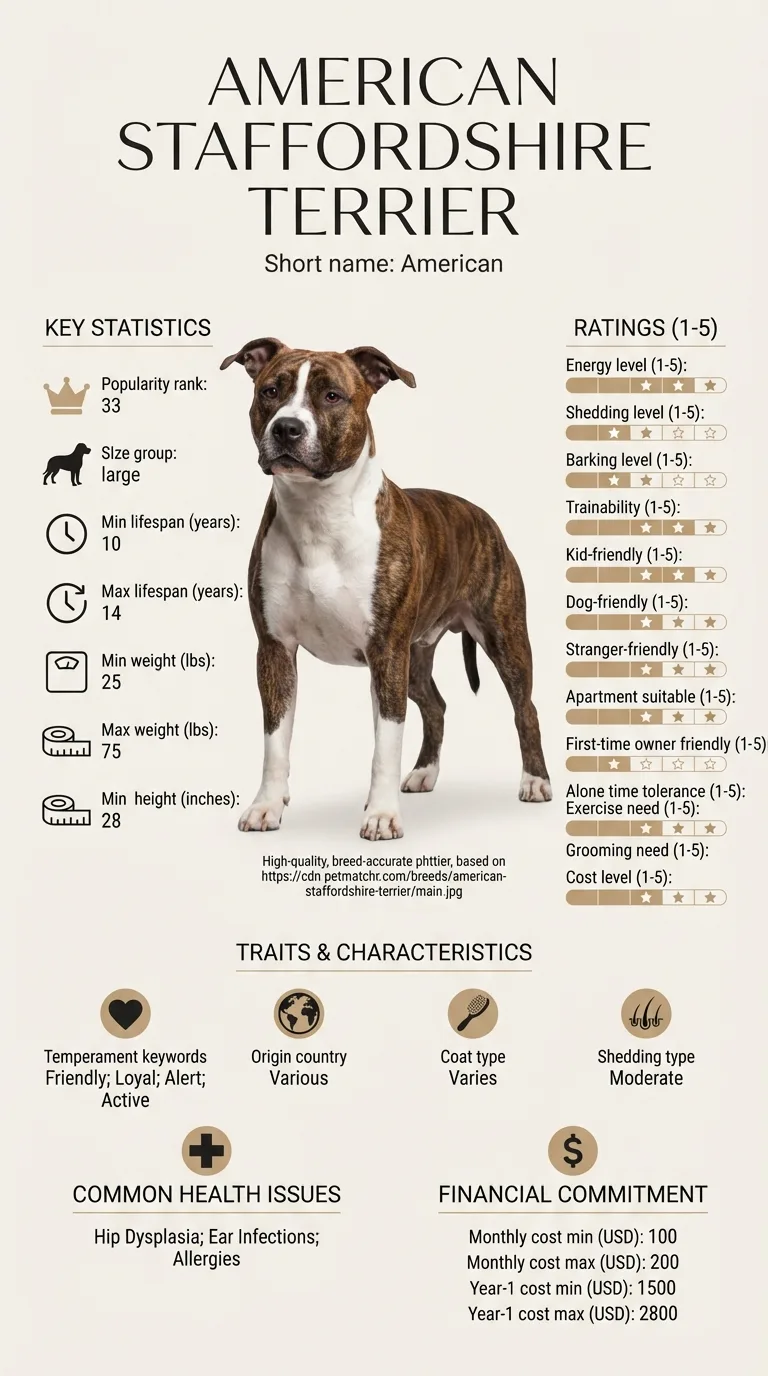
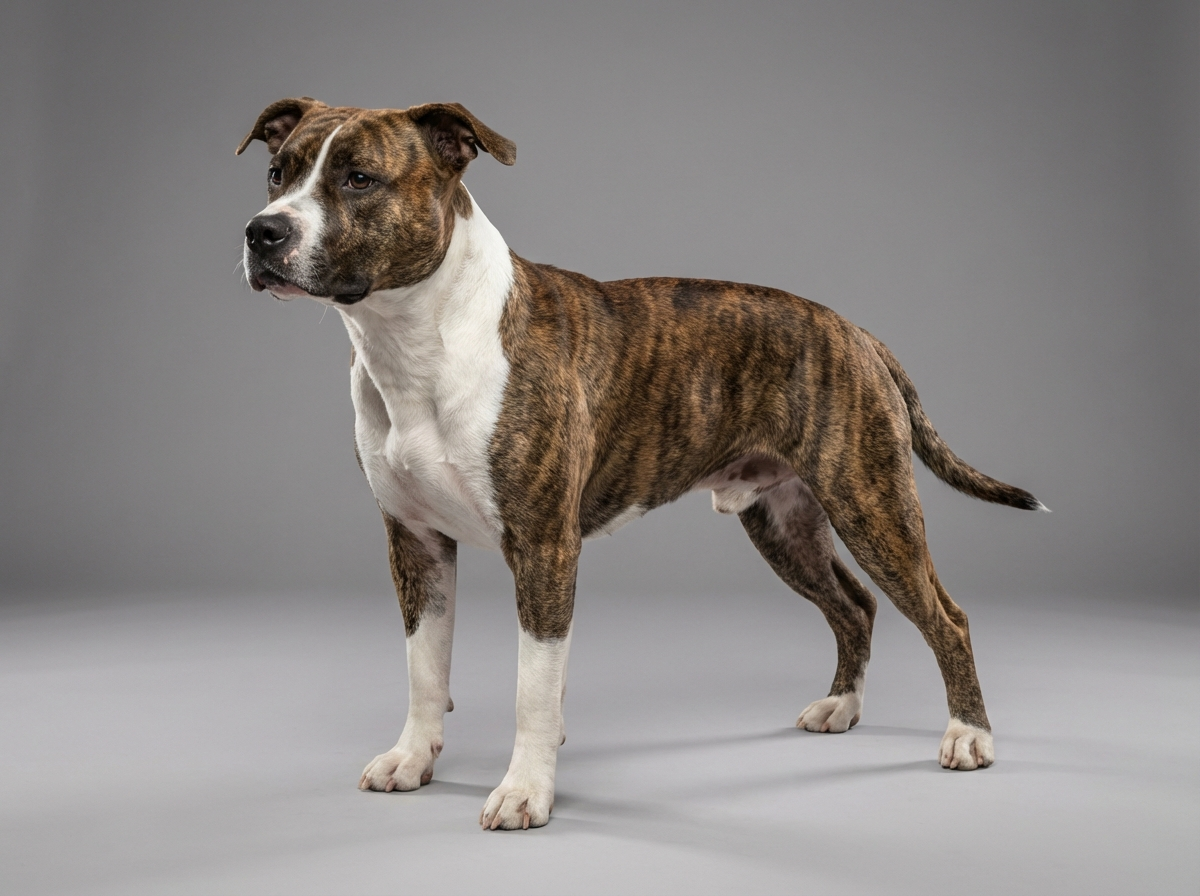
American Staffordshire Terrier Bone & Growth Issues
Quick answer
What are some quick tips for American Staffordshire Terrier bone & growth issues?
Monitor your dog's growth closely and consult a vet if you notice any irregularities. A balanced diet and controlled exercise are essential for healthy bone development.
Bone and growth issues can be a significant concern for American Staffordshire Terriers, particularly due to their large size and rapid growth.
Owners of American Staffordshire Terriers, especially those with puppies or young dogs, often find themselves worried about these growth-related challenges. First-time owners or those unfamiliar with the breed may feel especially overwhelmed.
Important reminder
This guide is not medical advice. If your dog shows pain, sudden behavior change, or worsening symptoms, consult a licensed veterinarian.
Some links may be affiliate links. We may earn a commission at no extra cost to you. We only suggest products we believe are helpful for dog owners.
We research and check what we publish, but we do not warrant that any figure, date, price, or statement is accurate, complete, or current, and we accept no liability for any loss, cost, injury, or other harm arising from the use of this site. Use it as one reference among several. You remain responsible for your own decisions and for your dog's care - confirm anything that matters with a licensed veterinarian or another qualified professional before you act on it. Full disclaimer.
Check this first
When American Staffordshire Terrier Bone & Growth Issues Are an Emergency
Emergency Signs:
- Severe pain or limping that lasts more than a few minutes.
- Swelling or deformity in the bone or joint area.
- Difficulty standing or walking.
- Signs of shock, like rapid breathing or pale gums.
If you see any of these symptoms, it’s crucial to contact your vet immediately.
Mild Cases to Monitor:
- Occasional limping that resolves quickly.
- Slight swelling after exercise that goes down with rest.
- Mild stiffness that improves with movement.
In these cases, monitor your dog’s behavior and make a plan to discuss any ongoing issues with your vet during your next appointment.
Being proactive can ensure your American Staffordshire Terrier stays healthy. Keep an eye on their growth and behavior, and don’t hesitate to reach out to a vet if something feels off.
If any of these apply, call your vet or an emergency clinic now. The rest of this page is for the cases that are not an emergency.
What this problem looks like
American Staffordshire Terrier bone & growth issues can be a significant concern for owners. These problems often manifest as joint pain, difficulty moving, or abnormal growth patterns. Daily life may involve watching for signs of discomfort, which can affect their playfulness and overall happiness.
Common triggers
Rapid growth during puppyhood
High-impact activities or excessive exercise
Genetic predisposition to bone issues
Bone and growth issues are fairly common in American Staffordshire Terriers, especially in their early development stages. Many owners report noticing these challenges as their dogs reach larger sizes and experience growth spurts.
Why this happens
Breed factors
American Staffordshire Terriers are large dogs that experience rapid growth. This can lead to bone and growth issues, especially if they inherit genetic predispositions, such as hip dysplasia. Their energetic nature can also put extra stress on their developing bones.
Environment factors
Environmental factors, like diet and exercise, can contribute to bone issues. If they don't receive balanced nutrition during their growth phase, or if they engage in excessive or improper exercise, it can hinder their bone development. Additionally, living in a crowded space may limit their activity, affecting their physical health.
What you can do at home (once it is not an emergency)
When to talk to your vet
If you notice persistent limping, reluctance to move, or significant changes in behavior, contact your vet immediately. These could be signs of serious bone or joint issues that require professional intervention.
At home, alongside your vet's plan
Ensure a balanced diet rich in calcium and phosphorus during their growth stages. Consult your vet for specific dietary recommendations.
Implement a regular, moderate exercise routine. Avoid high-impact activities until they are fully grown, typically around 18-24 months.
Monitor their weight closely. Keeping them within a healthy weight range can prevent added stress on their bones.
Provide joint supplements, like glucosamine, if recommended by your vet. These can support bone health, especially in active breeds.
Create a safe play area where they can exercise without risk of injury. Use soft surfaces to minimize impact on their joints.
Mistakes that make Bone & Growth Issues worse
Avoiding certain common mistakes can help improve your American Staffordshire Terrier's bone and growth issues. Here are some pitfalls to watch out for.
Overfeeding: Giving too much food can lead to rapid growth, increasing the risk of bone issues. Instead, stick to a measured feeding schedule with the right portions for their age and size.
Skipping Exercise: Not providing enough physical activity can lead to obesity and worsen bone problems. Ensure your dog gets regular exercise, but avoid high-impact activities until they're fully grown.
Ignoring Vet Advice: Some owners dismiss their vet's recommendations regarding diet or supplements. Always follow your vet's guidance closely as they understand your dog's unique needs.
Lack of Proper Training: Inconsistent training can cause anxiety and stress in your dog, potentially aggravating growth issues. Implement a consistent training routine that fosters a calm environment.
Neglecting Joint Support: Not considering joint supplements can delay healing. Speak with your vet about age-appropriate supplements that support healthy bone growth.
Forgetting Regular Check-Ups: Skipping routine vet visits can lead to unnoticed growth issues. Schedule regular check-ups to monitor your dog's growth and overall health.
Ignoring Signs of Pain: Some owners may overlook signs that their dog is in pain or discomfort. Be vigilant and consult your vet if you notice limping or reluctance to move.
More American Staffordshire Terrier health & behavior issues
Most American Staffordshire Terriers with bone and growth issues can show improvement within 3 to 6 months with consistent care and veterinary follow-up.
Success includes a noticeable reduction in discomfort, improved mobility, and a more active lifestyle for your dog.
Jake's Journey with Bone Growth Issues
When Sarah adopted Jake, her American Staffordshire Terrier, she quickly noticed he limped after playtime. Concerned, she took him to the vet, who diagnosed him with growth issues common in large breeds. With a tailored exercise plan and a high-quality diet, Sarah committed to daily routines that included gentle walks and joint supplements. Over the next six months, Jake's limping decreased significantly, and he started to enjoy playing fetch again.
Key takeaway: With the right care and attention, many bone growth issues can be managed effectively, allowing your dog to lead a happier life.
Frequently asked questions
Why does my American Staffordshire Terrier have bone & growth issues?
American Staffordshire Terriers can experience bone & growth issues due to their large size and rapid growth. Genetics, diet, and activity levels can all contribute to these problems. It's essential to monitor their growth and consult with a vet if you notice any abnormalities.
How can I stop my American Staffordshire Terrier from having bone & growth issues?
To help prevent bone & growth issues, provide a balanced diet rich in essential nutrients. Regular vet check-ups are crucial for monitoring growth and addressing any concerns early. Additionally, avoid over-exercising your puppy, as too much strain can lead to complications.
Are there specific training methods for American Staffordshire Terrier bone & growth issues?
While training won't directly fix bone & growth issues, it can help manage behaviors that arise from discomfort. Positive reinforcement training can teach your dog to follow commands, which can limit excessive jumping or running. Consult a trainer experienced with large breeds for tailored strategies.
When should I be concerned about my American Staffordshire Terrier's growth?
If your American Staffordshire Terrier is growing too quickly or too slowly, it’s important to seek veterinary advice. A sudden change in growth patterns can indicate underlying health issues. Regular check-ups can help track growth and catch potential problems early.
Can bone & growth issues be treated in adult American Staffordshire Terriers?
Yes, while prevention is ideal, treatments for bone & growth issues in adult American Staffordshire Terriers can include medication, weight management, and physical therapy. In some cases, surgery may be necessary. Always consult your vet for the best course of action.
What steps can I take to support my American Staffordshire Terrier's bone health?
Supporting your American Staffordshire Terrier's bone health involves a balanced diet, regular exercise, and maintaining a healthy weight. Supplements like glucosamine can also be beneficial, but consult your vet before adding any new products to their regimen.
How can I help my older American Staffordshire Terrier with bone & growth issues?
Older dogs may need a joint-friendly diet and lower-impact exercise routines. Regular vet check-ups can help monitor their condition and adapt their care as needed.
What training techniques are effective for American Staffordshire Terriers with bone & growth issues?
Positive reinforcement training works best. Focus on gentle commands and avoid strenuous activities that may exacerbate their bone issues while keeping training sessions short and engaging.
When should I see a vet about my American Staffordshire Terrier's bone & growth issues?
If you notice persistent limping, changes in appetite, or discomfort during activities, it's time to consult a vet. Early intervention can help manage pain and improve your dog's quality of life.
What are some quick tips for American Staffordshire Terrier bone & growth issues?
Monitor your dog's growth closely and consult a vet if you notice any irregularities. A balanced diet and controlled exercise are essential for healthy bone development.
Living
How can diet impact my American Staffordshire Terrier's growth?
A nutritious diet supports proper growth and bone health. Ensure your dog gets the right balance of protein, vitamins, and minerals tailored to their age and size.
Training
Are there specific exercises for American Staffordshire Terriers with growth issues?
Gentle, low-impact exercises like short walks and swimming can help maintain fitness without stressing their developing bones. Avoid high-impact activities until they are fully grown.
Health
How often should I take my American Staffordshire Terrier to the vet for growth issues?
Regular check-ups every 6-12 months are recommended, especially during their rapid growth phase. Your vet can monitor their development and address any issues early.
A fuller vet-visit kit for American Staffordshire Terrier Bone Growth Issues
The free prep sheet covers the same-day warning signs, a symptom log and the questions to ask. We are considering a fuller kit that adds a cost worksheet for the usual tests and treatments (US price ranges with their sources) and a plain-English guide to ways of covering the bill. It is not built yet; this list tells us whether it is worth building.
One email, no spam, unsubscribe anytime. Information only, not veterinary advice.