Health
How can I spot genetic disorders in my Doberman Pinscher?
Look for signs like extreme lethargy, difficulty walking, or unusual behavior. If you notice any of these, consult your vet promptly.

Quick answer
How can I spot genetic disorders in my Doberman Pinscher?
Look for signs like extreme lethargy, difficulty walking, or unusual behavior. If you notice any of these, consult your vet promptly.
Doberman Pinschers are prone to several genetic disorders that can impact their health and happiness.
This problem affects Doberman owners, especially those new to the breed. Many owners worry about their dog's health and want to know how to manage or prevent these disorders.
This guide is not medical advice. If your dog shows pain, sudden behavior change, or worsening symptoms, consult a licensed veterinarian.
Some links may be affiliate links. We may earn a commission at no extra cost to you. We only suggest products we believe are helpful for dog owners.
We research and check what we publish, but we do not warrant that any figure, date, price, or statement is accurate, complete, or current, and we accept no liability for any loss, cost, injury, or other harm arising from the use of this site. Use it as one reference among several. You remain responsible for your own decisions and for your dog's care - confirm anything that matters with a licensed veterinarian or another qualified professional before you act on it. Full disclaimer.
Check this first
Recognizing when your Doberman Pinscher's genetic disorders are an emergency is crucial for their health. Certain signs indicate immediate veterinary attention is needed, while others can be monitored with a plan. Always trust your instincts, but knowing these red flags can help you prioritize your dog's care.
If any of these apply, call your vet or an emergency clinic now. The rest of this page is for the cases that are not an emergency.
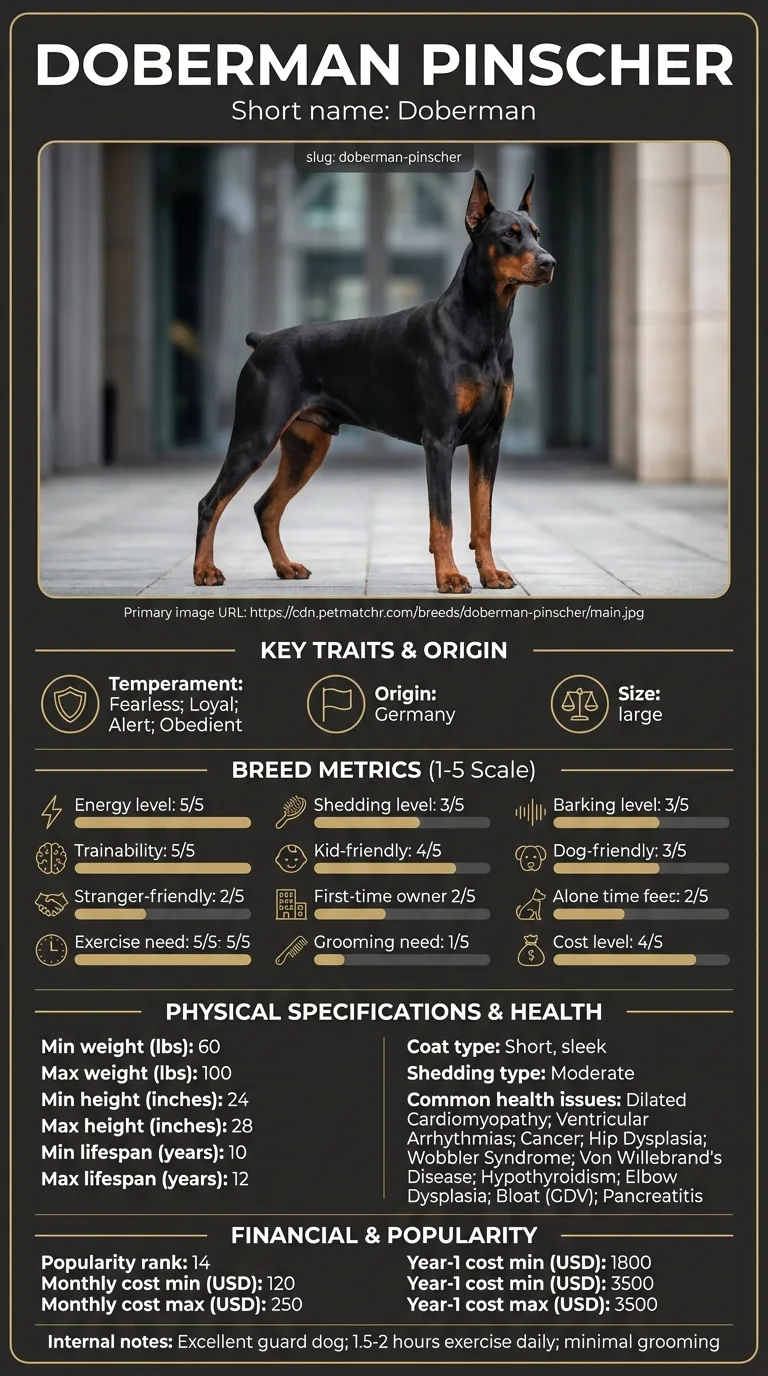
The Doberman Pinscher is a strong and loyal breed, but they can be prone to several genetic disorders. Common issues include Dilated Cardiomyopathy, which affects heart function, and Hip Dysplasia, leading to joint problems. These disorders can cause varying degrees of discomfort and health complications, impacting the dog's quality of life.
Genetic disorders are relatively common in Dobermans, especially since they are a purebred breed. Many Dobermans may face at least one health issue during their lives, making awareness crucial for potential owners.
Doberman Pinschers can be prone to specific genetic disorders due to their breeding history. Conditions like Dilated Cardiomyopathy and Von Willebrand's Disease are more common in this breed. These genetic predispositions can lead to health issues as they age.
Environmental factors also play a role in the health of Dobermans. Poor nutrition, lack of exercise, and stress can contribute to the development of genetic disorders. A supportive and healthy environment is crucial for their overall well-being.
If you notice signs of distress, such as excessive panting, coughing, or lethargy, schedule a visit with your vet. Early intervention is key to managing genetic disorders and ensuring your Doberman's long-term health.
Avoiding these common mistakes can help you manage your Doberman Pinscher's health more effectively.
See all Doberman Pinscher health problems, which breeds are prone to most common genetic disorders, or the full Doberman Pinscher breed guide for temperament, exercise needs and ownership costs.
It can take several months to a few years to effectively manage and monitor genetic disorders in Doberman Pinschers. Regular veterinary check-ups and proactive care are essential.
Success means keeping your Doberman healthy with regular vet visits, managing symptoms effectively, and maintaining a good quality of life. Owners should notice an improvement in their dog's overall health and behavior.
If your Doberman shows any of these symptoms, contact your vet immediately: - Sudden collapse or weakness - Severe difficulty breathing - Uncontrolled bleeding or swelling - Persistent vomiting or diarrhea - Signs of extreme pain, such as whining or hiding These symptoms could signal severe conditions like dilated cardiomyopathy or bloat, which require urgent care.

In less severe situations, you can monitor your Doberman's health at home. Look for these symptoms that generally don't require immediate action: - Mild lethargy or reduced energy - Occasional coughing or sneezing - Slight changes in appetite - Minor digestive issues - Small lumps or bumps that aren't growing Keep track of their behavior and consult your vet if these symptoms persist or worsen.

Emily, a first-time dog owner from Denver, adopted a Doberman Pinscher named Max. Soon after bringing him home, she learned about the common genetic disorders Dobermans face, like dilated cardiomyopathy. After a thorough check-up, her vet advised a special diet and regular heart screenings. Initially overwhelmed, Emily found support through online forums and local training groups. With consistent care and training, Max's health improved, and he thrived. Emily discovered that being proactive and informed made all the difference in their journey.
Key takeaway: Being a responsible owner means staying informed about potential health issues and working closely with your vet to manage your Doberman's well-being.
Doberman Pinschers are prone to several genetic disorders, including Dilated Cardiomyopathy, Hip Dysplasia, and Von Willebrand's Disease. Regular vet check-ups and early screening can help catch these issues early. This answer relates to Doberman Pinscher most common genetic disorders.
While you can't entirely prevent genetic disorders, you can reduce risks by choosing a reputable breeder who screens for health issues. Regular health check-ups and a healthy diet can also improve your dog's overall well-being.
Genetic disorders in Doberman Pinschers often stem from inherited traits due to selective breeding. It's crucial to understand your dog's lineage and ensure responsible breeding practices to minimize these risks.
If your Doberman Pinscher shows symptoms like lethargy, unusual behavior, or difficulty moving, consult a veterinarian immediately. Early diagnosis can help manage many genetic disorders effectively.
Yes, veterinarians can conduct specific tests for conditions like Dilated Cardiomyopathy and Hip Dysplasia. Discuss with your vet about which tests are appropriate for your dog's age and health status.
Training can help manage some behavior issues related to genetic disorders. Consistent training and socialization can improve your Doberman's adaptability and overall mental health.
Treatment costs for genetic disorders can vary widely, ranging from regular vet visits to more expensive surgeries. It's important to budget for potential medical expenses as part of your Doberman's care.
Yes, many genetic disorders in Doberman Pinschers are hereditary, meaning they can be passed down from parents. It's important to choose a reputable breeder who tests for these common conditions.
For older Dobermans, maintaining a comfortable lifestyle is key. Provide joint supplements, a balanced diet, and regular vet check-ups to monitor their health and adjust care as needed.
Warning signs of dilated cardiomyopathy include coughing, fatigue, and difficulty breathing. If you notice these symptoms, seek veterinary advice as soon as possible.
Yes, training can help manage behavioral issues that may arise from genetic disorders. Consistent training and positive reinforcement can significantly improve your Doberman's behavior and overall wellbeing.
Look for signs like extreme lethargy, difficulty walking, or unusual behavior. If you notice any of these, consult your vet promptly.
Maintain a healthy diet, ensure regular vet check-ups, and provide consistent training. Early intervention is key to managing health issues.
Expect to spend between $120 to $250 monthly on vet care, which may increase if health issues arise. Budgeting for potential expenses is wise.
Yes, regular exercise can improve your Doberman's overall health and help manage symptoms of genetic disorders. Aim for at least 1.5 to 2 hours of exercise daily.
Signs include coughing, difficulty breathing, and fatigue. If you notice these symptoms, contact your vet for evaluation.
A one-page prep sheet for this condition: the signs, the questions to ask, what to get priced. Unlocks here.
You get: Vet visit prep sheet
No spam. One-click unsubscribe. See our privacy policy.
See a sample page before you decide.
Early access list
The free prep sheet covers the same-day warning signs, a symptom log and the questions to ask. We are considering a fuller kit that adds a cost worksheet for the usual tests and treatments (US price ranges with their sources) and a plain-English guide to ways of covering the bill. It is not built yet; this list tells us whether it is worth building.
One email, no spam, unsubscribe anytime. Information only, not veterinary advice.