Behavior
More energetic despite the size?
The Pomeranian, rated High (4/5) energy versus the Shar-Pei's Low (2/5).

Quick answer
More energetic despite the size?
The Pomeranian, rated High (4/5) energy versus the Shar-Pei's Low (2/5).
Chinese Shar-Pei or Pomeranian? On paper they differ most on grooming need, and on the scales Chinese Shar-Pei is the heavier at 45–60 lbs. Here is how the two compare on everything that shapes an ordinary week.
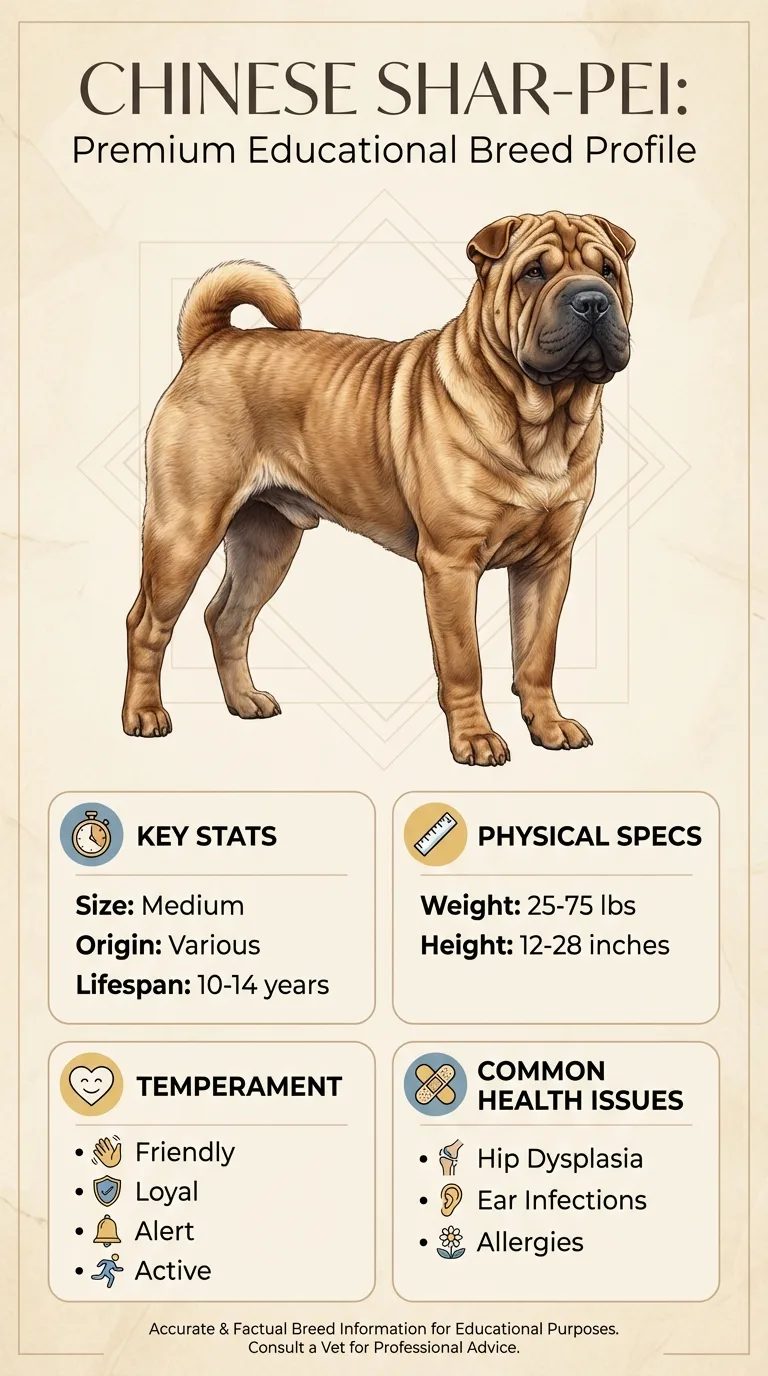
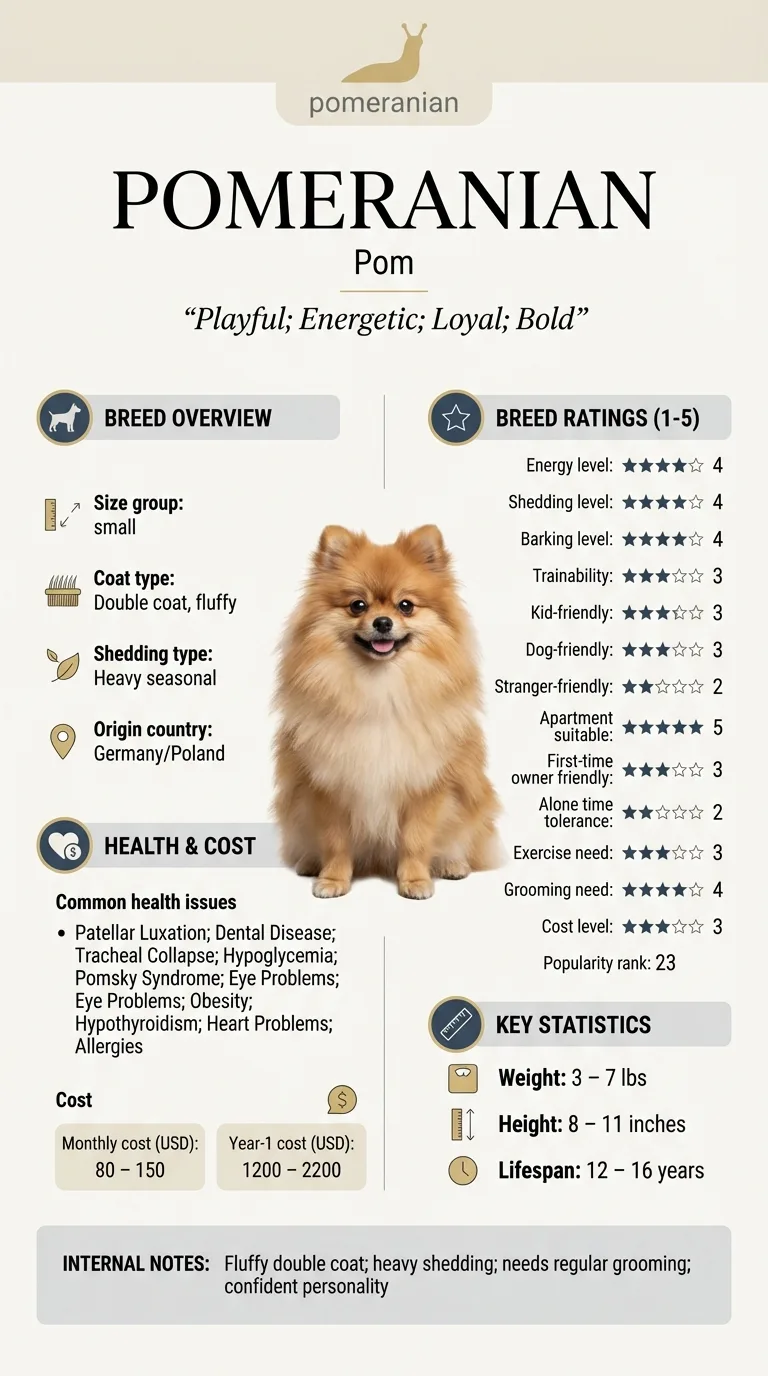
This is for someone already down to Chinese Shar-Pei and Pomeranian and deciding between them. For this pair the decision usually turns on grooming need and energy level, so those are covered first and in most detail. Anyone choosing from a flat has a clear answer here: Pomeranian rates 5/5 against 4/5. It is written for the decision rather than the breed history.
Between Chinese Shar-Pei and Pomeranian, grooming need is what separates them, and Chinese Shar-Pei is the lower-effort dog of the two to keep.
Choose Chinese Shar-Pei if you do not want a standing grooming appointment, shedding is a problem in your house and your walking routine is modest.
Choose Pomeranian if you are in a flat or a smaller home, this is your first dog and you already have another dog.
| Feature | chinese shar pei | pomeranian | Winner |
|---|---|---|---|
| Size class | medium | small | Equal |
| Weight | 45–60 lbs | 3–7 lbs | Equal |
| Height | 18–20 in | 8–11 in | Equal |
| Lifespan | 8–12 years | 12–16 years | pomeranian |
| Exercise need | Low (2/5) | Moderate (3/5) | chinese shar pei |
| Grooming need | Low (2/5) | High (4/5) | chinese shar pei |
| Shedding | Low (2/5) | High (4/5) | chinese shar pei |
| Energy level | Low (2/5) | High (4/5) | Equal |
| Barking | Low (2/5) | High (4/5) | chinese shar pei |
| Apartment suitability | High (4/5) | Very high (5/5) | pomeranian |
| Good for first-time owners | Low (2/5) | Moderate (3/5) | pomeranian |
| Tolerates being alone | Moderate (3/5) | Low (2/5) | chinese shar pei |
| Trainability | Low (2/5) | Moderate (3/5) | pomeranian |
| Good with kids | Moderate (3/5) | Moderate (3/5) | Equal |
| Good with other dogs | Low (2/5) | Moderate (3/5) | pomeranian |
| Friendly to strangers | Low (2/5) | Low (2/5) | Equal |
| Cost level | High (4/5) | Moderate (3/5) | pomeranian |
| Coat | Short and harsh | Double coat, fluffy | Equal |
| Origin | Various | Germany/Poland | Equal |
| Typical monthly cost | $100–$200 | $80–$150 | Equal |
| Typical first-year cost | $1,400–$2,900 | $1,200–$2,200 | Equal |
A Pomeranian can weigh as little as 3 pounds — a fraction of even the low end of the Shar-Pei's 45-to-60-pound range — and stands just 8 to 11 inches against 18 to 20. Both breeds trace back to spitz-type ancestry in some form, but they ended up worlds apart: the Pomeranian bred down repeatedly for size until it became a fluffy toy companion, while the Shar-Pei stayed a solidly built medium dog valued for guarding. The size gap alone means completely different gear — a harness sized for a Pomeranian would look like a bracelet next to the Shar-Pei's collar.
The Pomeranian is surprisingly high-energy for its size, rated High, 4/5, well above the Shar-Pei's Low, 2/5, and needs Moderate, 3/5, exercise against the Shar-Pei's Low, 2/5. Despite weighing under 10 pounds, a Pomeranian is known for near-constant motion indoors — trotting, spinning, alert-barking at passersby — that can rival much larger dogs' activity levels. The Shar-Pei stays genuinely low-key by comparison, content with a short walk and a long nap. An owner expecting the Pomeranian's tiny size to mean low energy is often surprised by how much livelier it is day to day than the far bigger Shar-Pei.
The Pomeranian's fluffy double coat rates High, 4/5, for both grooming and shedding — that famous "poof" needs regular brushing to prevent matting and still leaves fur behind despite the effort. The Shar-Pei's short, harsh coat needs only Low, 2/5, attention on both fronts. It's a clear case of appearances being misleading: the small, glamorous-looking Pomeranian is actually the higher-maintenance coat of the two, while the larger, more textured-looking Shar-Pei turns out to be the wash-and-go option. Anyone drawn to the Pomeranian's looks should budget real brushing time into the weekly routine.
Both breeds suit small spaces, with the Pomeranian rating even higher at Very High, 5/5, apartment suitability against the Shar-Pei's High, 4/5. But that convenience comes with tradeoffs: the Pomeranian barks at a High, 4/5, rate — a genuine consideration for anyone with close neighbors — compared with the Shar-Pei's Low, 2/5. The Pomeranian also tolerates being alone worse, Low 2/5 against the Shar-Pei's Moderate 3/5, making it more prone to anxious barking when left by itself. A working owner in a shared building might find the larger, quieter, more independent Shar-Pei the more realistic choice despite the Pomeranian's smaller footprint.
The Pomeranian rates Moderate, 3/5, on both trainability and first-time-owner suitability, a step up from the Shar-Pei's Low, 2/5, on both measures, though not the dramatic gap seen with some other toy breeds. Its playful, bold, loyal temperament makes it responsive to training when it's motivated, but Pomeranians are also known for a stubborn streak and a tendency toward small-dog syndrome if boundaries aren't set early. The Shar-Pei's independent, reserved nature makes consistent training a longer project regardless of owner experience. Neither breed is the easiest first dog, but the Pomeranian offers a somewhat gentler learning curve.
With kids, the two tie at Moderate, 3/5 — the Shar-Pei because of its reserved temperament, the Pomeranian because of how easily a small dog can be injured during rough play. Friendliness to strangers also ties, Low 2/5 for both, an unusual point of agreement between an otherwise very different pair. The Pomeranian does edge out the Shar-Pei with other dogs, Moderate 3/5 against Low 2/5, though neither breed is naturally the most sociable at the dog park. Overall, this pair is more alike in household temperament than most Shar-Pei comparisons, both favoring calmer, more controlled social settings.
The Pomeranian's 12-to-16-year lifespan comfortably beats the Shar-Pei's 8-to-12, even though its health list runs twice as long at ten conditions against five. Tracheal Collapse and Patellar Luxation are common toy-breed joint and airway issues, while Pomsky Syndrome — a coat and pigmentation disorder despite the misleading name — is more breed-specific. Hypothyroidism appears on both breeds' lists, one of the few points of overlap. The Shar-Pei's shorter, skin-focused list includes Skin Fold Dermatitis and Entropion, conditions the Pomeranian doesn't share at all. Smaller size generally correlates with longer life in dogs, and this pair fits that pattern clearly.
The Pomeranian is the cheaper breed to keep: a Moderate, 3/5, overall cost rating against the Shar-Pei's High, 4/5, with monthly costs of $80 to $150 versus $100 to $200, and a first-year range of $1,200 to $2,200 compared with $1,400 to $2,900. Its small size keeps food costs down despite its High grooming needs, while the Shar-Pei's larger frame and skin-fold care push its numbers higher across the board. Given the Pomeranian's longer lifespan too, the cumulative cost difference over a dog's full life likely favors the smaller breed by an even wider margin than the first-year numbers alone suggest.
Chinese Shar-Pei weighs 45–60 lbs and lives 8–12 years; Pomeranian weighs 3–7 lbs and lives 12–16 years. The two diverge most on grooming need, energy level and shedding and 1 other rated axes. They are level on good with kids and friendly to strangers, so those cannot decide it. In the table, a "winner" means easier for an ordinary household — not better. Size, coat and origin are recorded without a verdict. Because both breeds are scored the same way, the gaps are reliable even where the absolute numbers are rough.

Yes — it rates High (4/5) energy against the Shar-Pei's Low (2/5), a surprising gap given the size difference between them.
The Pomeranian, rated High (4/5) for both grooming and shedding, versus the Shar-Pei's Low (2/5) on both.
Yes, rated High (4/5), notably more than the Shar-Pei's Low (2/5) barking rating.
The Shar-Pei, rated Moderate (3/5) versus the Pomeranian's Low (2/5).
12 to 16 years, well beyond the Shar-Pei's 8 to 12 year lifespan.
The Pomeranian, rated Moderate (3/5) cost versus the Shar-Pei's High (4/5), with a lower first-year range of roughly $1,200-$2,200 versus $1,400-$2,900.
Yes, Tracheal Collapse is one of ten conditions on its health list, a common concern in small toy breeds with delicate airways.
The Pomeranian, rated High (4/5) energy versus the Shar-Pei's Low (2/5).
The Pomeranian, rated High (4/5) versus the Shar-Pei's Low (2/5).
The Pomeranian, at 12-16 years versus the Shar-Pei's 8-12 years.
The Pomeranian, rated Moderate (3/5) cost versus the Shar-Pei's High (4/5).
Secure checkout on Stripe. We never see your card.
7-day money-back guarantee. Instant access.
Health information here is general and is not veterinary advice. If your dog shows pain, sudden behaviour change, or worsening symptoms, consult a licensed veterinarian.
Some links on this site are affiliate links. We may earn a commission at no extra cost to you, and we only suggest products we believe are helpful for dog owners.
We research and check what we publish, but we do not warrant that any figure, date, price, or statement is accurate, complete, or current, and we accept no liability for any loss, cost, injury, or other harm arising from the use of this site. Use it as one reference among several. You remain responsible for your own decisions and for your dog's care - confirm anything that matters with a licensed veterinarian or another qualified professional before you act on it. Full disclaimer.
Match your lifestyle to the right dog.
Take quizNot sure which breed is right for you? Take our 2-minute quiz to find out.
Take the quiz