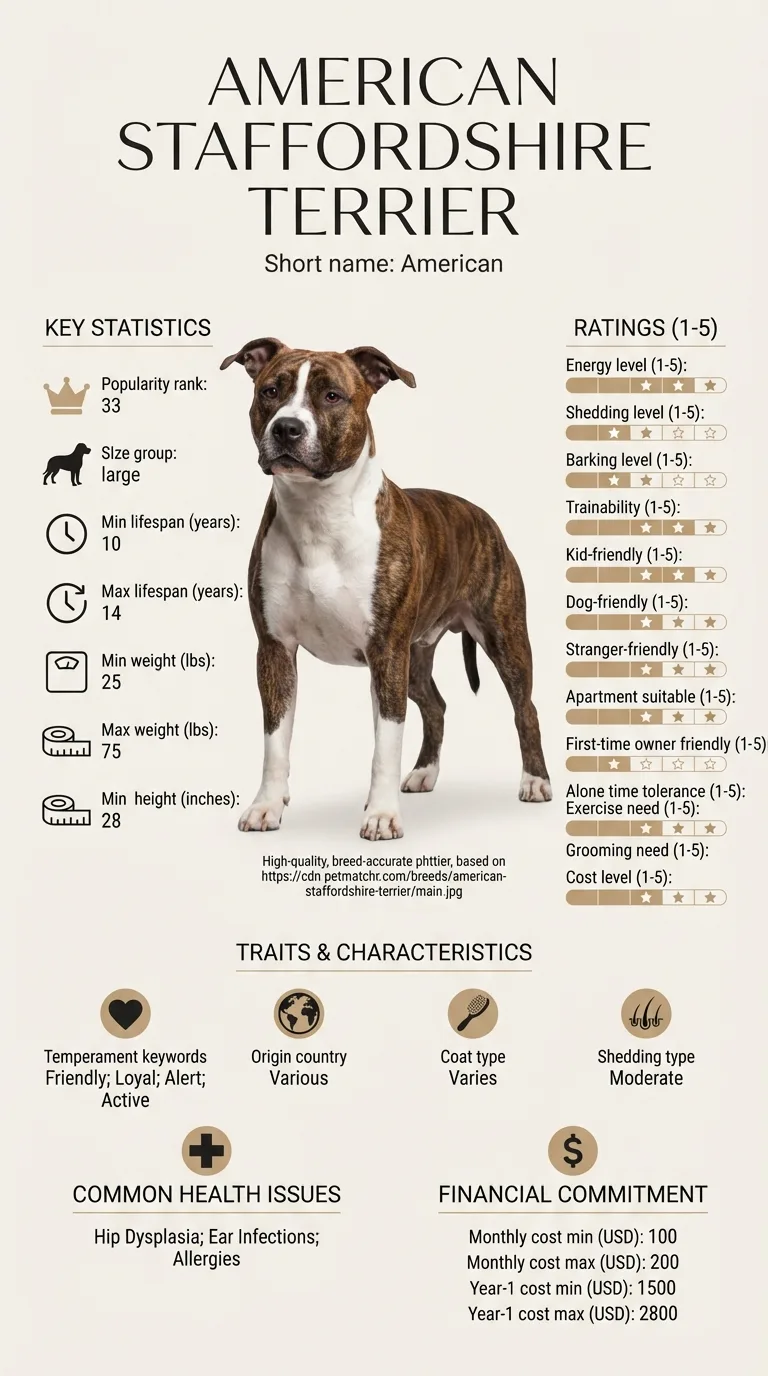
American Staffordshire Terrier Intervertebral Disc Disease (IVDD) Type I
Quick answer
What are quick tips for managing American Staffordshire Terrier intervertebral disc disease (IVDD) type I?
Keep your dog at a healthy weight, minimize jumping, and provide a comfortable resting area. Regular vet visits are crucial for monitoring their condition.
American Staffordshire Terrier intervertebral disc disease (IVDD) type I is a serious condition that affects your dog's spine. This disease can lead to pain and mobility issues due to herniated discs pressing on the spinal cord.
Owners of American Staffordshire Terriers are often the ones who face this problem. It can be particularly challenging for first-time dog owners or those with busy lifestyles. Many might not recognize the signs of IVDD type I until their dog shows severe discomfort or difficulty moving.
Important reminder
This guide is not medical advice. If your dog shows pain, sudden behavior change, or worsening symptoms, consult a licensed veterinarian.
Some links may be affiliate links. We may earn a commission at no extra cost to you. We only suggest products we believe are helpful for dog owners.
We research and check what we publish, but we do not warrant that any figure, date, price, or statement is accurate, complete, or current, and we accept no liability for any loss, cost, injury, or other harm arising from the use of this site. Use it as one reference among several. You remain responsible for your own decisions and for your dog's care - confirm anything that matters with a licensed veterinarian or another qualified professional before you act on it. Full disclaimer.
Check this first
When American Staffordshire Terrier Intervertebral Disc Disease (IVDD) Type I is an Emergency
Recognizing when your American Staffordshire Terrier's intervertebral disc disease (IVDD) type I is an emergency is crucial. Some signs are red flags that require immediate veterinary attention. Others can be monitored at home with a watchful eye and a plan.
Call your vet right away if your dog experiences severe pain, sudden paralysis, or difficulty walking. These symptoms may indicate a serious condition that could worsen without prompt treatment. Additionally, if your dog is unable to control bowel or bladder functions, this is a sign that immediate action is necessary.
In less severe cases, such as mild pain or slight mobility issues, you can monitor your dog at home. Keep an eye on their symptoms and ensure they are comfortable. If the condition doesn't improve or worsens over a few days, it's time to consult your vet. Keeping a journal of your dog’s behaviors and symptoms can help in discussions with your veterinarian, allowing for a better assessment of your dog's health status.
If any of these apply, call your vet or an emergency clinic now. The rest of this page is for the cases that are not an emergency.
What this problem looks like
American Staffordshire Terrier intervertebral disc disease (IVDD) type I is a painful condition where herniated discs press on the spinal cord. This often leads to symptoms like difficulty walking, pain, and even paralysis in severe cases. It's essential to recognize these signs early to prevent further complications.
Common triggers
Genetic predisposition from breeding practices.
Excessive jumping or rough play that strains the back.
Obesity, which adds extra pressure on the spine.
Intervertebral disc disease type I is relatively common in American Staffordshire Terriers, especially as they age. While not every dog will experience this issue, owners should be aware of the risks and monitor their pets for any signs of discomfort.
Why this happens
Breed factors
The American Staffordshire Terrier is a large breed that can be predisposed to intervertebral disc disease (IVDD) due to genetics. Their size and structure mean that their spinal discs face more stress, making them vulnerable to herniation. Additionally, certain movements and activities can increase the risk of injury.
Environment factors
Environmental factors can also play a role in the development of IVDD. For example, a lack of proper exercise can weaken the muscles supporting the spine. Likewise, high-impact activities or sudden movements can exacerbate the issue, especially in an unconditioned dog.
What you can do at home (once it is not an emergency)
When to talk to your vet
If your American Staffordshire Terrier shows signs of pain, such as yelping, reluctance to move, or difficulty walking, it's essential to consult your vet. Early intervention can help manage the condition and prevent further complications.
At home, alongside your vet's plan
Maintain a healthy weight for your American Staffordshire Terrier. Excess weight can put added pressure on the spine.
Provide low-impact exercise, such as short walks or swimming, to keep your dog active without stressing their back.
Create a safe environment by removing hazards that could lead to jumps or falls, such as stairs or slippery surfaces.
Use ramps or steps to help your dog get on furniture or into the car to avoid excessive strain on their back.
Mistakes that make Intervertebral Disc Disease (IVDD) Type I worse
Certain common behaviors can unintentionally worsen your American Staffordshire Terrier's intervertebral disc disease (IVDD) Type I. Here are some mistakes to avoid and safer alternatives to consider.
Ignoring early signs of pain: Many owners dismiss subtle changes in their dog's behavior, like reluctance to jump or play. Instead, consult your vet at the first sign of discomfort.
Over-exercising: While exercise is essential, too much can strain your dog's back. Stick to moderate walks and avoid high-impact activities.
Using improper lifting techniques: Lifting your dog improperly can worsen back issues. Always support their rear and front when picking them up.
Neglecting weight management: Obesity can exacerbate IVDD symptoms. Ensure your dog maintains a healthy weight through diet and regular, controlled exercise.
Skipping prescribed rest: Some owners underestimate the importance of rest during recovery. Follow your vet's advice on rest periods to prevent further injury.
Not adjusting the home environment: Failing to create a dog-friendly space can lead to accidents. Use ramps or steps to help your dog navigate furniture safely.
Ignoring physical therapy: Some owners shy away from physical therapy due to costs. However, vet-recommended therapies can significantly aid recovery.
More American Staffordshire Terrier health & behavior issues
Managing American Staffordshire Terrier intervertebral disc disease (IVDD) type I can take several weeks to months. Initial improvements may be seen within a few weeks of implementing treatment strategies, but full recovery can vary based on the dog's condition and response to treatment.
Success looks like your dog regaining mobility, experiencing less pain, and showing improved overall quality of life. You'll notice them returning to their favorite activities, such as walks or playing, without signs of distress.
Max's Journey to Recovery
When Sarah adopted Max, her lively American Staffordshire Terrier, she quickly noticed something was off. After a few months, he started limping and showed reluctance to jump on the couch. A vet diagnosed him with intervertebral disc disease (IVDD) type I. Determined to help him, Sarah followed a strict regimen of physical therapy, medication, and adjustments to Max’s exercise routine. Over several weeks, she gradually introduced short walks and gentle stretches. To her relief, Max began to show improvement, and soon enough, he was back to his playful self, chasing after toys in the backyard.
Key takeaway: Consistency in treatment and understanding your dog’s needs are crucial for recovery from IVDD. Regular vet check-ups and a tailored exercise plan can lead to significant improvements.
Frequently asked questions
Why does my American Staffordshire Terrier have intervertebral disc disease (IVDD) type I?
Intervertebral disc disease (IVDD) type I in American Staffordshire Terriers can occur due to genetic predispositions, age, or injury. The disease involves herniated discs that press on the spinal cord, causing pain and mobility issues. Regular vet check-ups can help detect early signs. This answer relates to American Staffordshire Terrier intervertebral disc disease (ivdd) type i.
How can I stop my American Staffordshire Terrier from developing IVDD type I?
While you can't completely prevent IVDD type I, you can reduce the risk by maintaining a healthy weight and limiting high-impact activities. Providing a supportive environment, like a soft bed, and avoiding jumping can also help protect their spine.
What treatments are available for IVDD type I in American Staffordshire Terriers?
Treatment options for IVDD type I range from strict rest and medication to manage pain, to surgical intervention in severe cases. Your vet will recommend the best course of action based on your dog's specific condition and needs.
Can training help my American Staffordshire Terrier with IVDD type I?
Yes, training can be beneficial. Focus on low-impact activities and gentle exercises that strengthen their core without straining their back. Always work under the guidance of a vet or a certified trainer experienced with IVDD.
What are the early signs of intervertebral disc disease (IVDD) type I in my American Staffordshire Terrier?
Early signs of intervertebral disc disease (IVDD) type I can include a reluctance to jump or climb stairs, changes in walking or running, and signs of pain when touched along the spine. If you notice these symptoms, it's crucial to consult your vet promptly for an evaluation.
Can intervertebral disc disease (IVDD) type I affect older American Staffordshire Terriers differently?
Yes, older American Staffordshire Terriers may experience intervertebral disc disease (IVDD) type I more severely due to age-related degeneration. They might face increased challenges with mobility, so regular check-ups with a vet are essential for monitoring their spine health.
How can I help my American Staffordshire Terrier manage pain from IVDD type I?
To help manage pain from intervertebral disc disease (IVDD) type I, your vet might recommend medications, physical therapy, or even changes in your dog's environment. Keeping your dog calm and limiting strenuous activities can also help alleviate discomfort.
Are there specific training methods for an American Staffordshire Terrier with IVDD type I?
Training an American Staffordshire Terrier with intervertebral disc disease (IVDD) type I should focus on gentle obedience exercises that do not strain their back. Positive reinforcement techniques are effective, and consider consulting a trainer experienced with dogs facing mobility challenges.
Is surgery always necessary for intervertebral disc disease (IVDD) type I in American Staffordshire Terriers?
Not always. Surgery for intervertebral disc disease (IVDD) type I may be necessary in severe cases, but many dogs improve with conservative treatments like rest, medication, and physical therapy. Always discuss the best approach with your veterinarian based on your dog's specific condition.
What are quick tips for managing American Staffordshire Terrier intervertebral disc disease (IVDD) type I?
Keep your dog at a healthy weight, minimize jumping, and provide a comfortable resting area. Regular vet visits are crucial for monitoring their condition.
Training
How can I train my American Staffordshire Terrier with IVDD type I?
Focus on low-impact training activities that promote mobility without stress on the spine. Use positive reinforcement to encourage gentle behaviors.
Costs
What costs should I expect for treating IVDD type I in my American Staffordshire Terrier?
Treatment costs can vary widely, ranging from $500 for medication and rest to over $5,000 for surgical options. It's wise to discuss potential expenses with your vet.
American Staffordshire Terrier separation anxiety guide – Understand how to identify and address separation anxiety in American Staffordshire Terriers.
How to stop American Staffordshire Terrier intervertebral disc disease (ivdd) type i – Find out how to prevent and manage IVDD in your American Staffordshire Terrier effectively.
Bring the right questions to the vet
A one-page prep sheet for this condition: the signs, the questions to ask, what to get priced. Unlocks here.
You get: Vet visit prep sheet
No spam. One-click unsubscribe. See our privacy policy.
A fuller vet-visit kit for American Staffordshire Terrier Intervertebral Disc Disease Ivdd Type I
The free prep sheet covers the same-day warning signs, a symptom log and the questions to ask. We are considering a fuller kit that adds a cost worksheet for the usual tests and treatments (US price ranges with their sources) and a plain-English guide to ways of covering the bill. It is not built yet; this list tells us whether it is worth building.
One email, no spam, unsubscribe anytime. Information only, not veterinary advice.