Health
What's this breed's actual documented eye condition?
Entropion, an eyelid rolling inward due to excess facial skin.

Quick answer
What's this breed's actual documented eye condition?
Entropion, an eyelid rolling inward due to excess facial skin.
One documented condition explains most of what actually goes wrong with this breed's eyes — understanding it clearly does more good than worrying about a long list of separate diagnoses.
New owners trying to get oriented on what to actually watch for, and existing owners who've encountered one eye issue and want to understand how it might relate to others down the line.
This guide is not medical advice. If your dog shows pain, sudden behavior change, or worsening symptoms, consult a licensed veterinarian.
Some links may be affiliate links. We may earn a commission at no extra cost to you. We only suggest products we believe are helpful for dog owners.
We research and check what we publish, but we do not warrant that any figure, date, price, or statement is accurate, complete, or current, and we accept no liability for any loss, cost, injury, or other harm arising from the use of this site. Use it as one reference among several. You remain responsible for your own decisions and for your dog's care - confirm anything that matters with a licensed veterinarian or another qualified professional before you act on it. Full disclaimer.
Entropion is the single documented eye condition for the Chinese Shar-Pei, driven by this breed's abundant facial skin. Most other eye problems owners encounter in this breed either stem from untreated entropion's downstream effects or are separate, non-documented conditions that happen to look similar and require an accurate exam to distinguish.
Entropion is a well-documented, common issue for this breed. Its downstream complications — scarring, chronic irritation, occasionally secondary glaucoma — are correspondingly more likely here than in breeds without this documented predisposition.
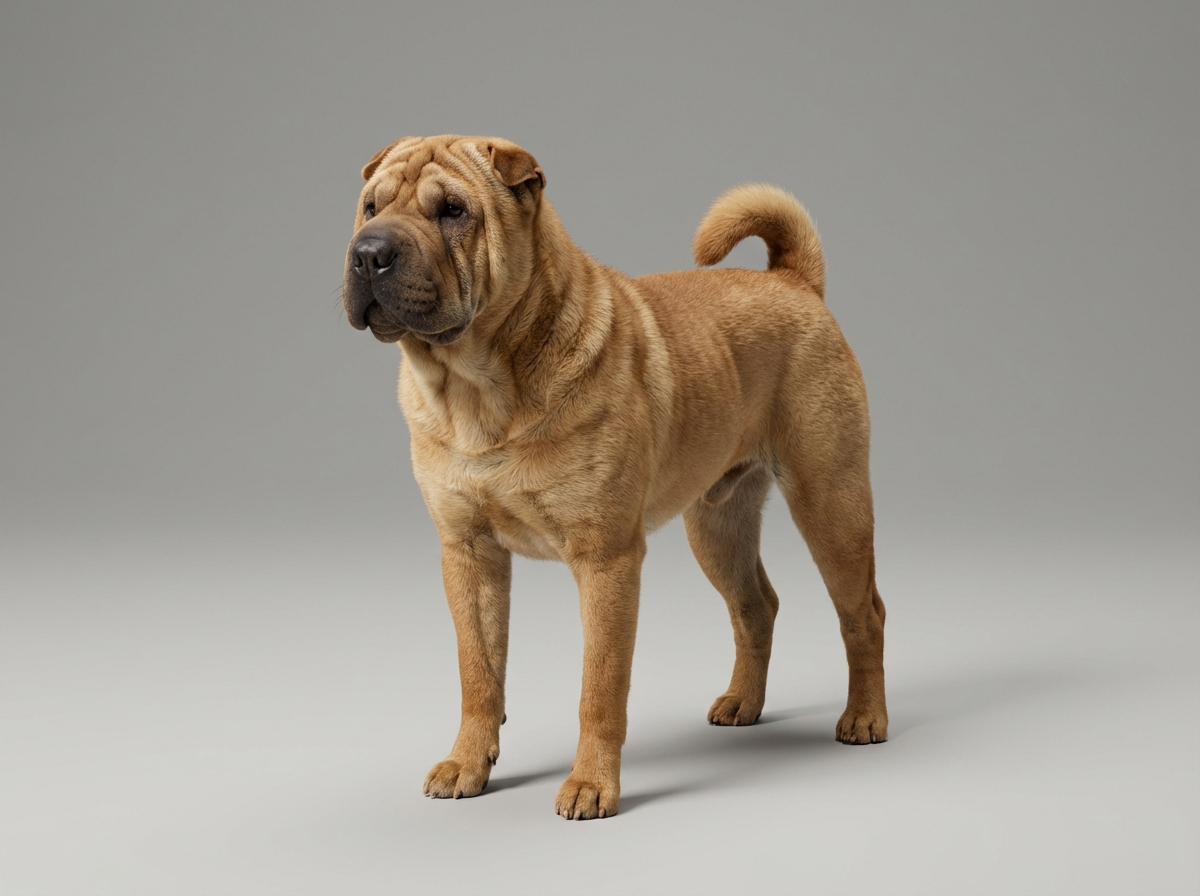
This breed's documented trait of carrying more facial skin than its frame technically requires is the direct cause of entropion, and by extension, most of the other eye complications owners in this breed actually encounter.
How early entropion is identified and corrected has a major effect on whether downstream complications develop, making treatment timing the most significant environmental and management factor here.
See your vet for squinting, visible eyelid rolling, excessive tearing, redness, or any new cloudiness — these can indicate entropion or one of its downstream effects and generally don't resolve without appropriate treatment.
See all Chinese Shar PEI health problems, which breeds are prone to eye disorders, or the full Chinese Shar PEI breed guide for temperament, exercise needs and ownership costs.
Entropion correction, when needed, typically involves one to two weeks of recovery. Downstream complications like corneal scarring are usually permanent once they've developed, making early correction the more favorable path.
Success looks like entropion caught and corrected early, preventing the downstream eye complications that come from years of untreated irritation.
Entropion is the hub. Because this breed's documented facial structure carries more skin than a typical dog's frame requires, the eyelid margin is prone to rolling inward, causing fur and eyelashes to rub against the eye's surface. Left uncorrected over months or years, that friction is the leading documented-adjacent cause of corneal scarring, chronic tearing, and secondary irritation in this breed — conditions that can look like separate diagnoses but usually share this same root cause.
Other eye conditions sometimes discussed for this breed — cherry eye, true corneal dystrophy, cataracts, glaucoma — aren't independently documented here. Some of them, like secondary glaucoma, can occur as a downstream consequence of long-untreated entropion damage. Others, like true corneal dystrophy or cataracts, are genuinely unrelated conditions that happen to produce a similarly cloudy appearance, requiring a vet to distinguish accurately.
Since entropion is the central, documented concern, here's a routine built around catching it and its downstream effects early.

If you think your Chinese has eye disorders, the plan is three steps: write down what you have seen and when it started, book a veterinary appointment rather than waiting for the next flare, and take video of the behaviour or symptom before you go — the thing you are worried about rarely happens in the consulting room. Screening in the parents covers skin fold dermatitis, entropion, familial shar-pei fever.
What the vet visit should produce is a diagnosis and a written plan, not just reassurance: what is being ruled out, what the monitoring interval is, and which signs mean you come back sooner. Ask what the treatment costs across a year rather than per visit, because that is the number that decides whether you are managing this condition or reacting to it.
Between appointments, keep a short log — dates, what you saw, what changed. It is the single most useful thing an owner brings to a follow-up, and for eye disorders it is often what separates a clear pattern from a guess.
Odalys had dealt with her Shar-Pei Sable's occasional eye redness for years, treating each flare as a separate, unrelated issue. At a comprehensive senior wellness exam, her vet took the time to walk through the full picture: mild entropion had been present for years, driving the recurring irritation, which had gradually caused some corneal scarring in one eye. Understanding the connection for the first time, Odalys opted for entropion correction rather than continuing to treat each flare individually. Sable's eye comfort improved noticeably, and no new scarring has developed since.
Key takeaway: Treating each eye flare as a separate mystery misses the bigger, documented picture — one core condition often explains a string of issues that look unrelated at first glance.
Entropion — the eyelid rolling inward due to this breed's abundant facial skin. Most other eye issues owners encounter in this breed relate back to or are commonly confused with this one condition.
Yes, chronic irritation from untreated entropion is the documented-adjacent pathway toward corneal scarring, chronic tearing, and in more severe, prolonged cases, secondary glaucoma.
No, neither is part of this breed's documented health profile. Both can look similar to entropion-related corneal scarring, which is why an accurate vet exam matters when a cloudy eye appears.
No, cherry eye is an anatomically distinct condition — a prolapsed third eyelid gland — unrelated to entropion, and it isn't documented as an elevated risk for this breed either.
At every routine wellness visit at minimum, with more frequent checks if entropion or related irritation has already been diagnosed or is suspected.
Entropion correction is a fairly common surgical need for this breed given how directly it's tied to documented facial structure, more so than for most other breeds.
Catching entropion early and correcting it if needed, since most of this breed's other eye complications trace back to the downstream effects of that one condition left unaddressed.
Entropion, an eyelid rolling inward due to excess facial skin.
Yes, entropion and its downstream irritation explain most of what owners actually encounter.
Weekly at home, and at every routine vet visit as a standard part of the exam.
Entropion correction is a relatively common surgical need given this breed's documented facial structure.
Yes, chronic irritation can make a calm dog more withdrawn or reluctant to be touched near the face.
A one-page prep sheet for this condition: the signs, the questions to ask, what to get priced. Unlocks here.
You get: Vet visit prep sheet
No spam. One-click unsubscribe. See our privacy policy.
See a sample page before you decide.
Early access list
The free prep sheet covers the same-day warning signs, a symptom log and the questions to ask. We are considering a fuller kit that adds a cost worksheet for the usual tests and treatments (US price ranges with their sources) and a plain-English guide to ways of covering the bill. It is not built yet; this list tells us whether it is worth building.
One email, no spam, unsubscribe anytime. Information only, not veterinary advice.