Health
What causes a traumatic kneecap dislocation in an active dog?
A sudden twisting motion, hard landing, or collision during high-speed activity like field work or intense play.

Quick answer
What causes a traumatic kneecap dislocation in an active dog?
A sudden twisting motion, hard landing, or collision during high-speed activity like field work or intense play.
Your Brittany was fine yesterday, sprinting after a bird, and today it's holding up a back leg after an awkward landing. That's a very different story from a lifelong developmental issue.
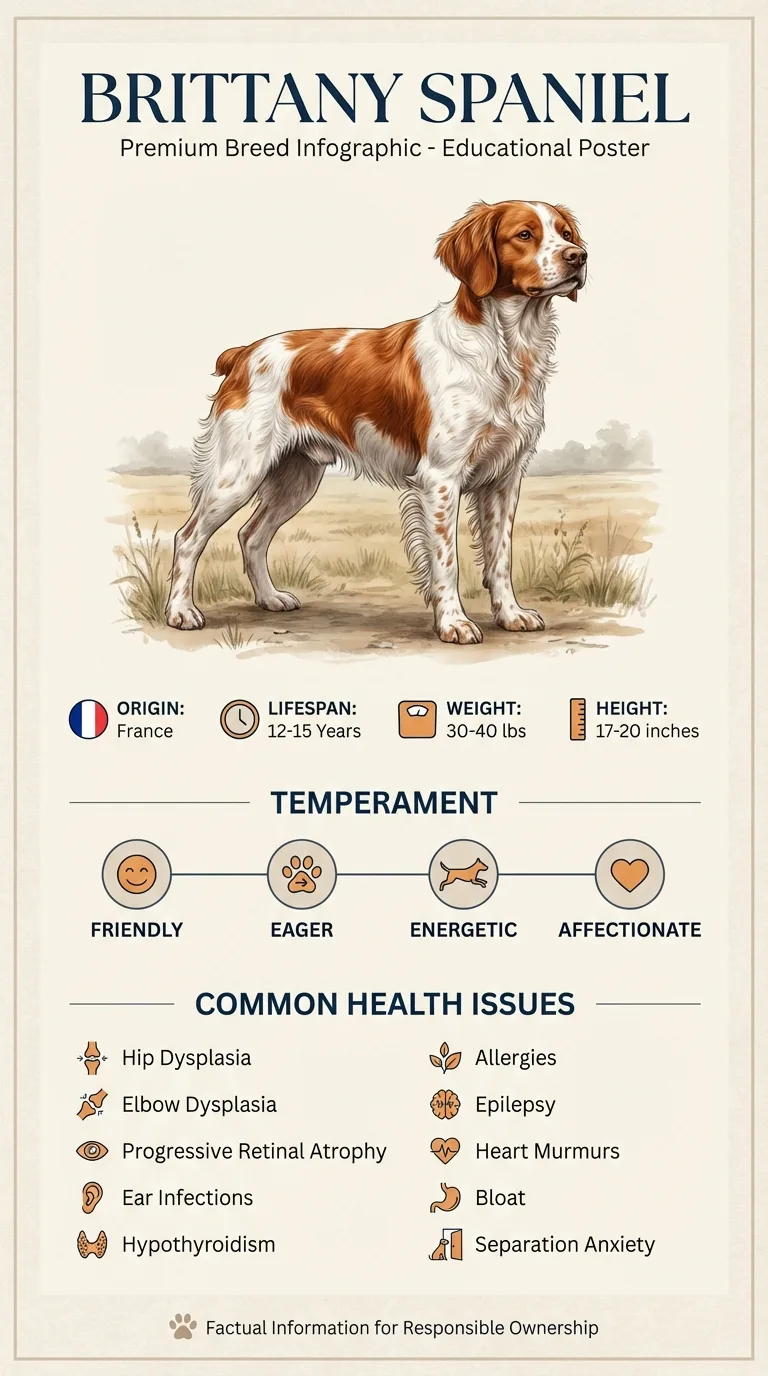
Owners of actively worked hunting and field-trial Brittanys face this most directly, since the terrain and intensity of that work create real opportunities for a sudden twisting injury that a more sedentary dog's knee would likely never encounter.
This guide is not medical advice. If your dog shows pain, sudden behavior change, or worsening symptoms, consult a licensed veterinarian.
Some links may be affiliate links. We may earn a commission at no extra cost to you. We only suggest products we believe are helpful for dog owners.
We research and check what we publish, but we do not warrant that any figure, date, price, or statement is accurate, complete, or current, and we accept no liability for any loss, cost, injury, or other harm arising from the use of this site. Use it as one reference among several. You remain responsible for your own decisions and for your dog's care - confirm anything that matters with a licensed veterinarian or another qualified professional before you act on it. Full disclaimer.
Traumatic patellar luxation is a sudden kneecap dislocation caused by injury to a previously healthy knee, distinct from the congenital form that develops from birth. For a breed built around sustained, high-speed field activity across varied and sometimes unpredictable terrain, this traumatic route is a genuinely realistic risk, separate from any developmental joint tendency.
This traumatic form isn't a documented breed-wide predisposition the way congenital patellar luxation is in some other breeds, but it's a realistic, activity-driven injury risk for any Brittany regularly doing sustained field work or high-intensity play.
Brittanys are built and bred for sustained, high-speed work across open and often uneven field terrain, which creates genuine physical opportunities for a sudden twisting knee injury that a lower-activity breed's joints would rarely be exposed to.
The specific terrain, intensity, and conditioning level of a dog's regular activity heavily influence this risk. A dog gradually conditioned for field work with good overall fitness is generally less prone to sudden traumatic injury than one pushed into intense activity without a fitness base.
Seek same-day or next-day veterinary evaluation for sudden lameness following a specific incident, especially with visible swelling, reluctance to bear weight, or obvious pain, rather than waiting to see if it resolves on its own.
See all Brittany health problems, which breeds are prone to patellar luxation, or the full Brittany breed guide for temperament, exercise needs and ownership costs.
Mild strains may improve within a couple of weeks of rest and anti-inflammatory management. More significant ligament damage requiring surgical repair typically involves a recovery and rehabilitation period of two to three months before a full return to intense activity.
Success looks like a full, stable recovery confirmed by your vet before returning to field work, and a conditioning routine that reduces the likelihood of a repeat injury during future seasons.
A healthy kneecap sits securely in its groove, held by surrounding ligaments and tendons under normal use. A sudden, forceful twisting motion, common when a dog changes direction sharply at speed, lands awkwardly from a jump, or gets a leg caught while crashing through brush, can stretch or tear the supporting soft tissue enough to let the kneecap pop out of alignment, sometimes toward the outside of the leg rather than the classic inward direction seen in congenital cases.
This traumatic form often comes with more visible, acute pain and swelling than a mild congenital case, since it involves actual soft tissue damage rather than a lifelong structural variation the dog has adapted around.
None of these are unique to Brittanys, but they're genuinely more likely to occur in a breed regularly doing sustained, high-speed field work across varied terrain than in a breed that mostly walks on leash.

If you think your Brittany has patellar luxation, the plan is three steps: write down what you have seen and when it started, book a veterinary appointment rather than waiting for the next flare, and take video of the behaviour or symptom before you go — the thing you are worried about rarely happens in the consulting room. Screening in the parents covers hip dysplasia, elbow dysplasia, progressive retinal atrophy.
What the vet visit should produce is a diagnosis and a written plan, not just reassurance: what is being ruled out, what the monitoring interval is, and which signs mean you come back sooner. Ask what the treatment costs across a year rather than per visit, because that is the number that decides whether you are managing this condition or reacting to it.
Between appointments, keep a short log — dates, what you saw, what changed. It is the single most useful thing an owner brings to a follow-up, and for patellar luxation it is often what separates a clear pattern from a guess.
Duke, a four-year-old Brittany working a pheasant field, took a hard landing after jumping a low fence and immediately came up holding his left hind leg. His owner noticed visible swelling within the hour and got him to a vet the same day. Examination confirmed a traumatic lateral patellar luxation with some ligament strain, but no full tear. Duke was placed on strict rest and anti-inflammatory medication for three weeks, followed by a gradual return to activity over the following month. His owner now builds a two-week conditioning ramp-up before each hunting season, rather than starting Duke at full intensity on day one, and he hasn't had a repeat injury in the two seasons since.
Key takeaway: A sudden, obvious injury during hard activity is a different problem from a lifelong developmental knee issue, and it responds well to a proper recovery period plus better conditioning going forward.
A traumatic dislocation happens suddenly in a previously normal knee, often with visible pain and swelling, whereas a congenital case develops gradually from a structural variation present since birth and often causes only intermittent, milder symptoms.
Many dogs do recover well with appropriate treatment, which may range from rest and supportive care for a mild strain to surgical repair for more significant ligament damage.
Full recovery and vet clearance should come before returning to high-intensity activity, and your vet may recommend a gradual return-to-activity plan rather than jumping straight back to full field intensity.
A sudden onset with clear pain, swelling, and reluctance to bear weight after a specific incident points toward trauma, whereas a pattern that's been present intermittently since puppyhood suggests the developmental form.
Depending on severity, treatment can range from rest, anti-inflammatory medication, and controlled activity, to surgical repair of torn supporting ligaments if the joint remains unstable.
It's possible, particularly if the dog returns to high-intensity activity before the joint has fully healed and regained stability, which is why a gradual, vet-guided return to work matters.
A sudden twisting motion, hard landing, or collision during high-speed activity like field work or intense play.
No, this form involves injury to a previously normal knee, distinct from the developmental version present since birth.
It ranges from a few hundred dollars for conservative management to a few thousand for surgical repair, depending on severity.
Yes, following your vet's specific recovery timeline before resuming intense field activity is important to avoid re-injury.
Often yes, more so than with a mild congenital case, since traumatic injuries typically involve real soft tissue damage and acute discomfort.
A one-page prep sheet for this condition: the signs, the questions to ask, what to get priced. Unlocks here.
You get: Vet visit prep sheet
No spam. One-click unsubscribe. See our privacy policy.
Preview page 1 before you decide.