Costs
Brittany cost in Kansas City
About $82–$155/month, $1,200–$2,150 for year one — below average, with real Flint Hills quail country and one of the country's largest urban park systems nearby.

See Brittany price across all cities →
Quick answer
Brittany cost in Kansas City
About $82–$155/month, $1,200–$2,150 for year one — below average, with real Flint Hills quail country and one of the country's largest urban park systems nearby.
A Brittany Spaniel in Kansas City costs about $82–$155 a month, with the first year around $1,200–$2,150 — below the national average, with real bird-hunting country and an unusually large urban park system nearby.
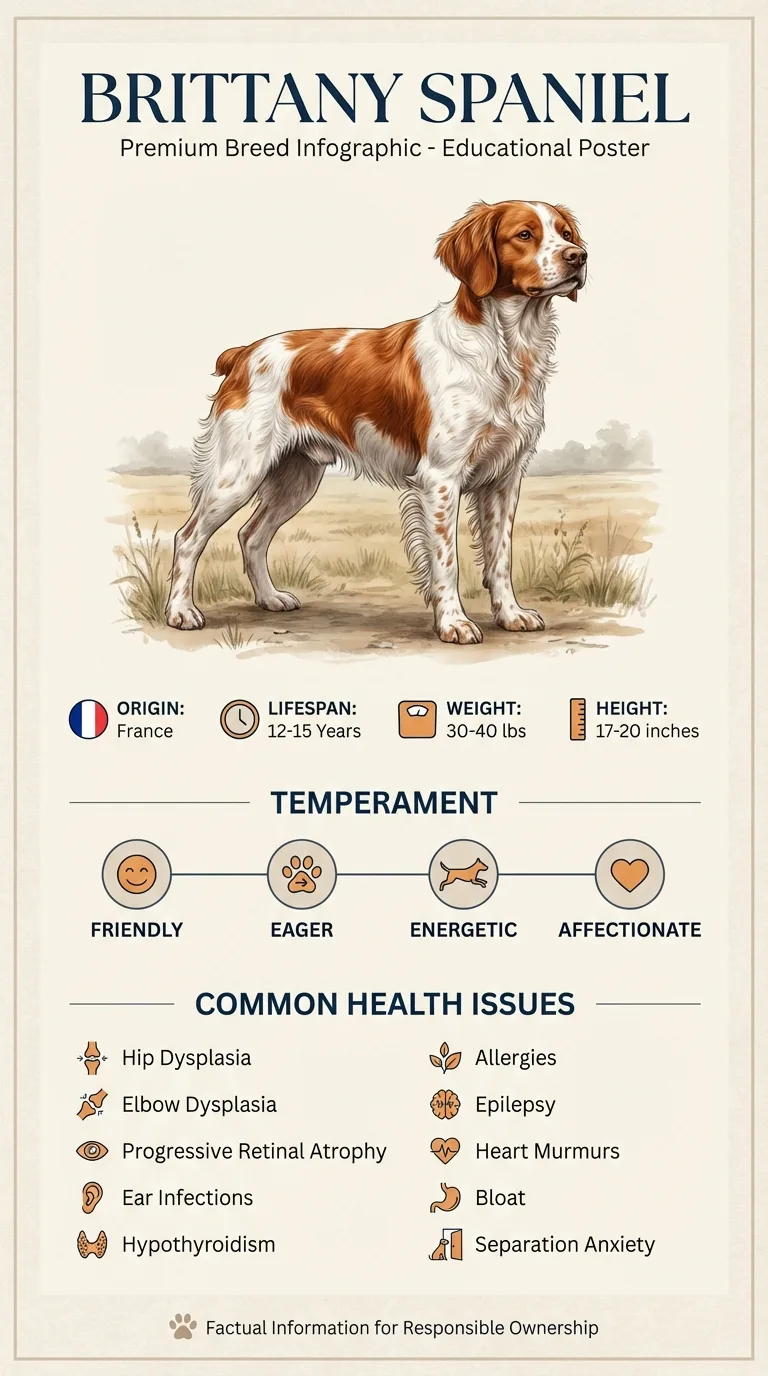
This breed's documented health profile splits into two categories worth budgeting differently for: chronic conditions like epilepsy and heart murmurs that need years of monitoring, and bloat, an acute emergency that needs same-day surgery.
These figures adjust the Brittany's typical national cost range down for Kansas City's below-average market, with a note on the genuine Flint Hills quail-hunting access and the city's unusually large boulevard park system.
Estimate · source: estimation · confidence: medium · updated 2026-09-05 · not a quote
| Item | Cost range |
|---|---|
One-time setup (initial vet visit, spay/neuter, gear) Covers the first exam, vaccinations, spay/neuter if needed, and basic gear — priced at the metro's generally affordable rates. | $270 - $460 |
| Item | Cost range |
|---|---|
Food Below the national average, consistent with the broader metro's lower price level. | $36 - $59 |
Grooming The medium wavy coat needs regular brushing; most owners handle this at home without frequent professional grooming. | $7 - $15 |
Flea & tick prevention Clearly seasonal given the metro's real four-season Midwest climate. | $8 - $16 |
Each range starts from a national baseline for this breed's size class and is then adjusted for local cost of living and veterinary pricing. The baselines, and the source each one came from, are listed on our sources page (dataset 2026.09). Two inputs, the purchase price and the emergency reserve, have no published national figure we could verify, so we leave them to you rather than invent them.
These are planning estimates, not quotes. Your own numbers will move with the individual dog, your vet and your insurer. Build a budget with your own figures.
For a Brittany in Kansas City, insurance mainly comes down to the breed's epilepsy, heart murmur and bloat risk rather than anything specific to the local market.
This breed's documented seizure and cardiac risk make insurance a genuinely proactive purchase — buy before a diagnosis, not after, since pre-existing conditions won't be covered.
For owners who'd rather self-insure, the key is having the reserve actually set aside and untouched — not just a hypothetical willingness to cover a bill if one comes up.
Kansas City already starts from a lower cost base than most cities on this site; the real value-add here is genuine access to both hunting country and large free park acreage.
The Flint Hills, a belt of native tallgrass prairie stretching south into Kansas, hold genuine bobwhite quail habitat within roughly a two-hour drive of the metro, a real if not immediate outlet for this pointing breed's working drive that few people associate with a major Midwestern city best known for barbecue and stockyards history.
Closer to home, Kansas City's park system, laid out over a century ago by landscape architect George Kessler as a connected network of boulevards and parks, still gives residents genuine trail acreage today — Swope Park alone ranks among the largest urban parks in the country, more than twice the size of New York's Central Park, and offers real daily exercise options for an active breed without a drive out of the city.
Kansas City's general cost of living runs below the national average, and the metro's real four-season Midwest climate keeps flea-and-tick prevention on a clearly seasonal, not year-round, window.

A Kansas City Brittany owner, skeptical that real quail hunting existed within a reasonable drive of a major Midwest metro, tagged along on a coworker's Flint Hills trip mostly out of curiosity. The dog's response to open prairie cover was immediate and unmistakable, and what started as a one-off outing became a standing October tradition, with Swope Park's trails covering the dog's needs on every other weekend of the year.
Key takeaway: Kansas City's proximity to genuine Flint Hills quail country is easy to overlook from inside the city itself — worth a first trip even for an owner who assumes real hunting access requires living somewhere more rural.
About $82–$155, below the national average, consistent with the broader Kansas City metro's generally lower cost of living.
Roughly $1,200–$2,150, including the initial vet exam, spay/neuter if needed, and gear on top of ongoing monthly costs.
Genuinely, within reach — the Flint Hills, a native-prairie belt roughly two hours south, hold real bobwhite quail habitat, a working outlet for this breed that most people wouldn't expect from a major Midwestern metro.
The city's century-old Kessler-designed boulevard and park system offers genuine trail acreage, anchored by Swope Park, one of the largest urban parks in the country — a real daily option without leaving the city.
This breed's real seizure, cardiac and bloat statistics make insurance genuinely worth comparing — the earlier it's bought, the more useful it becomes.
Around $500 covers a typical significant vet visit in this market, reflecting Kansas City's below-national-average general pricing.
About $82–$155/month, $1,200–$2,150 for year one — below average, with real Flint Hills quail country and one of the country's largest urban park systems nearby.
This guide is not medical advice. If your dog shows pain, sudden behavior change, or worsening symptoms, consult a licensed veterinarian.
Some links may be affiliate links. We may earn a commission at no extra cost to you. We only suggest products we believe are helpful for dog owners.
We research and check what we publish, but we do not warrant that any figure, date, price, or statement is accurate, complete, or current, and we accept no liability for any loss, cost, injury, or other harm arising from the use of this site. Use it as one reference among several. You remain responsible for your own decisions and for your dog's care - confirm anything that matters with a licensed veterinarian or another qualified professional before you act on it. Full disclaimer.
One sheet with every line item, the emergency fund and when insurance pays off - unlocks on this page.
You get: 12-month budget sheet
No spam. One-click unsubscribe. See our privacy policy.
Preview page 1 before you decide.