Health
What is the first sign?
Head shaking and scratching at one ear, often with a smell or a change in the colour of the wax before any obvious discharge.

Quick answer
What is the first sign?
Head shaking and scratching at one ear, often with a smell or a change in the colour of the wax before any obvious discharge.
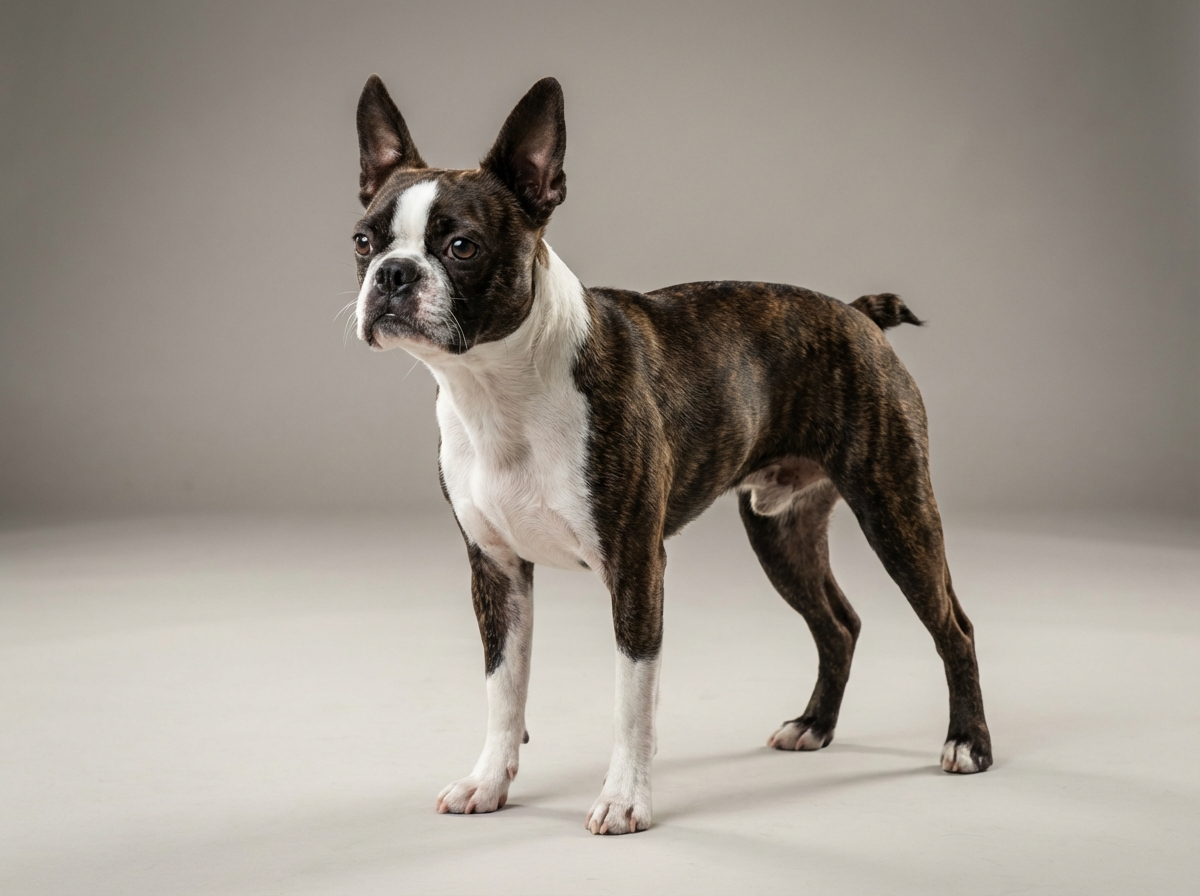
This breed has erect, well-ventilated ears - the conformation that should protect against infection. So a Boston with repeat ear problems almost always has a reason, and the reason is what needs treating.
Owners on their third or fourth course of ear drops in a year, people whose dog has started shaking its head or tilting it to one side, and anyone whose vet has raised the possibility of surgery on an ear canal.
This guide is not medical advice. If your dog shows pain, sudden behavior change, or worsening symptoms, consult a licensed veterinarian.
Some links may be affiliate links. We may earn a commission at no extra cost to you. We only suggest products we believe are helpful for dog owners.
We research and check what we publish, but we do not warrant that any figure, date, price, or statement is accurate, complete, or current, and we accept no liability for any loss, cost, injury, or other harm arising from the use of this site. Use it as one reference among several. You remain responsible for your own decisions and for your dog's care - confirm anything that matters with a licensed veterinarian or another qualified professional before you act on it. Full disclaimer.
Ear infection is overgrowth of yeast or bacteria in a canal whose environment has changed to favour them. In Boston Terriers, whose upright ears are naturally well ventilated, recurrence points strongly toward an underlying cause - most often allergy. Managing episodes without addressing that cause produces an endless cycle of clearance and relapse, and years of untreated inflammation can permanently damage the canal.
Ear disease is among the most frequent reasons dogs are seen in general practice, though Boston Terriers are less structurally predisposed than drop-eared breeds. Because their ear conformation is favourable, repeated infections in this breed are a meaningful signal rather than an expected nuisance, and should trigger investigation rather than routine repeat treatment.
Ear conformation works in this breed's favour: erect ears allow air to circulate through the canal and keep it drier than a covered canal would be. What is not in the Boston's favour is the skin. Allergic disease affects the ear canal lining like any other skin, and an allergic Boston frequently presents with ears rather than with an obvious rash. Deafness also appears on this breed's documented health list, which makes protecting hearing from avoidable chronic damage more relevant here than in many breeds.
Humidity and water are the main external contributors - dogs that swim, are bathed frequently, or are dried carelessly retain moisture in the canal. Long grass supplies seeds, which is a seasonal problem in summer. Household cleaning habits matter as well: enthusiastic use of cotton buds or homemade solutions does measurable damage, and a proportion of chronic ear disease begins with well-intentioned over-cleaning.
Book an appointment for head shaking, scratching at an ear, redness, discharge or a new smell, and ask for a sample to be examined under the microscope rather than accepting a repeat prescription. Seek same-day care if the ear is acutely painful and your dog will not let you near it, if there is bleeding, if the head is tilted to one side, if your dog is unsteady or its eyes are flicking, or if hearing seems suddenly reduced. Those signs suggest disease beyond the outer canal. After two or three episodes in a year, ask directly about referral to a dermatologist to establish the underlying cause.
Most owners clean ears badly, and bad cleaning irritates the canal it is meant to help. The technique below is the one veterinary nurses demonstrate, and it works because of the canal's L shape.
See all Boston Terrier health problems, which breeds are prone to ear infections, or the full Boston Terrier breed guide for temperament, exercise needs and ownership costs.
An uncomplicated infection usually resolves within two to three weeks of appropriate treatment, with a recheck to confirm rather than assume clearance. Identifying and controlling an underlying allergy takes considerably longer - typically a full season of trial and adjustment - and that is the work that stops the cycle.
Months rather than weeks between episodes, ears that are clean and comfortable without routine medication, and a dog that lets you look into them without objecting. If the underlying cause is allergy, occasional flares in the ears are realistic; four courses of drops a year is not.
Ear infection is almost never a primary disease. Yeast and bacteria are opportunists: they multiply when something has changed the environment of the canal to suit them. Treating them without changing that environment produces exactly what owners describe - clearance, then relapse within weeks.
The most common underlying cause in dogs is allergy. Ear canal lining is skin, and it becomes inflamed in an allergic dog just as the feet and belly do. Inflamed skin swells the canal, increases wax production and warms it, and the resulting environment supports overgrowth. Repeat infections in a dog with itchy feet is one of the most reliable patterns in small animal practice.
The other underlying causes are worth naming: a grass seed or other foreign body, ear mites - usually in young dogs or those from group housing - hormonal disease such as hypothyroidism, and rarely a polyp or growth within the canal.
Proper management means identifying which of these applies. That is why a good consultation involves examining the canal with an otoscope and taking a sample for microscopic examination, rather than reaching for the same bottle again. Different organisms need different treatment, and a canal with a ruptured eardrum cannot receive certain medications safely at all.

Over eighteen months, Aoife's Boston, Teddy, had five courses of ear drops from three different vets at a busy practice. Each cleared the infection. Each time it came back within six to eight weeks, usually the right ear. At the fifth visit Aoife asked the question that changed things: why does this keep happening? The vet took a proper history rather than a bottle, and the answer was in it - Teddy had also been licking his front paws every evening since he was two, which Aoife had never thought to mention because it seemed unrelated. A dermatology referral confirmed environmental allergy. Teddy went onto a management plan for his skin, and his ears followed. He has had two episodes in the three years since, both in high pollen season. Aoife's regret is not the five bottles. It is that nobody, herself included, connected the feet to the ears for a year and a half.
Key takeaway: Recurrent ear infections in an upright-eared breed are a symptom, not a diagnosis. If your dog also licks its feet, you have probably already found the cause.
Their upright, open ears are actually favourable - far better ventilated than the heavy drop ears of breeds where infection is expected. That is why a Boston with recurrent infections should prompt a search for an underlying cause rather than a shrug.
Allergy, by a wide margin. If your dog also licks its front feet, rubs its face or has recurring skin irritation, the ears are almost certainly a symptom of the same problem.
Because yeast and different bacterial types need different treatment, and organisms can change between episodes. Treating without looking is guesswork, and repeated guesswork is how resistant infections develop.
No. The organism may be different, and if the eardrum has ruptured some medications can cause permanent damage including deafness. Old drops are also frequently out of date.
It can mean infection has extended into the middle or inner ear, which affects balance. A head tilt, unsteadiness or flicking eye movements need prompt veterinary assessment rather than another course of topical treatment.
Deafness is separately documented in this breed and is usually congenital rather than infectious. However, severe chronic ear disease can reduce hearing through canal narrowing and eardrum damage, which is another reason not to let it run for years.
Only in end-stage disease, where years of inflammation have thickened and calcified the canal so that no medication can reach the tissue. It is a last resort, and reaching it usually means the underlying cause was never addressed.
Head shaking and scratching at one ear, often with a smell or a change in the colour of the wax before any obvious discharge.
Because the infection is a symptom. Until the underlying cause - usually allergy - is managed, clearing the organism only buys weeks.
Healthy, upright ears in this breed often need little or no routine cleaning. Over-cleaning irritates the canal. Follow your vet's advice for your dog.
Individual consultations and drops are modest, but four or five episodes a year add up quickly - usually to more than investigating the underlying cause properly once.
A one-page prep sheet for this condition: the signs, the questions to ask, what to get priced. Unlocks here.
You get: Vet visit prep sheet
No spam. One-click unsubscribe. See our privacy policy.
Preview page 1 before you decide.