Health
Does the Akita have stenotic nares?
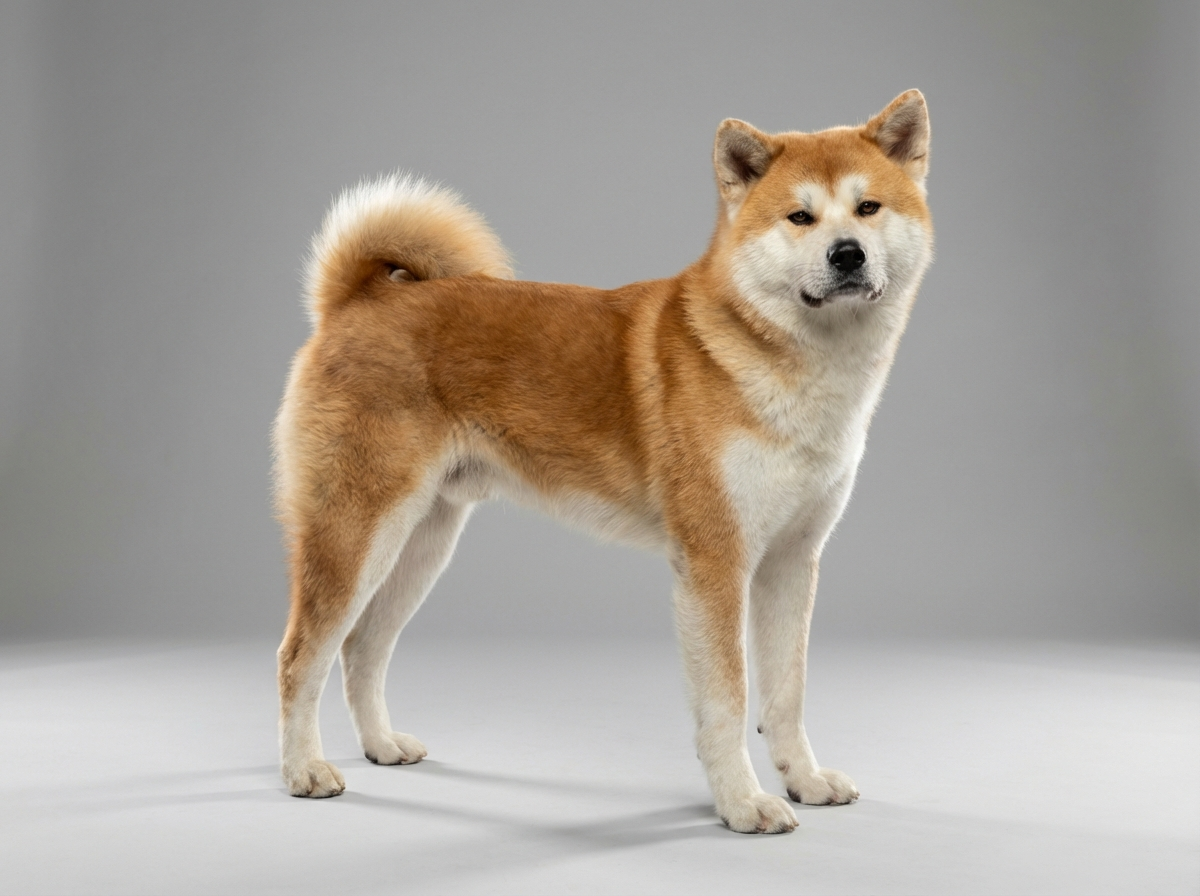
No — this breed has broad, open nostrils as part of its standard, proportionate head conformation.

Quick answer
Does the Akita have stenotic nares?
No — this breed has broad, open nostrils as part of its standard, proportionate head conformation.
Narrowed nostrils that restrict airflow are one of the most visually obvious brachycephalic traits, immediately recognizable in a Bulldog or Pug's face — and it's simply not a feature the Akita's nose structure has.
Owners who've encountered this specific term while researching general brachycephalic conditions and want to know if it applies to their Akita are the audience here.
This guide is not medical advice. If your dog shows pain, sudden behavior change, or worsening symptoms, consult a licensed veterinarian.
Some links may be affiliate links. We may earn a commission at no extra cost to you. We only suggest products we believe are helpful for dog owners.
We research and check what we publish, but we do not warrant that any figure, date, price, or statement is accurate, complete, or current, and we accept no liability for any loss, cost, injury, or other harm arising from the use of this site. Use it as one reference among several. You remain responsible for your own decisions and for your dog's care - confirm anything that matters with a licensed veterinarian or another qualified professional before you act on it. Full disclaimer.
Check this first
Labored breathing, visible nasal discharge with distress, blue-tinged gums, or collapse warrant same-day emergency veterinary care in any breed, regardless of the underlying cause. For an Akita, these signs are far more likely to reflect heat-related distress, a respiratory infection, or in older dogs, laryngeal paralysis than any nostril-related structural issue.
Occasional reverse sneezing (a common, generally harmless sound many dogs make) or mild nasal discharge without other symptoms is not typically an emergency, though persistent nasal discharge or noisy breathing deserves a vet visit to identify the actual cause.
The practical point for an Akita owner is the same as with other brachycephalic-adjacent searches: don't dismiss a genuine symptom, but expect your vet's workup to focus on causes that actually fit this breed's normal, open nostril and muzzle conformation.
If any of these apply, call your vet or an emergency clinic now. The rest of this page is for the cases that are not an emergency.
Stenotic nares, or abnormally narrow nostrils, is a defining structural trait of brachycephalic breeds like Bulldogs and Pugs. The Akita's standard calls for a broad, proportionate muzzle with open, functional nostrils, placing this breed entirely outside the category where this specific narrowing occurs, making it a non-issue for Akita-specific health planning.
Stenotic nares is well documented and common in brachycephalic breeds; it is not established as occurring in Akitas, whose nostril and muzzle conformation don't create this specific structural narrowing.
The defining feature of stenotic nares is a cartilage structure that narrows the nostril opening, a trait specifically bred into flat-faced dogs over generations. The Akita's breed standard calls for the opposite conformation — broad, open, functional nostrils as part of an overall proportionate head — meaning this specific structural risk simply isn't part of the breed's anatomy.
Because this condition isn't relevant to the breed's anatomy, there are no environmental triggers to discuss for it in Akitas specifically. General respiratory comfort factors for this breed — heat, humidity, and exercise intensity — remain relevant to overall breathing comfort but operate through an entirely different mechanism than nostril structure.
Seek emergency care for labored breathing, significant nasal discharge with distress, blue-tinged gums, or collapse, regardless of suspected cause. Schedule a routine visit for persistent nasal discharge or new noisy breathing to identify the actual underlying cause.
Applying a flat-faced-breed structural trait to a breed with normal nostril conformation leads research in the wrong direction. Avoid these mistakes.
See all Akita health problems, which breeds are prone to small nostrils stenotic nares, or the full Akita breed guide for temperament, exercise needs and ownership costs.
Because this condition isn't relevant to the breed, there's no meaningful timeline to track for it. Whatever the actual cause of any nasal or breathing symptom turns out to be, your vet can outline an appropriate monitoring or treatment timeline for that specific finding.
Success is directing attention toward the respiratory and heat-related considerations that are actually relevant to this breed rather than a structural trait that doesn't apply to its conformation.
After reading about stenotic nares as part of general brachycephalic health content, Lars wondered whether his Akita, Ren, might have any nostril-related breathing limitation, especially since Ren sometimes breathed a bit noisily during excited play in Duluth. His vet examined Ren's nostrils and confirmed they were broad, open, and completely normal for the breed. The noisy breathing turned out to be related to Ren's excitement level and slightly overweight condition at the time rather than any structural issue. Lars focused on a gradual weight-management plan instead, and Ren's breathing during play became noticeably quieter as he reached a leaner body condition.
Key takeaway: A genuine breathing sound in an Akita deserves investigation, but the cause is far more likely to be something else entirely than a nostril-related structural trait that doesn't fit this breed's normal conformation.
It's a structural narrowing of the nostrils that restricts airflow, a defining feature of brachycephalic breeds like Bulldogs and Pugs, often addressed surgically in severe cases to improve breathing.
No — the Akita's breed standard calls for a broad, proportionate muzzle with open, functional nostrils, placing it outside the brachycephalic category where this specific structural narrowing occurs.
This has other, more relevant explanations for this breed, including heat-related panting, obesity, allergies, or in senior dogs, age-related laryngeal changes — a vet exam identifies the actual cause rather than assuming a nostril-related issue.
No — since this breed doesn't have narrowed nostrils to begin with, this specific procedure, common in brachycephalic breeds, isn't part of a realistic Akita care conversation.
Heat-related breathing distress and, in older dogs, laryngeal paralysis are the genuinely relevant considerations for this breed, distinct from any brachycephalic-specific structural trait.
A physical exam of the nostrils and airway, along with a discussion of when and how symptoms occur, helps identify the actual cause, whether that's environmental, infectious, or age-related.
This isn't part of standard Akita breeding health screening, since it isn't an established trait or concern for the breed; hip, elbow, and eye testing are the relevant health screens for this breed.
No — this breed has broad, open nostrils as part of its standard, proportionate head conformation.
Heat-related causes, allergies, or in older dogs, laryngeal paralysis are more relevant explanations.
No — this breed doesn't have the narrowed nostril structure this surgery addresses.
No — it isn't part of standard Akita health screening since it isn't a breed concern.
Generally not — it's a common, usually harmless sound in many dogs.
A one-page prep sheet for this condition: the signs, the questions to ask, what to get priced. Unlocks here.
You get: Vet visit prep sheet
No spam. One-click unsubscribe. See our privacy policy.
Preview page 1 before you decide.