DogBreedCompass

Pit Bull or Brussels Griffon: Two Coats and a Skull Too Small

The Brussels Griffon weighs 8 to 12 pounds, rates 5/5 for apartments and comes in two entirely different coats. It also carries a neurological condition that comes directly from the shape of its skull.

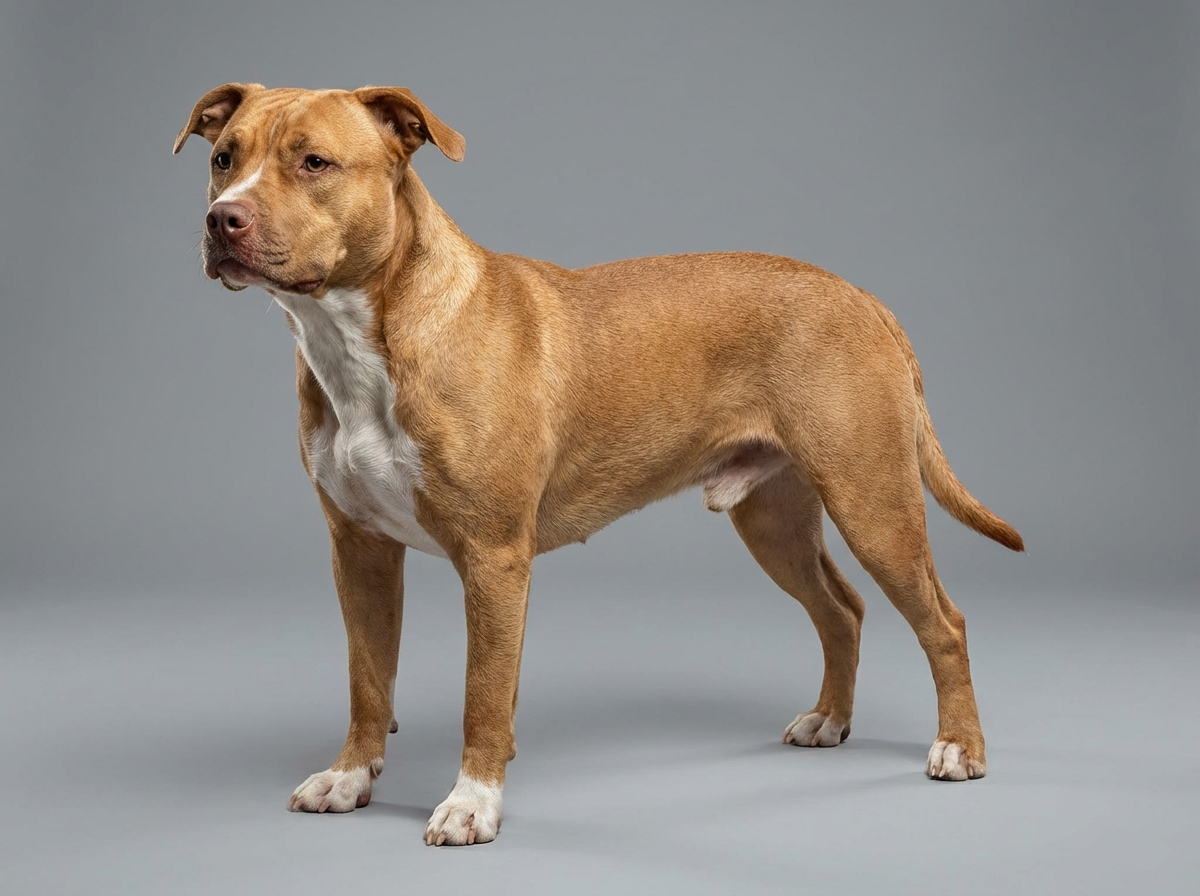
american pit bull terrier infographic
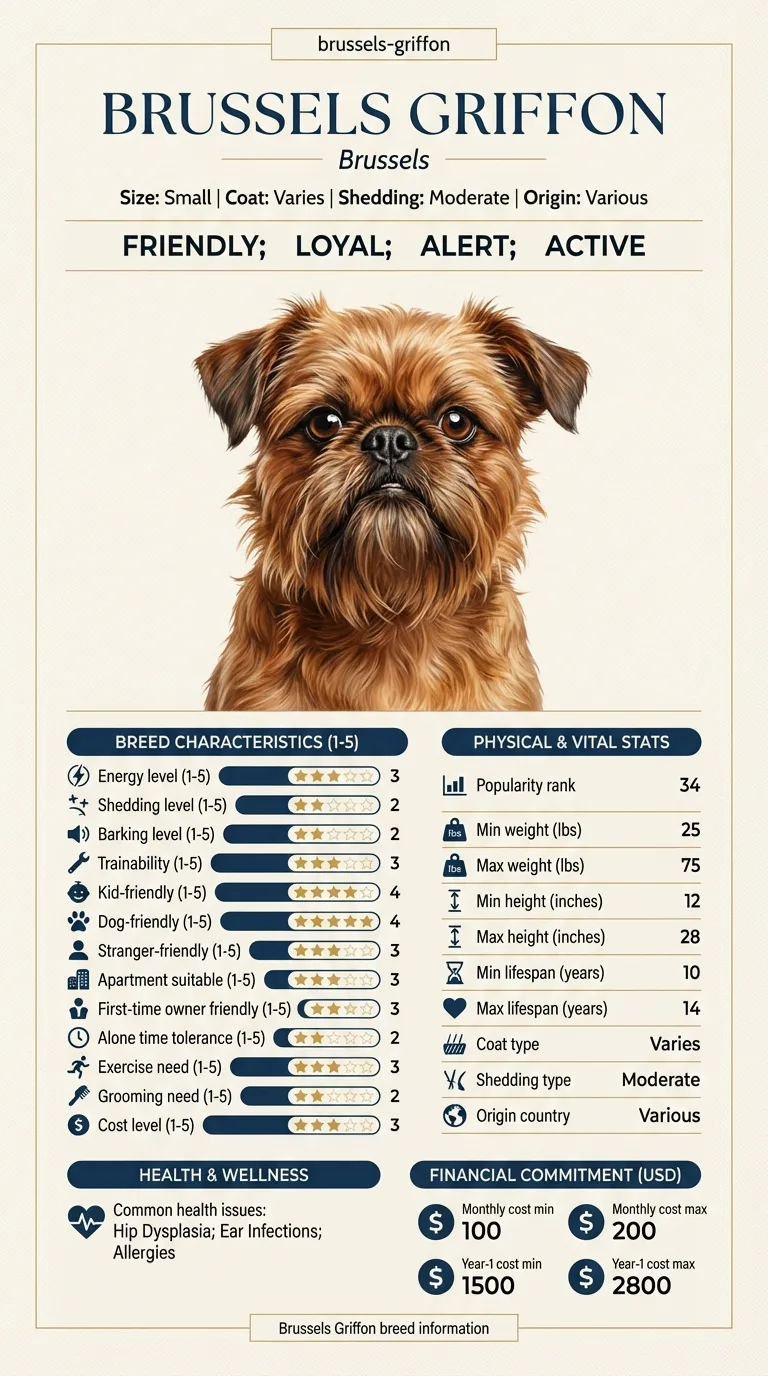
brussels griffon infographic

This page is for someone comparing a small characterful companion against an athletic working dog, and wanting the Griffon's health picture explained properly before deciding.

Quick verdict

The Griffon is the obvious choice for a small home and a quiet routine, and the questions that matter are all about the skull — breathing, eyes and the neurological condition that comes with a shortened head.

Choose american pit bull terrier if...

Choose the American Pit Bull Terrier if you want an athletic, low-maintenance dog for an hour a day, and you can manage careful introductions to other dogs and check local restrictions on bully-type breeds.

Choose brussels griffon if...

Choose the Brussels Griffon if you want a comic, devoted companion for a flat, you will manage heat and handle a sensitive dog gently, and you will choose a breeder producing moderate rather than extreme heads.

Head-to-head comparison

Featureamerican pit bull terrierbrussels griffonWinner
Weight30–65 lbs8–12 lbsEqual
Height17–21 in7–10 inEqual
Lifespan12–14 years12–15 yearsbrussels griffon
CoatShort, glossyRough or smoothEqual
Grooming need1/53/5american pit bull terrier
Shedding3/5 — moderate2/5 — lowbrussels griffon
Energy level4/53/5brussels griffon
Exercise need4/52/5brussels griffon
Trainability4/53/5american pit bull terrier
Barking2/53/5american pit bull terrier
Good with kids4/53/5american pit bull terrier
Good with other dogs2/53/5brussels griffon
Friendly to strangers3/53/5Equal
Apartment suitability2/55/5brussels griffon
Good for first-time owners2/53/5brussels griffon
Tolerates being alone3/52/5american pit bull terrier
Typical monthly cost$80–150$80–150Equal
Typical first-year cost$1,200–2,200$1,100–2,300Equal

Deep dive

Rough or smooth: a real choice inside the breed

Unlike most breeds, the Brussels Griffon offers two genuinely different coats, and the choice changes the maintenance more than the appearance suggests.

The rough coat is wiry and dense with the beard and moustache that give the breed its distinctive face. Like any wire coat it grips its dead hair instead of dropping it, which is why the breed sheds at only 2/5, and that trapped hair has to be removed. Hand-stripping — plucking dead hairs out by the root — keeps the texture harsh and the colour correct and is the traditional method; clipping is faster and cheaper and permanently softens the coat. Either way it is a professional appointment every few months, plus combing the beard and leg furnishings at home. The beard also carries water and food out of the bowl onto whatever the dog leans against.

The smooth coat is short and close-lying and needs essentially nothing beyond a weekly rubber mitt. It sheds a little more visibly than the rough coat but requires no stripping, no clipping and no appointments. For anyone choosing on maintenance rather than looks, the smooth Griffon is a considerably easier dog.

That variation is why the breed rates 3/5 for grooming overall — an average of two quite different jobs.

The Pit Bull's 1/5 is the floor of the scale: a rubber curry mitt once a week, a bath when needed, no matting, no appointment. It sheds more at 3/5, and short stiff hairs work into fabric, but the time and money cost is essentially nil.

If you are choosing a Griffon, decide the coat before you choose the litter. It is one of the few decisions in dog ownership that is genuinely made at purchase and cannot be changed afterwards.

Syringomyelia: what a shortened skull can do

Syringomyelia sits on the Brussels Griffon's health list and is the entry most buyers have never heard of, so it deserves a proper explanation.

In some small brachycephalic breeds the skull is shortened without a matching reduction in the brain, so the space at the back of the skull is too small for its contents. That crowding disrupts the normal flow of cerebrospinal fluid, and over time fluid-filled cavities can form within the spinal cord. Those cavities are the syrinxes the condition is named for, and they cause abnormal sensation and pain.

The signs are distinctive once you know them. The classic one is phantom scratching: the dog scratches at the air near its neck or shoulder, often while walking, without ever making contact. Others include yelping for no visible reason, sensitivity around the head, neck and ears, reluctance to be touched there or to have a collar put on, sleeping with the head in odd raised positions, and in advanced cases weakness or a scoliosis-like curve to the neck.

Diagnosis is by MRI, and management is medical — pain relief and drugs that reduce fluid production — with surgery reserved for severe cases. It is not curable, but many affected dogs are managed comfortably for years.

What a buyer can do is ask. Some breed communities screen breeding stock by MRI and record the results, and a breeder engaged with that is a meaningfully better bet. Ask whether either parent has been scanned, and whether any dog in the line has been diagnosed.

As an owner, use a harness rather than a collar as a matter of course, and treat unexplained yelping or phantom scratching as a neurological question rather than a skin one.

Breathing and eyes in a very small skull

Brachycephalic airway syndrome heads the Griffon's list, and in a dog of 8 to 12 pounds the margins are narrow.

A shortened skull compresses the nose and throat without proportionally reducing the soft tissue inside, so nostrils can be pinched and the soft palate can be long. Because dogs cool by panting, a dog that cannot move air well cannot shed heat well. The practical rules are the familiar ones: walk early and late in warm weather, use a harness rather than a collar, never leave the dog in a car or a conservatory even briefly, keep it lean, and treat noisy laboured breathing at rest as a veterinary conversation rather than a breed characteristic.

The range between individuals is wide. A Griffon with open nostrils and a visible muzzle from parents that breathe quietly at rest is a different animal from one bred for an extremely flat face. Ask what the adults are like on a warm day and whether any dog in the line has needed airway surgery. Anaesthesia also needs a practice equipped for brachycephalic patients — a point that matters for a routine dental as much as for surgery.

Eye injuries are the second consequence. Prominent eyes in shallow sockets sit exposed, and scratches, ulcers and knocks are more likely than in a normally built dog. A Griffon squinting, weeping, holding an eye closed or pawing at its face needs seeing the same day.

Patellar luxation and hip dysplasia complete the list — the kneecap slipping out of its groove shows as a skipping stride, and both are worth asking a breeder about.

The Pit Bull has a normal muzzle and normal eye sockets. Its list is different in character: hip and elbow dysplasia, skin allergies, heart murmurs, bloat, obesity, cruciate disease, arthritis and cancer.

Alert, sensitive, comical and devoted

The Griffon's own temperament keywords are unusually accurate, and sensitive is the one that shapes ownership.

This is a dog that reads its people closely and takes tone personally. Raised voices, rough handling and heavy correction produce a shut-down, avoidant animal rather than a defiant one, and a bad experience is remembered. Training works when it is upbeat, brief and generously paid; its 3/5 trainability reflects a dog that is bright but not driven to work for a handler, and house-training in particular often takes longer than owners expect.

It is also a genuinely funny dog — upright, expressive, mildly self-important — and a devoted one that attaches strongly to its household. That attachment is why it rates only 2/5 for tolerating time alone. A Griffon in an empty house is not a happy dog, and its distress tends to be vocal.

With children it rates 3/5, and the reason is fragility plus sensitivity. An 8 pound dog with prominent eyes can be genuinely injured by a fall or a grab, and a dog that is hurt or frightened will defend itself. Older children who understand consent suit the breed far better than toddlers.

The Pit Bull's temperament runs the other way: robust rather than delicate, 4/5 with children, and a dog that tolerates rough handling well. Its 2/5 with other dogs is its defining management task — no dog parks, no on-lead greetings with unknown dogs, careful neutral-ground introductions, and awareness that tolerance can decline at social maturity.

And only the Pit Bull carries the administrative layer. Tenancy agreements, housing rules and insurance policies frequently restrict bully-type dogs, often by appearance rather than pedigree. A Griffon is never restricted anywhere.

Identical monthly costs and two different ways to spend them

Both dogs run $80 to $150 a month, with first years of $1,200–2,200 and $1,100–2,300. As with several pairings on this site, the identical figures conceal completely different spending.

The Pit Bull's money goes on food and routine care, with essentially nothing on grooming. Its uncertainty is insurance, where bully-type breeds are frequently surcharged or excluded outright, and where an exclusion matters far more than a premium.

The Griffon's money goes on the head. A rough-coated dog needs stripping or clipping on a schedule. Eye problems are more likely and sometimes urgent. Airway assessment and, in some dogs, corrective surgery is a realistic possibility. Anaesthesia for routine dentals needs a practice set up for short-faced patients. And if syringomyelia is suspected, an MRI is not a cheap investigation.

That makes insuring early — before anything is diagnosed and excluded — more valuable for a Griffon than the low monthly figure suggests.

On the other side, it needs very little exercise at 2/5: twenty to thirty minutes of walking plus indoor play, which is why the 5/5 apartment rating is earned rather than generous. It travels easily, fits anywhere, and lives 12 to 15 years.

The Pit Bull needs an hour to ninety minutes of real activity and cannot be satisfied indoors.

So the decision comes down to two ordinary questions rather than anything about temperament. Can you supply an hour of daily exercise? And if not, are you prepared to take on a short-faced breed with the eye, airway and neurological questions that go with it — and to choose the moderate end of it rather than the extreme?

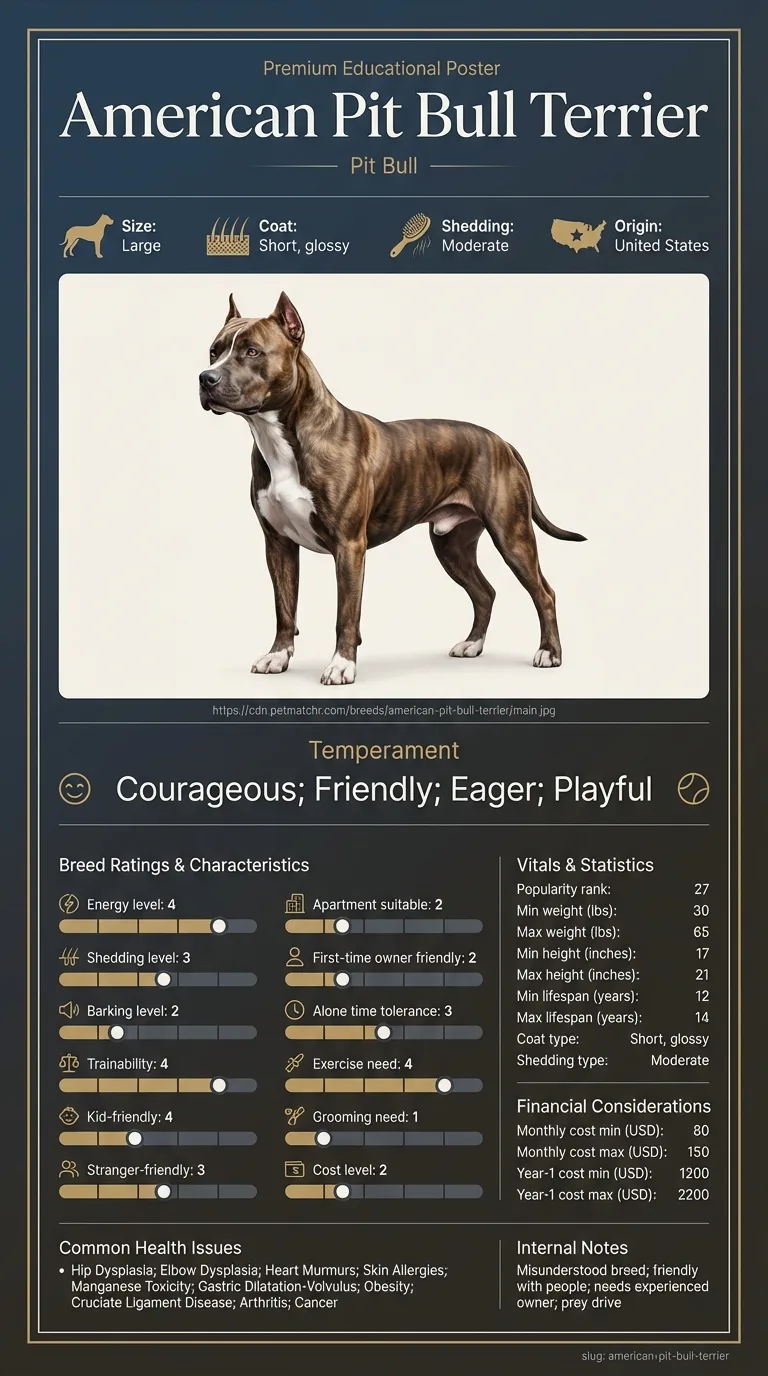
American Pit Bull Terrier vs Brussels Griffon at a glance

The Brussels Griffon weighs just 8 to 12 pounds, rates 5/5 for apartments, and comes in two entirely different coat types. It also carries a neurological condition that comes directly from the shape of its skull, a detail worth knowing before you buy.

The Griffon is the obvious choice for a small home and a quiet routine, and the questions that matter with this breed are all about the head: breathing, eye protection, and the neurological condition linked to a shortened skull.

Choose the American Pit Bull Terrier if you want an athletic, low-maintenance dog for an hour a day, and you can manage careful introductions to other dogs and check local restrictions on bully-type breeds. Choose the Brussels Griffon if you want a comic, devoted companion for a flat, and you will choose a breeder producing a moderate rather than an extreme head shape.

Frequently asked questions

What is the difference between a rough and a smooth Brussels Griffon?

Coat only. The rough is wiry with a beard and needs stripping or clipping every few months plus combing at home; the smooth is short and needs a weekly rubber mitt. If you are choosing on maintenance, the smooth is far easier.

What is syringomyelia and how would I spot it?

Fluid-filled cavities in the spinal cord, caused by a skull too small for its contents. The classic sign is phantom scratching at the air near the neck or shoulder while walking, plus yelping and sensitivity around the head and neck.

Should a Brussels Griffon wear a collar?

Use a harness instead. It avoids pressure on a shortened airway and on a neck that may be sensitive, and it is free insurance in a breed where both problems appear on the health list.

How serious is the breathing problem?

It varies enormously between individuals. Look for open nostrils, a visible muzzle and parents that breathe quietly at rest, and ask whether any dog in the line has needed airway surgery. The individual matters more than the breed name.

Is a Griffon good with young children?

It rates 3/5 against the Pit Bull's 4/5. The concerns are fragility and sensitivity — an 8 pound dog with prominent eyes is easily hurt, and a frightened dog defends itself. Older children suit the breed better.

Which is better for a flat?

The Griffon at 5/5 against 2/5. It needs twenty to thirty minutes of walking plus indoor play. The Pit Bull is quiet at 2/5 barking but needs an hour or more of real activity that cannot happen indoors.

Do they cost the same?

Monthly, yes — both $80 to $150. The Griffon's spending goes on coat, eyes, airway and possible neurological investigation; the Pit Bull's on food and routine care, with insurance the main unknown.

Quick answers

View more answers
Living

Pit Bull or Brussels Griffon: which should I choose?

The Griffon if you want a comic, devoted companion for a flat and will choose a moderate head rather than an extreme one. The Pit Bull if you can supply an hour of daily exercise and manage careful introductions to other dogs.

Costs

Which is cheaper to keep?

They match at $80 to $150 a month. Insuring a Griffon early matters more than the figure suggests, because eye, airway and neurological investigation can all be expensive.

Health

What should I ask a Brussels Griffon breeder?

Whether the parents breathe quietly at rest and have open nostrils, whether either has been MRI-scanned or any dog in the line diagnosed with syringomyelia, and whether the knees have been evaluated.

Training

How should I train a sensitive breed?

Upbeat, brief and generously paid. Raised voices and heavy correction produce a shut-down dog rather than a compliant one, and a Griffon remembers a bad session for a long time.

Related DogBreedCompass guides

  • American Pit Bull Terrier breed guideThe Pit Bull profile covers temperament, exercise and the practical realities of ownership.
  • Brussels Griffon breed guideThe Griffon profile covers the two coat varieties, airway health and the breed's temperament.
  • patellar luxation in Brussels GriffonsPatellar luxation is a common small-breed complaint and shows as a skipping stride.
  • dental disease in Brussels GriffonsDental care matters in a small jaw and needs a practice equipped for short-faced anaesthesia.
  • heart disease in Pit Bull TerriersHeart murmurs sit on the Pit Bull's list and are worth checking at an early vaccination visit.
  • American Pit Bull Terrier vs Boston TerrierReaders considering a small short-faced breed usually weigh the Boston alongside it.

Related guides

Important reminder

Health information here is general and is not veterinary advice. Neurological signs, airway assessment and anaesthetic risk should be discussed with your own veterinarian.

Some links on this site are affiliate links. We may earn a commission if you buy through them, at no additional cost to you.

Find Your Perfect Breed

Match your lifestyle to the right dog.

Take quiz

Find your match

Not sure which breed is right for you? Take our 2-minute quiz to find out.

Take the quiz