DogBreedCompass
← Back to breed profile

American Pit Bull Terrier Hypothyroidism: What You Need to Know

American Pit Bull Terrier hypothyroidism is a condition caused by a deficiency of thyroid hormones.

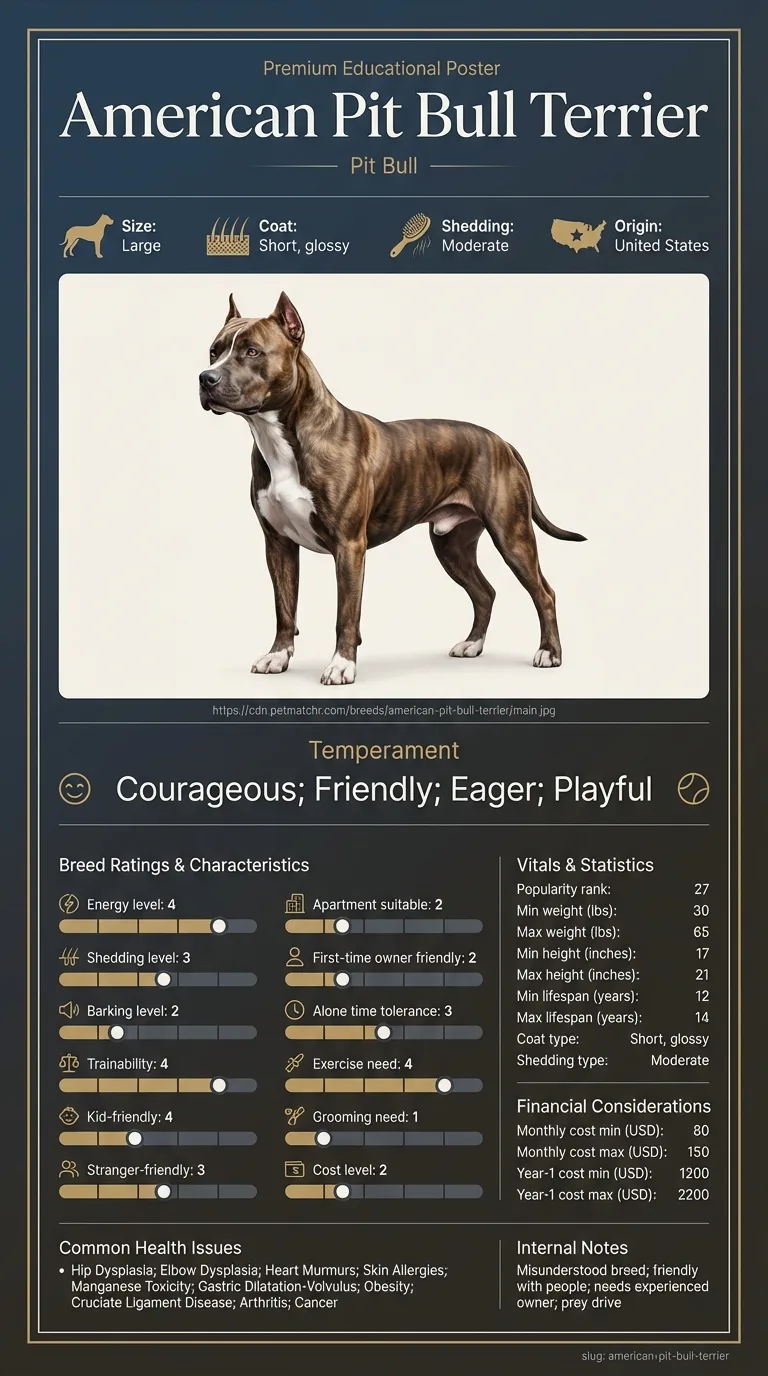
American Pit Bull Terrier Hypothyroidism: What You Need to Know infographic

Owners of American Pit Bull Terriers often face challenges with hypothyroidism, especially those who may not be familiar with the breed's specific health needs. This condition often affects middle-aged dogs, and owners who notice changes in their pet's energy levels or weight may be particularly concerned.

Important reminder

This guide is not medical advice. If your dog shows pain, sudden behavior change, or worsening symptoms, consult a licensed veterinarian.

Some links may be affiliate links. We may earn a commission at no extra cost to you. We only suggest products we believe are helpful for dog owners.

What this problem looks like

American Pit Bull Terriers can suffer from hypothyroidism, a condition caused by insufficient thyroid hormone production. This problem often manifests as weight gain, lethargy, and changes in coat quality. Owners may notice their Pit Bull becoming less active or more prone to skin issues, which can be concerning.

Common triggers

  • Genetics
  • Age-related decline in thyroid function
  • Autoimmune diseases

Hypothyroidism is relatively common in American Pit Bull Terriers compared to other breeds. While not every Pit Bull will develop this condition, it’s important for owners to be aware of the signs and consult a vet if they notice any symptoms.

Why this happens

Breed factors

American Pit Bull Terriers are prone to certain genetic conditions, including hypothyroidism. This breed may have inherited traits that affect their thyroid function, leading to hormone deficiencies. These health issues can be exacerbated by their size and energy levels.

Environment factors

Environmental factors can also play a role in hypothyroidism. Poor diet, lack of exercise, and exposure to toxins can impact thyroid health. Stressful living conditions or inconsistent routines may further aggravate the issue.

What you can try

At-home strategies

  • 1. Feed a balanced diet: Ensure your Pit Bull has high-quality dog food that meets their nutritional needs. Look for foods rich in vitamins and minerals that support thyroid function.
  • 2. Maintain an exercise routine: Regular physical activity helps manage weight and stress, which can positively affect thyroid health. Aim for at least 30 minutes of exercise daily.
  • 3. Monitor for symptoms: Keep an eye out for common signs of hypothyroidism, such as lethargy, weight gain, or changes in coat quality. Early detection can lead to better management.

When to consider a trainer

If your American Pit Bull Terrier shows behavioral changes due to hypothyroidism, a trainer can help with socialization and managing anxiety. Consider this if your dog becomes more withdrawn or displays aggression.

When to talk to your vet

Talk to your vet if you notice symptoms of hypothyroidism or if your dog’s behavior changes significantly. A vet can perform blood tests to diagnose the issue and recommend appropriate treatment or medication.

Realistic expectations

With proper management and veterinary care, you can see improvements in your American Pit Bull Terrier's health within 3 to 6 months.

Success means your dog shows increased energy levels, maintains a healthy weight, and responds well to medication and dietary adjustments.

Mistakes that make this worse

Here are common mistakes that can worsen American Pit Bull Terrier hypothyroidism and what you can do instead to help your dog.

  • Ignoring Symptoms: Overlooking signs like weight gain or lethargy can delay treatment. Stay alert to changes in your dog’s behavior.
  • Inconsistent Medication: Skipping doses or not following the vet's instructions can lead to worsening symptoms. Set reminders to give medication consistently.
  • Poor Diet Choices: Feeding low-quality food can exacerbate health issues. Invest in a balanced, vet-recommended diet to support your dog's overall health.
  • Lack of Regular Vet Visits: Failing to schedule check-ups can prevent early detection of problems. Keep regular vet appointments to monitor your dog's thyroid levels.
  • Neglecting Exercise: Not providing enough physical activity can lead to obesity, complicating hypothyroidism. Aim for daily walks and playtime to keep your dog active.
  • Self-Medicating: Using over-the-counter supplements without vet consultation can be harmful. Always consult your vet before adding any supplements to your dog's routine.
  • Forgetting to Monitor Weight: Not tracking your dog's weight can make it harder to manage their health. Regularly weigh your dog to watch for any significant changes.

When American Pit Bull Terrier Hypothyroidism is an Emergency

Recognizing when hypothyroidism in your American Pit Bull Terrier is an emergency can be crucial for their health. If you notice severe symptoms like extreme lethargy, significant weight gain despite a normal diet, or difficulty breathing, you should call your vet immediately. These signs could indicate a serious complication that requires prompt treatment.

On the other hand, if your dog shows mild symptoms such as slight weight gain, low energy, or skin issues, you might monitor these changes at home. Make sure to keep a close eye on their behavior and overall condition, noting any changes to discuss with your vet during your next appointment. Keeping a detailed record can help identify patterns and assist your veterinarian in making a diagnosis.

It's essential to trust your instincts as a pet owner. If something feels off about your dog, don't hesitate to seek professional advice. Early intervention can make a significant difference in managing hypothyroidism effectively.

American Pit Bull Terrier Hypothyroidism: What You Need to Know - When American Pit Bull Terrier Hypothyroidism is an Emergency

A Journey to Better Health: Max the American Pit Bull Terrier

When Lisa adopted Max, her American Pit Bull Terrier, she noticed he was unusually lethargic and had a dull coat. After a vet visit, she learned Max had hypothyroidism. Initially overwhelmed, Lisa followed the vet's advice, adjusting Max's diet and administering medication regularly. Within a few months, Max's energy bounced back, and his coat became shiny again. Lisa learned to monitor his diet closely and keep up with vet appointments.

Key takeaway: With proper care and attention, managing hypothyroidism in your American Pit Bull Terrier can lead to a happy, healthy life.

Frequently asked questions

Why does my American Pit Bull Terrier have hypothyroidism?

Hypothyroidism in American Pit Bull Terriers is often caused by an autoimmune disorder that damages the thyroid gland. Genetic predisposition can also play a role, as some breeds are more prone to this condition. Regular vet check-ups can help identify thyroid issues early.

How can I tell if my American Pit Bull Terrier has hypothyroidism?

Signs of hypothyroidism in your American Pit Bull Terrier may include weight gain, lethargy, and changes in coat quality. Look for symptoms like excessive shedding or skin issues. If you notice any of these signs, consult your vet for a thyroid function test.

What treatment options are available for my American Pit Bull Terrier's hypothyroidism?

Treatment typically involves daily medication to replace missing thyroid hormones. Your vet will prescribe the right dosage based on your dog's weight and condition. Regular follow-up visits are crucial to monitor hormone levels and adjust the treatment as needed.

Can diet help manage my American Pit Bull Terrier's hypothyroidism?

A balanced diet can support your American Pit Bull Terrier's overall health but won't cure hypothyroidism. However, maintaining a healthy weight through proper nutrition can help manage symptoms. Always consult with your vet for dietary recommendations tailored to your dog's needs.

How often should I take my American Pit Bull Terrier to the vet for hypothyroidism?

After diagnosis, schedule follow-ups every 6-12 months to monitor thyroid hormone levels. Your vet may recommend more frequent visits initially to adjust medication. Consistent check-ups help ensure effective management of your dog's condition.

What are the early signs of hypothyroidism in an American Pit Bull Terrier?

Early signs of American Pit Bull Terrier hypothyroidism can include weight gain, lethargy, and a dull coat. You may also notice increased sensitivity to cold and changes in behavior. If you observe these symptoms, consult your vet for proper testing.

Can hypothyroidism in American Pit Bull Terriers affect their training?

Yes, hypothyroidism can impact an American Pit Bull Terrier's training. Symptoms like lethargy may make it harder for your dog to focus or engage during training sessions. Adjust your training methods to suit their energy levels, and consult a trainer familiar with health issues.

Is hypothyroidism common in older American Pit Bull Terriers?

Hypothyroidism can become more common as American Pit Bull Terriers age. Regular vet check-ups are essential for older dogs to catch any hormonal imbalances early. Your vet can provide treatment options if hypothyroidism is diagnosed.

What can I do to manage my American Pit Bull Terrier's hypothyroidism at home?

Managing American Pit Bull Terrier hypothyroidism at home involves following your vet's prescribed medication and ensuring a balanced diet. Regular exercise is also crucial to help maintain a healthy weight and overall well-being. Keep a close eye on any changes in behavior or health.

Why does my American Pit Bull Terrier have hypothyroidism?

Hypothyroidism in American Pit Bull Terriers can be caused by autoimmune disorders, certain medications, or even genetic factors. It's important to work with your vet to determine the underlying cause and create an effective treatment plan for your dog.

Quick answers

View more answers
Health

What are quick tips for managing American Pit Bull Terrier hypothyroidism?

Regular vet check-ups and consistent medication doses are key. Monitor your dog's weight and coat condition closely, and maintain a healthy diet. Keep an eye out for changes in behavior or energy levels.

Training

How can I help my American Pit Bull Terrier adjust to medication?

Administer medication at the same time each day to establish a routine. You can hide pills in treats or food to make it easier for your dog to take them. Positive reinforcement can also help.

Living

Are there any lifestyle changes needed for my American Pit Bull Terrier with hypothyroidism?

You may need to adjust exercise levels to match your dog's energy. Regular walks and mental stimulation can help. Avoid overexertion, especially if your dog shows signs of fatigue.

Related DogBreedCompass guides

  • American Pit Bull Terrier behavior problemsLearn more about how to manage behavior issues in American Pit Bull Terriers, including those related to hypothyroidism.
  • American Pit Bull Terrier hypothyroidism trainingExplore tips on training your American Pit Bull Terrier with hypothyroidism to ensure they thrive.
  • American Pit Bull Terrier separation anxiety guideUnderstand the signs of separation anxiety in American Pit Bull Terriers and how it relates to their health.
  • American Pit Bull Terrier health issuesReview the common health issues that can affect American Pit Bull Terriers, including hypothyroidism.
  • American Pit Bull Terrier cost breakdownGet insights on the costs associated with owning an American Pit Bull Terrier, including any health-related expenses.

Related guides