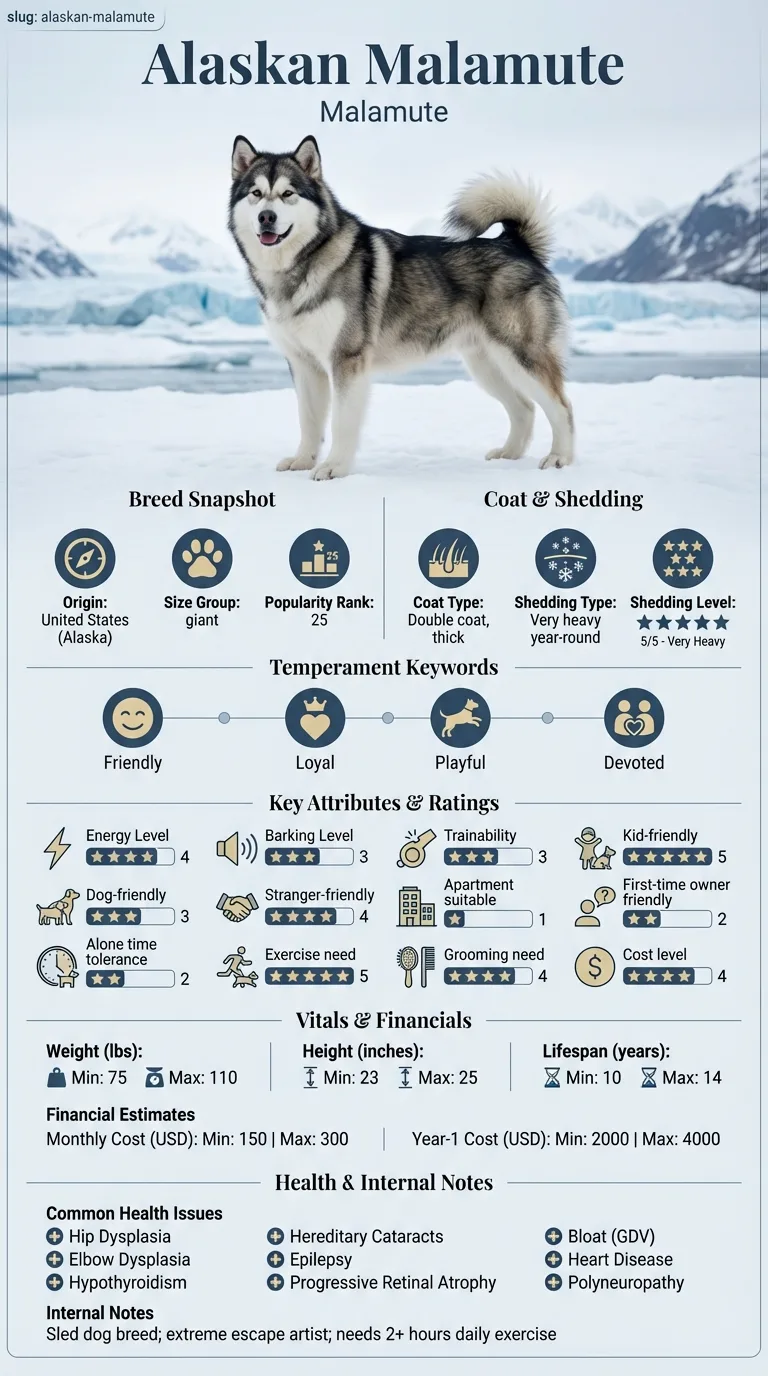
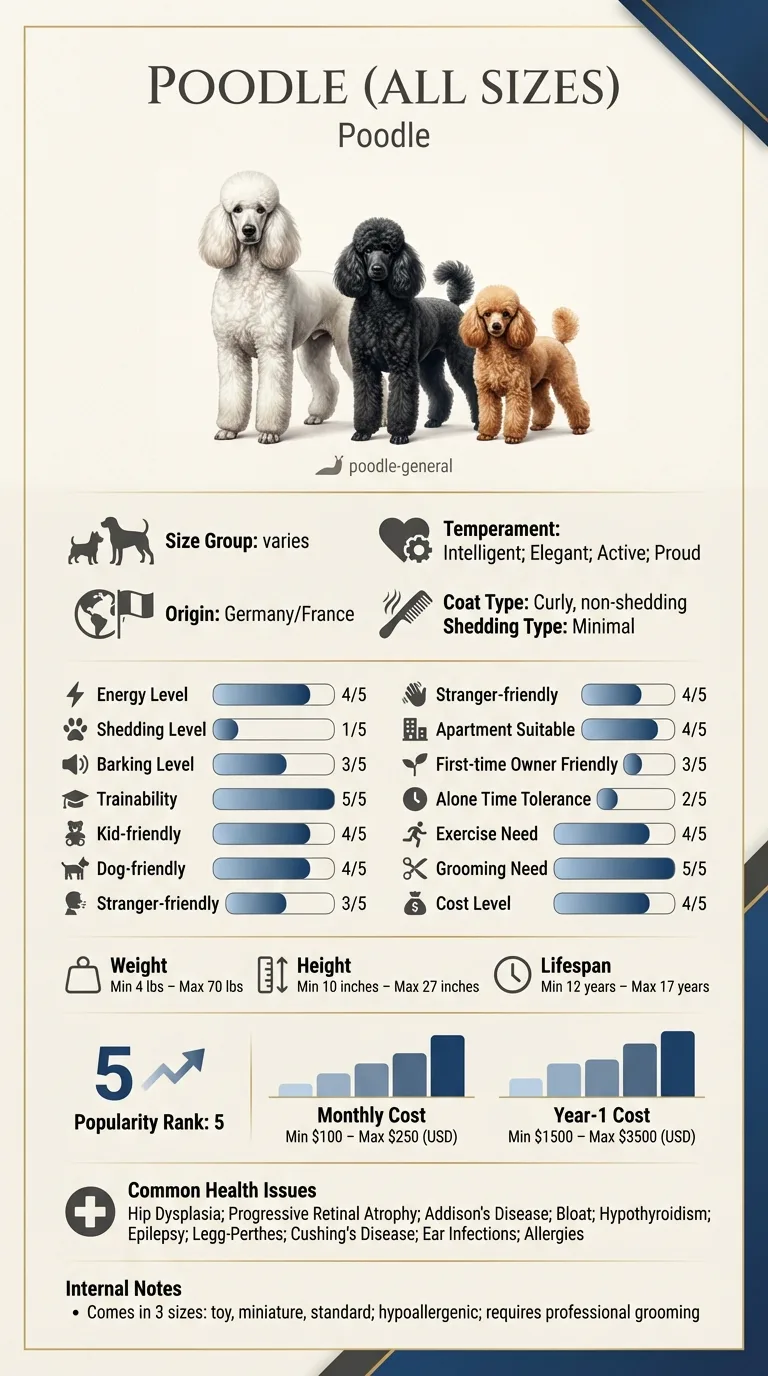
The Poodle's health list is longer than the Malamute's, and one entry on it deserves particular attention because it is so easily missed.
Addison's disease — hypoadrenocorticism — is a failure of the adrenal glands to produce enough cortisol and aldosterone, and Poodles are among the breeds most associated with it. It is sometimes called the great pretender because its signs are vague and intermittent: episodes of lethargy, poor appetite, vomiting or diarrhoea, a dog that seems unwell for a few days and then appears to recover. Many dogs are treated for something else several times before anyone tests. Untreated, it can end in an Addisonian crisis — collapse, dangerously low blood pressure, a life-threatening emergency. The diagnostic route is an ACTH stimulation test, and once identified it is managed with lifelong medication and a good prognosis. The practical takeaway: if a Poodle has recurring vague illness with no clear cause, ask specifically about adrenal testing.
Cushing's disease sits at the other end of the same axis — too much cortisol — and shows as increased thirst, increased urination, a pot-bellied appearance and thinning coat in an older dog.
The rest of the list: hip dysplasia, progressive retinal atrophy with DNA testing available, bloat in Standards particularly, hypothyroidism, epilepsy, Legg-Calve-Perthes disease in the smaller varieties, ear infections driven by hair growing in the canal, and allergies. Ear care is a routine job in this breed, not an occasional one.
The Malamute's list is shorter and blunter: hip and elbow dysplasia, bloat, hypothyroidism, epilepsy, progressive retinal atrophy, hereditary cataracts, zinc-responsive dermatosis and inherited polyneuropathy.
Lifespan clearly favours the Poodle at 12 to 17 years against 10 to 14, with the smaller varieties at the top of that range. Ask a Poodle breeder for hip scores, eye certification and DNA results; ask a Malamute breeder for hips and elbows.