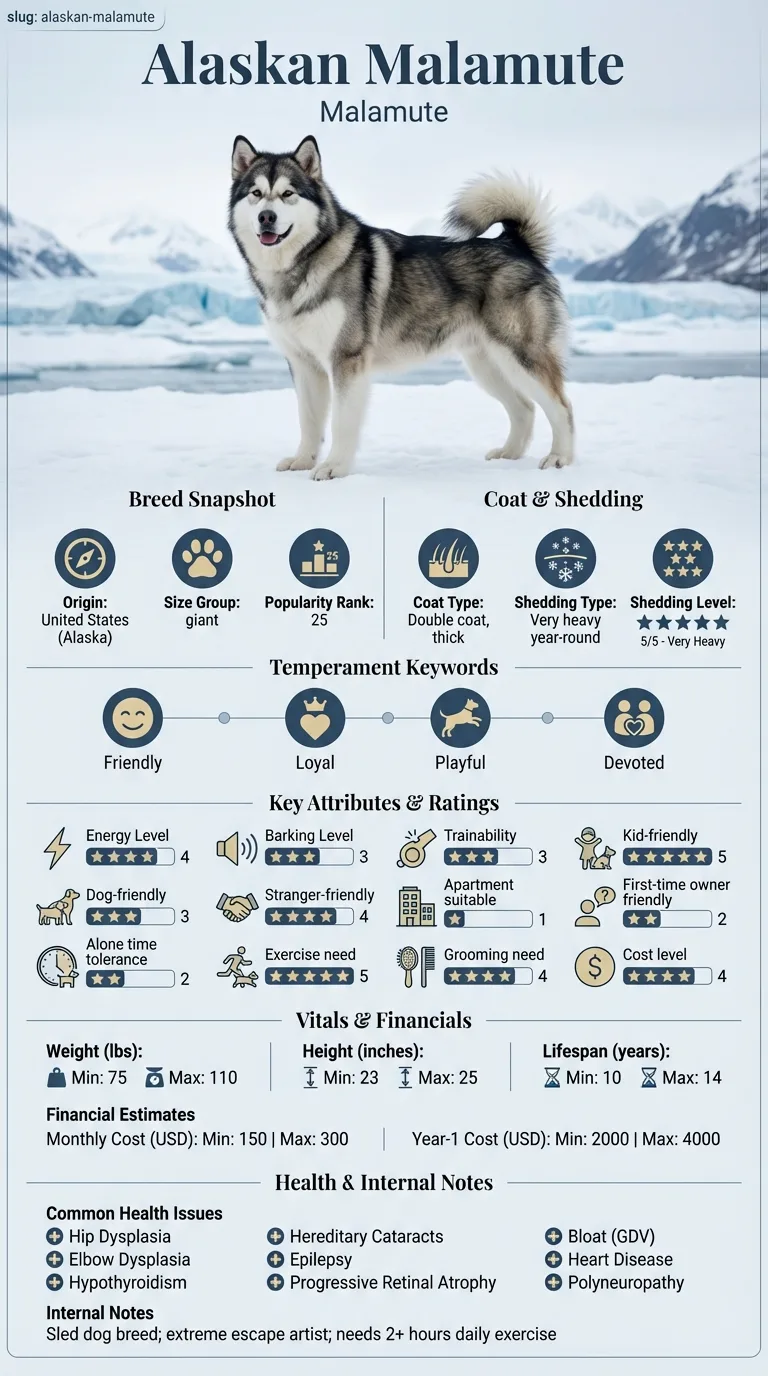
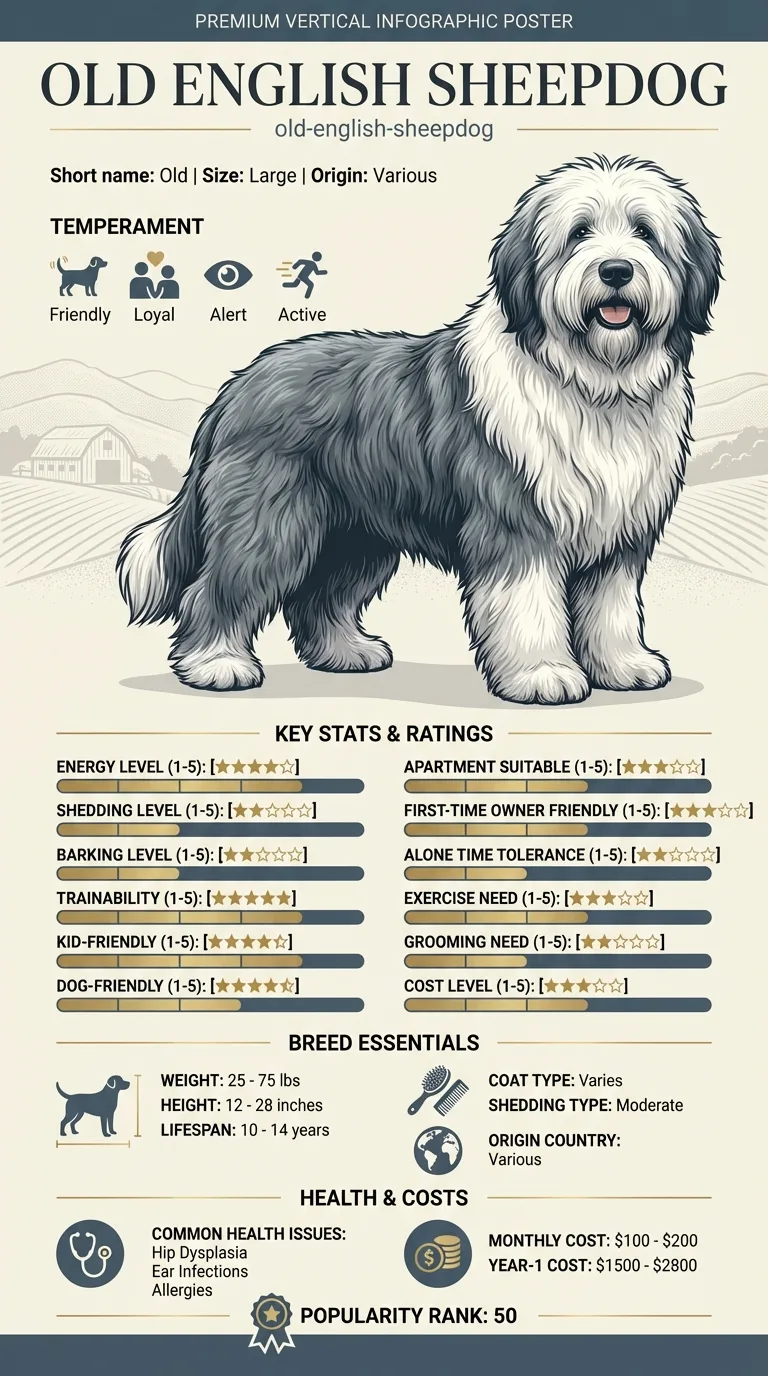
The Old English Sheepdog's list is short — hip dysplasia, cataracts, hypothyroidism, bloat and primary ciliary dyskinesia — and the last of those is the one most buyers have never heard of.
Primary ciliary dyskinesia is an inherited defect in the tiny hair-like cilia that line the airways and sweep mucus out of the lungs. When they do not work, mucus stays put, and the result is a puppy with a persistent wet cough, recurring nasal discharge and repeated chest infections from very early in life. It is not a condition that appears in middle age; it is usually obvious in the first months, and it is often misdiagnosed as ordinary kennel cough that keeps coming back. Affected dogs need lifelong management. The important point for a buyer is that DNA testing exists in the breed, so a breeder can know the status of both parents — and a puppy from two tested-clear parents cannot be affected.
Cataracts and hypothyroidism are shared with the Malamute, and both are worth asking about. Eye certification on breeding stock covers the first; the second shows up gradually as weight gain, lethargy and coat change, and is easily treated once identified.
Bloat is on both lists. Both breeds are large and deep-chested enough for the standard precautions: split meals, quiet time around eating, a slow-feeder bowl for a fast eater, and knowing where the nearest out-of-hours clinic is before you need it.
Hip dysplasia is the shared orthopaedic question — scores on both parents, and restrained exercise through the first eighteen months in either breed.
The Malamute's list runs longer, adding elbow dysplasia, epilepsy, progressive retinal atrophy, zinc-responsive dermatosis and inherited polyneuropathy, but its lifespan is the better of the two at 10 to 14 years against 10 to 12.