Health
Do Weimaraners get Legg-Calvé-Perthes disease?
No, it's documented in small and toy breeds under about 25 pounds, not in large breeds like the Weimaraner.

Quick answer
Do Weimaraners get Legg-Calvé-Perthes disease?
No, it's documented in small and toy breeds under about 25 pounds, not in large breeds like the Weimaraner.
Perthes disease sounds like exactly the kind of hip problem a Weimaraner owner should worry about, except the research behind it was built entirely around dogs a fraction of this breed's size.
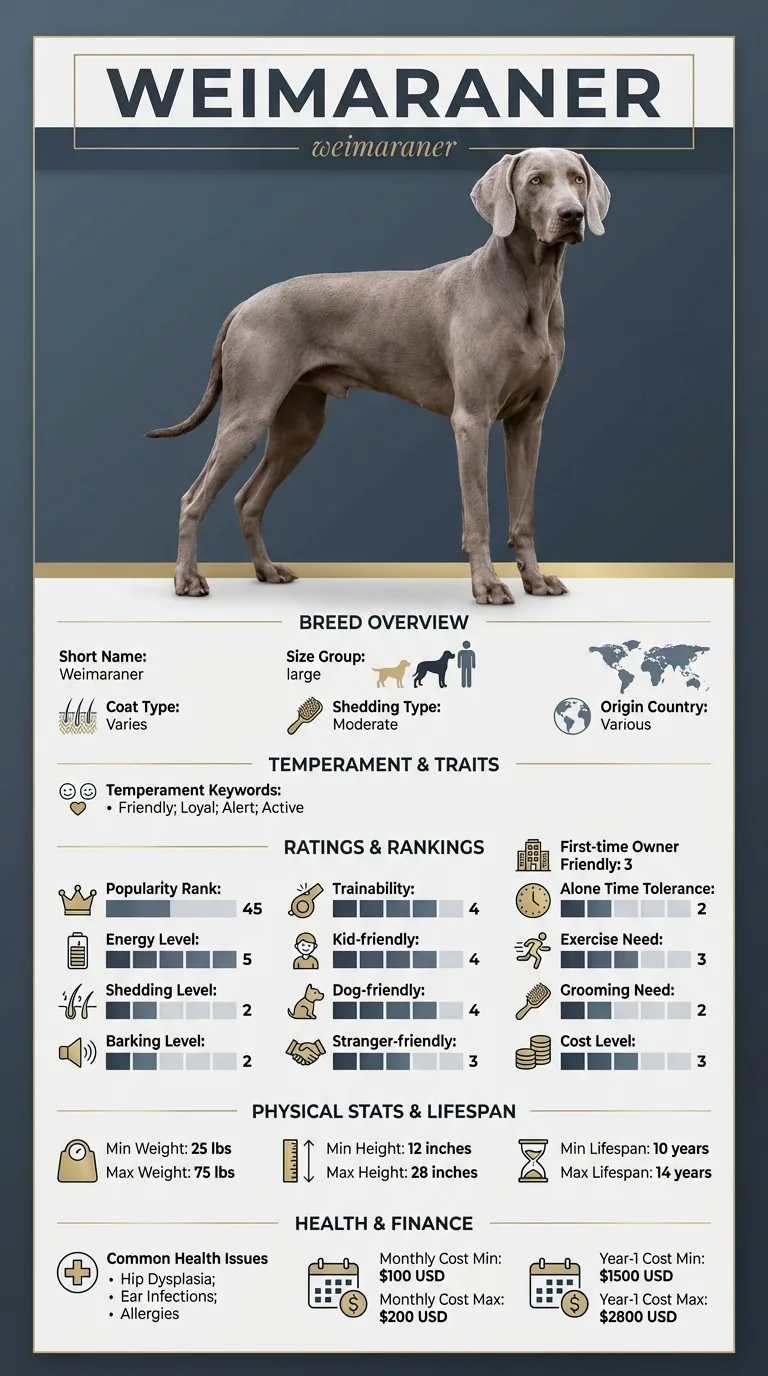
Owners of Weimaraner puppies who found Legg-Calvé-Perthes disease while researching canine hip problems in general, especially after learning this breed has its own documented hip dysplasia risk, and want to know whether this rarer-sounding condition is also something to worry about.
This guide is not medical advice. If your dog shows pain, sudden behavior change, or worsening symptoms, consult a licensed veterinarian.
Some links may be affiliate links. We may earn a commission at no extra cost to you. We only suggest products we believe are helpful for dog owners.
We research and check what we publish, but we do not warrant that any figure, date, price, or statement is accurate, complete, or current, and we accept no liability for any loss, cost, injury, or other harm arising from the use of this site. Use it as one reference among several. You remain responsible for your own decisions and for your dog's care - confirm anything that matters with a licensed veterinarian or another qualified professional before you act on it. Full disclaimer.
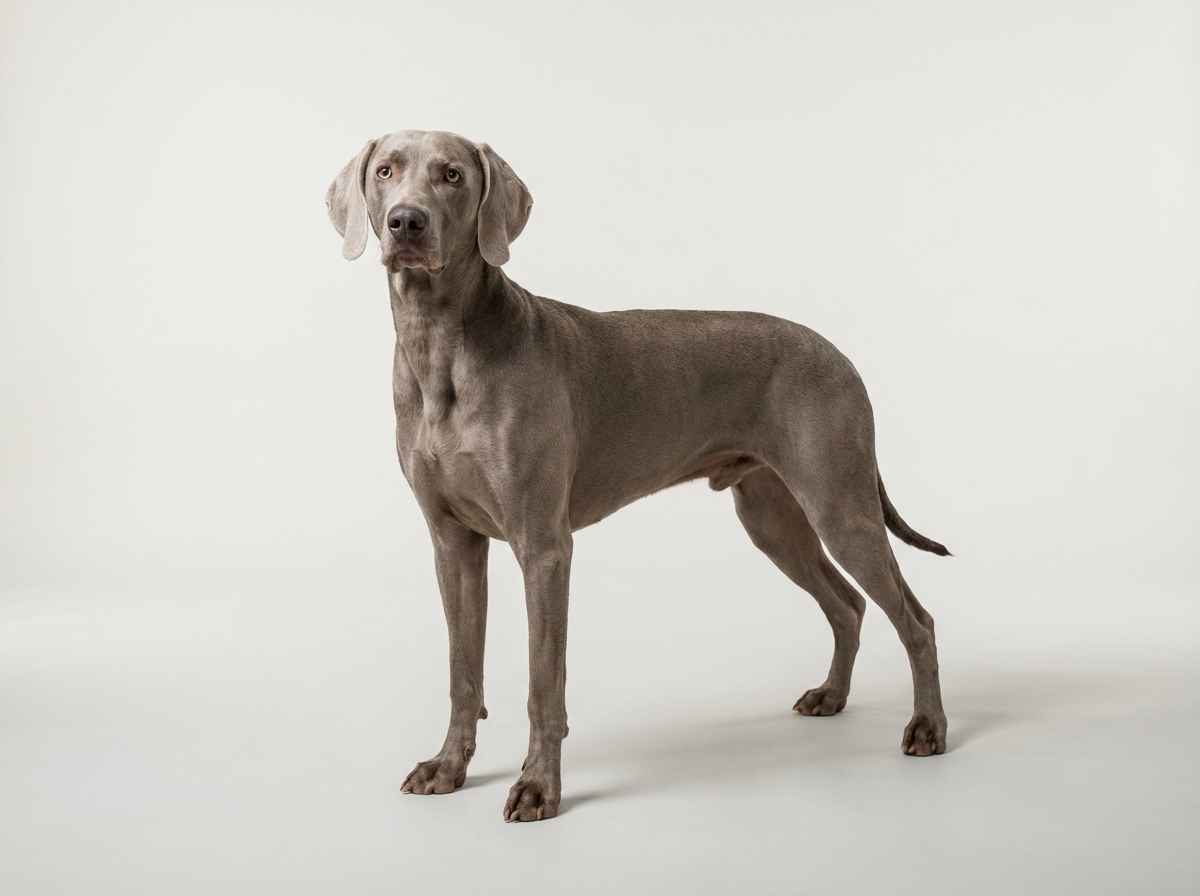
Legg-Calvé-Perthes disease is avascular necrosis of the femoral head, well documented in small and toy breeds under roughly 25 pounds, and it isn't established as occurring in Weimaraners. For a limping Weimaraner, hip dysplasia — the hip condition genuinely documented in this breed — along with panosteitis or a soft-tissue injury are the far more relevant explanations to investigate.
Legg-Calvé-Perthes disease is uncommon even within the small breeds where it's documented, and it has no established occurrence in Weimaraners at all. Hip dysplasia, by contrast, is a recognized and meaningfully common concern in this breed and is the far more relevant condition to track.
The vascular and skeletal factors behind Legg-Calvé-Perthes disease have been characterized specifically in small and toy breeds, and no equivalent mechanism has been documented in Weimaraner genetics or anatomy. This breed's own documented hip driver is developmental hip dysplasia, a joint-laxity problem tied to large-breed growth patterns rather than to femoral head blood supply.
Because Perthes disease isn't established in this breed, there are no meaningful environmental triggers to manage for it. The environmental factors actually worth managing in a Weimaraner are the ones tied to hip dysplasia and rapid growth: controlled exercise, appropriate growth-phase nutrition, and maintaining a lean body condition through puppyhood.
See a vet for any Weimaraner showing persistent hind-leg lameness, reluctance to rise, or reduced activity, regardless of whether Perthes disease crossed your mind. In this breed, that exam will reasonably focus on hip dysplasia, panosteitis, or a soft-tissue injury as the likely causes.
Legg-Calvé-Perthes disease turns up constantly in general dog-hip search results, which can pull Weimaraner owners toward a diagnosis that has never been characterized in their breed. Watch for these missteps.
See all Weimaraner health problems, which breeds are prone to legg calv perthes disease, or the full Weimaraner breed guide for temperament, exercise needs and ownership costs.
There's no meaningful timeline to track for Perthes disease in a Weimaraner because it isn't a relevant risk for this breed. If a limp turns out to be hip dysplasia instead, that's typically a longer-term condition to monitor and manage across the dog's life rather than something with a short recovery window.
Success here looks like redirecting a limping Weimaraner's workup toward the conditions actually documented in this breed, hip dysplasia chief among them, rather than pursuing a diagnosis built around dogs a fraction of this size. A thorough vet exam and, if needed, hip radiographs will get you a far more useful answer than continued research into Perthes disease.
Legg-Calvé-Perthes disease is avascular necrosis: the blood supply to the head of the femur fails in a young, small-breed dog, the bone tissue dies, and the joint collapses as a result. It's documented almost exclusively in dogs under roughly 25 pounds, with Yorkshire Terriers, Miniature Pinschers, and West Highland White Terriers among the breeds most frequently cited in veterinary literature.
Hip dysplasia, the condition genuinely documented in Weimaraners, works differently: it's a developmental looseness in how the ball and socket fit together, which wears the joint down over months or years rather than cutting off its blood supply. Both conditions can produce a limping hind leg and reduced hip mobility, which is exactly why the two get confused in general searches.
A Weimaraner's larger frame and different vascular anatomy are part of why Perthes disease hasn't been characterized in this breed the way it has in small dogs. If your Weimaraner is limping, the more useful question for your vet is whether it looks like hip dysplasia, not whether it looks like Perthes disease.

A Weimaraner puppy or young adult favoring a hind leg deserves a veterinary exam regardless of which condition you suspect, and the workup for this breed will reasonably start with hip dysplasia, panosteitis (a normal growing-pain condition in large breeds), or a soft-tissue injury, not Perthes disease. Radiographs of the hip joint will show a vet what's actually happening structurally, and in a Weimaraner that's the fastest way to rule things in or out.
Persistent or worsening lameness, reluctance to rise, or a hind leg noticeably thinner than the other all warrant prompt attention in this breed, same as they would in any dog. The underlying cause in a Weimaraner simply won't be Legg-Calvé-Perthes disease.

When Marcus's ten-month-old Weimaraner, Remy, started favoring a hind leg after a hike near their home in Tulsa, a late-night search led him straight to Legg-Calvé-Perthes disease, and the description of bone death in the hip sounded alarming enough that he called his vet's emergency line. The exam and hip radiographs the next morning told a different story: early signs consistent with hip dysplasia, the condition this breed is actually known for, with visible joint laxity on film. Marcus's vet explained that Perthes disease is a small-breed problem, seen in dogs a quarter of Remy's size, and has never been documented in a Weimaraner. With an actual diagnosis in hand, Marcus and his vet set up a weight-management and controlled-exercise plan for Remy's hip dysplasia, along with a recheck schedule to track how the joint developed over the following months.
Key takeaway: A limping Weimaraner is worth an urgent vet visit, but the useful diagnosis to chase is hip dysplasia — the condition genuinely documented in this breed — not Legg-Calvé-Perthes disease, which belongs to dogs built nothing like a Weimaraner.
No. It's characterized almost entirely in small and toy breeds under about 25 pounds, such as Yorkshire Terriers and West Highland White Terriers, not in a large breed like the Weimaraner.
It's avascular necrosis of the femoral head: blood supply to the top of the thighbone fails in a young dog, the bone tissue dies, and the hip joint deteriorates as a result. It typically appears between four and eleven months of age in the small breeds where it's documented.
Hip dysplasia is the hip condition genuinely documented in this breed, caused by developmental looseness in the joint rather than a loss of blood supply. It's worth discussing with your vet and screening for through radiographs, especially in a breed as active as the Weimaraner.
It would be exceptionally unusual and essentially unstudied in a dog this size, though nothing in medicine is truly impossible. Hip dysplasia, panosteitis, or a soft-tissue injury are all far more statistically likely explanations for a Weimaraner's limp.
Mild cases sometimes respond to rest and pain management, but many small-breed dogs need a femoral head ostectomy to remove the damaged bone and let a fibrous "false joint" form. Those treatment specifics don't transfer usefully to a Weimaraner's hip problems, which call for different diagnostics and options.
Perthes disease in small breeds classically appears between four and eleven months old. Weimaraner hip dysplasia can show early signs in puppyhood too, but it often develops or worsens gradually and may not become obvious until later adolescence or adulthood.
There's little reason to test for a condition that hasn't been documented in this breed's size class. It's more useful to ask about hip dysplasia screening, such as an OFA or PennHIP evaluation, which is actually relevant to a Weimaraner.
No, it's documented in small and toy breeds under about 25 pounds, not in large breeds like the Weimaraner.
Hip dysplasia is the hip condition genuinely documented in this breed.
Yes, an OFA or PennHIP evaluation is a reasonable cost given this breed's documented hip dysplasia risk.
No, direct any routine adjustments like controlled exercise and weight management toward hip dysplasia risk instead.
Yes, controlled, low-impact exercise and a lean body condition support joint health, though it won't prevent hip dysplasia outright.
A one-page prep sheet for this condition: the signs, the questions to ask, what to get priced. Unlocks here.
You get: Vet visit prep sheet
No spam. One-click unsubscribe. See our privacy policy.
See a sample page before you decide.
Early access list
The free prep sheet covers the same-day warning signs, a symptom log and the questions to ask. We are considering a fuller kit that adds a cost worksheet for the usual tests and treatments (US price ranges with their sources) and a plain-English guide to ways of covering the bill. It is not built yet; this list tells us whether it is worth building.
One email, no spam, unsubscribe anytime. Information only, not veterinary advice.