Health
Do Weimaraners get glaucoma often?
Primary, inherited glaucoma isn't documented in this breed; secondary glaucoma from injury or another eye issue is the more realistic path.

Quick answer
Do Weimaraners get glaucoma often?
Primary, inherited glaucoma isn't documented in this breed; secondary glaucoma from injury or another eye issue is the more realistic path.
A sudden red, painful, cloudy-looking eye with a dog squinting hard or pawing at their face is one of the true eye emergencies in veterinary medicine, and glaucoma is exactly the kind of condition where the difference between same-hour and next-day care can mean the difference between saving vision and losing it.
This affects owners of any Weimaraner showing sudden eye pain, redness, or cloudiness, since glaucoma can occur secondary to other issues rather than only as a primary inherited condition.
This guide is not medical advice. If your dog shows pain, sudden behavior change, or worsening symptoms, consult a licensed veterinarian.
Some links may be affiliate links. We may earn a commission at no extra cost to you. We only suggest products we believe are helpful for dog owners.
Check this first
You don't need to know whether it's primary or secondary glaucoma to know this needs same-hour care; the presentation alone is enough.
If any of these apply, call your vet or an emergency clinic now. The rest of this page is for the cases that are not an emergency.
Glaucoma is a buildup of pressure inside the eye that can cause rapid, permanent vision loss if untreated. Weimaraners aren't documented with a primary, inherited predisposition to it, but secondary glaucoma, developing as a consequence of injury or another eye issue, is a realistic risk given this breed's active, field-oriented lifestyle.
Primary glaucoma is uncommon in Weimaraners compared to breeds with a documented inherited predisposition. Secondary glaucoma is also uncommon overall but is the more realistic path in this breed, given its elevated eye-injury risk from an active, outdoor lifestyle.
Weimaraners are not documented among the breeds with an inherited primary glaucoma predisposition. Their relevance to this topic comes through secondary risk factors: an active, field-oriented lifestyle that raises eye-injury risk, and the general possibility of cataracts or other eye issues that can, in rare cases, progress to secondary glaucoma.
Eye trauma from brush, branches, or rough play is the most breed-relevant environmental trigger for secondary glaucoma. Untreated chronic eye inflammation or an unaddressed cataract progressing to lens instability can also contribute in individual cases.
Treat any sudden red, painful, or cloudy eye, especially with an enlarged or unresponsive pupil, as an emergency requiring care within hours. This is not a condition to monitor overnight or wait out; permanent vision loss can occur quickly without prompt treatment.
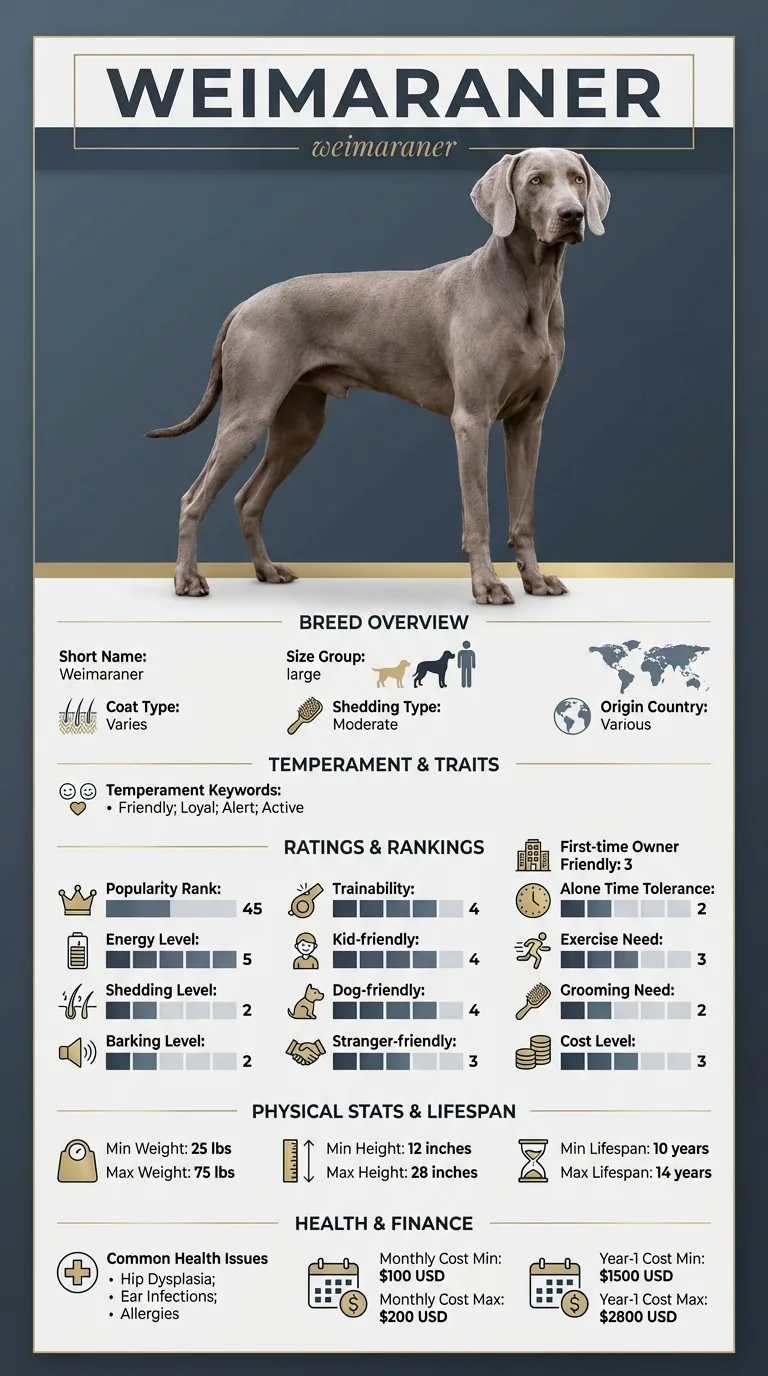
See all Weimaraner health problems, which breeds are prone to glaucoma, or the full Weimaraner breed guide for temperament, exercise needs and ownership costs.
Treatment must begin within hours of symptom onset to have the best chance of preserving vision. Ongoing management, if the eye is saved, often involves lifelong monitoring and sometimes long-term medication managed by your vet or a veterinary ophthalmologist.
Success is recognizing the emergency immediately and getting same-hour care, which gives the best realistic chance of preserving vision, though outcomes vary depending on how much pressure damage occurred before treatment started.
Primary glaucoma, an inherited predisposition to poor fluid drainage within the eye, is well documented in specific breeds like Cocker Spaniels and Basset Hounds. Weimaraners are not among the breeds with a documented primary glaucoma predisposition, which means this condition isn't expected to show up here the way it does in those breeds.
Secondary glaucoma, however, can occur in any breed as a consequence of another eye problem, such as chronic inflammation, a lens that has become dislocated (sometimes following advanced cataracts), a tumor, or significant eye trauma. Because Weimaraners already face real eye-injury risk from their active, field-oriented lifestyle, and can develop cataracts like any breed, secondary glaucoma is the more realistic path by which this breed could develop elevated eye pressure.
Regardless of whether a case turns out to be primary or secondary, the presentation and urgency are the same: a sudden red, painful, cloudy eye, often with an enlarged or fixed pupil, needs emergency veterinary attention within hours, not days. Glaucoma is one of the few conditions on this site where 'wait and see if it improves' is never the right call.
While retrieving a ball from a briar patch, Holly's Weimaraner, Dash, took a scratch to the eye that seemed to heal within a few days with the medicated drops her vet prescribed. About three weeks later, Holly noticed that same eye looked suddenly red and slightly cloudy, and Dash was squinting and pawing at his face. Remembering how urgent eye issues could be for this breed, Holly didn't wait, calling the emergency clinic immediately. Testing confirmed secondary glaucoma, likely related to the earlier injury. Because treatment started within a few hours of the new symptoms appearing, Dash's vision in that eye was largely preserved, though he now needs ongoing pressure-monitoring visits.
Key takeaway: The connection between Dash's earlier eye injury and his later glaucoma wasn't obvious at first, but Holly's fast response to the new symptoms, rather than assuming it was a minor recurrence, made the difference in preserving his vision.
Not primary, inherited glaucoma, which is documented in other breeds like Cocker Spaniels and Basset Hounds rather than Weimaraners. Secondary glaucoma, occurring as a consequence of injury, cataracts, or other eye issues, is the more realistic path for this breed given its activity-related eye injury risk.
Primary glaucoma is an inherited predisposition to poor eye fluid drainage. Secondary glaucoma develops as a consequence of another problem, like trauma, chronic inflammation, or a dislocated lens. Both require the same urgent treatment once pressure builds.
A cataract is a slow, usually painless clouding of the eye's lens. Glaucoma is a pressure buildup that's typically sudden, painful, and can include redness and an enlarged pupil, a genuine emergency rather than a gradual change.
Within hours, not days. Elevated eye pressure can cause permanent optic nerve damage and vision loss quickly, making this one of the true same-hour veterinary emergencies.
Yes, trauma to the eye can trigger secondary glaucoma, which is part of why any eye injury in this active, field-oriented breed should be evaluated promptly rather than assumed to be minor.
Treatment can sometimes preserve vision if started quickly, and always requires prompt veterinary and often specialist ophthalmology involvement. Outcomes depend heavily on how fast treatment begins after symptoms appear.
Emergency treatment and specialist ophthalmology care for glaucoma is a significant expense, often running into the thousands of dollars depending on severity and whether ongoing management or surgery is needed.
Primary, inherited glaucoma isn't documented in this breed; secondary glaucoma from injury or another eye issue is the more realistic path.
A sudden red, painful, cloudy eye, sometimes with an enlarged pupil, very different from the slow clouding of a cataract.
Yes, always. It needs veterinary care within hours to have the best chance of preserving vision.
Yes, trauma can trigger secondary glaucoma, which is why prompt care for any eye injury matters.
It's a significant expense, often in the thousands of dollars depending on severity and specialist involvement.
A one-page prep sheet for this condition: the signs, the questions to ask, what to get priced. Unlocks here.
You get: Vet visit prep sheet
No spam. One-click unsubscribe. See our privacy policy.
Preview page 1 before you decide.