Health
What's the most common sign of allergies in this breed?
Recurring ear infections and paw licking are more typical presentations than sneezing or watery eyes.

Quick answer
What's the most common sign of allergies in this breed?
Recurring ear infections and paw licking are more typical presentations than sneezing or watery eyes.
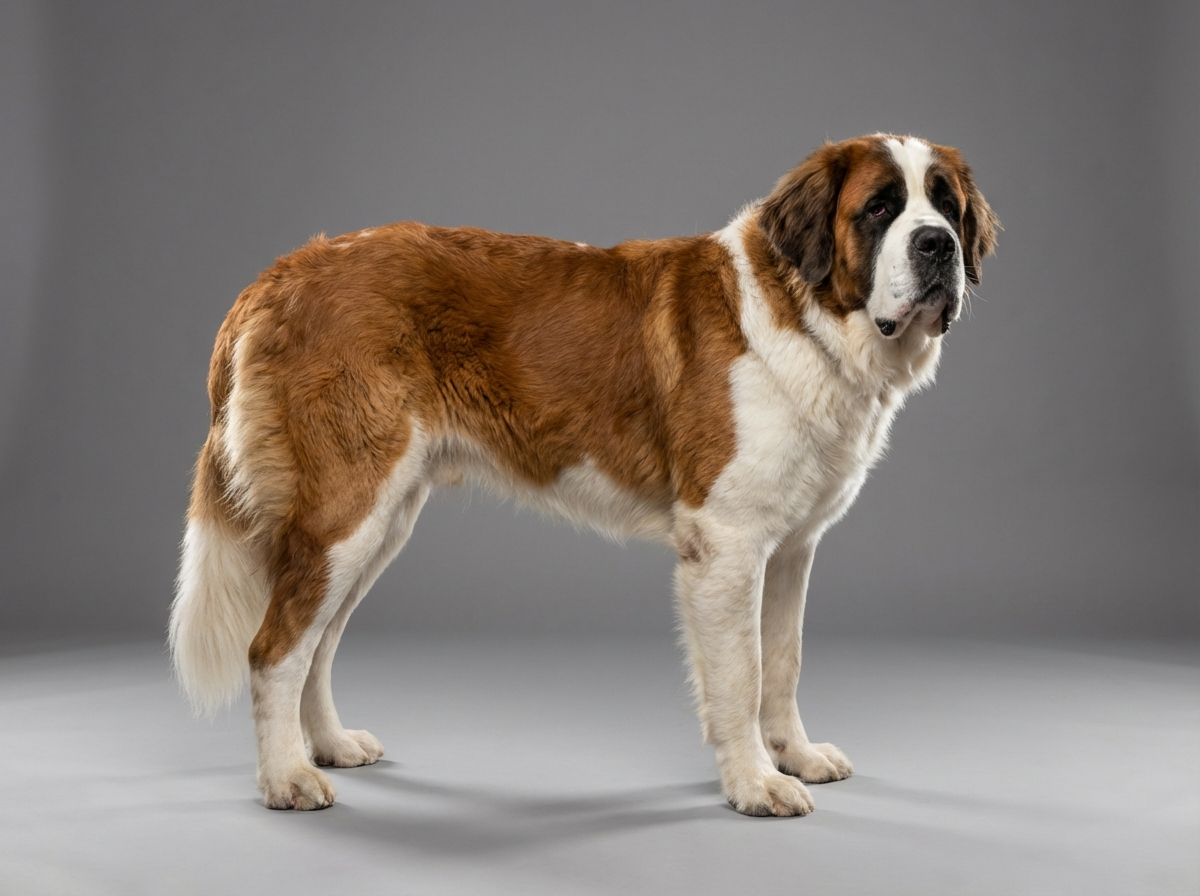
A Saint Bernard with allergies rarely sneezes its way through spring. It shakes its head, digs at its ears, and licks its paws raw — a pattern owners often mistake for a series of unrelated infections rather than one underlying condition.
Owners who keep treating each ear infection or skin flare as a standalone problem, paying for repeat vet visits and short-term fixes without addressing the recurring allergic trigger underneath them.
This guide is not medical advice. If your dog shows pain, sudden behavior change, or worsening symptoms, consult a licensed veterinarian.
Some links may be affiliate links. We may earn a commission at no extra cost to you. We only suggest products we believe are helpful for dog owners.
Chronic allergies in a Saint Bernard are an ongoing immune overreaction to food ingredients, pollen, dust or mold that shows up mainly through the skin and ears — recurring ear infections, paw licking, and irritated skin folds — rather than through sneezing or watery eyes. It is a long-term management condition rather than a single illness to cure.
Chronic ear infections and skin irritation are among the most frequently reported ongoing health issues in this breed, and most Saint Bernard owners will manage at least one significant flare during the dog's life. Severity ranges widely, from an occasional mild ear cleaning to dogs needing a structured year-round routine.
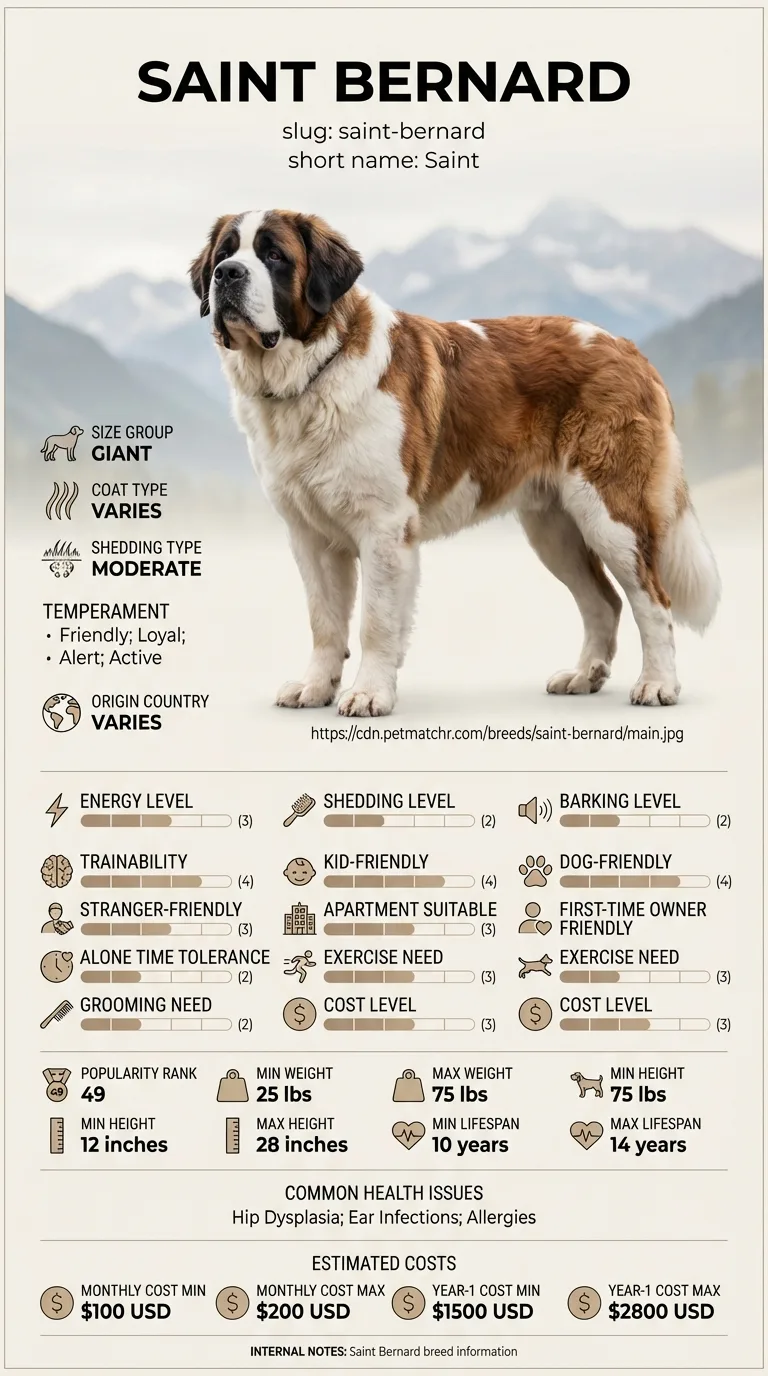
The breed's heavy double coat holds moisture, pollen and dust close to the skin longer than a short, single coat would, giving allergens more contact time. Loose skin folds around the face and neck create warm, moist pockets that are harder to keep dry and clean. None of this means the immune system itself is unusually reactive — it means the physical environment on a Saint Bernard's body gives ordinary allergens more opportunity to cause irritation.
Homes with carpeting, high dust, or seasonal pollen exposure through open windows and yard time increase allergen load. Frequent bathing with the wrong products, humid climates, and inconsistent diets that make triggers hard to isolate all compound the underlying tendency.
Book a visit for recurring ear infections, persistent paw licking, red or thickened skin, or any flare that does not improve within a few days of home care. Treat as urgent any sudden facial swelling, open sores, or an ear infection accompanied by head-tilting or apparent pain, since these can indicate a more serious secondary infection.
Most of what prolongs a Saint Bernard's allergy season is not the allergy itself but how the flare gets managed at home.

See all Saint Bernard health problems, which breeds are prone to allergies, or the full Saint Bernard breed guide for temperament, exercise needs and ownership costs.
Most owners see a meaningful reduction in flare frequency within 8 to 12 weeks of establishing a consistent diet and grooming routine, though full identification of every trigger can take a season or more of tracking.
Success is fewer and milder flares, not zero flares — a dog whose ears stay clear for months at a stretch and whose skin issues, when they do occur, resolve quickly with an established home routine rather than escalating into a crisis.
In an allergic dog, inflamed skin produces more oil and changes the microenvironment inside the ear canal, letting yeast and bacteria that are normally present in small numbers multiply out of control. A Saint Bernard's ears sit close to the head and get less airflow than an upright ear does, which is a modest but real disadvantage once inflammation is already present. The result is a cycle: allergy inflames the canal, moisture and yeast take hold, the ear gets treated and clears up, and weeks later the same allergic trigger starts the cycle again.
Treating only the infection each time — without addressing the allergy driving it — is why some owners feel they are stuck on a treadmill of ear drops. Long-term control means identifying and reducing the allergic trigger itself, not just clearing the current infection.
Delilah, a four-year-old Saint Bernard, had gone through four separate ear infections in a single year, each treated with drops that cleared things up for a few weeks before the head-shaking started again. Her owner had assumed each episode was a fresh, unrelated infection until a vet visit connected the pattern to a chronic food allergy. An eight-week elimination diet trial pointed to a common protein source Delilah had eaten for years. Switching to a novel protein, combined with a weekly ear-check routine and more frequent brushing during pollen season, cut her infections down to one mild flare over the following year.
Key takeaway: Treating the fourth ear infection the same way as the first missed the pattern entirely — recognizing allergies as the recurring cause, not the ear infections themselves, was what finally broke the cycle.
They are not the single most allergy-prone breed, but chronic ear infections and skin irritation are commonly reported in the breed, likely worsened by their heavy coat trapping moisture and allergens close to the skin.
Environmental allergies often follow a seasonal pattern and improve in winter; food allergies tend to be present year-round. A vet-guided elimination diet over 8 to 12 weeks is the only reliable way to confirm a food trigger.
Only ones your vet has specifically approved for your dog's weight and health history. Not every over-the-counter antihistamine is appropriate or effective for canine allergies, and dosing by weight matters in a giant breed.
Allergies express differently in different dogs. Some show mostly through the ears, others through paw licking or belly redness, and some through both. The underlying allergic tendency is the same even when the visible pattern differs.
Usually not cured, but they can be well managed. Most dogs need an ongoing routine — diet consistency, regular ear checks, and prompt treatment of flares — rather than a one-time fix.
Regular brushing and occasional medicated baths reduce the allergen load sitting in the coat and can meaningfully cut down flare frequency, though grooming alone will not resolve a true underlying allergy.
Costs vary widely by severity, but recurring ear treatments, vet visits, and prescription diets can add up over a year. Ask your vet for a realistic annual estimate based on your dog's specific pattern.
Recurring ear infections and paw licking are more typical presentations than sneezing or watery eyes.
They can worsen or shift in trigger over a dog's life, but many dogs stabilize once a consistent management routine is in place.
A limited-ingredient or novel-protein diet, introduced gradually and kept consistent for at least 8 weeks, is the standard first step for suspected food allergies.
Weekly checks for redness, odor or head-shaking catch flares early, before a full infection sets in.
No — persistent scratching or head-shaking is a medical sign, not a behavior to correct, and should prompt a vet visit rather than obedience work.
A one-page prep sheet for this condition: the signs, the questions to ask, what to get priced. Unlocks here.
You get: Vet visit prep sheet
No spam. One-click unsubscribe. See our privacy policy.
Preview page 1 before you decide.