Behavior
What are quick tips for Rottweiler Mix allergic reactions?
Keep your Rottweiler Mix away from known allergens, maintain a clean living environment, and consult your vet for the right diet and medications.

Quick answer
What are quick tips for Rottweiler Mix allergic reactions?
Keep your Rottweiler Mix away from known allergens, maintain a clean living environment, and consult your vet for the right diet and medications.
Rottweiler Mix allergic reactions can be a frustrating challenge for owners. These reactions can affect your dog's health and happiness.
Owners of Rottweiler Mixes often face this issue, especially if they live in areas with high pollen counts or have pets with sensitivities. Busy families or first-time dog owners may struggle to identify and address these allergic reactions effectively.
This guide is not medical advice. If your dog shows pain, sudden behavior change, or worsening symptoms, consult a licensed veterinarian.
Some links may be affiliate links. We may earn a commission at no extra cost to you. We only suggest products we believe are helpful for dog owners.
We research and check what we publish, but we do not warrant that any figure, date, price, or statement is accurate, complete, or current, and we accept no liability for any loss, cost, injury, or other harm arising from the use of this site. Use it as one reference among several. You remain responsible for your own decisions and for your dog's care - confirm anything that matters with a licensed veterinarian or another qualified professional before you act on it. Full disclaimer.
Check this first
Recognizing when a Rottweiler Mix's allergic reactions are an emergency is crucial for their health. Emergency signs include severe swelling, difficulty breathing, or excessive vomiting. If you notice these symptoms, you should call your vet immediately.
Mild allergic reactions can often be monitored at home. Watch for signs like mild itching or sneezing, which may not require urgent care. However, if these symptoms persist or worsen, consult your vet to determine a proper plan.
In summary, if your Rottweiler Mix displays severe symptoms or distress, don’t hesitate to seek help. On the other hand, mild symptoms can often be managed with observation and care at home, but always err on the side of caution if you’re unsure.
If any of these apply, call your vet or an emergency clinic now. The rest of this page is for the cases that are not an emergency.
Rottweiler Mix allergic reactions can be a significant concern for owners. These reactions often manifest as skin irritations, excessive scratching, or gastrointestinal issues. Daily life may include watching for signs of discomfort and managing flare-ups, which can be challenging.
Allergic reactions are quite common in Rottweiler Mixes, with a reported risk that is 276% higher than average. Many owners experience these issues at some point, making it essential to recognize and address them promptly.
Rottweiler Mixes can have genetic predispositions to allergies. Their immune systems may react strongly to certain environmental factors or food ingredients. This breed is also known to have a history of skin sensitivities, which can lead to allergic reactions.
Environmental factors play a significant role in allergic reactions. Common triggers include pollen, dust mites, mold, and certain chemicals found in cleaning supplies or grooming products. Additionally, dietary changes or specific food ingredients can also cause allergic responses.
Talk to your vet if you notice persistent allergic reactions despite home remedies. If your dog shows severe symptoms like difficulty breathing, excessive itching, or swelling, seek veterinary attention immediately.
Here are some common mistakes Rottweiler Mix owners make that can worsen allergic reactions. Avoiding these can help improve your dog's condition.
Start here: Rottweiler Mix Genetic Disorders: What to Screen For
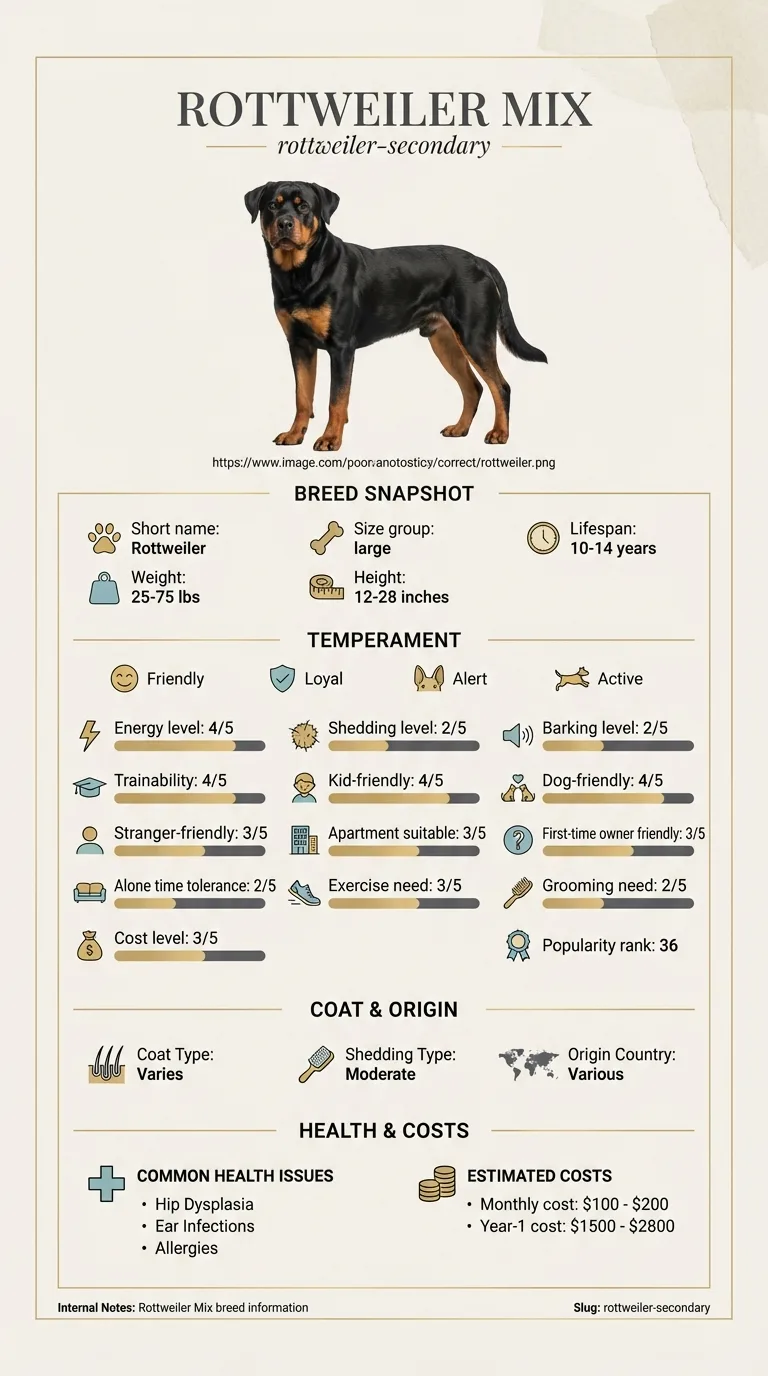
See all Rottweiler Secondary health problems, which breeds are prone to allergic reactions, or the full Rottweiler Secondary breed guide for temperament, exercise needs and ownership costs.
It typically takes 4 to 12 weeks to effectively manage allergic reactions in your Rottweiler Mix. Consistency is key during this period.
Successful management means fewer visible allergic reactions, improved comfort for your dog, and an overall reduction in scratching or inflammation.
When Sarah adopted Bella, her Rottweiler Mix, she quickly noticed Bella scratching and chewing her paws. After a vet visit, Sarah learned Bella had allergies, likely due to environmental factors. Determined to help her, Sarah started a strict routine with hypoallergenic food, regular baths, and careful monitoring of Bella's environment. Over the next few months, Bella's symptoms improved significantly, and she became much more comfortable in her own skin.
Key takeaway: Managing a Rottweiler Mix's allergic reactions requires patience, consistency, and a proactive approach to care.
Rottweiler Mix allergic reactions can stem from various sources like food, pollen, or environmental factors. It's essential to monitor your dog's exposure and note any changes in diet or environment that may trigger these reactions.
To stop Rottweiler Mix allergic reactions, first identify the allergens through an elimination diet or allergy testing. Once identified, avoid those allergens and consult your vet for suitable treatments like antihistamines or hypoallergenic diets.
Common signs of allergic reactions in Rottweiler Mixes include itching, skin rashes, ear infections, or gastrointestinal issues. If you notice these symptoms, it's important to consult your veterinarian for an accurate diagnosis.
Training can help manage your Rottweiler Mix’s behavior related to their allergies. Positive reinforcement can encourage them to avoid certain areas or items that trigger their reactions, but it won’t eliminate the allergies themselves.
Treatments for Rottweiler Mix allergic reactions may include antihistamines, steroids, or allergy shots. Always discuss with your vet the best course of action for your dog's specific needs.
You should take your Rottweiler Mix to the vet whenever you notice signs of allergies, or at least once a year for a check-up. Regular visits help monitor their health and catch any issues early.
Common allergens for Rottweiler Mixes include certain foods, pollen, dust mites, and flea saliva. Identifying specific triggers can help manage their allergic reactions effectively.
Signs of allergies in Rottweiler Mixes may include itching, sneezing, or skin irritations. If you notice these symptoms, it's best to consult your vet for proper diagnosis and treatment.
Yes, older Rottweiler Mixes might experience different allergy symptoms or more severe reactions. Aging can affect their immune system, making it crucial to monitor their health closely.
You should see a vet if your Rottweiler Mix has persistent or severe symptoms, such as difficulty breathing or swelling. Quick attention can prevent further complications.
Yes, you can manage mild allergies at home by keeping your dog's environment clean and avoiding known allergens. However, consult your vet for a proper plan tailored to your pet's needs.
Keep your Rottweiler Mix away from known allergens, maintain a clean living environment, and consult your vet for the right diet and medications.
Consider a hypoallergenic diet that eliminates common allergens and gradually reintroduce foods to identify triggers.
Yes, there are several brands that offer limited ingredient or hypoallergenic dog foods designed for dogs with allergies.
Limit outdoor time during high pollen counts, bathe your dog regularly, and wipe their paws after walks to remove allergens.
A one-page prep sheet for this condition: the signs, the questions to ask, what to get priced. Unlocks here.
You get: Vet visit prep sheet
No spam. One-click unsubscribe. See our privacy policy.
Preview page 1 before you decide.