Health
Is glaucoma painful?
Yes, acutely painful, unlike some other eye conditions in this breed that are quiet and painless.

Quick answer
Is glaucoma painful?
Yes, acutely painful, unlike some other eye conditions in this breed that are quiet and painless.
This is the eye emergency where waiting even a day can be the difference between saved vision and permanent blindness.
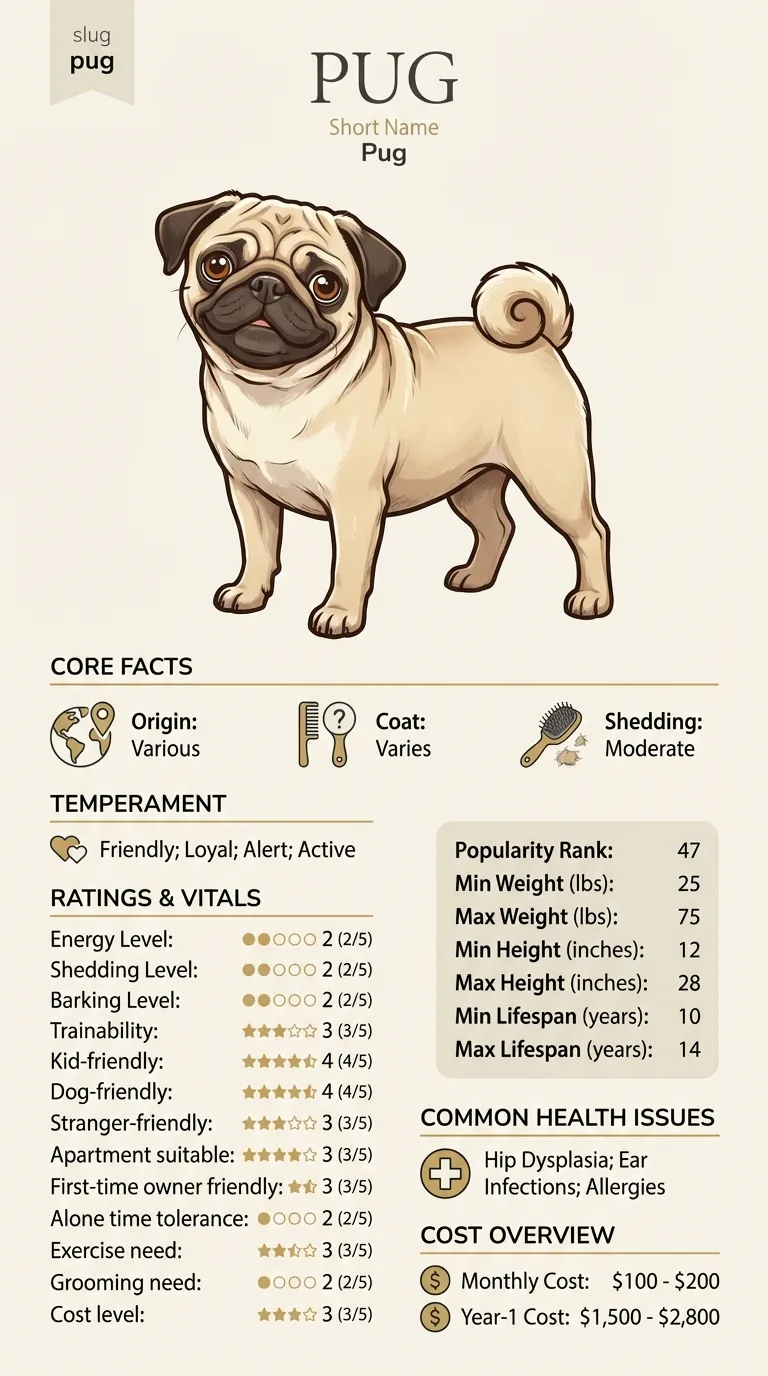
This is critical reading for every Pug owner, since recognizing the signs quickly and getting to emergency care fast is what actually determines whether vision can be saved, far more than any specific individual risk factor.
This guide is not medical advice. If your dog shows pain, sudden behavior change, or worsening symptoms, consult a licensed veterinarian.
Some links may be affiliate links. We may earn a commission at no extra cost to you. We only suggest products we believe are helpful for dog owners.
Check this first
The inside of a healthy eye maintains a careful balance between fluid production and drainage, keeping internal pressure within a normal range. When the drainage angle is malformed or blocked, fluid continues being produced but can't drain properly, and pressure inside the eye climbs. This elevated pressure directly compresses and damages the optic nerve, the structure carrying visual information to the brain, and unlike many other structures in the body, optic nerve damage from sustained high pressure is not reversible once it occurs, which is exactly why speed matters so much more here than with most other eye conditions.
If any of these apply, call your vet or an emergency clinic now. The rest of this page is for the cases that are not an emergency.
Glaucoma is a painful buildup of fluid pressure inside the eye, usually from a drainage malformation or blockage, that can permanently damage the optic nerve and cause vision loss within hours to a couple of days if untreated. It's a true ophthalmic emergency requiring immediate recognition and treatment, unlike the slower, often painless eye conditions also seen in this breed.
Glaucoma is a less common eye condition overall in this breed compared to some others discussed here, but its rapid, sight-threatening progression means every owner should know the signs regardless of how commonly it's diagnosed.
Some brachycephalic breeds' shallow eye sockets and prominent eye positioning have been discussed in veterinary literature as potentially relevant to drainage angle structure, though glaucoma's underlying cause can vary by individual dog beyond breed anatomy alone.
There's no significant environmental trigger for the underlying drainage malformation, though prior eye injury or inflammation in some cases can contribute to or worsen drainage problems over time.
Treat any red, cloudy, bulging, or acutely painful-looking eye as an emergency requiring immediate veterinary attention, not a condition to monitor overnight. The window to preserve vision through prompt pressure-lowering treatment is short, making speed the single most important factor in the outcome.
Start here: Pug Most Common Genetic Disorders: What to Screen For
See all PUG health problems, which breeds are prone to glaucoma, or the full PUG breed guide for temperament, exercise needs and ownership costs.
Emergency treatment to lower eye pressure begins immediately upon diagnosis, with the first hours being the most critical window for preserving vision. Ongoing management, if the eye and some vision are saved, typically involves lifelong monitoring and possibly daily medication.
Success means recognizing the signs and getting to emergency treatment fast enough to preserve as much vision as possible, since any delay directly and often permanently worsens the outcome in a way many other conditions don't.
Classic signs include a visibly red or bloodshot eye, a cloudy or hazy cornea, an enlarged or bulging appearance to the eye itself, squinting or pawing at the eye indicating significant pain, and sometimes a dilated pupil that doesn't respond normally to light. Any combination of these signs warrants an immediate emergency vet visit, not a wait-until-morning approach, since the window to relieve pressure and potentially save vision is measured in hours, not days. Treatment involves emergency medication to rapidly lower eye pressure, and depending on the underlying cause and how much vision remains, further treatment or even surgery to manage long-term pressure control.

If you think your Pug has glaucoma, the plan is three steps: write down what you have seen and when it started, book a veterinary appointment rather than waiting for the next flare, and take video of the behaviour or symptom before you go — the thing you are worried about rarely happens in the consulting room. Screening in the parents covers brachycephalic airway syndrome (boas), pug dog encephalitis, corneal ulcers.
What the vet visit should produce is a diagnosis and a written plan, not just reassurance: what is being ruled out, what the monitoring interval is, and which signs mean you come back sooner. Ask what the treatment costs across a year rather than per visit, because that is the number that decides whether you are managing this condition or reacting to it.
Between appointments, keep a short log — dates, what you saw, what changed. It is the single most useful thing an owner brings to a follow-up, and for glaucoma it is often what separates a clear pattern from a guess.
Late one evening, eight-year-old Frankie's owner noticed his left eye looked unusually red and slightly bulged compared to the right, and he seemed to be squinting and pawing at his face. Rather than waiting until her regular vet opened in the morning, she drove straight to an emergency clinic, where glaucoma was diagnosed and pressure-lowering treatment started within the hour. While Frankie retained only partial vision in that eye due to how advanced the pressure had already become, his vet confirmed that waiting until morning likely would have resulted in complete, permanent vision loss in that eye instead.
Key takeaway: With glaucoma, the decision to treat a red, painful-looking eye as an immediate emergency rather than waiting overnight is often what determines how much vision, if any, can ultimately be saved.
Glaucoma is an acutely painful pressure buildup inside the eye that threatens vision within hours to days if untreated. Corneal dystrophy is a slow, typically painless clouding of the cornea's surface layer that rarely threatens vision urgently. They can both cause a cloudy-looking eye, but the urgency and underlying cause are completely different.
A red or bloodshot eye, cloudy cornea, an eye that looks enlarged or bulging, squinting or pawing at the eye from pain, and sometimes a dilated pupil that doesn't respond normally to light are the classic combination of signs.
Immediately. This is a true ophthalmic emergency where the window to relieve pressure and potentially save vision is measured in hours, not days, making a same-hour emergency vet visit the right response rather than waiting to see if it improves.
Yes, sustained elevated eye pressure damages the optic nerve, and that damage isn't reversible once it occurs, which is exactly why fast treatment is so critical compared to many other eye conditions that progress more slowly.
Emergency treatment focuses on rapidly lowering eye pressure with medication, followed by further management or sometimes surgery depending on the underlying cause and how much vision can be preserved.
It can develop in one eye first and later affect the other, especially if there's an underlying structural drainage issue, which is why the unaffected eye is typically monitored closely after a diagnosis in one eye.
Yes, acutely painful, unlike some other eye conditions in this breed that are quiet and painless.
Within hours to a couple of days without treatment, making this a true emergency.
A red, cloudy, or bulging-looking eye, squinting from pain, and sometimes a poorly responsive pupil.
Yes, immediate emergency treatment is needed to lower pressure before permanent optic nerve damage occurs.
It's a significant emergency expense; ask your emergency vet for a specific estimate given your dog's case.
A one-page prep sheet for this condition: the signs, the questions to ask, what to get priced. Unlocks here.
You get: Vet visit prep sheet
No spam. One-click unsubscribe. See our privacy policy.
Preview page 1 before you decide.