DogBreedCompass
← Back to breed profile

Understanding Poodle (Miniature) Genetic Predisposition to Obesity

Poodles (Miniature) can be prone to obesity due to genetic factors, making it crucial for owners to be aware. (Poodle (Miniature) genetic predisposition to obesity)

Understanding Poodle (Miniature) Genetic Predisposition to Obesity infographic

Owners of Poodles (Miniature), especially those who might not realize their dog has a genetic predisposition to obesity, often face challenges with weight control. This can be particularly concerning for first-time dog owners or those living in homes with limited space for exercise.

Important reminder

This guide is not medical advice. If your dog shows pain, sudden behavior change, or worsening symptoms, consult a licensed veterinarian.

Some links may be affiliate links. We may earn a commission at no extra cost to you. We only suggest products we believe are helpful for dog owners.

What this problem looks like

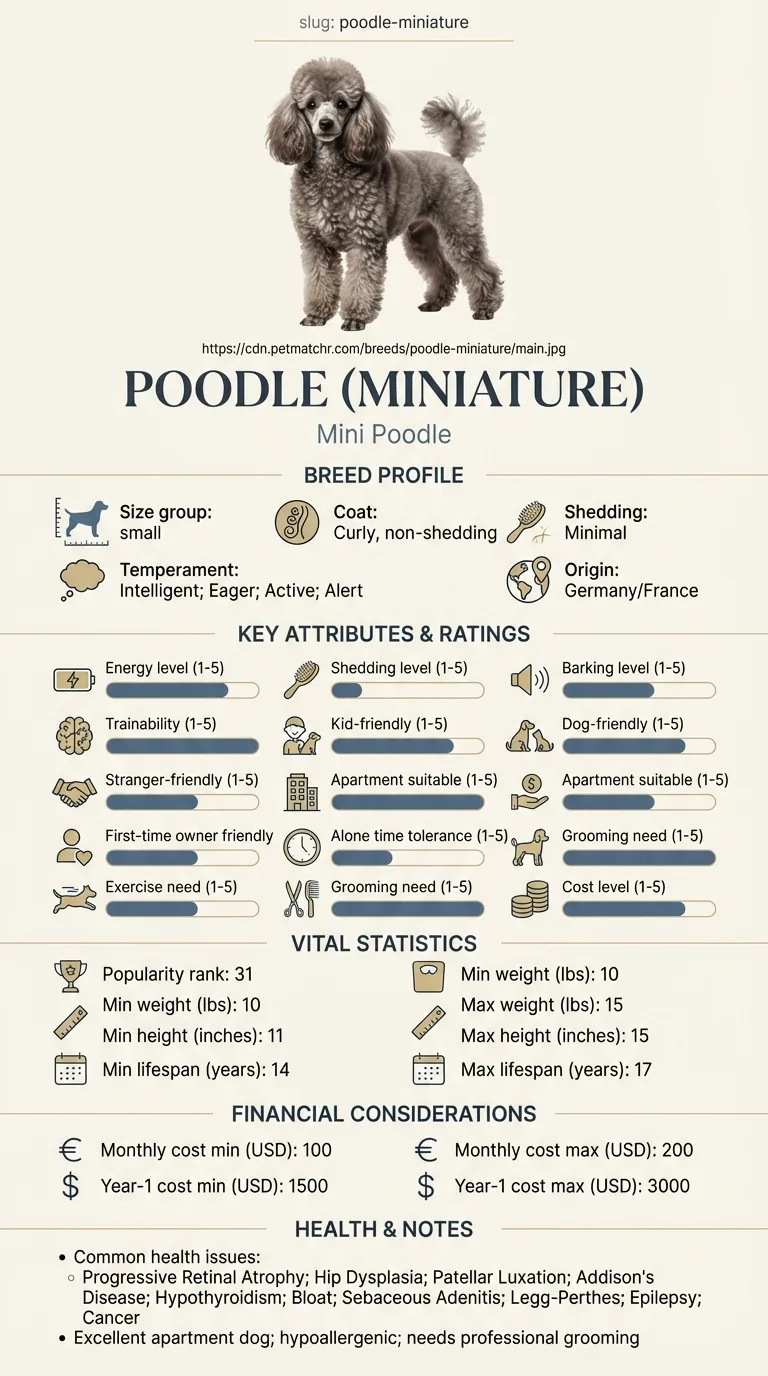
The Poodle (Miniature) genetic predisposition to obesity is a common concern for owners. This breed is prone to gaining weight due to a mutation in the POMC gene, which increases their appetite. Daily life with a Mini Poodle may involve managing their food intake and ensuring regular exercise to prevent obesity-related health issues.

Common triggers

  • Overfeeding or high-calorie treats
  • Lack of exercise or physical activity
  • Genetic factors linked to appetite regulation
  • Age-related metabolism changes

Approximately 25% of Mini Poodles may struggle with obesity due to their genetic predisposition. This can lead to various health issues, making it essential for owners to monitor their weight closely.

Why this happens

Breed factors

Poodles (Miniature) have a genetic predisposition to obesity due to mutations in the POMC gene. This mutation can lead to an increased appetite and a slower metabolism, making it easier for them to gain weight. Their small size means that even a little extra weight can significantly impact their health.

Environment factors

Environmental factors like diet and lack of exercise also contribute to obesity in Mini Poodles. If they are overfed or not provided enough opportunities for physical activity, they are more likely to gain weight. Additionally, stress or boredom can lead to overeating as a coping mechanism.

What you can try

At-home strategies

  • Establish a consistent feeding schedule with measured portions to control calorie intake. Use a measuring cup for accuracy.
  • Incorporate daily exercise into your Mini Poodle's routine. Aim for at least 30 minutes of brisk walking or playtime each day.
  • Choose high-quality, low-calorie dog food that is specifically formulated for weight management. Check with your vet for recommendations.

When to consider a trainer

If your Mini Poodle is resistant to exercise or has trouble following commands, consider hiring a professional trainer. A trainer can help you establish a positive routine and motivate your dog. They can also address behavioral issues that may contribute to overeating.

When to talk to your vet

If you notice significant weight gain or changes in your Mini Poodle's eating habits, consult your vet. They can assess your dog's overall health and suggest a tailored diet or weight loss plan. Regular check-ups can help monitor any potential health issues related to obesity.

Realistic expectations

You can expect to see noticeable changes in your Mini Poodle's weight and eating habits within 3 to 6 months of implementing a structured diet and exercise plan.

Success looks like your Mini Poodle maintaining a healthy weight, having increased energy levels, and showing improved overall health. You'll also notice better training responsiveness and a happier, more active dog.

Mistakes that make this worse – Poodle (Miniature) genetic predisposition to obesity

Avoiding certain behaviors can help in managing your Poodle (Miniature)'s genetic predisposition to obesity. Here are common mistakes to steer clear of.

  • Overfeeding treats: Giving too many treats can lead to weight gain. Instead, use smaller treats or fruits like carrots for training.
  • Ignoring exercise: Skipping regular walks or playtime can contribute to obesity. Aim for daily walks and interactive play to keep your Mini Poodle active.
  • Free feeding: Leaving food out all day encourages overeating. Set a feeding schedule with measured portions to control intake.
  • Neglecting portion control: Not measuring food can lead to overfeeding. Use a scale or measuring cup to serve the right amount of food.
  • Being inconsistent with training: Inconsistent commands can confuse your dog and lead to bad habits. Stick to clear commands and routines for feeding and exercise.
  • Giving in to begging: Responding to begging can reinforce the behavior. Ignore begging and reward good behavior instead.
  • Not consulting a vet: Failing to seek professional advice can hinder progress. Regular vet check-ups can help monitor weight and adjust feeding as needed.

When It Is an Emergency

Understanding when your Poodle (Miniature) is facing a genetic predisposition to obesity is crucial. While this condition can often be monitored at home, there are specific signs that require immediate veterinary attention. If your Mini Poodle shows any of the following red flags, it's time to call your vet without delay.

Understanding Poodle (Miniature) Genetic Predisposition to Obesity - When It Is an Emergency
  • Rapid weight gain despite a controlled diet
  • Unusual lethargy or lack of energy
  • Breathing difficulties or excessive panting
  • Vomiting or diarrhea that persists
  • Signs of discomfort when moving

Mild Cases to Monitor

For milder cases of genetic predisposition to obesity, there are signs you can watch for at home. If your Poodle (Miniature) exhibits increased appetite but maintains a healthy weight, or if they have minor energy fluctuations, these can often be observed without immediate vet visits. Develop a management plan that includes regular exercise, portion control, and healthy treats.

Understanding Poodle (Miniature) Genetic Predisposition to Obesity - Mild Cases to Monitor

Samantha's Journey with Her Poodle (Miniature) and Obesity

Samantha, a busy nurse in Chicago, noticed her Mini Poodle, Bella, had gained weight over a few months. Bella was always eager for treats, and Samantha often gave in to her puppy dog eyes. However, after a vet visit revealed Bella's genetic predisposition to obesity, Samantha realized she needed to make a change. She started by controlling Bella's portion sizes and incorporating daily walks into their routine. With some patience and consistency, Bella shed the extra pounds and became more playful and active, making both of them happier.

Key takeaway: With proper diet management and regular exercise, even dogs with a genetic predisposition to obesity can lead healthier lives.

Frequently asked questions

Why does my Poodle (Miniature) have a genetic predisposition to obesity?

The Poodle (Miniature) can have a genetic predisposition to obesity due to a mutation in the POMC gene. This mutation is linked to increased appetite and can lead to weight gain if not managed properly. Regular vet check-ups and a balanced diet are essential to monitor this risk. This answer relates to Poodle (Miniature) genetic predisposition to obesity.

How can I stop my Poodle (Miniature) from becoming obese?

To prevent obesity in your Poodle (Miniature), control their diet by measuring food portions and providing healthy snacks. Regular exercise, such as daily walks or play sessions, is crucial to keep them fit and healthy. Consulting with a vet for personalized advice on nutrition can also help.

What training methods help manage my Poodle's weight?

Training your Poodle (Miniature) to follow commands can help them stay active and mentally stimulated. Incorporate activities that promote exercise, like fetch or agility training. Consistency in training sessions will also help reinforce good habits and discourage overeating.

Are there specific diets for Poodles (Miniature) with obesity issues?

Yes, there are specialized diets formulated for dogs prone to obesity. Look for low-calorie, high-fiber options that can help them feel full without adding extra weight. Always consult your vet before changing your dog's diet to ensure it meets their nutritional needs.

What health issues should I watch for in a Poodle (Miniature) prone to obesity?

Obesity can lead to several health problems in Poodles (Miniature), including diabetes, joint issues, and heart disease. Regular check-ups with a vet can help monitor their weight and catch any health concerns early. Maintaining a healthy lifestyle is vital for their long-term well-being.

What are the signs that my Poodle (Miniature) is becoming obese?

Common signs of obesity in Poodles (Miniature) include difficulty in feeling their ribs, excessive weight gain, and decreased energy levels. If your dog struggles to keep up on walks or has trouble jumping, it may be time to assess their weight.

Can I manage my Poodle (Miniature)'s weight through diet alone?

While diet is crucial, it's not the only factor in managing your Poodle's weight. Regular exercise and mental stimulation are also important to keep them healthy and prevent obesity. A balanced approach will yield the best results.

How can I prevent my older Poodle (Miniature) from gaining weight?

Preventing weight gain in older Poodles (Miniature) involves adjusting their diet and exercise routine as they age. Consult with your vet for tailored advice, including the right calorie count and activity levels suitable for their age.

Should I see a vet if I suspect my Poodle (Miniature) has a genetic predisposition to obesity?

Yes, if you suspect your Poodle (Miniature) has a genetic predisposition to obesity, it's a good idea to consult your veterinarian. They can guide you on weight management strategies and monitor your dog's overall health.

What are some effective training tips to manage my Poodle (Miniature)'s weight?

Effective training tips include using food puzzles to limit treats and encourage mental engagement. Additionally, incorporating structured exercise routines, like daily walks or play sessions, can help maintain a healthy weight for your Poodle (Miniature).

Quick answers

View more answers
Health

How can I tell if my Poodle (Miniature) is overweight?

You can tell if your Poodle (Miniature) is overweight by feeling their ribs; you should be able to feel them without excess fat covering. They should also have a defined waist when viewed from above.

Behavior

What are quick tips for managing my Poodle's weight?

Limit treats, measure their food, and schedule daily exercise. Regular weigh-ins can help track progress and make necessary adjustments.

Living

How often should my Poodle (Miniature) exercise?

Aim for at least 30 minutes of exercise each day, which can include walks, playtime, or training sessions. Keeping them active helps prevent weight gain and improves their overall health.

Related DogBreedCompass guides

  • Poodle (Miniature) behavior problemsLearn more about managing common behavior issues specific to the Poodle (Miniature), including tips to help with obesity.
  • Poodle (Miniature) genetic predisposition to obesity trainingThis guide offers strategies for training your Poodle (Miniature) to help mitigate their genetic predisposition to obesity.
  • Poodle (Miniature) separation anxiety guideUnderstanding separation anxiety in Poodles can help you create a more balanced environment for your dog and reduce stress-related eating.
  • Poodle (Miniature) cost breakdownExplore the costs of owning a Poodle (Miniature) to better prepare for potential expenses related to their health and care.
  • Other breeds with genetic predisposition to obesityFind out about other breeds with similar genetic health issues and what you can do to prevent obesity.

Related guides