Costs
What are Poodle (All Sizes) insurance claims quick tips?
Regular vet visits and a healthy diet can help minimize insurance claims for your Poodle. Early detection of health issues is key.

Quick answer
What are Poodle (All Sizes) insurance claims quick tips?
Regular vet visits and a healthy diet can help minimize insurance claims for your Poodle. Early detection of health issues is key.
Insurance claims for Poodles can be a real concern for owners. This issue affects both your peace of mind and your wallet. (Poodle (All Sizes) insurance claims)
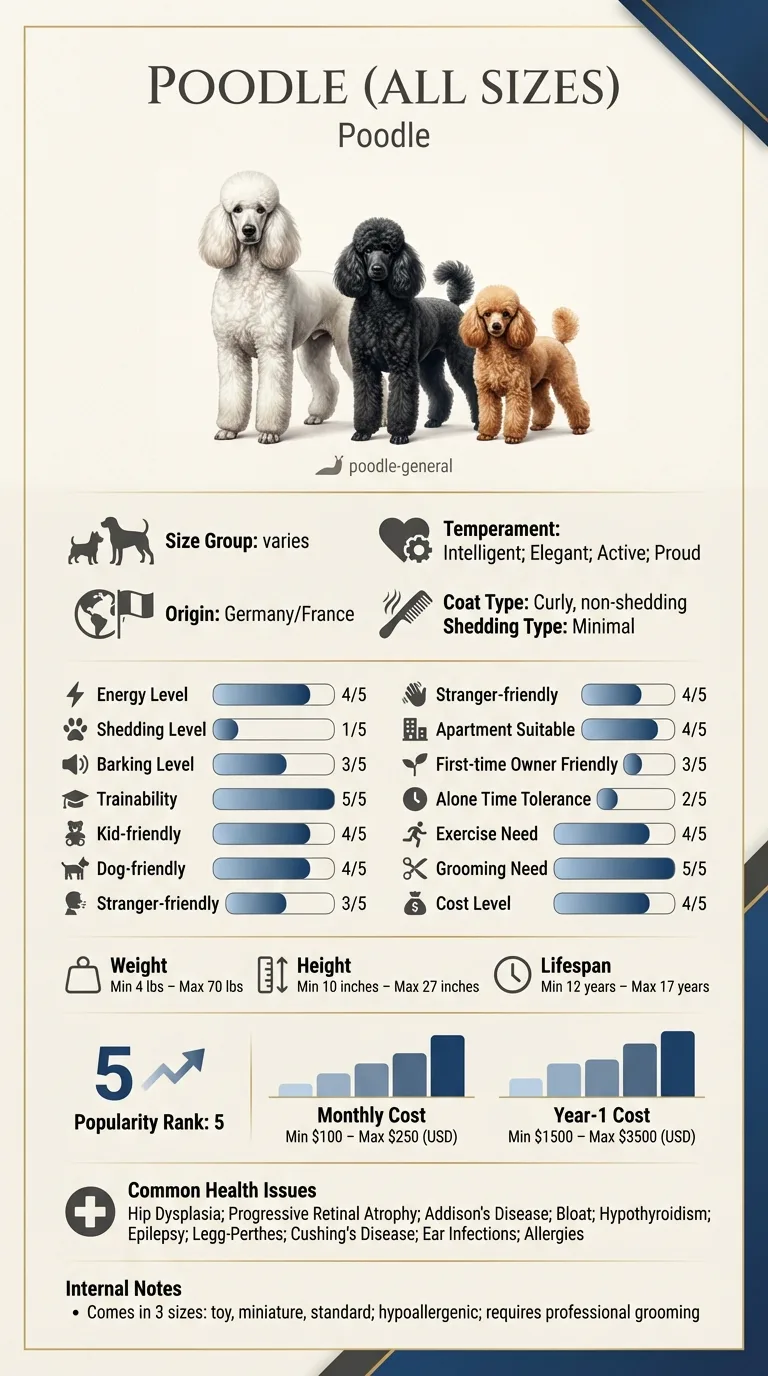
New Poodle owners or those who have had insurance claims in the past often feel overwhelmed. This is especially true for those who are not prepared for the potential costs associated with health issues.
This guide is not medical advice. If your dog shows pain, sudden behavior change, or worsening symptoms, consult a licensed veterinarian.
Some links may be affiliate links. We may earn a commission at no extra cost to you. We only suggest products we believe are helpful for dog owners.
We research and check what we publish, but we do not warrant that any figure, date, price, or statement is accurate, complete, or current, and we accept no liability for any loss, cost, injury, or other harm arising from the use of this site. Use it as one reference among several. You remain responsible for your own decisions and for your dog's care - confirm anything that matters with a licensed veterinarian or another qualified professional before you act on it. Full disclaimer.
Check this first
Red flags that mean you should call your vet now include sudden changes in behavior or severe symptoms. If your Poodle shows signs of distress, such as excessive drooling, difficulty breathing, or sudden lethargy, it’s time to act. Additionally, if you notice unusual swelling, sudden vomiting, or a refusal to eat for more than 24 hours, do not wait.
On the other hand, mild cases can often be monitored. If your Poodle occasionally has minor digestive upset or a slight increase in anxiety without severe symptoms, keep a close eye on them. You can implement gradual changes to their routine or diet before deciding on a vet visit. Maintaining a log of any claims and behaviors can also help you and your vet assess the situation better.
In summary, if your Poodle (All Sizes) displays severe symptoms like difficulty breathing or sudden changes in behavior, it’s an emergency. For mild cases that don’t worsen, you can monitor and adjust accordingly.
If any of these apply, call your vet or an emergency clinic now. The rest of this page is for the cases that are not an emergency.
Poodle (All Sizes) insurance claims can be a significant concern for owners. Many Poodles face health issues that lead to frequent vet visits, resulting in high insurance claims. Common conditions include hip dysplasia and allergies, which can require ongoing treatment.
Insurance claims for Poodles are relatively common, especially for those over five years old. Many owners report frequent claims related to chronic conditions, which can add up significantly over time.
Poodles, regardless of size, are prone to certain genetic health issues. These can lead to higher insurance claims. Common concerns include hip dysplasia, progressive retinal atrophy, and allergies.
The environment also plays a significant role in insurance claims. Factors such as inadequate exercise, lack of mental stimulation, or stress can exacerbate health issues. Poodles, particularly, may develop anxiety-related conditions that lead to unexpected vet visits.
If your Poodle is frequently visiting the vet or showing signs of distress, it’s time to consult a veterinarian. They can assess if there are underlying health issues that need addressing or if medication is necessary.
Avoiding these common mistakes can help reduce Poodle (All Sizes) insurance claims. Addressing these behaviors can lead to a healthier, happier pet.
Start here: Poodle (All Sizes) Genetic Disorders: What to Screen For
See all Poodle General health problems, which breeds are prone to insurance claims, or the full Poodle General breed guide for temperament, exercise needs and ownership costs.
You can expect to start seeing improvements in your Poodle's behavior related to insurance claims within 6 to 12 weeks of consistent care and management.
Success means having a healthier dog with fewer claims, better behavior, and a more manageable lifestyle. You should notice reduced anxiety and a happier, more confident Poodle.
Maria, a busy mom in Atlanta, adopted Bella, her Standard Poodle, hoping to find a loyal companion. However, Bella's anxiety led to frequent insurance claims for health issues, making Maria worried about her pup's well-being and the financial burden. After consulting a vet and a dog trainer, Maria learned that Bella's anxiety stemmed from separation issues and began implementing a structured training plan. With patience and regular practice, Maria saw Bella become calmer and more secure within a few months. Their bond strengthened as Bella learned to cope with being alone, leading to fewer claims and a happier household.
Key takeaway: Understanding your Poodle's anxiety and addressing it with proper training can significantly reduce health-related insurance claims and improve your dog's overall happiness.
Poodles are known for some common health issues like hip dysplasia and allergies, which can lead to insurance claims. Regular vet check-ups and a healthy diet can help reduce these risks. Understanding your Poodle's specific health needs is key to managing potential claims.
To reduce insurance claims for your Poodle, focus on preventive care. This includes regular vet visits, maintaining a balanced diet, and ensuring proper exercise. Training and socialization can also lower stress-related health issues that may lead to claims.
Poodles can face health issues like hip dysplasia, progressive retinal atrophy, and allergies. Being aware of these conditions allows for early intervention. Speak with your vet about screenings that can catch potential problems early.
To lower insurance costs, consider enrolling in wellness plans that cover routine care. Additionally, maintaining your Poodle's health can reduce the likelihood of expensive claims. Compare different insurance providers to find the best coverage for your needs.
Routine exercise, a balanced diet, and mental stimulation are vital for your Poodle's health. Regular grooming can also prevent skin issues that lead to claims. Plus, keeping up with vaccinations and check-ups will help catch any issues early.
Poodles are prone to several health issues that can lead to insurance claims. Common problems include Hip Dysplasia, Progressive Retinal Atrophy, and Addison's Disease. Being aware of these conditions can help you prepare and potentially mitigate costs.
Preventive care is key to reducing insurance claims for your Poodle. Regular vet check-ups, a balanced diet, and proper exercise can help maintain your dog's health. Also, consider investing in training to address any behavior issues early on.
Yes, older Poodles may require different insurance coverage, as they are more susceptible to health issues. It’s important to review your policy and ensure it covers age-related conditions, which can lead to higher claims.
Watch for signs like persistent coughing, difficulty walking, or changes in appetite. If your Poodle shows unusual behavior or symptoms, consult your vet promptly to prevent potential health issues from escalating into insurance claims.
Training your Poodle to feel more comfortable alone can help reduce anxiety-related issues. Gradual desensitization, providing engaging toys, and using calming products can be effective. For severe cases, consulting a professional trainer or a vet might be necessary.
Regular vet visits and a healthy diet can help minimize insurance claims for your Poodle. Early detection of health issues is key.
Aim for at least once a year for a check-up, but more often if your Poodle shows any health issues. Early intervention can save money on insurance claims.
Yes, proper training can lower stress and anxiety, which may reduce health problems that lead to claims. Invest in basic obedience and socialization classes.
Poodles benefit from high-quality dog food tailored to their size and health needs. Consult your vet for specific dietary recommendations.
Contact your vet immediately if you suspect a health issue. Prompt action can prevent complications and potentially costly claims.
A one-page prep sheet for this condition: the signs, the questions to ask, what to get priced. Unlocks here.
You get: Vet visit prep sheet
No spam. One-click unsubscribe. See our privacy policy.
Preview page 1 before you decide.