Behavior
What are quick tips for managing my Poodle's weight?
Monitor their food intake, engage in daily exercise, and avoid overfeeding. Regular vet check-ups can help track their weight effectively.

Quick answer
What are quick tips for managing my Poodle's weight?
Monitor their food intake, engage in daily exercise, and avoid overfeeding. Regular vet check-ups can help track their weight effectively.
Poodles of all sizes can face a genetic predisposition to obesity, making it crucial for owners to stay informed and proactive. (Poodle (All Sizes) genetic predisposition to obesity)
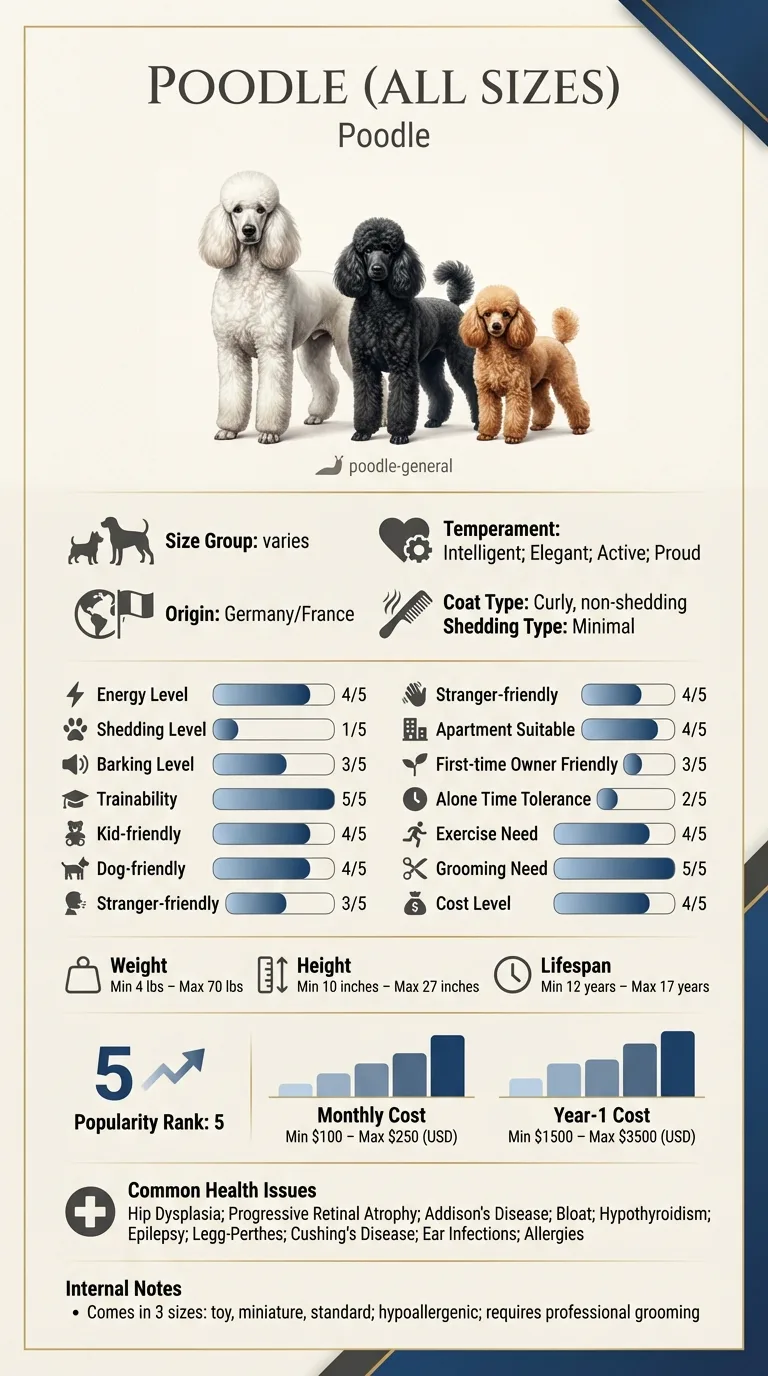
This issue often affects owners who may not realize their Poodle's weight gain is linked to genetics. Busy families, first-time dog owners, or those unfamiliar with the breed's specific health needs might struggle to recognize the signs early. It’s important for anyone with a Poodle to be aware of this challenge.
This guide is not medical advice. If your dog shows pain, sudden behavior change, or worsening symptoms, consult a licensed veterinarian.
Some links may be affiliate links. We may earn a commission at no extra cost to you. We only suggest products we believe are helpful for dog owners.
We research and check what we publish, but we do not warrant that any figure, date, price, or statement is accurate, complete, or current, and we accept no liability for any loss, cost, injury, or other harm arising from the use of this site. Use it as one reference among several. You remain responsible for your own decisions and for your dog's care - confirm anything that matters with a licensed veterinarian or another qualified professional before you act on it. Full disclaimer.
Check this first
Recognizing when your Poodle (All Sizes) is facing a health crisis is crucial. If you notice any of the following red-flag signs, it's time to call your vet immediately. These include sudden weight gain, lethargy, vomiting, or difficulty breathing. If your dog seems unusually hungry or is begging for food constantly, it could signal an underlying health issue that needs urgent attention.
If any of these apply, call your vet or an emergency clinic now. The rest of this page is for the cases that are not an emergency.
Many Poodles (all sizes) face a genetic predisposition to obesity, primarily due to a mutation in the POMC gene. This condition can lead to increased appetite and weight gain, making it a daily challenge for owners to manage their dog's diet and exercise. Without proper care, this issue can escalate, affecting their health and quality of life.
Obesity in Poodles is relatively common, with many dogs facing challenges related to weight management. Studies show that around 30% of Poodles may struggle with obesity at some point in their lives, making it essential for owners to be vigilant.
Poodles (All Sizes) have a genetic predisposition to obesity due to a mutation in the POMC gene. This mutation can lead to an increased appetite and a tendency to gain weight more easily than other breeds. Their varied sizes and energy levels also influence their weight management needs.
Environmental factors can exacerbate this issue. A lack of exercise, overfeeding, or high-calorie treats can contribute to weight gain. Additionally, living in a less active environment can hinder their ability to maintain a healthy weight.
If you notice significant weight gain or if your Poodle shows signs of discomfort due to obesity, consult your vet. They can assess your dog's health, suggest dietary changes, or rule out underlying health issues.
Addressing your Poodle's genetic predisposition to obesity is crucial. Here are common mistakes that can hinder progress, along with safer alternatives.
Start here: Poodle (All Sizes) Genetic Disorders: What to Screen For
See all Poodle General health problems, which breeds are prone to genetic predisposition to obesity, or the full Poodle General breed guide for temperament, exercise needs and ownership costs.
Expect to see gradual changes over 3 to 6 months with consistent effort.
Success looks like maintaining a healthy weight for your Poodle while keeping their energy levels balanced through proper diet and exercise.
On the other hand, if your Poodle is slightly overweight but still active and playful, you can monitor the situation at home. Look for gradual weight gain, slight changes in energy levels, or increased begging behavior without other concerning symptoms. Establish a feeding schedule and incorporate regular exercise to help manage their weight effectively.

Jessica, a busy nurse in Chicago, noticed her Poodle, Max, was gaining weight rapidly. After a vet visit, she learned Max had a genetic predisposition to obesity due to a POMC gene mutation. Jessica committed to a structured feeding schedule and daily walks, gradually introducing playtime and agility exercises. Six months later, Max lost 10 pounds and was more energetic and playful, showing that dedication pays off.
Key takeaway: With the right approach to diet and exercise, you can manage your Poodle's genetic predisposition to obesity effectively.
Poodles can inherit a mutation in the POMC gene, which is linked to increased appetite. This genetic factor means they may be more likely to overeat, leading to obesity if not managed properly. Regular vet check-ups can help identify any concerns early. This answer relates to Poodle (All Sizes) genetic predisposition to obesity.
To prevent obesity, control your Poodle's portions and feed a balanced diet. Incorporate daily exercise into their routine, such as walks or playtime, which helps burn calories and keeps them active.
Signs of obesity in Poodles include difficulty in breathing, lack of energy, and an inability to feel their ribs. If you notice these symptoms, consult your vet for advice on a weight management plan.
Yes, training can help by establishing a routine that includes exercise. Positive reinforcement during play can motivate your Poodle to stay active, supporting weight management and overall health.
Yes, the risk of obesity can vary depending on the individual Poodle's genetic background and lifestyle. Factors like age, size, and activity level all play a role, so it's important to tailor care to your specific dog.
Switching to a high-quality, low-calorie dog food can help manage weight. Additionally, consider measuring food portions and limiting treats to maintain a healthy diet.
To determine if your Poodle is overweight, check for a visible waist when viewed from above and feel for ribs without excessive pressure. A weight gain of just a few pounds can significantly impact their health, so regular weigh-ins are important.
If your older Poodle is gaining weight, consult your vet to rule out any underlying health issues. Adjusting their diet and increasing their exercise gradually can help manage their weight effectively.
To help your Poodle lose weight, create a balanced diet plan with smaller portions and healthier food options. Regular exercise, like daily walks and playtime, is also crucial in promoting weight loss while ensuring their overall well-being.
If your Poodle is struggling to lose weight despite your efforts or shows signs of lethargy, discomfort, or health changes, it's time to consult a vet. They can provide tailored advice and treatment options based on your dog's specific needs.
Monitor their food intake, engage in daily exercise, and avoid overfeeding. Regular vet check-ups can help track their weight effectively.
Poodles typically need at least 30 to 60 minutes of exercise daily, depending on their size. Regular activity helps maintain a healthy weight and overall well-being.
Managing obesity can range from $100 to $250 monthly, depending on food quality and vet visits. Investing in good nutrition and regular vet care can save costs in the long run.
A one-page prep sheet for this condition: the signs, the questions to ask, what to get priced. Unlocks here.
You get: Vet visit prep sheet
No spam. One-click unsubscribe. See our privacy policy.
Preview page 1 before you decide.