Health
What are quick tips for Poodle (All Sizes) most common genetic disorders?
Choose a reputable breeder, schedule regular vet check-ups, and maintain a healthy diet and exercise routine for your Poodle.

Quick answer
What are quick tips for Poodle (All Sizes) most common genetic disorders?
Choose a reputable breeder, schedule regular vet check-ups, and maintain a healthy diet and exercise routine for your Poodle.
Poodles are known for their intelligence and elegance, but they can also be prone to several genetic disorders. (Poodle (All Sizes) most common genetic disorders)
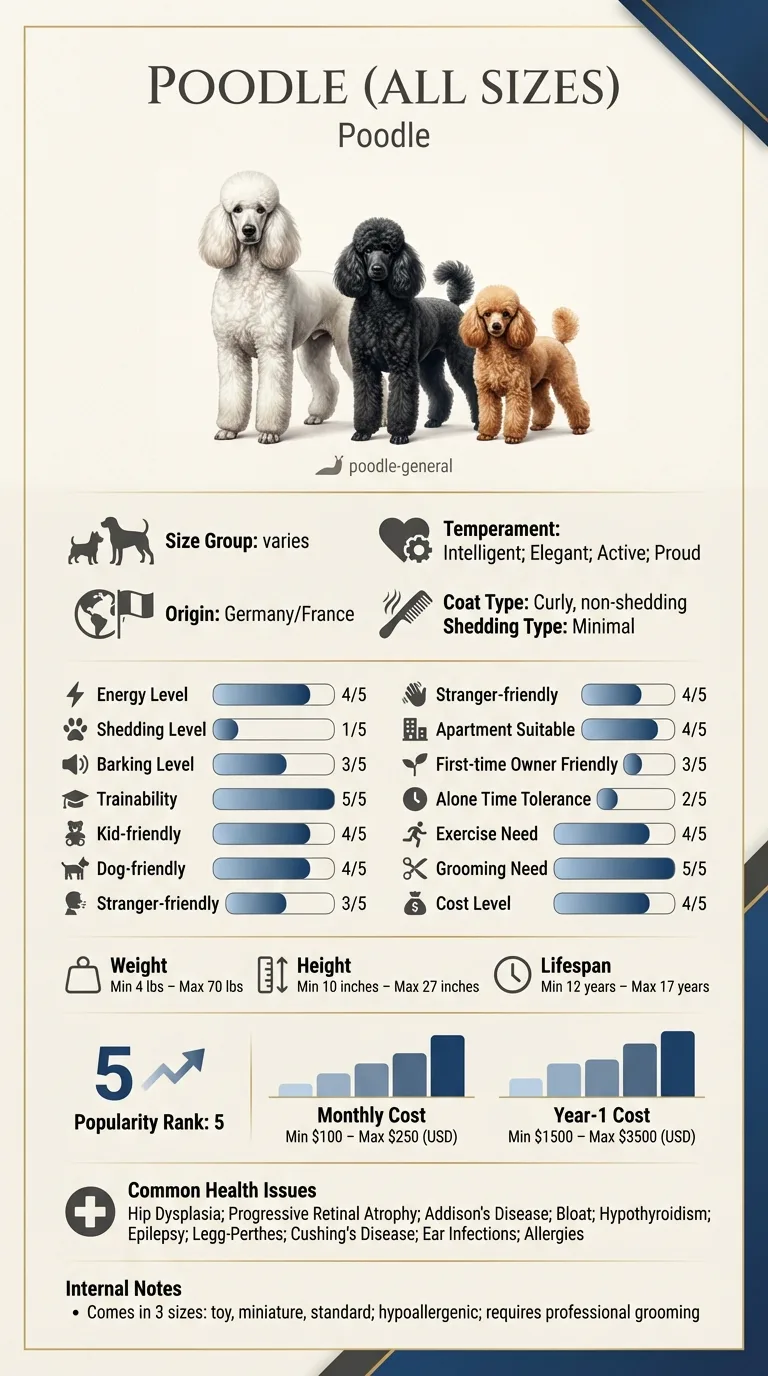
New and experienced Poodle owners alike often face the challenge of managing these health concerns. Families, busy professionals, and anyone considering a Poodle should educate themselves to ensure a happy, healthy life for their pet.
This guide is not medical advice. If your dog shows pain, sudden behavior change, or worsening symptoms, consult a licensed veterinarian.
Some links may be affiliate links. We may earn a commission at no extra cost to you. We only suggest products we believe are helpful for dog owners.
We research and check what we publish, but we do not warrant that any figure, date, price, or statement is accurate, complete, or current, and we accept no liability for any loss, cost, injury, or other harm arising from the use of this site. Use it as one reference among several. You remain responsible for your own decisions and for your dog's care - confirm anything that matters with a licensed veterinarian or another qualified professional before you act on it. Full disclaimer.
Check this first
Call your vet if you notice any of the following red-flag signs: sudden lethargy, difficulty breathing, unresponsiveness, or severe vomiting. These symptoms can indicate life-threatening conditions that require immediate medical attention.
Mild cases, such as occasional ear infections or minor skin allergies, can often be monitored at home. If your dog is still cheerful, eating, and drinking normally, you can plan to watch for any changes or consult your vet if symptoms persist or worsen.
In cases like bloat or signs of severe pain, it’s best to err on the side of caution and seek veterinary help right away. Delaying treatment for these conditions can lead to serious complications. Always trust your instincts; if something feels off, don’t hesitate to reach out to your veterinarian.
If any of these apply, call your vet or an emergency clinic now. The rest of this page is for the cases that are not an emergency.
Poodle (All Sizes) most common genetic disorders can significantly impact your dog's health and happiness. These disorders, including hip dysplasia and progressive retinal atrophy, may show up as mobility issues or vision problems. Daily life can involve frequent vet visits, special diets, or medications to manage these conditions, making it a challenge for many owners.
These genetic disorders are relatively common in Poodles, especially considering their popularity as a breed. Many Poodles may experience one or more of these issues, so it's crucial to be aware and proactive about health screenings.
Poodles, regardless of size, can inherit a range of genetic disorders due to their breeding history. Conditions like hip dysplasia and progressive retinal atrophy are common in this breed. These issues often stem from a limited gene pool, making some genetic disorders more prevalent.
Environmental factors also play a role in the development of genetic disorders. Poor diet, lack of exercise, or stress can exacerbate health problems. Additionally, the way a Poodle is raised and cared for can influence the onset of these conditions.
Talk to your vet if your Poodle shows signs of distress, pain, or unusual behavior. If you suspect a genetic disorder, such as persistent lethargy or mobility issues, immediate veterinary attention is crucial.
Many Poodle owners unintentionally reinforce genetic disorders or delay improving their pet's health. Here are some common mistakes and safer alternatives.
See all Poodle General health problems, which breeds are prone to most common genetic disorders, or the full Poodle General breed guide for temperament, exercise needs and ownership costs.
Typically, it takes about 6 to 12 months to effectively manage and understand the genetic disorders affecting your Poodle. Regular vet check-ups and following a proper care routine are crucial during this time.
Success looks like being able to identify early signs of genetic disorders, maintaining your Poodle's health through preventive care, and adapting their lifestyle to minimize risks.
When Jenna adopted her Standard Poodle, Max, she quickly learned about potential health issues, including hip dysplasia and allergies. After attending a vet appointment, she discovered that Max had early signs of hip dysplasia. Jenna committed to a tailored exercise and diet plan, and after several months, Max was thriving with improved mobility and energy. She also joined an online support group for Poodle owners, which helped her learn more about his needs and manage his health effectively.
Key takeaway: Being proactive and informed can significantly improve your Poodle's quality of life, especially regarding genetic disorders.
Poodles can face several common genetic disorders, including Hip Dysplasia, Progressive Retinal Atrophy, Addison's Disease, and Epilepsy. It's essential to be aware of these issues as they can affect your Poodle's health and quality of life. This answer relates to Poodle (All Sizes) most common genetic disorders.
Genetic disorders in Poodles often stem from inherited traits from their parents. Responsible breeding practices can help reduce the prevalence of these disorders, so it's vital to choose breeders who conduct health screenings.
Managing a Poodle's genetic disorders involves regular vet check-ups, a balanced diet, and appropriate exercise. Early detection and treatment can significantly improve your dog's quality of life.
Preventive measures include choosing a reputable breeder who tests for genetic conditions, maintaining a healthy lifestyle for your dog, and being aware of breed-specific health issues. Regular vet visits and vaccinations are also crucial.
If your Poodle shows any symptoms of a genetic disorder, it’s essential to see a vet immediately. Early diagnosis can lead to better management and treatment options, improving your dog’s quality of life.
Managing a Poodle with genetic disorders can cost anywhere from $100 to $250 per month, depending on treatment needs and vet visits. It's important to budget for potential health care expenses as part of your Poodle's overall care.
Signs of genetic disorders in Poodles can vary widely. Common indicators include limping, difficulty seeing, or unusual behaviors. If you notice persistent issues, consult your vet for a thorough evaluation.
While you can't completely prevent genetic disorders, choosing a reputable breeder is crucial. They should provide health clearances for both parents. Regular vet check-ups can also help detect issues early.
Yes, older Poodles may be more prone to genetic disorders as age can exacerbate underlying conditions. Regular health screenings become increasingly important as your dog ages to monitor for potential issues.
Many genetic disorders in Poodles can be managed or treated, but it depends on the specific condition. Consultation with a veterinarian is vital to create a tailored treatment plan that suits your Poodle's needs.
Choose a reputable breeder, schedule regular vet check-ups, and maintain a healthy diet and exercise routine for your Poodle.
Use positive reinforcement techniques to build your Poodle's confidence and reduce anxiety. Gradual desensitization to vet visits can also help.
Include regular vet visits, a balanced diet, exercise, and mental stimulation to keep your Poodle healthy and happy.
A one-page prep sheet for this condition: the signs, the questions to ask, what to get priced. Unlocks here.
You get: Vet visit prep sheet
No spam. One-click unsubscribe. See our privacy policy.
See a sample page before you decide.
Early access list
The free prep sheet covers the same-day warning signs, a symptom log and the questions to ask. We are considering a fuller kit that adds a cost worksheet for the usual tests and treatments (US price ranges with their sources) and a plain-English guide to ways of covering the bill. It is not built yet; this list tells us whether it is worth building.
One email, no spam, unsubscribe anytime. Information only, not veterinary advice.