Health
What are Poodle (All Sizes) heart problems quick tips?
Keep your Poodle active but avoid strenuous exercise. Schedule regular vet check-ups to monitor heart health. Maintain a balanced diet to support their overall well-being.

Quick answer
What are Poodle (All Sizes) heart problems quick tips?
Keep your Poodle active but avoid strenuous exercise. Schedule regular vet check-ups to monitor heart health. Maintain a balanced diet to support their overall well-being.
Poodle (All Sizes) heart problems can be serious and affect your dog's quality of life. Understanding these issues is crucial for their well-being.
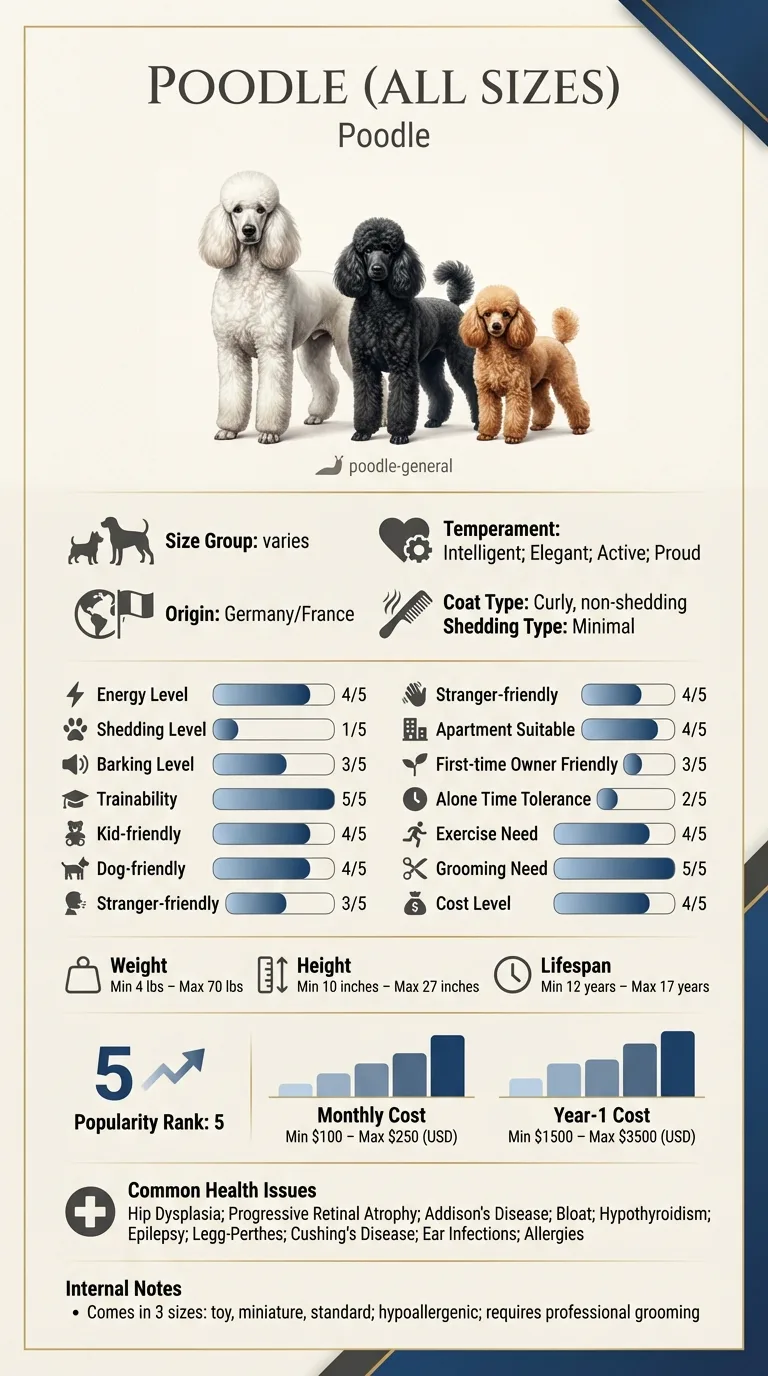
Typical owners who face this issue are those with Poodles of varying sizes, especially if they're first-time dog parents. Busy families or individuals who may not be aware of specific health concerns often find themselves seeking guidance.
This guide is not medical advice. If your dog shows pain, sudden behavior change, or worsening symptoms, consult a licensed veterinarian.
Some links may be affiliate links. We may earn a commission at no extra cost to you. We only suggest products we believe are helpful for dog owners.
We research and check what we publish, but we do not warrant that any figure, date, price, or statement is accurate, complete, or current, and we accept no liability for any loss, cost, injury, or other harm arising from the use of this site. Use it as one reference among several. You remain responsible for your own decisions and for your dog's care - confirm anything that matters with a licensed veterinarian or another qualified professional before you act on it. Full disclaimer.
Check this first
Recognizing when Poodle (All Sizes) heart problems require immediate attention can save your dog's life. If your Poodle shows any red-flag signs, it's crucial to call your vet right away. On the other hand, some symptoms can be monitored at home with a proper plan in place, but you should always err on the side of caution.
If any of these apply, call your vet or an emergency clinic now. The rest of this page is for the cases that are not an emergency.
Poodle (All Sizes) heart problems can manifest in various ways, including lethargy, coughing, or difficulty breathing. These issues often stem from genetic conditions like subvalvular aortic stenosis and cardiomyopathy. Owners may notice their Poodle tiring easily during walks or having a reduced appetite, which can be alarming.
Heart problems are relatively common in Poodles, especially as they age. Regular vet check-ups can help catch early signs, but many owners may not notice symptoms until they become severe.
Poodles, regardless of size, can be predisposed to certain heart issues like subvalvular aortic stenosis and cardiomyopathy. These conditions can be influenced by genetics, meaning some Poodles may be more likely to develop heart problems simply because of their breed.
Environmental factors such as obesity, lack of exercise, and stress can also lead to heart issues in Poodles. Additionally, poor diet and exposure to extreme temperatures can negatively impact their heart health.
Consult your vet if you notice any signs of heart problems such as coughing, fatigue, or difficulty breathing. Regular check-ups are also essential to catch any issues early.
Avoiding common mistakes can help manage Poodle (All Sizes) heart problems effectively. Here are some behaviors that can unintentionally worsen the situation.
Start here: Poodle (All Sizes) Genetic Disorders: What to Screen For
See all Poodle General health problems, which breeds are prone to heart problems, or the full Poodle General breed guide for temperament, exercise needs and ownership costs.
Addressing Poodle (All Sizes) heart problems can take several weeks to months. Regular vet visits and monitoring will be crucial during this time.
Success means seeing improvements in your Poodle's energy levels, appetite, and overall health. You should also notice fewer symptoms and better management of any existing heart issues.
Watch for these alarming signs that indicate your Poodle needs immediate veterinary care:

Not all heart problems are emergencies. If your Poodle exhibits these symptoms, you may monitor them while keeping an eye on their condition:

Emily, a busy nurse in Seattle, noticed her Poodle, Max, was more tired than usual. After a vet visit, she learned that Max had subvalvular aortic stenosis, a common heart issue in Poodles. Concerned but determined, Emily followed the vet's advice to adjust Max's diet and incorporate gentle exercise. Over a few months, with regular check-ups and medication, Max regained his playful spirit, and Emily felt a huge sense of relief.
Key takeaway: Monitoring your Poodle's health and following a vet's recommendations can significantly improve their quality of life and manage heart problems effectively.
Poodles can develop heart problems due to genetics, age, and lifestyle factors. Conditions like subvalvular aortic stenosis and cardiomyopathy are common in this breed. Regular vet check-ups can help catch these issues early.
To help prevent heart problems, maintain a healthy diet and regular exercise for your Poodle. Weight management and regular vet visits are crucial for early detection. Avoid overexertion, especially in hot weather.
Signs of heart problems in Poodles can include coughing, difficulty breathing, fatigue, and a decreased tolerance for exercise. If you notice any of these symptoms, consult your vet immediately. Early intervention can significantly improve outcomes.
Veterinarians typically perform physical examinations and may use imaging techniques like X-rays or ultrasounds to diagnose heart problems in Poodles. Blood tests can also help assess heart health. Regular check-ups are vital for monitoring.
Treatment options for heart problems in Poodles may include medication, dietary changes, and in some cases, surgery. Your veterinarian will recommend a tailored approach based on the specific condition and severity. Regular follow-up is essential.
Moderate exercise can be beneficial for Poodles with heart issues, but it's crucial to follow your vet's guidance. Low-impact activities like walking can help maintain heart health without overexerting your dog. Tailor the exercise routine to their condition.
If your Poodle (All Sizes) shows signs like coughing, fatigue, or difficulty breathing, it’s important to consult a vet. Early diagnosis can help manage the condition effectively and improve your dog's quality of life.
Yes, heart problems can be hereditary in Poodles (All Sizes). It's advisable to ask breeders about the heart health of the puppy's parents and consider genetic testing if you're adopting.
For older Poodles (All Sizes) with heart problems, regular vet check-ups are essential. You may also need to adjust their diet and exercise regimen to accommodate their health needs.
Watch for warning signs like persistent coughing, excessive panting, or swelling in the abdomen. If you notice these symptoms, it’s crucial to see a vet for a thorough evaluation.
Yes, medication can help manage heart problems in Poodles (All Sizes). Your veterinarian can prescribe treatments tailored to your dog's specific condition, improving their overall health and comfort.
Keep your Poodle active but avoid strenuous exercise. Schedule regular vet check-ups to monitor heart health. Maintain a balanced diet to support their overall well-being.
Opt for high-quality, low-sodium dog food rich in omega-3 fatty acids. Consult your vet for specific dietary recommendations based on your Poodle's health status.
Costs for treating heart problems can vary widely, ranging from $500 for basic care to several thousand dollars for surgeries or advanced treatments. It's essential to budget for ongoing veterinary care.
Yes, stress can negatively impact your Poodle's heart health. Providing a calm environment and ensuring they have regular routines can help reduce anxiety.
Signs of heart failure can include coughing, lethargy, and difficulty breathing. If you notice these symptoms, consult your vet as soon as possible.
A one-page prep sheet for this condition: the signs, the questions to ask, what to get priced. Unlocks here.
You get: Vet visit prep sheet
No spam. One-click unsubscribe. See our privacy policy.
Preview page 1 before you decide.