Costs
What are Pembroke Welsh Corgi insurance claims quick tips?
Focus on preventive care, maintain a healthy diet, and ensure regular vet visits to minimize insurance claims for your Pembroke Welsh Corgi.

Quick answer
What are Pembroke Welsh Corgi insurance claims quick tips?
Focus on preventive care, maintain a healthy diet, and ensure regular vet visits to minimize insurance claims for your Pembroke Welsh Corgi.
Pembroke Welsh Corgi insurance claims can be a frustrating issue for many pet owners.
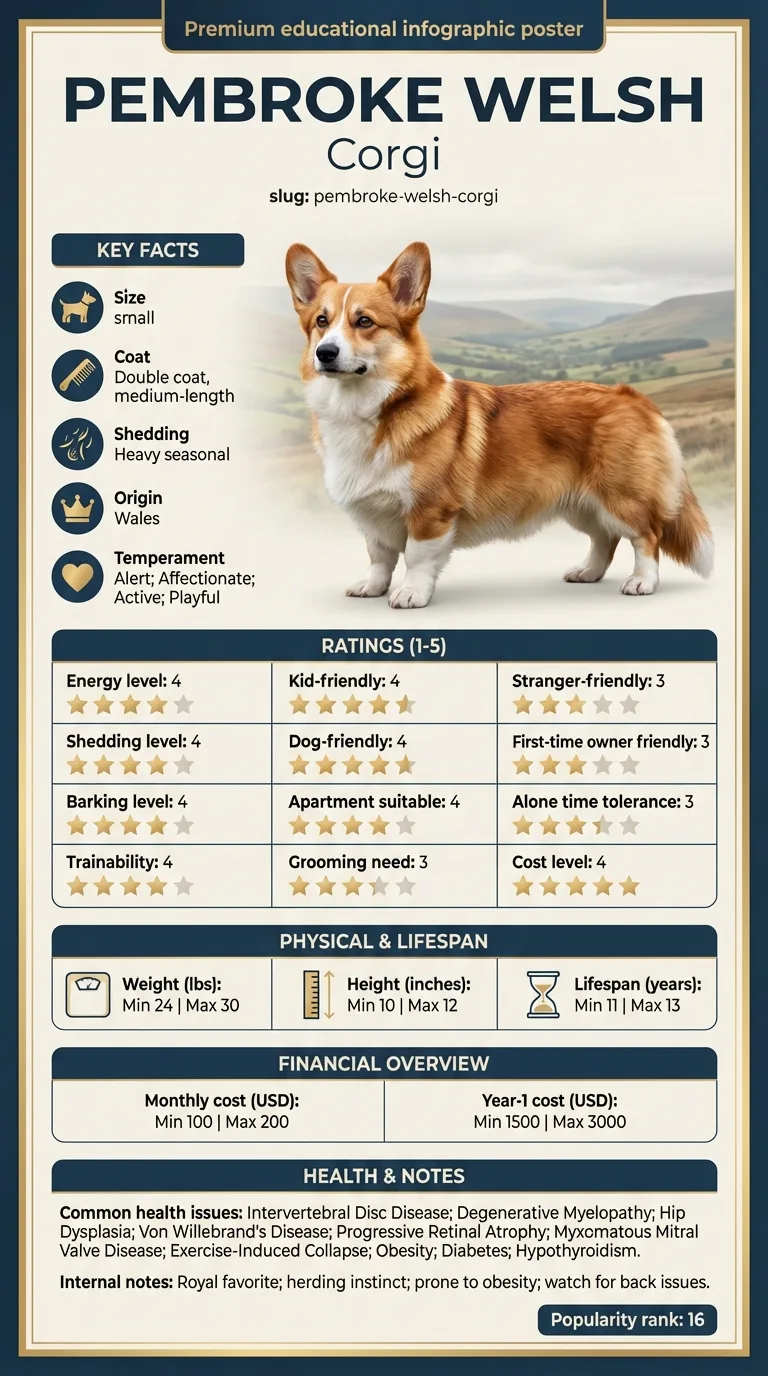
Typically, owners of Pembroke Welsh Corgis, especially first-time dog parents, may find themselves overwhelmed by unexpected medical expenses and claims. This breed, while adorable and affectionate, can be prone to certain health problems that lead to higher insurance claims.
This guide is not medical advice. If your dog shows pain, sudden behavior change, or worsening symptoms, consult a licensed veterinarian.
Some links may be affiliate links. We may earn a commission at no extra cost to you. We only suggest products we believe are helpful for dog owners.
We research and check what we publish, but we do not warrant that any figure, date, price, or statement is accurate, complete, or current, and we accept no liability for any loss, cost, injury, or other harm arising from the use of this site. Use it as one reference among several. You remain responsible for your own decisions and for your dog's care - confirm anything that matters with a licensed veterinarian or another qualified professional before you act on it. Full disclaimer.
Check this first
Recognizing when a situation with your Pembroke Welsh Corgi is an emergency can save you time and anxiety. If you notice severe behavior changes, such as sudden aggression or excessive anxiety, it may indicate a deeper issue that needs immediate attention. Likewise, if your Corgi experiences frequent accidents in the house or seems unable to control their bladder, it's crucial to consult your vet right away.
If any of these apply, call your vet or an emergency clinic now. The rest of this page is for the cases that are not an emergency.
Pembroke Welsh Corgi insurance claims can be a significant concern for owners. These small dogs are known for their active and playful nature, but they may also face health issues that lead to higher insurance claims. Day-to-day, this could manifest as frequent vet visits, medications, or treatments for conditions like obesity and back problems, which are common among Corgis.
Insurance claims for Pembroke Welsh Corgis are relatively common due to their breed-specific health issues. Many owners find themselves navigating multiple claims throughout their pet's life, particularly as Corgis age and become susceptible to more serious health problems.
Pembroke Welsh Corgis can be prone to certain health issues like intervertebral disc disease and obesity. These conditions may lead to higher insurance claims. Their active nature can also result in injuries if not properly managed.
The environment plays a significant role in the health of your Pembroke Welsh Corgi. Lack of exercise, improper diet, or stressful living conditions can increase the likelihood of health problems. Additionally, a busy or noisy home may contribute to anxiety, leading to more claims.
If your Corgi experiences sudden changes in behavior, health issues, or frequent injuries, it's essential to consult your vet. They can evaluate your dog's health and suggest changes to prevent future insurance claims.
Avoid these common mistakes that can unintentionally worsen your Pembroke Welsh Corgi's insurance claims situation.
Start here: Pembroke Welsh Corgi Most Common Genetic Disorders
See all Pembroke Welsh Corgi health problems, which breeds are prone to insurance claims, or the full Pembroke Welsh Corgi breed guide for temperament, exercise needs and ownership costs.
You can expect to see improvements in your Pembroke Welsh Corgi's behavior within 4 to 6 weeks of consistent care and management strategies. However, addressing deeper issues may take several months.
Success looks like a noticeable reduction in anxiety-driven behaviors, fewer insurance claims related to accidents or health issues, and a happier, more relaxed Corgi.
In less severe cases, you can monitor your Pembroke Welsh Corgi's behavior. For example, if your Corgi is showing minor signs of anxiety, such as occasional barking or a little restlessness, creating a consistent routine can help. Keeping track of their behavior over time can reveal patterns, allowing you to decide whether further action is necessary.

When Sarah adopted Bella, her Pembroke Welsh Corgi, she quickly learned that Bella's anxiety led to frequent accidents at home, resulting in multiple insurance claims. After consulting a trainer, Sarah established a daily routine that included exercise, training sessions, and mental stimulation. Over time, Bella became more confident and secure, which led to fewer accidents and only one claim in the past year.
Key takeaway: With consistent effort and the right training, you can significantly reduce your Pembroke Welsh Corgi's anxiety and related insurance claims.
Pembroke Welsh Corgis can be prone to certain health issues, which may lead to higher insurance claims. Common problems include intervertebral disc disease and hip dysplasia. Regular vet check-ups and preventive care can help reduce the likelihood of claims.
To reduce Pembroke Welsh Corgi insurance claims, focus on preventive care. Maintain a healthy diet, ensure regular exercise, and keep up with vet visits. Training your Corgi to avoid risky behaviors can also help.
Training your Pembroke Welsh Corgi in basic obedience and specific commands can prevent accidents that lead to claims. Using positive reinforcement techniques encourages good behavior. Consistent training sessions can also reduce anxiety and improve overall health.
Insurance costs for Pembroke Welsh Corgis can range from $100 to $200 per month, depending on coverage. Health issues common to the breed, like hip dysplasia, can increase premiums. It's important to compare plans to find the best fit for your budget.
Common health issues for Pembroke Welsh Corgis include intervertebral disc disease, obesity, and hip dysplasia. Being aware of these risks can help you take preventive measures to minimize claims. Regular vet check-ups and a healthy lifestyle are essential.
If your Pembroke Welsh Corgi is having frequent insurance claims, it's crucial to consult your veterinarian. They can help identify any underlying health issues that may be causing these claims and suggest a tailored care plan to improve your dog's health.
Yes, older Pembroke Welsh Corgis often have higher insurance claims due to age-related health issues. Common conditions in senior dogs include arthritis, heart disease, and dental problems, which can lead to more frequent vet visits and claims.
To reduce insurance claims for your Pembroke Welsh Corgi, focus on preventive care. Regular vet check-ups, a balanced diet, and appropriate exercise can help keep your dog healthy and minimize the risk of serious health issues.
Common reasons for Pembroke Welsh Corgi insurance claims include intervertebral disc disease, hip dysplasia, and obesity-related issues. Understanding these conditions can help you manage your dog's health and possibly prevent future claims.
Consider switching your Pembroke Welsh Corgi's insurance plan if you notice increased claim rates or if coverage options don't meet your dog's changing health needs. It's vital to review your policy regularly to ensure it remains suitable as your dog ages.
Focus on preventive care, maintain a healthy diet, and ensure regular vet visits to minimize insurance claims for your Pembroke Welsh Corgi.
Use positive reinforcement training to encourage good behavior and prevent risky activities that could lead to health problems.
Be prepared for monthly insurance costs between $100 and $200 and consider potential health issues that may arise as your Corgi ages.
Yes, they are prone to health issues such as hip dysplasia and intervertebral disc disease, which can lead to higher insurance claims.
A one-page prep sheet for this condition: the signs, the questions to ask, what to get priced. Unlocks here.
You get: Vet visit prep sheet
No spam. One-click unsubscribe. See our privacy policy.
Preview page 1 before you decide.