Behavior
What are some Pembroke Welsh Corgi anxiety quick tips?
Provide a safe space, maintain a consistent routine, and engage in regular exercise to help alleviate anxiety. Gradual exposure to triggers can also improve coping skills.

Quick answer
What are some Pembroke Welsh Corgi anxiety quick tips?
Provide a safe space, maintain a consistent routine, and engage in regular exercise to help alleviate anxiety. Gradual exposure to triggers can also improve coping skills.
Does your Pembroke Welsh Corgi seem anxious or stressed? You're not alone.
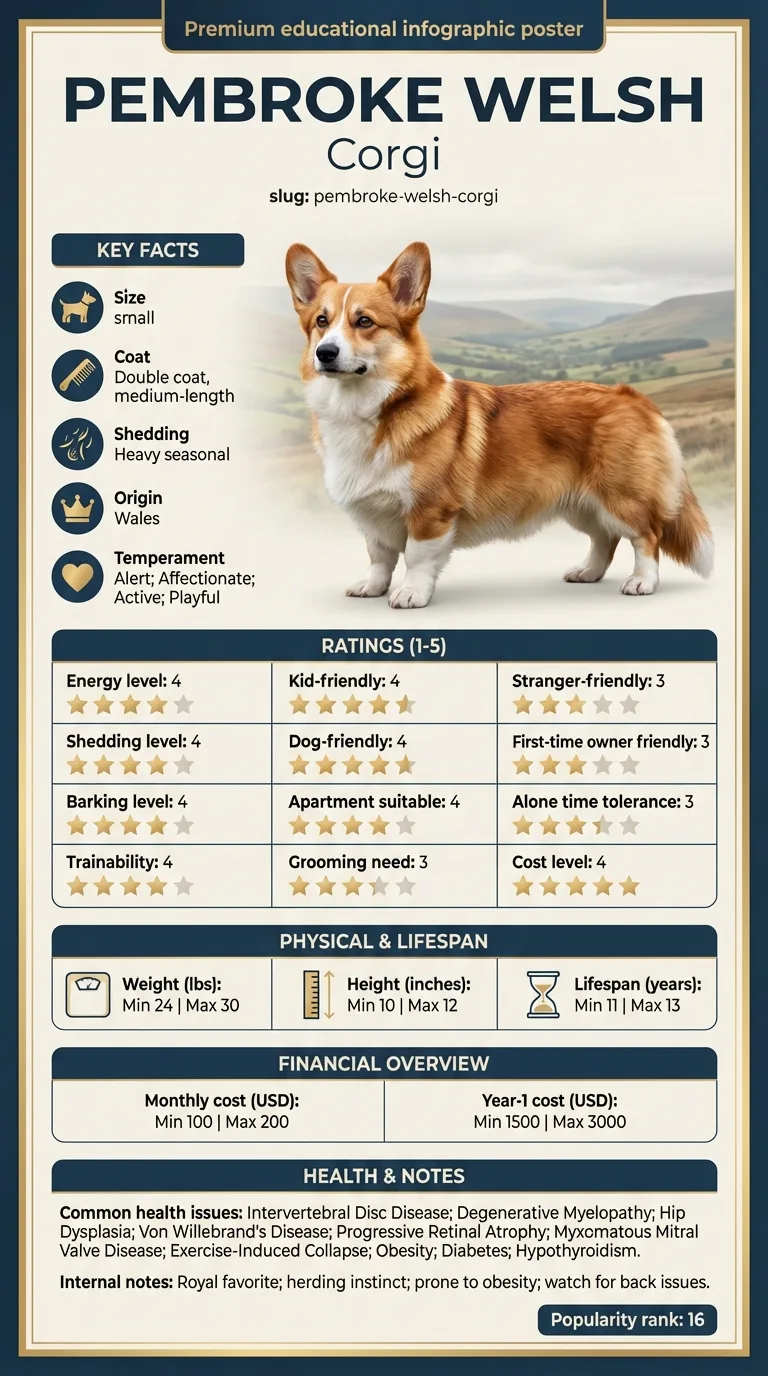
This guide is intended for Pembroke Welsh Corgi owners who are noticing signs of anxiety in their dogs and want effective strategies to alleviate their stress.
Pembroke Welsh Corgi anxiety can manifest in various ways, often leading to distressing behaviors for both the dog and the owner. This anxiety may show up as excessive barking, restlessness, or an inability to settle down. Owners may notice their Corgi becoming clingy or showing signs of fear in certain situations.
If your Pembroke Welsh Corgi anxiety persists despite your efforts, consider enrolling in a training class that focuses on desensitization and positive reinforcement. Professional trainers can provide tailored techniques to address specific issues.
If your Corgi shows signs of extreme anxiety, such as destructive behavior or excessive barking, consult your veterinarian or a certified behaviorist. They can rule out medical issues and recommend appropriate treatments.
To help manage Pembroke Welsh Corgi anxiety, consider using various tools and products designed for calming and training. These can make a significant difference in your dog's well-being.
Making lifestyle adjustments can greatly reduce Pembroke Welsh Corgi anxiety. Start by establishing a consistent daily schedule. Regular feeding, walking, and playtime create a sense of security for your Corgi.
If your schedule allows, stick to the same routines to help them feel more at ease.
Exercise is key for a happy Corgi. Aim for at least 30-60 minutes of physical activity each day. This can include walks, playdates, or structured games.
A tired dog is often a calm dog, which can help mitigate anxiety levels. Additionally, consider shorter, more frequent exercise sessions if your Corgi seems overwhelmed by longer outings.
Alone-time management is crucial. If your Corgi struggles with separation anxiety, gradually increase the time they spend alone. Start with just a few minutes and slowly extend this as they adjust.
Providing them with engaging toys or a cozy blanket can also help ease their stress during these alone times. Lastly, consider creating a safe space in your home where your Corgi can retreat when feeling anxious. This could be a quiet room with their bed and favorite toys, away from the hustle and bustle of daily life.
Tracking the progress of your Pembroke Welsh Corgi's anxiety can be a rewarding journey. Look for small victories, or 'micro-wins', like your Corgi being calm during brief periods of alone time. If they start playing with their toys instead of pacing, that’s a sign of improvement.
Celebrate these moments, as they indicate that your training and support are making a difference.
However, setbacks can occur. For example, your dog might regress after a stressful event, like a loud storm or a visit to the vet. This doesn’t mean all is lost; it’s a normal part of the process.
Recognizing that setbacks can happen will help you stay patient and focused on the long-term goal.
As you monitor progress, it’s crucial to have a plan. If you see consistent signs of improvement, such as reduced barking or more relaxed body language, your approach is likely working. But if the anxiety seems to worsen or new issues arise, it may be time to escalate your plan.
Consider consulting a professional trainer for tailored advice or exploring additional training resources. Remember, every dog is different, and finding the right support for your Pembroke Welsh Corgi may take time and experimentation.

Sarah adopted a Pembroke Welsh Corgi named Max, who showed signs of anxiety whenever she left the house. He would bark excessively and chew on furniture, making it tough for Sarah to leave him alone. She started by creating a safe space for him with his favorite toys and blankets, but the anxiety persisted, especially during longer absences. After researching online, Sarah discovered that she needed professional help and contacted a local dog trainer who specialized in anxiety training. Together, they worked on desensitizing Max to being alone by gradually increasing the time Sarah spent away. They also introduced calming techniques, like using a puzzle toy filled with treats to keep Max occupied. Over a few weeks, Max became more comfortable being alone, and his barking reduced significantly. Now, Sarah can leave for work without worrying about Max's anxiety.
Key takeaway: Creating a safe space and seeking professional help can significantly improve a Pembroke Welsh Corgi's anxiety.
Pembroke Welsh Corgis can experience anxiety due to various reasons, including changes in their environment, lack of socialization, or separation from their owners. It's important to identify triggers and understand that this breed is sensitive and may need extra reassurance.
Signs of anxiety in Pembroke Welsh Corgis may include excessive barking, destructive behavior, trembling, or hiding. Observing body language, such as a tucked tail or flattened ears, can also signal distress.
To manage Pembroke Welsh Corgi anxiety, create a calm environment, maintain a routine, and provide plenty of exercise. Training and positive reinforcement can also help your Corgi feel more secure and less anxious.
Yes, Pembroke Welsh Corgi anxiety training can be effective when tailored to their needs. Consistent training techniques, such as desensitization and counter-conditioning, can help them cope better with stressors.
If your Corgi's anxiety is severe or persistent, it may be time to consult a veterinarian or a professional dog trainer. They can provide tailored advice and, if necessary, recommend behavioral therapies or medications.
Calming products, such as anxiety wraps or pheromone diffusers, can be helpful for some Pembroke Welsh Corgis. However, it's best to consult with a veterinarian before trying these products to ensure they are appropriate for your dog.
Yes, older Pembroke Welsh Corgis can develop anxiety, especially if they experience changes in their environment or routine. It's important to monitor their behavior and consult a vet if you notice signs of anxiety, as they may also be dealing with health issues.
To help your Pembroke Welsh Corgi cope with travel anxiety, start by getting them accustomed to their travel crate or car. Use positive reinforcement and short trips to build their confidence, and always ensure they have familiar items like a favorite blanket or toy during travel.
Yes, it's quite normal for Pembroke Welsh Corgis to feel anxious in new environments. They are alert and protective dogs, so introducing them gradually to new places can help ease their anxiety and create a positive association with those settings.
Effective training methods for reducing Pembroke Welsh Corgi anxiety include positive reinforcement techniques, desensitization, and creating a consistent routine. It's also beneficial to engage them in regular exercise and mental stimulation to help manage their anxiety.
Provide a safe space, maintain a consistent routine, and engage in regular exercise to help alleviate anxiety. Gradual exposure to triggers can also improve coping skills.
Gradually increase the time your Corgi spends alone, and leave them with engaging toys to help them feel secure. Consider a pet camera to monitor their behavior while you're away.
Yes, costs can vary depending on whether you choose private training sessions or group classes. Expect to invest around $100 to $300 for initial training.
Anxiety and pain look alike from the outside. Get the prep sheet for this breed's separation-anxiety page and take it to the vet.
You get: Vet visit prep sheet
No spam. One-click unsubscribe. See our privacy policy.
Preview page 1 before you decide.
This guide is not medical advice. If your dog shows pain, sudden behavior change, or worsening symptoms, consult a licensed veterinarian.
Some links may be affiliate links. We may earn a commission at no extra cost to you. We only suggest products we believe are helpful for dog owners.
We research and check what we publish, but we do not warrant that any figure, date, price, or statement is accurate, complete, or current, and we accept no liability for any loss, cost, injury, or other harm arising from the use of this site. Use it as one reference among several. You remain responsible for your own decisions and for your dog's care - confirm anything that matters with a licensed veterinarian or another qualified professional before you act on it. Full disclaimer.
Not sure which breed is right for you? Take our 2-minute quiz to find out.
Take the quiz