Living
What are quick tips for dealing with Pembroke Welsh Corgi most common genetic disorders?
Choose a responsible breeder, schedule regular vet visits, and maintain a healthy weight for your Corgi.

Quick answer
What are quick tips for dealing with Pembroke Welsh Corgi most common genetic disorders?
Choose a responsible breeder, schedule regular vet visits, and maintain a healthy weight for your Corgi.
Pembroke Welsh Corgis can face several common genetic disorders that every owner should be aware of.
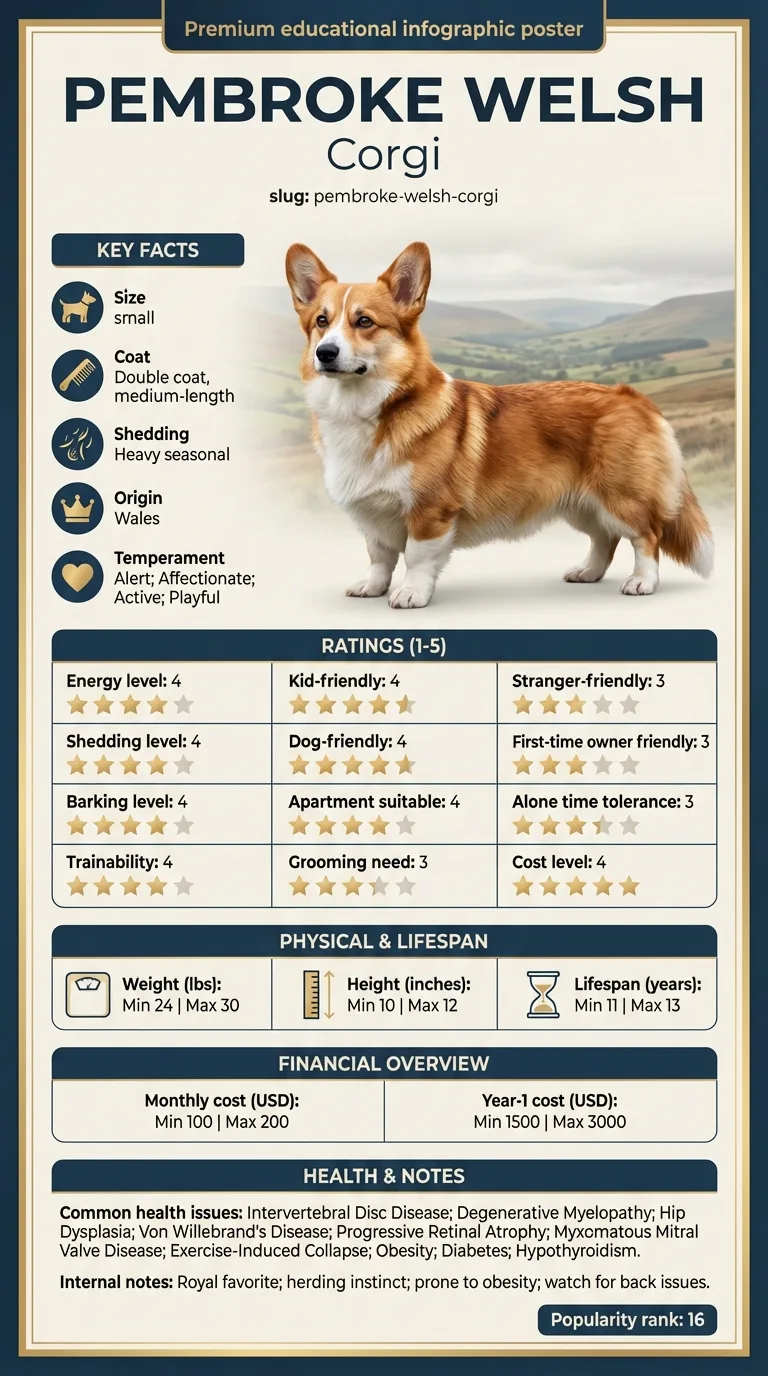
New and experienced Corgi owners often grapple with these genetic health problems. Those who are not prepared may find it challenging to manage their pet's health.
This guide is not medical advice. If your dog shows pain, sudden behavior change, or worsening symptoms, consult a licensed veterinarian.
Some links may be affiliate links. We may earn a commission at no extra cost to you. We only suggest products we believe are helpful for dog owners.
We research and check what we publish, but we do not warrant that any figure, date, price, or statement is accurate, complete, or current, and we accept no liability for any loss, cost, injury, or other harm arising from the use of this site. Use it as one reference among several. You remain responsible for your own decisions and for your dog's care - confirm anything that matters with a licensed veterinarian or another qualified professional before you act on it. Full disclaimer.
Check this first
Knowing when to call your vet about Pembroke Welsh Corgi most common genetic disorders is crucial. Some symptoms are red flags that require immediate attention, while others may just need monitoring. If your Corgi shows severe symptoms, don’t hesitate to reach out to your veterinarian.
Call your vet right away if you notice any of these emergency signs: - Sudden weakness or inability to stand - Difficulty breathing or rapid panting - Severe vomiting or diarrhea that is persistent - Blood in urine or stool - Signs of severe pain, such as whining or reluctance to move
These symptoms could indicate serious conditions like Intervertebral Disc Disease or other severe genetic disorders. It’s essential to act quickly in these situations.
On the other hand, if your Corgi shows mild symptoms, you might monitor the situation for a bit. These include: - Occasional coughing without other symptoms - Mild lethargy that improves with activity - Slight changes in appetite or behavior that last less than a day
For mild cases, keep an eye on your Corgi's behavior and health. You can create a plan for monitoring their condition and consult your vet if symptoms worsen or persist. Always trust your instincts; if something feels off, it’s better to be safe and call your vet.
If any of these apply, call your vet or an emergency clinic now. The rest of this page is for the cases that are not an emergency.
The Pembroke Welsh Corgi is prone to several genetic disorders that can affect their health and quality of life. Common issues include intervertebral disc disease, degenerative myelopathy, and hip dysplasia. Owners often notice signs like difficulty moving, loss of coordination, or unusual barking, which can be concerning.
Genetic disorders are fairly common in Pembroke Welsh Corgis, particularly in those bred from lines without health testing. It's crucial for potential owners to be aware of these issues and choose breeders who prioritize health.
Pembroke Welsh Corgis are prone to several genetic disorders due to their breeding history. Some common issues include Intervertebral Disc Disease and Hip Dysplasia. These disorders often stem from inherited traits, making them more prevalent in purebred dogs like Corgis.
Environmental factors can also contribute to health problems. For instance, obesity is a significant concern for Corgis, as their love for food combined with a sedentary lifestyle can lead to weight gain. Inadequate exercise and improper diet may exacerbate existing genetic conditions.
If your Corgi exhibits unusual symptoms, like limping or difficulty moving, it's crucial to consult a vet. Regular check-ups can help catch genetic disorders early, and a vet can provide specialized care tailored to your dog's needs.
Many owners unintentionally reinforce genetic disorder issues in their Pembroke Welsh Corgis. Here are common mistakes to avoid and better alternatives.
See all Pembroke Welsh Corgi health problems, which breeds are prone to most common genetic disorders, or the full Pembroke Welsh Corgi breed guide for temperament, exercise needs and ownership costs.
Managing Pembroke Welsh Corgi most common genetic disorders typically takes several months to see improvement. Regular vet check-ups and consistent care under your vet's plan are essential.
Success means your Corgi shows fewer symptoms of genetic disorders, maintains a healthy weight, and enjoys a better quality of life. You'll also feel more informed and confident in managing their health.
Sarah, a first-time dog owner in San Diego, adopted Max, a Pembroke Welsh Corgi. Shortly after bringing him home, she noticed he struggled with his mobility and excessive panting. After visiting the vet, Sarah learned Max was prone to intervertebral disc disease, one of the most common genetic disorders in Corgis. Feeling overwhelmed, she took a proactive approach by enrolling Max in a specialized training program and following a strict exercise routine. Within months, Max showed improvement in his mobility, and Sarah learned how to manage his health better.
Key takeaway: Being proactive and educated about your Corgi's genetic disorders can lead to significant improvements in their health and happiness.
Pembroke Welsh Corgis are prone to several genetic disorders, including Intervertebral Disc Disease, Hip Dysplasia, and Progressive Retinal Atrophy. Regular vet check-ups can help catch these issues early. This answer relates to Pembroke Welsh Corgi most common genetic disorders.
While you can't completely prevent genetic disorders, you can reduce risks by choosing a reputable breeder who conducts health screenings. Keeping your Corgi at a healthy weight and providing regular exercise also helps.
Genetic disorders in Pembroke Welsh Corgis often stem from inherited traits. If your Corgi shows signs of any disorders, consult with your vet for guidance and possible genetic testing.
Signs can include limping, difficulty standing up, lethargy, or changes in appetite. If you notice any unusual behavior or physical symptoms, it’s essential to consult your veterinarian.
While training won’t eliminate genetic disorders, it can help improve behavior and coping mechanisms. Behavioral training can also reduce stress in dogs with anxiety issues related to their health challenges.
Treatment options vary depending on the disorder but may include medication, physical therapy, or surgery. Consult your vet for a tailored plan based on your Corgi's specific needs.
Yes, as Pembroke Welsh Corgis age, they can become more prone to genetic disorders like hip dysplasia and degenerative myelopathy. Regular vet check-ups are crucial for early detection and management.
Look for breeders who conduct health screenings for common genetic disorders in their breeding dogs. Ask about the health history of the puppy’s parents and request proof of any health clearances.
If your Corgi shows signs of pain, excessive weight gain, or noticeable changes in behavior, it's time to see a vet. Early intervention can make a significant difference in managing genetic disorders.
Choose a responsible breeder, schedule regular vet visits, and maintain a healthy weight for your Corgi.
Monthly costs for a Pembroke Welsh Corgi typically range from $100 to $200, but medical expenses can increase significantly if genetic disorders are present.
Be alert for signs of Intervertebral Disc Disease and Hip Dysplasia, as these are common issues among Corgis.
Yes, regular exercise can help manage weight and improve overall health, which is crucial for Corgis with genetic disorders.
A one-page prep sheet for this condition: the signs, the questions to ask, what to get priced. Unlocks here.
You get: Vet visit prep sheet
No spam. One-click unsubscribe. See our privacy policy.
Preview page 1 before you decide.