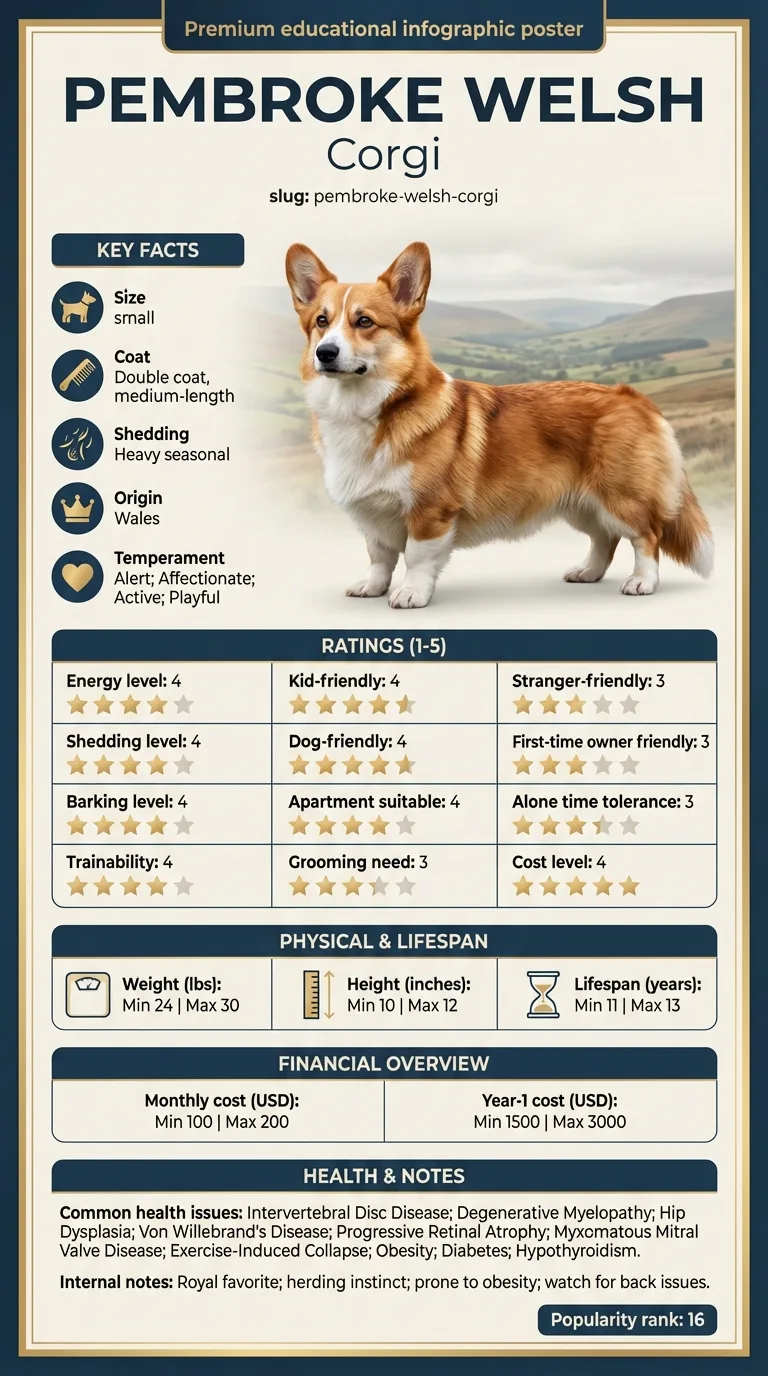
What are some Pembroke Welsh Corgi hip dysplasia quick tips?
Maintain your Corgi's healthy weight to reduce stress on their hips. Regular vet visits are essential for monitoring their condition. Incorporate low-impact exercises into their routine.
Pembroke Welsh Corgi hip dysplasia is a common yet serious condition affecting many dogs of this breed.

Owners of Pembroke Welsh Corgis often face this challenge, especially those who have active dogs or are first-time pet parents. If you notice your Corgi limping, having difficulty jumping, or showing reluctance to exercise, this may be a sign of hip dysplasia.
This guide is not medical advice. If your dog shows pain, sudden behavior change, or worsening symptoms, consult a licensed veterinarian.
Some links may be affiliate links. We may earn a commission at no extra cost to you. We only suggest products we believe are helpful for dog owners.
Pembroke Welsh Corgi hip dysplasia is a common issue characterized by malformed hip joints. This condition can lead to painful arthritis and mobility limitations, which can affect your Corgi's quality of life. Owners may notice their Corgi struggling to jump, run, or play, and they might display reluctance to engage in normal activities.
Hip dysplasia is relatively common in Pembroke Welsh Corgis, with studies indicating that it affects around 20-30% of the breed. Early diagnosis and management can help reduce its impact, so it's crucial to be aware of the signs.
Pembroke Welsh Corgis are genetically predisposed to hip dysplasia due to their body structure and weight distribution. Their short legs and long bodies can put extra stress on their joints, increasing the risk of malformation. This breed also has a history of herding, which can sometimes lead to more physical strain on their hips.
Environmental factors like excessive weight gain, lack of exercise, and improper nutrition can exacerbate hip dysplasia in Corgis. If they are not given enough room to move and play, their joints may suffer. Additionally, slippery floors or steep stairs can increase the risk of injury and joint stress.
If your Pembroke Welsh Corgi shows signs of discomfort or reluctance to move, consider consulting a professional trainer. They can help design a tailored exercise plan and provide guidance on safe play.
If you notice persistent limping, difficulty getting up, or excessive whining when moving, it's time to consult your vet. They can assess your Corgi's condition and recommend further treatment options.
Managing Pembroke Welsh Corgi hip dysplasia can take several months to see significant improvement. With consistent care, including training and vet visits, you may notice better mobility within 3 to 6 months.
Success in managing this condition means your Corgi can move more comfortably, enjoy daily activities, and experience reduced pain. You'll also see them engaging in play and exercise with less hesitation.
Avoid these common mistakes to help your Pembroke Welsh Corgi with hip dysplasia. Making adjustments can significantly improve their comfort and mobility.
Recognizing when Pembroke Welsh Corgi hip dysplasia becomes an emergency is crucial. Certain signs indicate that you should call your vet immediately. These include severe limping, inability to stand or walk, sudden yelping in pain, or visible swelling around the hip area. Additionally, if your Corgi shows signs of distress or has difficulty breathing, it’s time to seek help right away.
On the other hand, there are mild cases of hip dysplasia that can be monitored. If your Corgi occasionally limps or seems stiff after exercise but still plays and moves around normally, you can likely wait and watch. In these situations, creating a management plan with your vet can help. This may include weight management, moderate exercise, and pain relief options.
Always trust your instincts as a pet owner. If something feels off, it’s better to err on the side of caution. Regular check-ups can also help catch any early signs of worsening conditions.

Jake, a busy young professional in Chicago, noticed that Bella, his Pembroke Welsh Corgi, was limping after short walks. Concerned, he took her to the vet, who diagnosed her with hip dysplasia. Jake felt overwhelmed but committed to helping Bella. He learned how to adjust her diet, implement a gentle exercise plan, and started her on joint supplements. After a few months of dedicated care, Bella was not only walking better but also chasing after toys again, bringing joy back to their daily walks.
Key takeaway: With patience and the right approach, managing Pembroke Welsh Corgi hip dysplasia can lead to improved quality of life for both the dog and the owner.

Pembroke Welsh Corgis can inherit hip dysplasia from their parents. It can also be influenced by factors like rapid weight gain, poor nutrition, or lack of exercise. Regular vet check-ups can help you monitor your dog's hip health.
To prevent worsening of hip dysplasia, maintain a healthy weight and provide low-impact exercise. Avoid high-impact activities like jumping or running on hard surfaces. Consult your vet for a tailored exercise program.
Signs include limping, difficulty rising, or reluctance to climb stairs. You may also notice decreased activity or stiffness after rest. If you observe these symptoms, consult your vet for a proper diagnosis.
A balanced diet that maintains a healthy weight is crucial for Corgis with hip dysplasia. Look for formulas rich in Omega fatty acids and glucosamine to support joint health. Always check with your vet before changing your dog's diet.
Yes, training can help improve your Corgi's strength and stability. Focus on gentle obedience training and low-impact exercises. This can help them adjust their movements and reduce discomfort.
Older Pembroke Welsh Corgis may show signs of hip dysplasia through limping, difficulty getting up, or reluctance to jump. They might also exhibit changes in behavior, such as being less active or hesitant to play. If you notice any of these symptoms, it’s a good idea to consult your vet.
Yes, maintaining a healthy weight is crucial for Pembroke Welsh Corgis with hip dysplasia. Excess weight can exacerbate joint problems and lead to increased pain. A balanced diet and regular exercise can help keep their weight in check.
Hip dysplasia in Pembroke Welsh Corgis is often due to genetic factors, but environmental influences can also play a role. Factors like rapid growth, obesity, and improper exercise during their development can contribute to this condition. It's important to be aware of these factors and discuss them with your vet.
Training your Pembroke Welsh Corgi to manage hip dysplasia involves gentle, low-impact exercises. Activities like swimming can be beneficial without putting too much stress on their joints. Always consult your vet before starting a new exercise routine to ensure it's safe for your dog.
Surgery might be an option if your Pembroke Welsh Corgi's quality of life is significantly affected by hip dysplasia. If they experience chronic pain or mobility issues despite conservative treatments, discussing surgical options with your vet is essential. They can help determine the best approach based on your dog's specific needs.
Maintain your Corgi's healthy weight to reduce stress on their hips. Regular vet visits are essential for monitoring their condition. Incorporate low-impact exercises into their routine.
Treatment costs can vary, ranging from $500 to $3,000 depending on the severity and type of care needed. Regular check-ups and medications can add to these costs.
With proper care, a Pembroke Welsh Corgi can live a full life despite hip dysplasia. Early diagnosis and management can significantly improve their quality of life.