Health
What are the early signs of liver disease in a dog?
Vague ones: reduced appetite, weight loss, increased drinking and urinating, intermittent vomiting and general dullness. In a naturally calm low-energy breed they are easy to miss entirely.

Quick answer
What are the early signs of liver disease in a dog?
Vague ones: reduced appetite, weight loss, increased drinking and urinating, intermittent vomiting and general dullness. In a naturally calm low-energy breed they are easy to miss entirely.
The signs when they finally arrive are almost aggressively unhelpful: a bit off food, a bit quiet, drinking more, occasionally sick. In a calm, low-energy giant breed, that description covers a normal Tuesday.
For owners whose Newfoundland has had abnormal liver values flagged on a routine blood test, and for anyone trying to understand what a slow, expensive, monitoring-heavy diagnosis actually involves day to day.
This guide is not medical advice. If your dog shows pain, sudden behavior change, or worsening symptoms, consult a licensed veterinarian.
Some links may be affiliate links. We may earn a commission at no extra cost to you. We only suggest products we believe are helpful for dog owners.
We research and check what we publish, but we do not warrant that any figure, date, price, or statement is accurate, complete, or current, and we accept no liability for any loss, cost, injury, or other harm arising from the use of this site. Use it as one reference among several. You remain responsible for your own decisions and for your dog's care - confirm anything that matters with a licensed veterinarian or another qualified professional before you act on it. Full disclaimer.
Chronic active hepatitis is persistent liver inflammation that scars the organ over months to years. Because the liver compensates so effectively, the disease is usually silent in its early stages and vague in its middle stages, and it is often found incidentally on a blood test run for another reason. Diagnosis requires a staged workup ending in biopsy, and management is lifelong, diet-dependent and monitoring-heavy rather than a single course of treatment.
Chronic hepatitis is diagnosed across many breeds and is well recognised in veterinary internal medicine, with certain breeds carrying a documented copper-associated form. It does not appear on the Newfoundland's list of characteristic health issues. That absence is worth stating honestly: a Newfoundland is not expected to develop this condition, and if it does, the investigation should proceed on individual findings rather than on breed assumption.
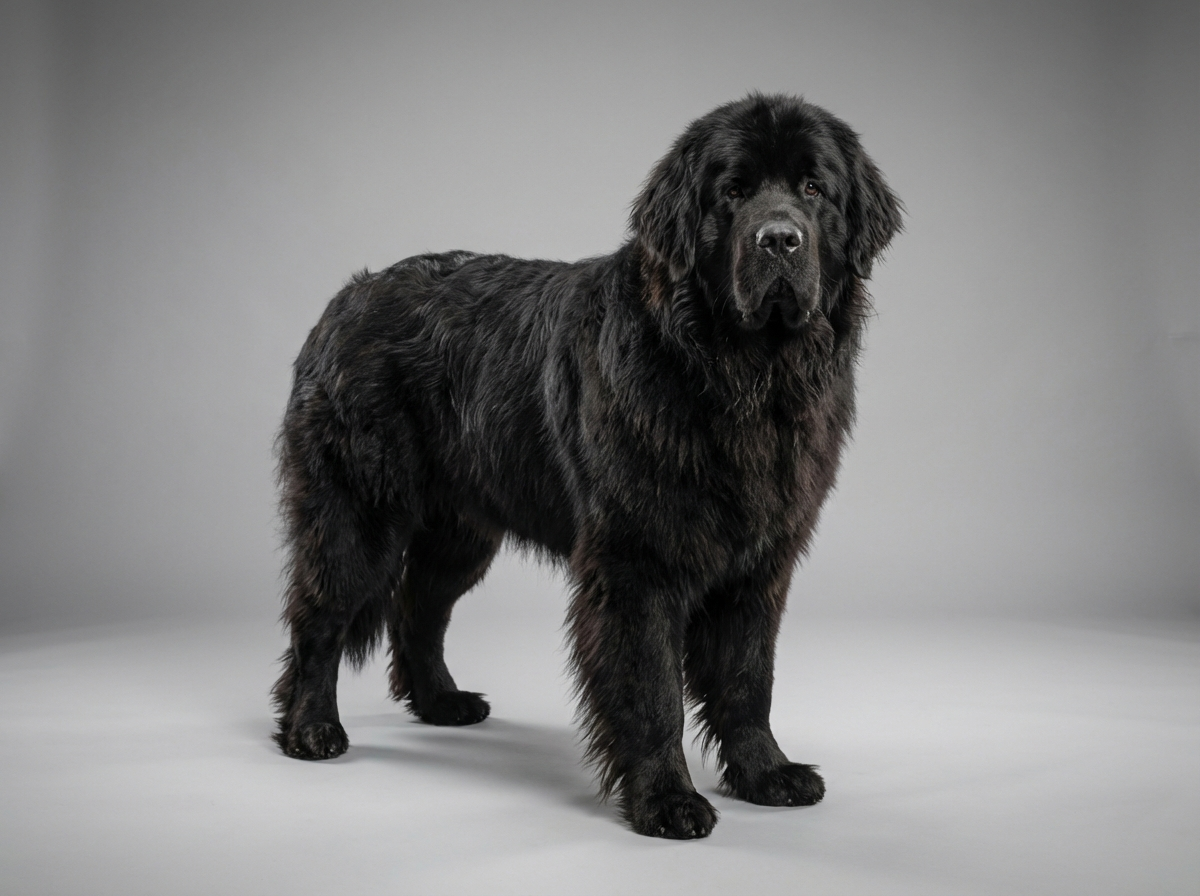
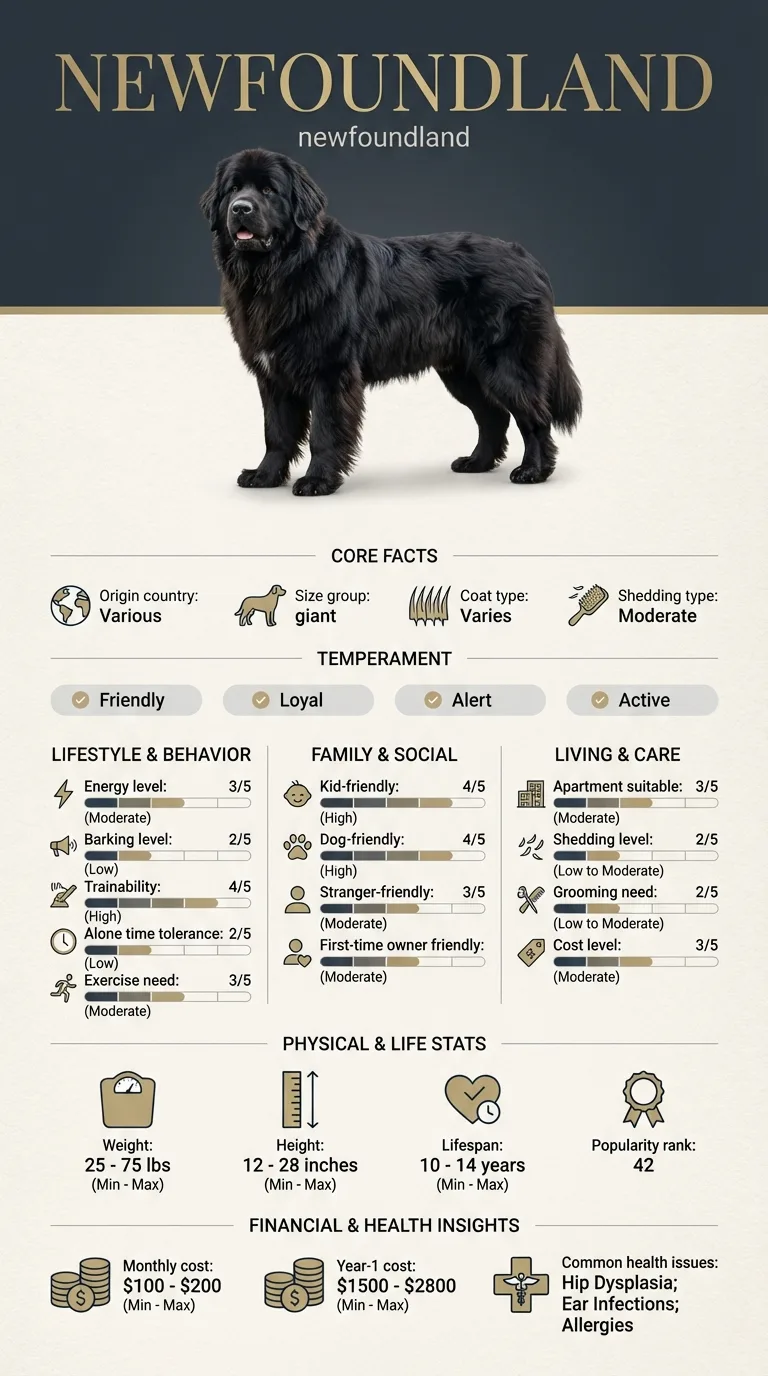
There is no documented Newfoundland predisposition to chronic hepatitis, and inventing one would be misleading. What the breed contributes is delay in detection and difficulty in management. A sweet, patient, calm dog with an energy level of two out of five gives very little behavioural signal when it feels mildly unwell, and a nine to ten year lifespan means quiet organ disease has less time to be caught before it matters. Size affects treatment practically: medication volumes, prescription diet quantities and monitoring costs all scale with a 100 to 150 pound body, and a giant breed with a swollen abdomen is difficult to nurse at home.
Household factors influence detection more than causation. Multi-person households where nobody tracks how much the dog actually ate, water bowls shared between animals so nobody notices increased drinking, and practices that see a large dog only once a year all delay the moment a problem surfaces. Access to medications, supplements and substances that stress the liver matters too, which is why a complete honest list of everything the dog receives, including things given by other family members, is part of any liver investigation.
Book an appointment for persistent reduced appetite, unexplained weight loss, increased drinking and urinating, or repeated vomiting over more than a couple of days. Ask for the liver to be assessed by function tests rather than enzymes alone if a value has been flagged. Seek same-day or emergency care for yellowing of the gums, whites of the eyes or skin, an abdomen that has become swollen or tense, unexplained bruising or bleeding from the gums, black tarry stools, disorientation, head pressing, circling or seizures. Neurological signs in a dog with liver disease indicate that toxins are no longer being cleared and are a genuine emergency requiring immediate hospital treatment.
See all Newfoundland health problems, which breeds are prone to chronic active hepatitis, or the full Newfoundland breed guide for temperament, exercise needs and ownership costs.
From a flagged blood value to a biopsy diagnosis is commonly four to eight weeks, depending on referral waiting times and whether clotting must be corrected first. Once treatment starts, blood values are usually rechecked at four to eight weeks and then every three to six months indefinitely. Improvement in enzymes can be seen within a couple of months, but scarring already present does not reverse. Some dogs stabilise and live comfortably for years; dogs diagnosed late with extensive scarring have a considerably shorter outlook, and your vet should say so plainly.
Success is a stable dog rather than a normal liver. That means a good appetite, a stable weight, no vomiting, no fluid accumulation, no yellowing, and blood values that hold steady or improve slightly at each recheck. It also means a household that has settled into the routine of a prescription diet, daily medication and scheduled monitoring without treating each recheck as a crisis, and an owner who knows exactly which signs mean the emergency clinic tonight.
The liver performs several hundred jobs at once: filtering toxins, manufacturing proteins including clotting factors, storing energy, and processing almost every drug a dog is given. It is also unusually good at compensating, and the remaining healthy tissue simply takes on more work as portions become scarred.
The result is a disease that announces itself in three phases. In the first, there are no signs at all and the only clue is a raised liver enzyme on a blood test run for another reason. In the second, the signs are vague: reduced appetite, weight loss, drinking and urinating more, intermittent vomiting or diarrhoea, and a general dullness. In the third, when compensation finally fails, the signs are unmistakable and serious: yellowing of the gums, eyes and skin, fluid accumulation swelling the abdomen, bleeding tendencies, and neurological signs including disorientation and seizures caused by toxins the liver can no longer clear.
The practical consequence is that the second phase is where the whole game is played, and the second phase looks like nothing much. In a breed described as sweet, patient and calm, with an energy level of two out of five, a dog who is a bit quiet and eating less is easily explained away. This is one of the strongest arguments for routine bloodwork in middle-aged and older dogs of this size, because a raised enzyme found by accident is worth far more than a diagnosis reached by crisis.

Owners are often surprised by how many steps sit between an abnormal blood value and a diagnosis. Knowing the sequence in advance makes the cost and the timeline easier to plan for.
Torvald was seven and had a dental cleaning booked. His practice ran pre-anaesthetic bloodwork the week before, as they do for every giant-breed patient, and two liver enzymes came back raised. He had no signs at all. His owner Maja described him as exactly himself. The dental was postponed. A repeat sample a fortnight later showed the same picture, and bile acid testing suggested his liver was not just irritated but working less well than it should. An ultrasound showed a coarse liver texture and nothing else abnormal. The biopsy was the part Maja hesitated over, because it meant anaesthesia in a breed where she had already been told to have the heart checked first. She did both. The heart was clear. The biopsy identified chronic inflammation with elevated copper, which changed the treatment plan specifically. Torvald went onto a prescription diet, medication and three-monthly bloodwork. Two years on, his enzymes are lower than the day they were found and he has never shown a single outward sign of liver disease. Maja's reflection is that nothing about Torvald ever prompted a visit. The disease was found because a routine blood test was run before a routine procedure, and everything good that followed came from that.
Key takeaway: This disease is usually found by accident or not in time. Routine bloodwork from middle age is what turns it into a managed condition rather than a crisis, and the biopsy is what makes the treatment specific rather than a guess.
It is not one of the conditions the breed is best known for; those are hip dysplasia, subaortic stenosis, dilated cardiomyopathy, cystinuria and bloat. Chronic hepatitis occurs across many breeds, and certain breeds have a strong copper-associated form. A Newfoundland with liver disease should be worked up on its own merits rather than assumed to have a breed-typical condition.
Not necessarily. Liver enzymes can rise for many reasons including other illnesses, medications and incidental changes, and a single mildly raised value in a well dog is often repeated rather than investigated immediately. What matters is the pattern over time and whether tests of function, not just enzymes, are also abnormal.
Because the treatment depends entirely on what kind of inflammation is present and whether copper is accumulating, and no blood test or scan can tell you that. Treating chronic hepatitis without knowing the type is guesswork, and one of the main treatment approaches is inappropriate if copper is not involved.
Generally it is managed rather than cured, and the realistic goal is to slow progression and keep the dog comfortable. Where a specific cause is identified and removed, some dogs do very well for years. Where the disease is advanced and scarring is extensive, the outlook is more limited, and your vet should give you an honest picture based on the biopsy findings.
Considerably, and it is one of the areas where veterinary guidance is essential rather than optional. Diets for liver disease are formulated around specific protein and mineral requirements, and in copper-associated disease the copper content of the food is directly relevant. Do not change diet or add supplements on your own initiative.
The liver processes most drugs, so a dog with reduced liver function may handle medications differently and clotting may be impaired. Make sure any vet treating your dog, for anything at all, knows about the liver diagnosis. In this breed that sits alongside the cardiac considerations that already apply to anaesthesia.
Vague ones: reduced appetite, weight loss, increased drinking and urinating, intermittent vomiting and general dullness. In a naturally calm low-energy breed they are easy to miss entirely.
Yellowing of the gums, eyes or skin, a swollen abdomen, unexplained bruising or bleeding, and disorientation or seizures. Any of these needs same-day veterinary care.
Because the type of inflammation and whether copper is accumulating determine the treatment, and neither can be established from blood tests or ultrasound alone.
The biopsy and workup are the large one-off expense; the ongoing cost is regular monitoring bloodwork, a prescription diet and medication for the rest of the dog's life, all priced for a giant breed.
Discuss it with your vet, but for a breed living nine to ten years, periodic bloodwork from middle age is how quiet organ disease gets found while there is still something to do about it.
A one-page prep sheet for this condition: the signs, the questions to ask, what to get priced. Unlocks here.
You get: Vet visit prep sheet
No spam. One-click unsubscribe. See our privacy policy.
Preview page 1 before you decide.