DogBreedCompass
← Back to breed profile

Jack Russell Terrier Heart Problems: What You Need to Know

Jack Russell Terrier heart problems can be serious and need attention. These issues, like subvalvular aortic stenosis and cardiomyopathy, affect your dog's health and quality of life.

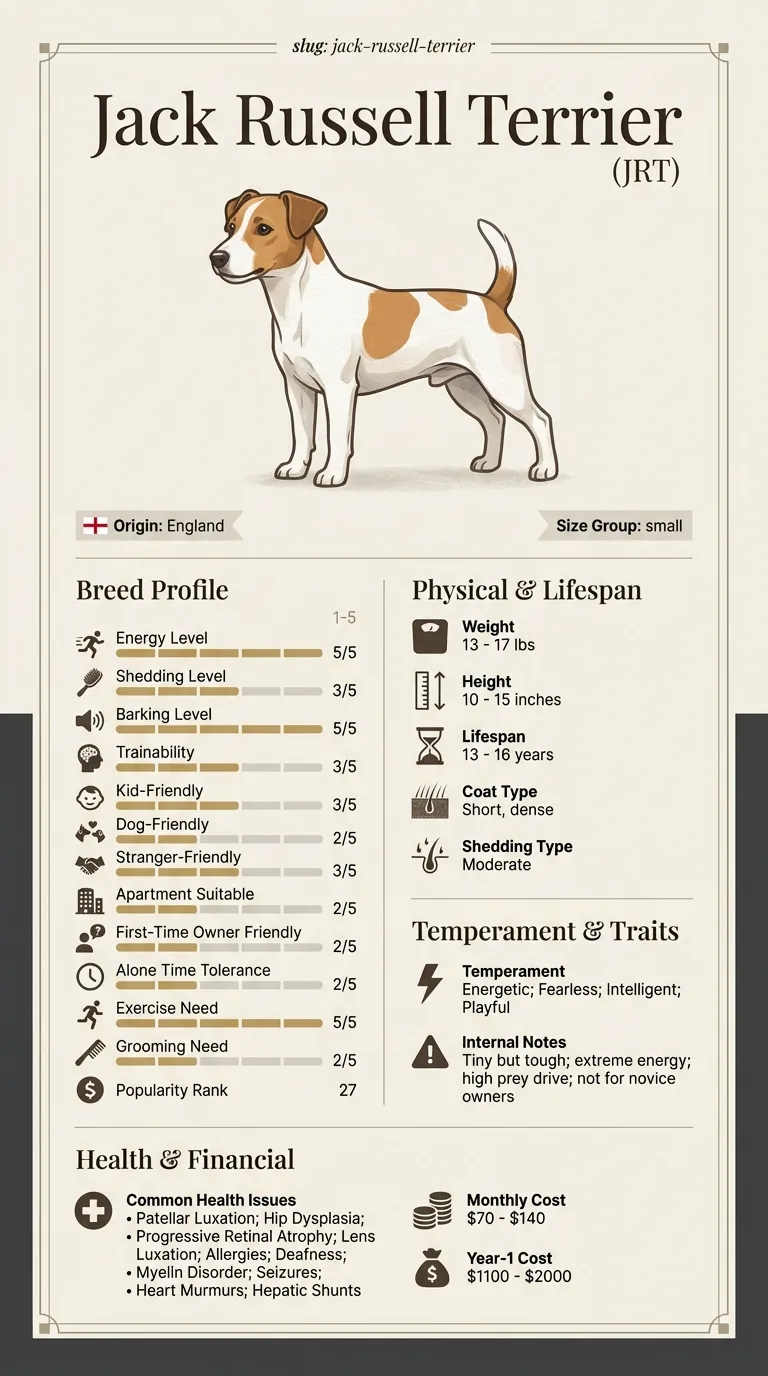
Jack Russell Terrier Heart Problems: What You Need to Know infographic

Typically, first-time dog owners or busy families may struggle with identifying heart problems in their Jack Russell Terriers. They might not know the warning signs or how to approach training to manage these health concerns effectively.

Important reminder

This guide is not medical advice. If your dog shows pain, sudden behavior change, or worsening symptoms, consult a licensed veterinarian.

Some links may be affiliate links. We may earn a commission at no extra cost to you. We only suggest products we believe are helpful for dog owners.

What this problem looks like

Jack Russell Terrier heart problems can manifest as breathing difficulties, coughing, or fatigue during play. These issues arise from conditions like subvalvular aortic stenosis and cardiomyopathy. Owners may notice their JRT struggling to keep up, leading to concern about their overall health.

Common triggers

  • Genetic predisposition due to breeding practices
  • High-stress situations or extreme excitement
  • Lack of regular vet check-ups to monitor heart health

Heart problems are not uncommon in Jack Russell Terriers, making it crucial for owners to be vigilant. It's important to have regular veterinary check-ups to catch any issues early.

Why this happens

Breed factors

Jack Russell Terriers can be predisposed to heart problems like heart murmurs and cardiomyopathy due to their genetic background. These small, energetic dogs may face higher risks of heart conditions as they age, particularly if they come from lines with known health issues.

Environment factors

Environmental factors such as poor diet, lack of exercise, and obesity can also contribute to heart problems. Stress or anxiety can exacerbate these conditions, especially if the dog is left alone for long periods or isn't provided with enough mental stimulation.

What you can try

At-home strategies

  • Ensure a balanced diet with high-quality dog food designed for small breeds. Avoid excessive treats and table scraps that can lead to weight gain.
  • Establish a regular exercise routine that includes daily walks and playtime to keep your Jack Russell Terrier active and healthy.
  • Monitor your dog's weight closely and adjust food portions as needed. Being overweight can increase the risk of heart issues.
  • Create a calm environment to reduce anxiety. Use calming techniques such as providing a cozy space or playing soothing music.
  • Incorporate mental stimulation through puzzle toys or training sessions. This can help alleviate stress and keep your dog engaged.

When to consider a trainer

If your Jack Russell Terrier shows signs of anxiety, such as excessive barking or destructive behavior, consider consulting a professional trainer. A trainer can help address behavioral issues and provide strategies for creating a more balanced environment.

When to talk to your vet

If you notice any signs of heart problems, such as coughing, lethargy, or difficulty breathing, contact your vet immediately. Regular check-ups are also essential, especially for older dogs, to catch any potential issues early.

Realistic expectations

Expect to see improvements in 3 to 6 months with consistent management and veterinary care.

Success looks like a stable heart condition, reduced symptoms, and a happier, more active dog.

Mistakes that make this worse

Addressing Jack Russell Terrier heart problems requires careful management. However, some common mistakes can unintentionally make the situation worse. Here are a few to avoid.

  • Ignoring symptoms: Dismissing coughing or lethargy can delay necessary treatment.
  • Overexercising: High-energy activities can exacerbate heart issues. Opt for short, controlled walks instead.
  • Feeding unhealthy treats: Giving high-fat or salty snacks can worsen heart conditions. Stick to vet-recommended diets.
  • Neglecting regular vet visits: Skipping check-ups can prevent early detection of worsening heart problems. Regular exams are crucial.
  • Failing to manage weight: Allowing your JRT to become overweight increases heart strain. Monitor their diet and exercise closely.
  • Not providing mental stimulation: A bored Jack Russell may stress, impacting heart health. Use puzzle toys and training to keep them engaged.
  • Avoiding medication: If your vet prescribes medication, not following through can worsen heart issues. Always follow the vet's recommendations.

When Jack Russell Terrier Heart Problems Are an Emergency

Red-flag signs that mean you should call your vet immediately include: sudden weakness or collapse, difficulty breathing, persistent coughing, or a noticeably fast or irregular heartbeat. If your Jack Russell Terrier displays any of these symptoms, don't wait. Get them to a vet as soon as possible.

On the other hand, if your dog shows mild symptoms like occasional coughing, slight lethargy, or a decreased interest in play, you might be able to monitor them at home. Keep a close eye on their behavior and activity levels, and consider making an appointment for a check-up. Make a plan that includes daily observations and note any changes that occur.

In summary, act quickly if you notice serious symptoms. For mild cases, keep monitoring while staying in touch with your vet. Trust your instincts—if something seems off, it's better to be safe than sorry.

Jack Russell Terrier Heart Problems: What You Need to Know - When Jack Russell Terrier Heart Problems Are an Emergency

Maggie's Journey with Heart Problems

Sarah, a busy office worker in Seattle, adopted Maggie, her energetic Jack Russell Terrier. Shortly after bringing Maggie home, Sarah noticed her becoming quickly fatigued during play and occasionally coughing. Concerned, she took Maggie to the vet, who diagnosed her with subvalvular aortic stenosis. Sarah learned the importance of regular vet visits and medication management. With a tailored exercise plan and dietary changes, Maggie started to regain her energy. Six months later, Maggie was back to her playful self, enjoying longer walks and even some agility training. Sarah felt relieved, knowing she could manage Maggie's health.

Key takeaway: Regular vet visits and a tailored care plan are crucial for managing Jack Russell Terrier heart problems effectively.

Frequently asked questions

Why does my Jack Russell Terrier have heart problems?

Jack Russell Terriers can develop heart problems due to genetic factors, age, or underlying health issues. Conditions like subvalvular aortic stenosis or cardiomyopathy are more common in this breed. Regular vet check-ups can help catch these issues early.

How can I prevent heart problems in my Jack Russell Terrier?

To prevent heart problems, ensure your Jack Russell maintains a healthy weight and gets regular exercise. A balanced diet and routine vet visits are also crucial. Early detection through screening can help manage any potential heart issues.

What are the symptoms of heart problems in Jack Russell Terriers?

Symptoms of heart problems can include coughing, difficulty breathing, fatigue, and a reduced appetite. If you notice these signs, consult your vet immediately for a thorough evaluation. Early intervention can make a significant difference.

What treatments are available for Jack Russell Terrier heart problems?

Treatment options for heart problems may include medication, dietary changes, and lifestyle adjustments. In some cases, surgery may be necessary. It's essential to work closely with your vet to determine the best approach for your dog's health.

Can heart problems affect my Jack Russell Terrier's behavior?

Yes, heart problems can influence your Jack Russell's energy levels and behavior. They may become less active or show signs of anxiety due to discomfort. Observing changes in their behavior can help you identify potential health issues early.

What are the early signs of heart problems in a Jack Russell Terrier?

Early signs of heart problems in a Jack Russell Terrier may include excessive coughing, difficulty breathing, or lethargy. You might also notice a decrease in their energy or enthusiasm for play. If you observe any of these symptoms, consult your vet promptly.

Can heart problems in Jack Russell Terriers be hereditary?

Yes, certain heart problems like subvalvular aortic stenosis can be hereditary in Jack Russell Terriers. It’s essential to ask about the health history of the puppy's parents and consider genetic testing if you're concerned. Regular vet check-ups can help catch any issues early.

How do I manage my Jack Russell Terrier's heart problems at home?

Managing heart problems at home may involve a combination of medication, a special diet, and controlled exercise. It's important to follow your vet's advice on lifestyle changes and keep a close eye on your dog's activity levels. Regular check-ups are crucial for monitoring their condition.

What should I do if my older Jack Russell Terrier shows signs of heart problems?

If your older Jack Russell Terrier shows signs of heart problems, it's vital to schedule a vet appointment as soon as possible. Older dogs may require different treatment plans or medications. Early intervention can significantly improve their quality of life.

Are there specific breeds at risk for heart problems like Jack Russell Terriers?

Yes, Jack Russell Terriers are among several breeds at risk for heart problems, particularly those with a history of heart issues in their lineage. Other small breeds may also be susceptible, so it's wise to research breed-specific health concerns before bringing a new dog home.

Quick answers

View more answers
Health

What are quick tips for Jack Russell Terrier heart problems?

Keep your Jack Russell at a healthy weight, provide regular exercise, and schedule routine vet check-ups. Monitor for signs of heart issues, such as coughing or fatigue, and consult your vet promptly if you notice any changes.

Health

How often should I take my Jack Russell Terrier to the vet?

It's recommended to take your Jack Russell to the vet at least once a year for a wellness check-up. Older dogs may need more frequent visits to monitor for heart problems and other health issues.

Living

What should I feed my Jack Russell Terrier to support heart health?

A high-quality, balanced diet rich in omega-3 fatty acids can support heart health. Consult your vet for specific dietary recommendations tailored to your dog's needs.

Health

Are heart problems common in Jack Russell Terriers?

Yes, heart problems like subvalvular aortic stenosis are relatively common in Jack Russell Terriers. Regular check-ups can help catch issues early and manage them effectively.

Training

Can training help with Jack Russell Terrier heart problems?

While training won't directly fix heart problems, it can help manage their behavior and stress levels. Positive reinforcement training can create a more relaxed environment for your dog.

Related DogBreedCompass guides

  • Jack Russell Terrier health issues guideLearn about common health issues in Jack Russell Terriers, including heart problems.
  • Jack Russell Terrier cost breakdownUnderstand potential costs associated with caring for a Jack Russell Terrier, including vet bills for heart issues.
  • Jack Russell Terrier heart problems trainingExplore training tips specifically designed to address Jack Russell Terrier heart problems and overall health.
  • Jack Russell Terrier separation anxiety guideFind effective strategies to manage separation anxiety in Jack Russell Terriers, which can be related to health concerns.
  • Jack Russell Terrier behavior problemsDiscover typical behavior problems in Jack Russell Terriers and how they may be linked to heart conditions.

Related guides