Behavior
What are quick tips for Jack Russell Terrier anxiety?
To help your Jack Russell Terrier with anxiety, ensure they get plenty of exercise and mental stimulation. Establishing a routine can also provide security and reduce stress.

Quick answer
What are quick tips for Jack Russell Terrier anxiety?
To help your Jack Russell Terrier with anxiety, ensure they get plenty of exercise and mental stimulation. Establishing a routine can also provide security and reduce stress.
Jack Russell Terrier anxiety can be a tough challenge for owners.
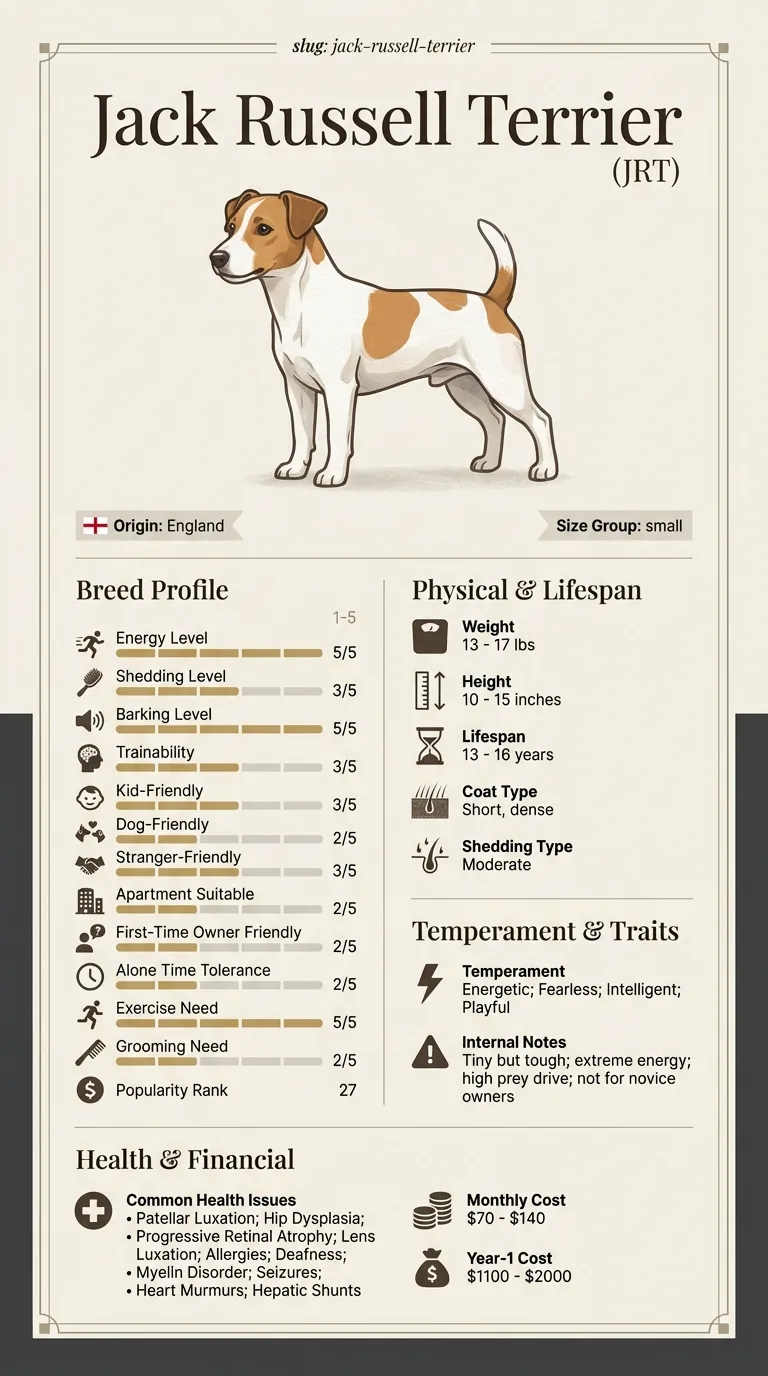
This guide is for Jack Russell Terrier owners looking to understand and address their dog's anxiety issues effectively.
Jack Russell Terrier anxiety often manifests through excessive barking, pacing, or chewing on furniture. This anxiety can lead to destructive behaviors, especially when left alone for long periods. Owners may notice their JRT acting restless or agitated, particularly in unfamiliar situations.
If your Jack Russell Terrier anxiety persists despite at-home strategies, professional training can help. A trainer can guide you in effective techniques and provide personalized plans for anxiety management.
If you notice severe anxiety symptoms, such as destructive behavior or excessive barking, consult a vet or behaviorist. They can help rule out medical issues and suggest specific treatments or medications.
There are various tools and products available to help manage Jack Russell Terrier anxiety. These can range from calming aids to training resources that support behavioral changes.
Adjusting your daily routine can significantly help manage Jack Russell Terrier anxiety. Start by establishing a consistent schedule for meals, walks, and playtime. Predictability can comfort your dog and reduce their stress levels.
Exercise is crucial for high-energy breeds like the Jack Russell Terrier. Aim for at least an hour of vigorous activity each day. This can include walks, fetch, or agility training.
Regular physical activity helps burn off excess energy and can lead to a calmer dog.
Additionally, consider gradually increasing the alone-time windows. Start with short periods and slowly extend them. This helps your dog learn to feel secure when left alone.
Create a cozy space with their favorite toys and blankets to make them feel safe.
Household routines can also play a role. Minimize loud noises or chaotic activities during times when your dog is likely to feel anxious. If your Jack Russell is particularly sensitive, using calming music or a white noise machine can help drown out distractions.
Lastly, be mindful of your own behavior. Dogs are sensitive to their owners’ emotions. Staying calm and positive can help your Jack Russell feel more secure.
Practicing relaxation techniques together can foster a peaceful environment. Making these lifestyle adjustments can greatly improve your dog's anxiety levels, leading to a happier and healthier companion.
Tracking progress with Jack Russell Terrier anxiety can feel overwhelming. However, recognizing small 'micro-wins' is crucial. These could be moments when your JRT handles a situation better than before, like staying calm during a doorbell ring or playing independently for a few minutes without distress.
Celebrate these victories—they show that your efforts are paying off!
On the flip side, setbacks are a normal part of the process. If your Jack Russell starts barking more or seems more anxious during car rides, it might feel discouraging. Recognizing these as temporary hurdles can help you stay focused.
It’s essential to assess the situation calmly. If your dog’s anxiety worsens or new behaviors emerge, it may be time to adjust your training plan or consult a professional.
You’ll know your plan is working when you see consistency in your Jack Russell’s behavior. Look for signs like decreased barking, increased willingness to explore new environments, and relaxation during downtime. Regularly documenting these changes can provide clarity and motivation.
If you notice your dog responding positively more often than not, you’re likely on the right track. Remember, patience is key, and every little step counts in the journey to alleviate Jack Russell Terrier anxiety.

Bella, a lively Jack Russell Terrier, struggled with anxiety whenever her owner, Sarah, left the house. Sarah noticed Bella would bark excessively and chew on furniture during those times. To help Bella, Sarah tried leaving her with interactive toys and playing calming music, but the anxiety persisted. Eventually, Sarah sought help from a certified dog trainer who specialized in anxiety issues. Together, they worked on gradual desensitization techniques and crate training. After several weeks of consistent practice, Bella showed significant improvement and could stay calm when Sarah left. Now, Bella enjoys her alone time and is much more relaxed overall.
Key takeaway: Early intervention and professional support can make a big difference in managing Jack Russell Terrier anxiety, leading to a happier pet and owner.
Jack Russell Terrier anxiety can stem from various factors, including genetics, early life experiences, and environmental stressors. These energetic dogs might feel anxious due to lack of exercise or stimulation. Understanding your JRT's triggers is crucial for effective management.
Helping your anxious Jack Russell Terrier involves creating a safe and calm environment. Regular exercise and mental stimulation can also reduce anxiety levels. Consider seeking professional training or behavior modification techniques tailored to your dog's needs.
In some cases, medication can be beneficial for managing severe anxiety in Jack Russell Terriers. It's essential to consult your veterinarian to discuss the best options for your dog. They can recommend a treatment plan that includes both medication and behavioral strategies.
Jack Russell Terrier anxiety training focuses on desensitizing your dog to their triggers and teaching coping strategies. Techniques may include positive reinforcement, gradual exposure, and establishing a consistent routine. This training helps your dog feel more secure and confident.
The time it takes to see improvement in your Jack Russell Terrier's anxiety can vary widely. Factors include the severity of the anxiety, your training consistency, and your dog's temperament. Patience and persistence are key, so don't get discouraged if progress is slow.
Older Jack Russell Terriers may develop anxiety due to health changes or shifts in their environment. It's essential to maintain a consistent routine and provide comfort through gentle training and familiar surroundings. Consulting your vet can also help to rule out any underlying health issues.
To manage Jack Russell Terrier anxiety during travel, ensure your dog is comfortable with a familiar blanket or toy. Gradually acclimate them to car rides and consider using calming aids like anxiety wraps or pheromone sprays. Frequent breaks during long trips can also help keep them relaxed.
Managing multiple Jack Russell Terriers with anxiety requires a tailored approach for each dog. Focus on individual training sessions to address their specific triggers. Providing separate safe spaces can also help reduce competition and stress among them.
Excessive barking in anxious Jack Russell Terriers is often a way to express their distress. This breed is naturally vocal and may bark when feeling threatened or uncertain. Training them to recognize calming cues can help reduce this behavior over time.
Signs of anxiety in a Jack Russell Terrier include excessive barking, pacing, panting, and destructive behavior. They may also seek out hiding spots or become overly clingy. Observing changes in their behavior can help you identify when they are feeling stressed.
To help your Jack Russell Terrier with anxiety, ensure they get plenty of exercise and mental stimulation. Establishing a routine can also provide security and reduce stress.
Create a safe space for your Jack Russell Terrier during storms, using blankets or their favorite toys. Calming music and gentle petting can also help soothe them.
Some diets include ingredients that may help reduce anxiety in dogs. Speak with your vet about specific nutritional options that could benefit your Jack Russell Terrier.
Yes, training classes can provide essential skills and socialization for your Jack Russell Terrier. Look for classes that focus on anxiety management and positive reinforcement.
Anxiety and pain look alike from the outside. Get the prep sheet for this breed's separation-anxiety page and take it to the vet.
You get: Vet visit prep sheet
No spam. One-click unsubscribe. See our privacy policy.
Preview page 1 before you decide.

This guide is not medical advice. If your dog shows pain, sudden behavior change, or worsening symptoms, consult a licensed veterinarian.
Some links may be affiliate links. We may earn a commission at no extra cost to you. We only suggest products we believe are helpful for dog owners.
We research and check what we publish, but we do not warrant that any figure, date, price, or statement is accurate, complete, or current, and we accept no liability for any loss, cost, injury, or other harm arising from the use of this site. Use it as one reference among several. You remain responsible for your own decisions and for your dog's care - confirm anything that matters with a licensed veterinarian or another qualified professional before you act on it. Full disclaimer.
Not sure which breed is right for you? Take our 2-minute quiz to find out.
Take the quiz