Health
How much higher is pregnancy complication risk in this breed?
Breed health data cites roughly 419% higher risk than the general dog population, driven substantially by structural and size-related factors.

Quick answer
How much higher is pregnancy complication risk in this breed?
Breed health data cites roughly 419% higher risk than the general dog population, driven substantially by structural and size-related factors.
Whelping a litter of this breed carries real, elevated risk, and treating it as a routine home event rather than a medically supported process is where the most serious complications tend to happen.
Breeders planning a litter, and anyone whose Shar-Pei is pregnant, whether intentionally bred or through an unplanned mating, who needs to understand what elevated risk actually means for whelping day.
This guide is not medical advice. If your dog shows pain, sudden behavior change, or worsening symptoms, consult a licensed veterinarian.
Some links may be affiliate links. We may earn a commission at no extra cost to you. We only suggest products we believe are helpful for dog owners.
We research and check what we publish, but we do not warrant that any figure, date, price, or statement is accurate, complete, or current, and we accept no liability for any loss, cost, injury, or other harm arising from the use of this site. Use it as one reference among several. You remain responsible for your own decisions and for your dog's care - confirm anything that matters with a licensed veterinarian or another qualified professional before you act on it. Full disclaimer.
Pregnancy and whelping complications are cited at roughly 419% higher risk in the Chinese Shar-Pei compared to the general dog population, likely driven by the breed's characteristic loose skin and head proportions along with size-related factors. Responsible breeding of this breed generally involves proactive prenatal imaging and ready veterinary support rather than treating whelping as a routine home event.
This elevated complication rate is specifically documented for the breed, making whelping-related risk a genuinely significant consideration for anyone breeding Chinese Shar-Peis rather than a rare, unlikely concern.
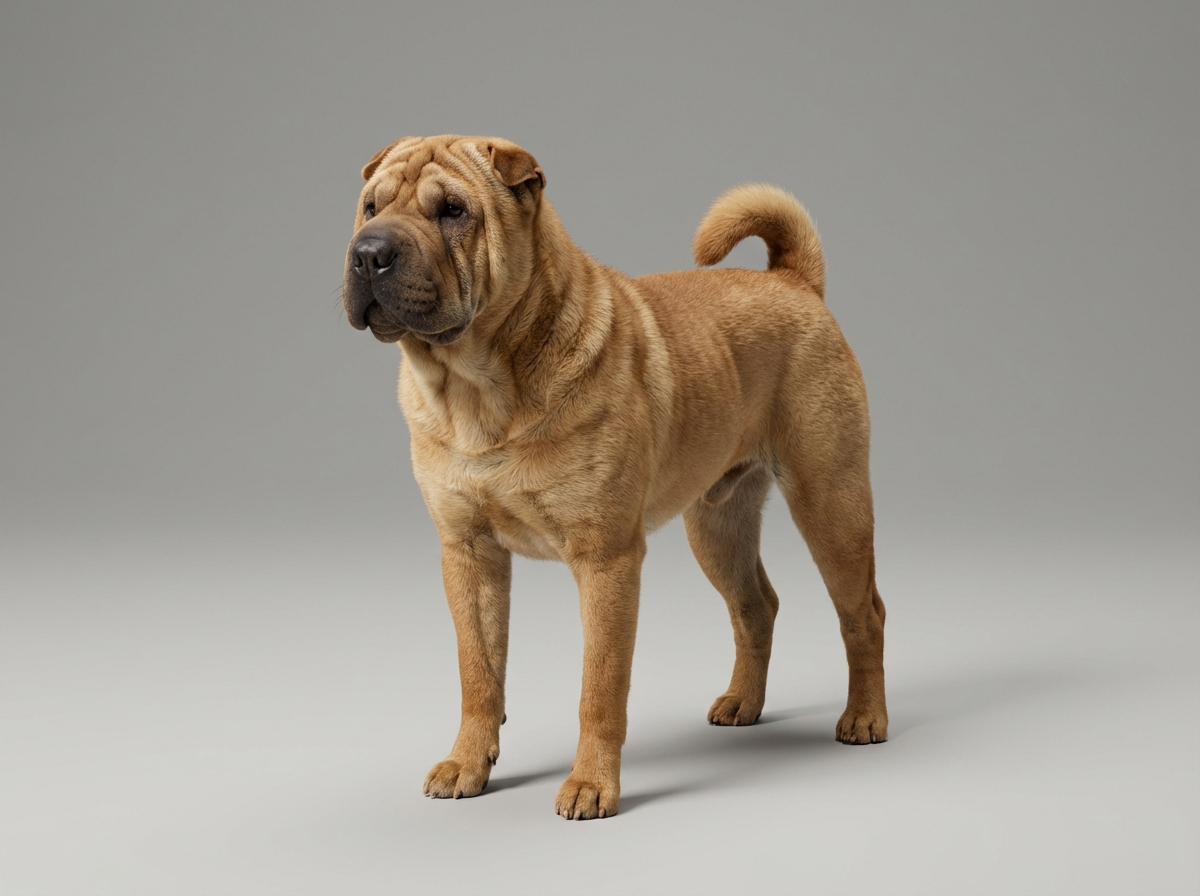
The Chinese Shar-Pei's characteristic loose, abundant skin extends to puppies, and this along with head and body proportions can occasionally complicate passage through the birth canal, contributing to the breed's documented elevated whelping complication rate.
Lack of prenatal imaging to assess puppy size and count, delayed recognition of a stalled labor, and whelping without ready veterinary support all increase the practical risk associated with this breed's underlying structural predisposition to complications.
Contact your vet immediately for prolonged straining without a puppy delivered within roughly thirty minutes, visible distress in the dam, a greenish discharge without a puppy following soon after, or an unusually long gap between puppies when more are expected. These situations can escalate quickly and need prompt professional assessment.
See all Chinese Shar PEI health problems, which breeds are prone to pregnancy complications, or the full Chinese Shar PEI breed guide for temperament, exercise needs and ownership costs.
Prenatal imaging is typically done in the final week of a roughly nine-week pregnancy, giving breeders a short but meaningful window to plan for a natural delivery or a scheduled cesarean before labor actually begins.
Success looks like a delivery, whether natural or surgical, that goes smoothly with a healthy dam and litter, achieved through proactive planning and prompt veterinary involvement rather than an unsupported, wait-and-see approach to whelping.
Several factors specific to this breed's physical structure plausibly contribute to elevated whelping complications. Puppy heads, like the adult dog's, tend to carry the breed's characteristic looser, more abundant skin, and a puppy's face and head structure can occasionally make passage through the birth canal more difficult than in breeds with more streamlined puppy proportions. The breed's moderate size also sits in a range where whelping complications generally aren't as rare as in very small toy breeds, where cesarean rates are famously high, but where individual variation in pelvic structure and litter size can still create real difficulty. Beyond structural factors, this breed's broader documented pattern of inflammatory and immune quirks may also play some role in pregnancy-related complications, though this connection is less well mapped than the more direct structural explanations.
Given this elevated risk, responsible breeding of this breed typically involves scheduling a prenatal X-ray or ultrasound in the final week of pregnancy to count puppies and assess their size relative to the dam's pelvis, giving real advance information about whether a natural delivery is likely to go smoothly or whether a planned cesarean might be the safer choice. Having a relationship with a vet who can be reached quickly, or ideally whelping at or near a veterinary facility rather than entirely at home, matters more for this breed than for one with a lower documented complication rate. Signs that a whelping is not progressing normally, prolonged straining without a puppy delivered within roughly thirty minutes, visible distress in the dam, or a suspiciously long gap between puppies when more are still expected, should prompt an immediate call to the vet rather than waiting to see if things resolve, since delay in these situations directly increases risk to both the dam and remaining puppies.

Mrs. Alvarez, a longtime Shar-Pei breeder near Fresno, scheduled a prenatal ultrasound for her dog Fiesta in the final week of pregnancy as she did with every litter, a habit she'd built after losing puppies in an earlier, less carefully planned whelping years before. The ultrasound showed one unusually large puppy relative to Fiesta's pelvis alongside four others of typical size. Rather than risk a natural delivery, she scheduled a cesarean with her vet for the following week. All five puppies were delivered safely, including the larger one, which likely would have caused a serious obstruction during a natural attempt.
Key takeaway: The imaging that flagged one oversized puppy days before labor started is exactly the kind of advance information this breed's elevated complication rate makes worth planning for, turning a potential emergency into a scheduled, controlled outcome.
Several structural factors, including the breed's characteristic loose puppy skin and head shape, likely contribute, along with the breed's moderate size sitting in a range where whelping complications aren't as rare as in larger breeds with more streamlined proportions.
Not necessarily; many dogs deliver naturally without issue, but given the elevated complication rate, a prenatal ultrasound or X-ray to assess puppy size and count helps determine whether a planned cesarean is the safer route for a specific pregnancy.
Prolonged straining without a puppy delivered within roughly thirty minutes, visible distress in the dam, or an unusually long gap between puppies when more are expected are all signs that warrant an immediate call to your vet.
Schedule a prenatal X-ray or ultrasound in the final week of pregnancy to count and assess puppies, establish a relationship with a vet reachable on short notice, and consider whelping at or near a veterinary facility given this breed's elevated complication rate.
Given the breed's documented elevated complication risk, whelping without ready access to veterinary support carries real added risk, and most responsible breeding programs plan for veterinary involvement rather than treating it as a routine home event.
Difficulty passing puppies due to head or body proportions, prolonged or unproductive labor, and situations requiring emergency cesarean intervention are among the more commonly reported complications for this breed.
Yes, complications during delivery can affect puppy survival and health as much as the dam's, which is part of why prompt intervention when labor isn't progressing normally matters for the whole litter, not just the mother.
Breed health data cites roughly 419% higher risk than the general dog population, driven substantially by structural and size-related factors.
A prenatal X-ray or ultrasound in the final week helps assess whether a planned cesarean is the safer route for a specific pregnancy rather than deciding this on the day of labor.
Prolonged straining without a puppy delivered within about thirty minutes, or visible distress in the dam, both warrant an immediate call to your vet.
It's a significant expense, though breeders generally consider it a worthwhile investment given this breed's elevated natural delivery complication rate.
Given this breed's elevated risk, whelping at or near a veterinary facility, or having a vet reachable on short notice, is a safer approach than a fully unsupported home whelping.
A one-page prep sheet for this condition: the signs, the questions to ask, what to get priced. Unlocks here.
You get: Vet visit prep sheet
No spam. One-click unsubscribe. See our privacy policy.
See a sample page before you decide.
Early access list
The free prep sheet covers the same-day warning signs, a symptom log and the questions to ask. We are considering a fuller kit that adds a cost worksheet for the usual tests and treatments (US price ranges with their sources) and a plain-English guide to ways of covering the bill. It is not built yet; this list tells us whether it is worth building.
One email, no spam, unsubscribe anytime. Information only, not veterinary advice.