Health
What's the actual mechanical cause of GDV?
A distended stomach rotating within a deep chest cavity, pinching off both ends and cutting off blood flow.

Quick answer
What's the actual mechanical cause of GDV?
A distended stomach rotating within a deep chest cavity, pinching off both ends and cutting off blood flow.
The reason giant breeds get named in every bloat article isn't random — it comes down to basic anatomy, and understanding it clarifies where this breed's real risk level actually sits.
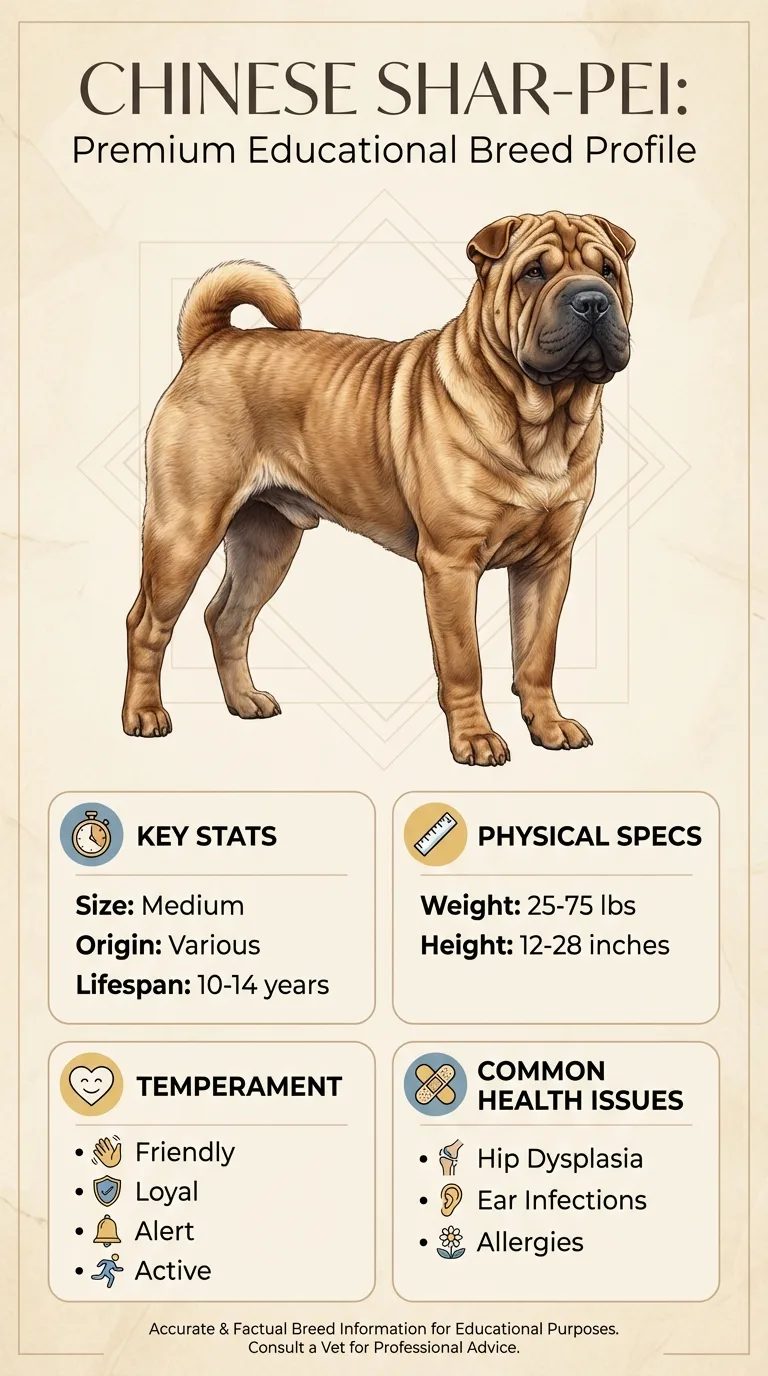
Owners trying to understand whether bloat warnings written for Great Danes and other giant breeds actually apply the same way to a medium dog, and anyone deciding whether a preventive gastropexy conversation is worth having.
This guide is not medical advice. If your dog shows pain, sudden behavior change, or worsening symptoms, consult a licensed veterinarian.
Some links may be affiliate links. We may earn a commission at no extra cost to you. We only suggest products we believe are helpful for dog owners.
We research and check what we publish, but we do not warrant that any figure, date, price, or statement is accurate, complete, or current, and we accept no liability for any loss, cost, injury, or other harm arising from the use of this site. Use it as one reference among several. You remain responsible for your own decisions and for your dog's care - confirm anything that matters with a licensed veterinarian or another qualified professional before you act on it. Full disclaimer.
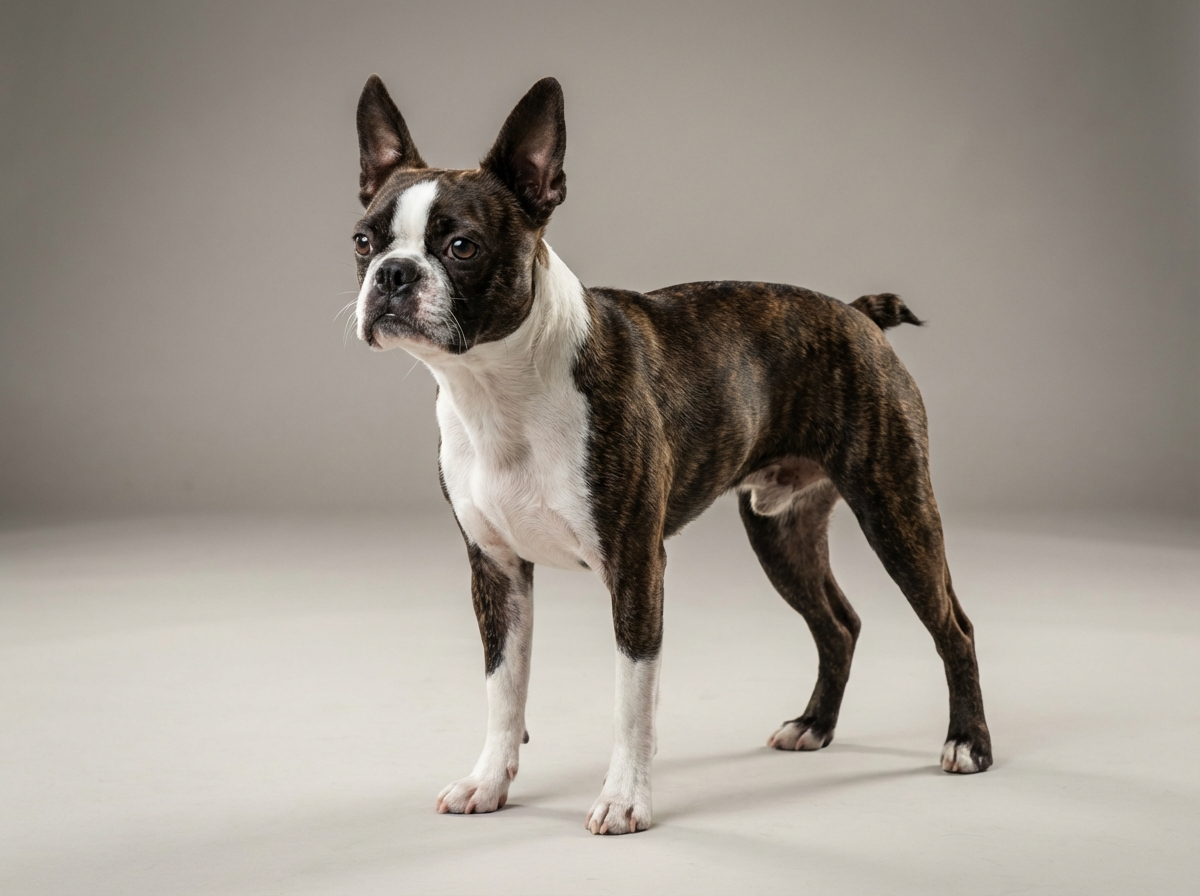
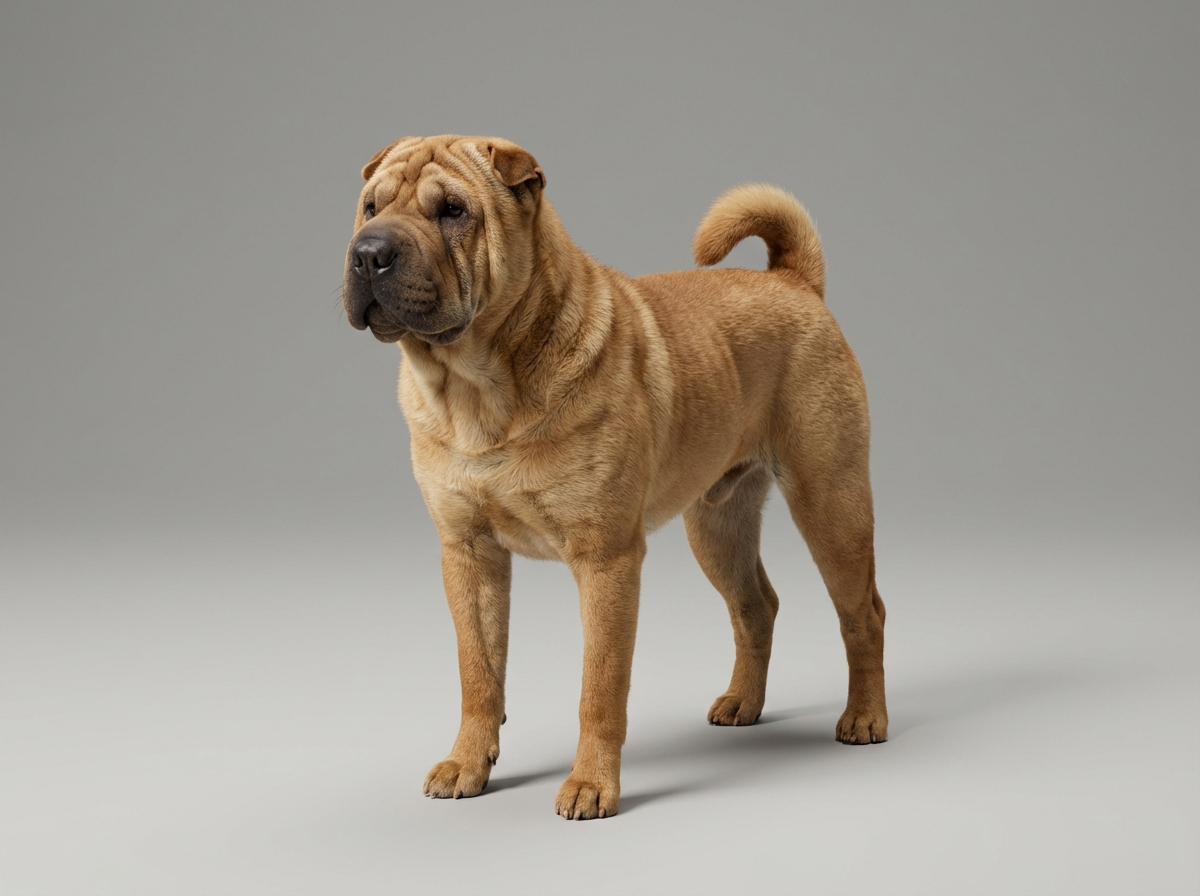
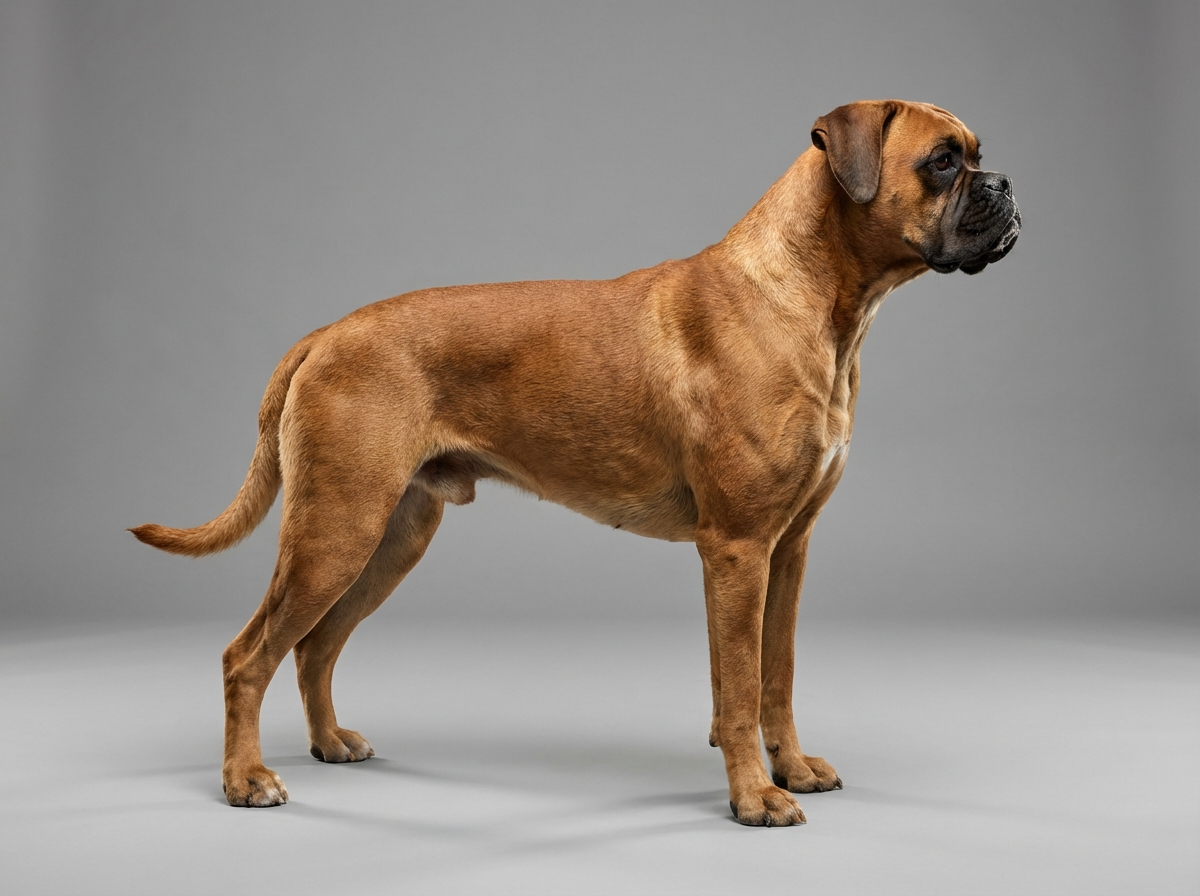
GDV happens when a distended stomach rotates within the abdomen, a process anatomically more likely in dogs with a deep, narrow chest cavity. This breed's documented moderate, medium build gives the stomach less room to rotate than in deep-chested giant breeds, which is the mechanical reason it isn't documented among the higher-risk group.
Lower than in deep-chested giant and large breeds based on anatomical risk factors, though not impossible in any dog — general prevention habits remain worthwhile regardless of documented breed-level risk.
This breed's documented moderate chest proportions, rather than a deep, narrow chest cavity, are the specific anatomical reason it isn't associated with elevated GDV risk the way giant and large deep-chested breeds are.
Rapid eating, large single meals, and exercise too soon after eating are the modifiable environmental factors that raise GDV risk in any dog, independent of chest shape.
Discuss gastropexy only if your vet raises a specific reason related to your individual dog. For symptoms — unproductive retching, a swollen abdomen, restlessness — treat it as an emergency and go to a vet immediately rather than scheduling a routine visit.
Start here: Chinese Shar-Pei Most Common Genetic Disorders: Screening
See all Chinese Shar PEI health problems, which breeds are prone to bloat gdv, or the full Chinese Shar PEI breed guide for temperament, exercise needs and ownership costs.
There's no timeline to manage for a condition that isn't a documented elevated risk for this breed — the realistic expectation is ongoing, low-effort prevention habits rather than active monitoring for a specific onset.
Success looks like sensible feeding habits maintained as routine, without needing to treat this breed as though it carries the same risk level as a deep-chested giant breed.
A dog's stomach is attached at both ends but otherwise able to move somewhat freely within the abdomen. In dogs with a deep, narrow chest cavity, the stomach has more room to swing and rotate on its axis when it becomes distended with gas or food, particularly after a large meal or rapid eating followed by activity. Once it rotates far enough, the entrance and exit both become pinched off, gas continues to build with nowhere to escape, and blood flow to the stomach wall and spleen is cut off.
Chest depth relative to width — not overall body size alone — is the specific anatomical feature most associated with this risk, which is why deep-chested giant and large breeds dominate GDV statistics. A medium dog with a moderate, less deep chest cavity has measurably less room for that kind of rotation to occur, which is the practical reason this breed isn't documented among the higher-risk group, even though it's still anatomically possible.
Even at a lower documented baseline risk, these habits reduce the odds further for any dog.

If you think your Chinese has bloat, the plan is three steps: write down what you have seen and when it started, book a veterinary appointment rather than waiting for the next flare, and take video of the behaviour or symptom before you go — the thing you are worried about rarely happens in the consulting room. Screening in the parents covers skin fold dermatitis, entropion, familial shar-pei fever.
What the vet visit should produce is a diagnosis and a written plan, not just reassurance: what is being ruled out, what the monitoring interval is, and which signs mean you come back sooner. Ask what the treatment costs across a year rather than per visit, because that is the number that decides whether you are managing this condition or reacting to it.
Between appointments, keep a short log — dates, what you saw, what changed. It is the single most useful thing an owner brings to a follow-up, and for bloat it is often what separates a clear pattern from a guess.
Hector had always fed his Shar-Pei Winston one large meal a day, and Winston ate it in under a minute every time. After reading about the mechanics of how rapid eating and large meals contribute to GDV risk regardless of breed, Hector switched Winston to two smaller meals using a slow-feeder bowl. Winston's mealtime stretched to five or six minutes, and Hector noticed less panting and restlessness afterward too. Nothing dramatic happened either way, but Hector felt better knowing he'd addressed the actually modifiable risk factors rather than assuming his breed's lower documented risk meant he didn't need to think about it at all.
Key takeaway: Lower documented breed risk doesn't mean zero risk — the genuinely useful habits, like slower eating and smaller meals, are worth adopting for any dog regardless of chest shape.
It comes down to chest shape — a deep, narrow chest cavity gives the stomach more room to rotate when distended, which is the actual mechanical driver of GDV, and giant and large breeds are documented to have that build far more often.
It's the most plausible reason this breed isn't documented among high-risk breeds, since the anatomical room for the stomach to rotate is genuinely less in a moderate, non-deep chest cavity.
It's a reasonable question to raise with your vet, particularly if your dog will already be under anesthesia for another procedure, but it isn't a standard recommendation for a breed without documented elevated risk.
Yes — rapid eating increases air swallowed and can contribute to gas distension in any dog, which is one of the few genuinely modifiable risk factors available to any owner.
Without a gastropexy, recurrence is a real risk in any dog that's experienced a true torsion, which is part of why surgery to tack the stomach in place is standard once an episode occurs.
Raised bowls were once commonly recommended, but more recent research has actually associated elevated bowls with increased, not decreased, risk in some studies. It's worth discussing current guidance with your vet rather than assuming the older advice still holds.
It means the anatomical risk factor is lower, not that the possibility is zero. The modifiable habits — feeding pace, meal size, exercise timing — are worth keeping regardless of how favorable your dog's chest shape happens to be.
A distended stomach rotating within a deep chest cavity, pinching off both ends and cutting off blood flow.
Its moderate, non-deep chest proportions give the stomach less anatomical room to rotate compared to deep-chested breeds.
Yes, they're inexpensive and directly reduce gulping and air swallowed during meals.
Current guidance leans toward standard, ground-level bowls; check with your vet for the latest recommendation.
Yes, avoiding vigorous activity for about an hour before and after eating is a simple, genuinely useful precaution.
A one-page prep sheet for this condition: the signs, the questions to ask, what to get priced. Unlocks here.
You get: Vet visit prep sheet
No spam. One-click unsubscribe. See our privacy policy.
Preview page 1 before you decide.