Health
Is Schnauzer Comedo Syndrome an Akita concern?
No — it's specifically documented in and named for the Miniature Schnauzer.

Quick answer
Is Schnauzer Comedo Syndrome an Akita concern?
No — it's specifically documented in and named for the Miniature Schnauzer.
A skin condition literally named after another breed is a strong clue that it isn't the one to focus on — and the Akita has its own distinct, genuinely documented skin condition worth understanding instead.
Owners who've encountered 'comedo syndrome' in general skin-condition searches and want to know what's actually relevant to their Akita's coat and skin health are the audience here.
This guide is not medical advice. If your dog shows pain, sudden behavior change, or worsening symptoms, consult a licensed veterinarian.
Some links may be affiliate links. We may earn a commission at no extra cost to you. We only suggest products we believe are helpful for dog owners.
We research and check what we publish, but we do not warrant that any figure, date, price, or statement is accurate, complete, or current, and we accept no liability for any loss, cost, injury, or other harm arising from the use of this site. Use it as one reference among several. You remain responsible for your own decisions and for your dog's care - confirm anything that matters with a licensed veterinarian or another qualified professional before you act on it. Full disclaimer.
Check this first
Widespread hair loss, significant skin infection with pain, or an eye or systemic illness component alongside skin changes warrant prompt veterinary evaluation, sooner rather than later, since these can indicate a more advanced or complicated presentation of sebaceous adenitis or another condition needing active treatment.
Mild, early scaling or a few patchy areas of hair loss along the back and head are not an emergency and are appropriate for a scheduled dermatology evaluation, ideally including a skin biopsy to confirm sebaceous adenitis versus another cause.
Because sebaceous adenitis is a progressive condition that's generally more manageable when caught early, prompt evaluation of any new patchy hair loss or excessive scaling, rather than waiting to see if it resolves, gives the best chance at effective long-term management.
If any of these apply, call your vet or an emergency clinic now. The rest of this page is for the cases that are not an emergency.
Schnauzer Comedo Syndrome is a follicular skin condition specifically documented in and named for the Miniature Schnauzer, not the Akita. The genuinely relevant, well-documented Akita skin condition involving hair follicles and sebaceous glands is sebaceous adenitis, an autoimmune condition causing patchy hair loss and scaling, consistent with this breed's broader recognized tendency toward immune-mediated disease.
Sebaceous adenitis, the Akita's actual relevant condition, is well documented in the breed alongside Standard Poodles, making it a genuine concern to watch for, while Schnauzer Comedo Syndrome specifically is not established as occurring in Akitas.
The Akita is specifically documented, alongside Standard Poodles, as predisposed to sebaceous adenitis, an autoimmune condition targeting the sebaceous glands attached to hair follicles. This fits within the breed's broader recognized tendency toward immune-mediated disease, giving it a genuine, well-established mechanism distinct from the comedo-forming process documented in Miniature Schnauzers.
While the underlying autoimmune tendency behind sebaceous adenitis is genetic, how promptly it's diagnosed and treated affects coat and skin quality outcomes. There are no well-established environmental triggers that cause the condition itself, though consistent topical treatment meaningfully supports skin barrier function once diagnosed.
See a vet promptly for widespread hair loss, significant skin infection, or skin changes accompanied by other illness signs. Schedule a routine dermatology evaluation, including a possible skin biopsy, for patchy hair loss or scaling to confirm the actual underlying cause.
A condition named for a different breed can misdirect research away from the one that actually matters for Akitas. Avoid these mistakes.
See all Akita health problems, which breeds are prone to schnauzer comedo syndrome, or the full Akita breed guide for temperament, exercise needs and ownership costs.
Sebaceous adenitis management is typically an ongoing, long-term commitment rather than something with a defined endpoint, with topical treatment often needed consistently to maintain skin barrier function and coat quality.
Success is an accurate diagnosis confirming sebaceous adenitis (or ruling it out in favor of another cause) through proper biopsy, followed by a consistent management routine that keeps skin and coat symptoms controlled over time.
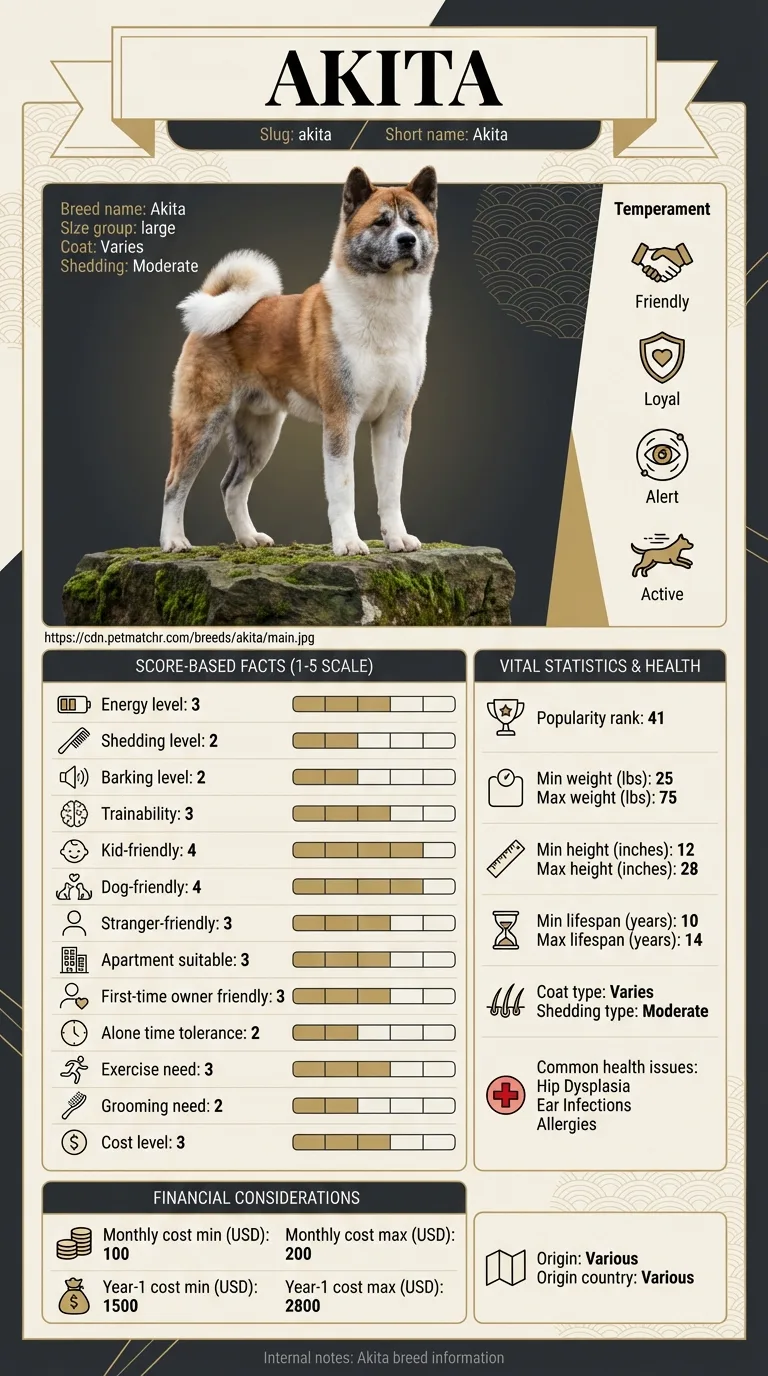
If you think your Akita has schnauzer comedo syndrome, the plan is three steps: write down what you have seen and when it started, book a veterinary appointment rather than waiting for the next flare, and take video of the behaviour or symptom before you go — the thing you are worried about rarely happens in the consulting room. Screening in the parents covers hip dysplasia, progressive retinal atrophy, hypothyroidism.
What the vet visit should produce is a diagnosis and a written plan, not just reassurance: what is being ruled out, what the monitoring interval is, and which signs mean you come back sooner. Ask what the treatment costs across a year rather than per visit, because that is the number that decides whether you are managing this condition or reacting to it.
Between appointments, keep a short log — dates, what you saw, what changed. It is the single most useful thing an owner brings to a follow-up, and for schnauzer comedo syndrome it is often what separates a clear pattern from a guess.
After noticing patchy hair loss and scaling along her Akita Nova's back in Charlotte, Adaeze initially wondered about comedo syndrome after some general research. Her vet explained that this specific condition was documented in Miniature Schnauzers and recommended a skin biopsy given Nova's breed and symptom pattern. The biopsy confirmed sebaceous adenitis, the condition actually well documented in Akitas. Adaeze started a consistent oil-based topical treatment routine, and Nova's coat and skin condition improved noticeably over the following months, with ongoing maintenance treatment keeping symptoms well controlled.
Key takeaway: A skin condition named for a different breed is a strong signal to look elsewhere — the Akita's own well-documented sebaceous adenitis is the condition genuinely worth understanding and diagnosing correctly.
It's a follicular skin condition specifically documented in and named for the Miniature Schnauzer, causing blackhead-like comedones (plugged hair follicles) primarily along the back.
Not specifically — it's a Miniature Schnauzer-associated condition. Akitas have their own distinct, well-documented skin condition called sebaceous adenitis, which is the more relevant one to understand for this breed.
It's an autoimmune condition where the immune system attacks the sebaceous glands attached to hair follicles, causing patchy hair loss, scaling, and a dull or brittle coat, most commonly along the back and head. It's well documented in Akitas and Standard Poodles.
A skin biopsy examining the hair follicles and sebaceous glands is the standard way to confirm the diagnosis, distinguishing it from other causes of hair loss and scaling.
Treatment often includes specific oil-based topical treatments to restore skin barrier function, sometimes combined with immune-modulating medications, and management is typically ongoing rather than a one-time cure.
A skin biopsy typically runs $200 to $500; ongoing topical treatment and any additional medication add a recurring cost that varies based on severity and the specific protocol used.
Sebaceous adenitis is an immune-mediated condition, fitting within the broader pattern of autoimmune disease documented in this breed, similar to the mechanism behind conditions like immune-mediated thyroiditis.
No — it's specifically documented in and named for the Miniature Schnauzer.
Sebaceous adenitis, an autoimmune condition affecting hair follicles and sebaceous glands.
A skin biopsy confirms the diagnosis.
Biopsy runs $200 to $500; ongoing topical treatment adds a recurring cost.
Yes — it fits within the breed's broader documented autoimmune tendencies.
A one-page prep sheet for this condition: the signs, the questions to ask, what to get priced. Unlocks here.
You get: Vet visit prep sheet
No spam. One-click unsubscribe. See our privacy policy.
Preview page 1 before you decide.