Living
Papillon or Weimaraner, which should I get?
It comes down to space and energy. Choose the Papillon for small-space living and lower daily exercise demands; choose the Weimaraner only if you have room to run it hard every day.

Quick answer
Papillon or Weimaraner, which should I get?
It comes down to space and energy. Choose the Papillon for small-space living and lower daily exercise demands; choose the Weimaraner only if you have room to run it hard every day.
Papillon or Weimaraner? On paper they differ most on apartment suitability, and on the scales Weimaraner is the heavier at 55–90 lbs. Here is how the two compare on everything that shapes an ordinary week.
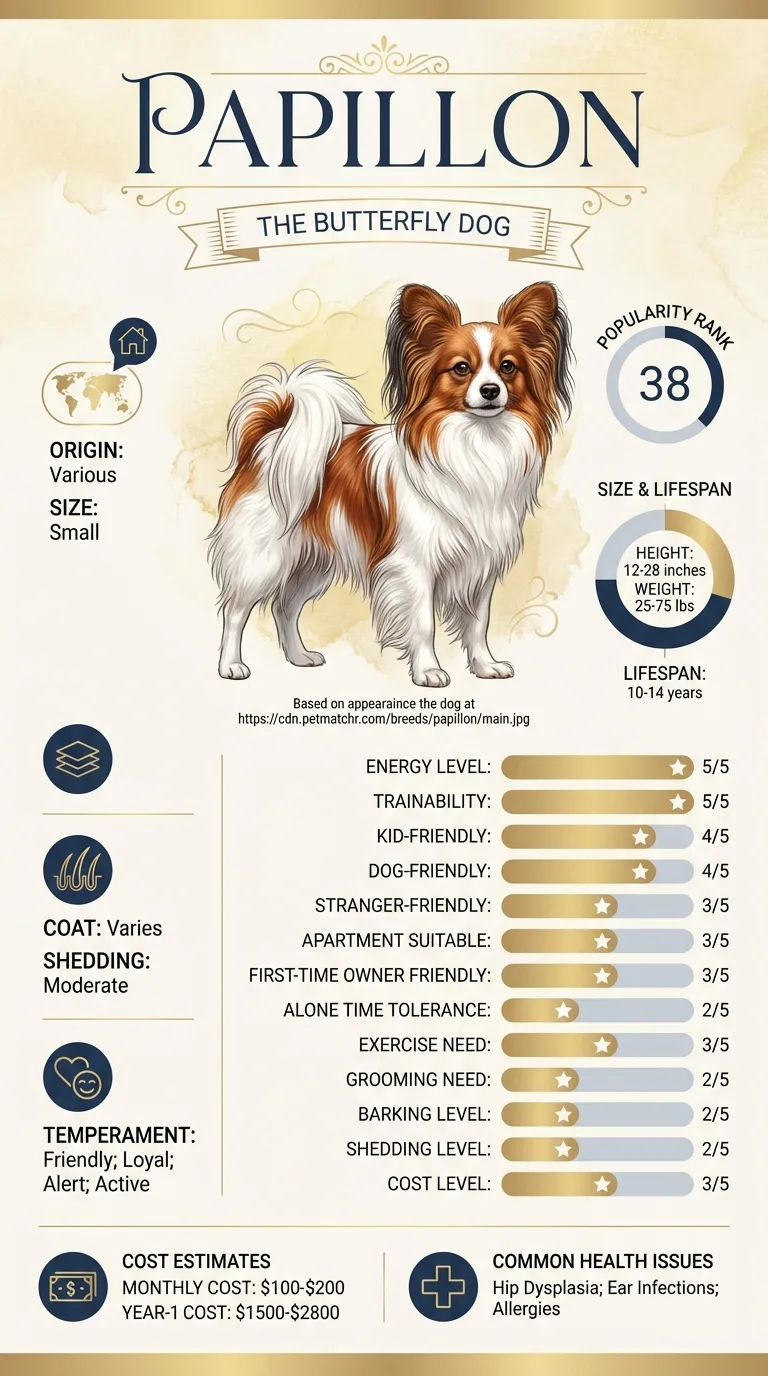
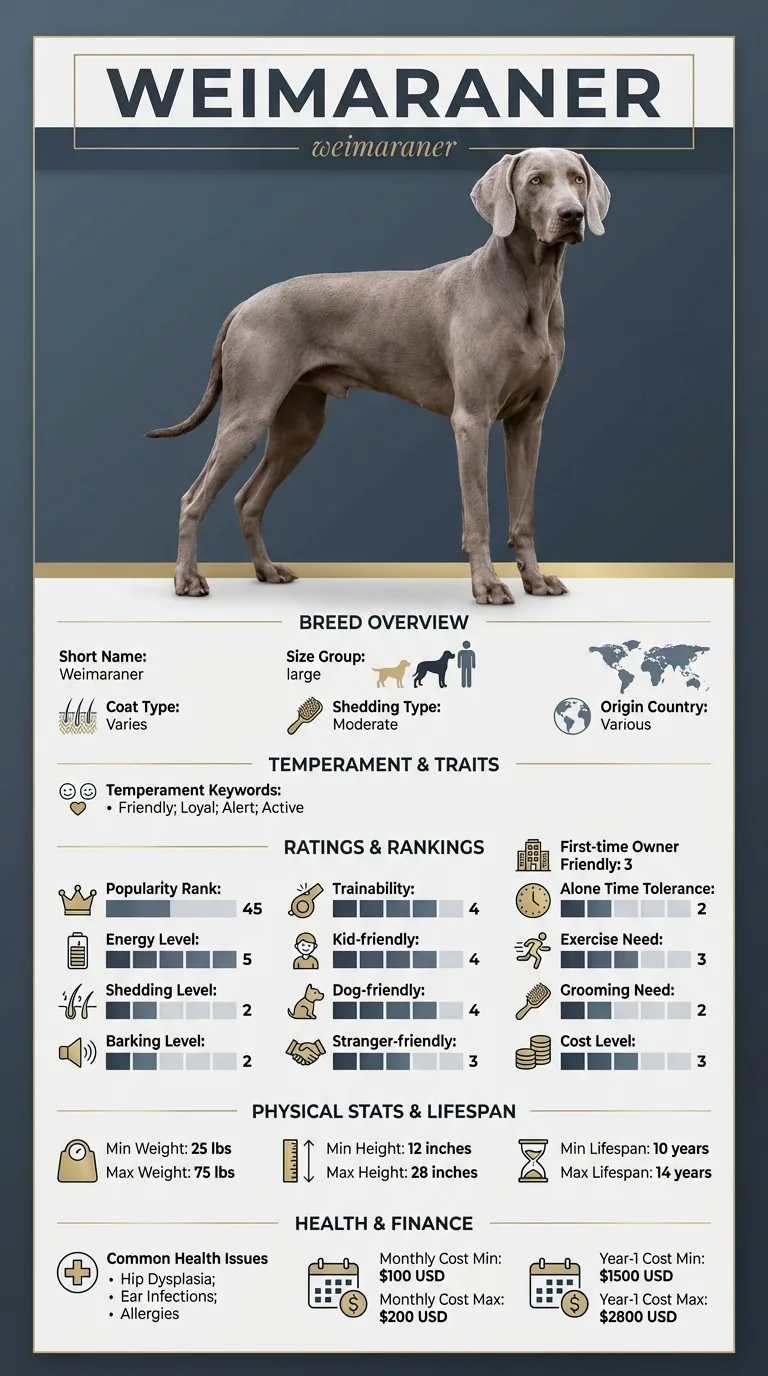
This is for someone already down to Papillon and Weimaraner and deciding between them. For this pair the decision usually turns on apartment suitability and exercise need, so those are covered first and in most detail. Anyone choosing from a flat has a clear answer here: Papillon rates 5/5 against 1/5. The focus throughout is on daily consequences rather than breed background.
Between Papillon and Weimaraner, apartment suitability is what separates them, and Papillon is the lower-effort dog of the two to keep.
Choose Papillon if you are in a flat or a smaller home, this is your first dog and your walking routine is modest.
Choose Weimaraner if you do not want a standing grooming appointment, there are young children at home and you want a dog that can keep up with an active routine.
| Feature | papillon | weimaraner | Winner |
|---|---|---|---|
| Size class | small | large | Equal |
| Weight | 5–10 lbs | 55–90 lbs | Equal |
| Height | 8–11 in | 23–27 in | Equal |
| Lifespan | 14–16 years | 10–13 years | papillon |
| Exercise need | Moderate (3/5) | Very high (5/5) | papillon |
| Grooming need | Low (2/5) | Very low (1/5) | weimaraner |
| Shedding | Low (2/5) | Low (2/5) | Equal |
| Energy level | High (4/5) | Very high (5/5) | Equal |
| Barking | High (4/5) | Moderate (3/5) | weimaraner |
| Apartment suitability | Very high (5/5) | Very low (1/5) | papillon |
| Good for first-time owners | High (4/5) | Low (2/5) | papillon |
| Tolerates being alone | Low (2/5) | Very low (1/5) | papillon |
| Trainability | Very high (5/5) | High (4/5) | papillon |
| Good with kids | Moderate (3/5) | High (4/5) | weimaraner |
| Good with other dogs | High (4/5) | Moderate (3/5) | papillon |
| Friendly to strangers | High (4/5) | Moderate (3/5) | papillon |
| Cost level | Low (2/5) | Moderate (3/5) | papillon |
| Coat | Long, silky single coat | Short and sleek | Equal |
| Origin | Various | Various | Equal |
| Typical monthly cost | $80–$150 | $110–$240 | Equal |
| Typical first-year cost | $1,100–$2,300 | $1,700–$3,200 | Equal |
Nine times. That's roughly the weight gap between a 10-pound Papillon and a 90-pound Weimaraner, and it shows in everything downstream, from leash strength to crate size to vet bills. The Papillon stands 8-11 inches at the shoulder; the Weimaraner runs 23-27 inches, tall enough to counter-surf without trying. There's no overlap here, so size alone should settle most of this decision before temperament even enters the picture.
The Weimaraner rates a full 5/5 on exercise need, very high, a dog bred to run behind horses all day where a couple of short walks won't cut it. The Papillon sits at a more manageable 3/5, moderate exercise despite a genuinely high 4/5 energy level, burning off steam in shorter bursts. If your week doesn't have room for an hour-plus of hard running, the Weimaraner will find ways to tell you about it.
Coat care flips the size assumption on its head. The Weimaraner's short, sleek coat needs almost nothing, a 1/5 grooming score, about as low as it gets. The Papillon's long, silky coat scores 2/5, still low but a notch more upkeep than you'd guess from a toy breed. Shedding is a wash: both land at 2/5, so neither will bury your couch in fur.
A Papillon is built for apartment life, 5/5 on apartment suitability, the ceiling of the scale. A Weimaraner scores 1/5, the floor, a large, high-drive dog in a small unit is a bad match on paper and worse in practice. Barking runs the other direction, with the Papillon rated high (4/5) against the Weimaraner's moderate (3/5). Neither tolerates being left alone well, but the Papillon (2/5) edges out the Weimaraner (1/5), a breed known for separation anxiety.
Both breeds train well, but the Papillon has the edge at 5/5 trainability versus the Weimaraner's still-solid 4/5. Where the gap really opens is first-time-owner suitability: 4/5 for the Papillon against just 2/5 for the Weimaraner. A Weimaraner's size, drive, and independent streak, its temperament list includes headstrong, ask more of a handler than most beginners are ready to give.
With kids, the Weimaraner actually scores higher, 4/5 versus the Papillon's 3/5, its sturdier frame holding up better to rough play. Everywhere else the Papillon leads: 4/5 with other dogs against the Weimaraner's 3/5, and 4/5 with strangers against 3/5. The Papillon reads as friendly and quick-witted, the Weimaraner as devoted but headstrong, a dog that bonds hard to its people and can be wary in less familiar company.
The Papillon typically lives 14-16 years, three to six years longer than the Weimaraner's 10-13. Papillon health concerns run toward patellar luxation, progressive retinal atrophy, and dental disease, manageable, mostly non-emergency issues. The Weimaraner's list includes bloat (GDV), a genuine emergency in large deep-chested breeds, plus hip dysplasia and von Willebrand disease. That combination of shorter lifespan and bloat risk is worth budgeting for, financially and emotionally.
On paper the Papillon is the cheaper dog to own, cost level 2/5 against the Weimaraner's 3/5, and the monthly range backs it up: $80-150 versus $110-240. First-year costs follow the same pattern, $1,100-2,300 for the Papillon against $1,700-3,200 for the Weimaraner. Food alone accounts for a chunk of that gap; a 70-pound dog eats a lot more than a 10-pound one.
Papillon weighs 5–10 lbs and lives 14–16 years; Weimaraner weighs 55–90 lbs and lives 10–13 years. The two diverge most on apartment suitability, exercise need and good for first-time owners. Almost every rated axis separates them at least slightly. The table below marks a winner only where one breed is genuinely easier for a typical owner; size and origin are facts rather than merits and stay level. Ratings come from one source applied to both breeds, so they are meaningful against each other rather than as absolute scores.

Not close. The Papillon weighs 5-10 lbs and stands 8-11 inches; the Weimaraner weighs 55-90 lbs and stands 23-27 inches. The Weimaraner is a large breed, the Papillon a small one, with no overlap in weight or height.
No, both are rated low shedding at 2/5, despite very different coats. The Papillon's long, silky coat and the Weimaraner's short, sleek one both shed lightly by breed standards.
Not really, per the data, it scores just 2/5 for first-time owners, against the Papillon's 4/5. Its very high exercise need (5/5) and headstrong temperament ask for more experience than a beginner typically has.
The Papillon, by a wide margin, 5/5 apartment suitability against the Weimaraner's 1/5. A Weimaraner's size and exercise needs make small-space living difficult for the dog and the neighbors.
Meaningfully more. Typical monthly costs run $110-240 for the Weimaraner versus $80-150 for the Papillon, and first-year costs are $1,700-3,200 versus $1,100-2,300.
Not directly, their listed conditions don't overlap. The Papillon's issues (patellar luxation, PRA, dental disease) are mostly small-breed orthopedic and dental concerns, while the Weimaraner's (bloat, hip dysplasia) are large-breed structural and digestive risks.
The Papillon, typically by several years, 14-16 years versus the Weimaraner's 10-13.
It comes down to space and energy. Choose the Papillon for small-space living and lower daily exercise demands; choose the Weimaraner only if you have room to run it hard every day.
Roughly $80-150 for a Papillon, $110-240 for a Weimaraner, the larger dog costs more to feed and maintain.
The Papillon is moderate (3/5); the Weimaraner is very high (5/5) and needs serious daily running, not just walks.
The Papillon, at 14-16 years versus 10-13 for the Weimaraner.
Secure checkout on Stripe. We never see your card.
7-day money-back guarantee. Instant access.
Health information here is general and is not veterinary advice. If your dog shows pain, sudden behaviour change, or worsening symptoms, consult a licensed veterinarian.
Some links on this site are affiliate links. We may earn a commission at no extra cost to you, and we only suggest products we believe are helpful for dog owners.
We research and check what we publish, but we do not warrant that any figure, date, price, or statement is accurate, complete, or current, and we accept no liability for any loss, cost, injury, or other harm arising from the use of this site. Use it as one reference among several. You remain responsible for your own decisions and for your dog's care - confirm anything that matters with a licensed veterinarian or another qualified professional before you act on it. Full disclaimer.
Match your lifestyle to the right dog.
Take quizNot sure which breed is right for you? Take our 2-minute quiz to find out.
Take the quiz