Living
Which is bigger?
The German Wirehaired Pointer, at 60-70 lbs versus the Sheltie's 15-25 lbs.

Quick answer
Which is bigger?
The German Wirehaired Pointer, at 60-70 lbs versus the Sheltie's 15-25 lbs.
German Wirehaired Pointer or Shetland Sheepdog? On paper they differ most on apartment suitability, and on the scales German Wirehaired Pointer is the heavier at 60–70 lbs. Here is how the two compare on everything that shapes an ordinary week.
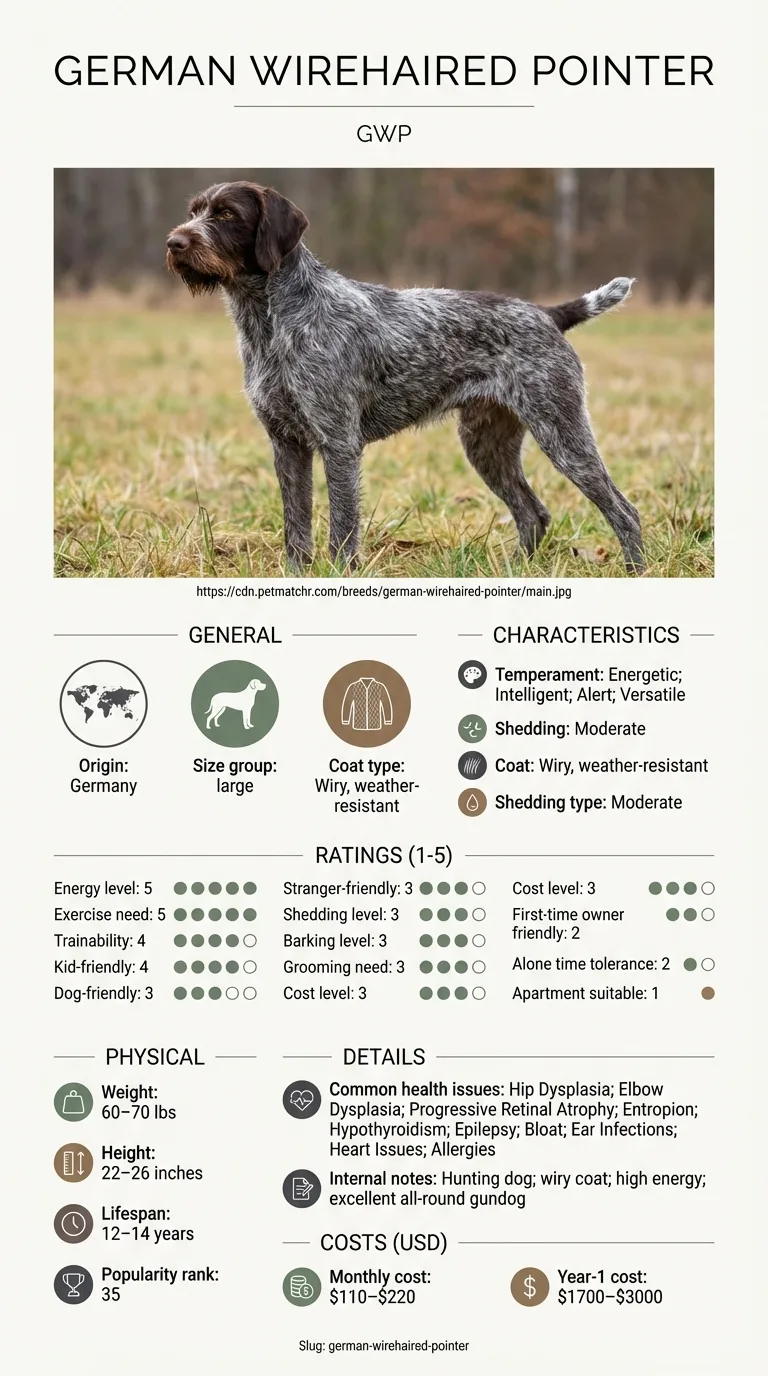
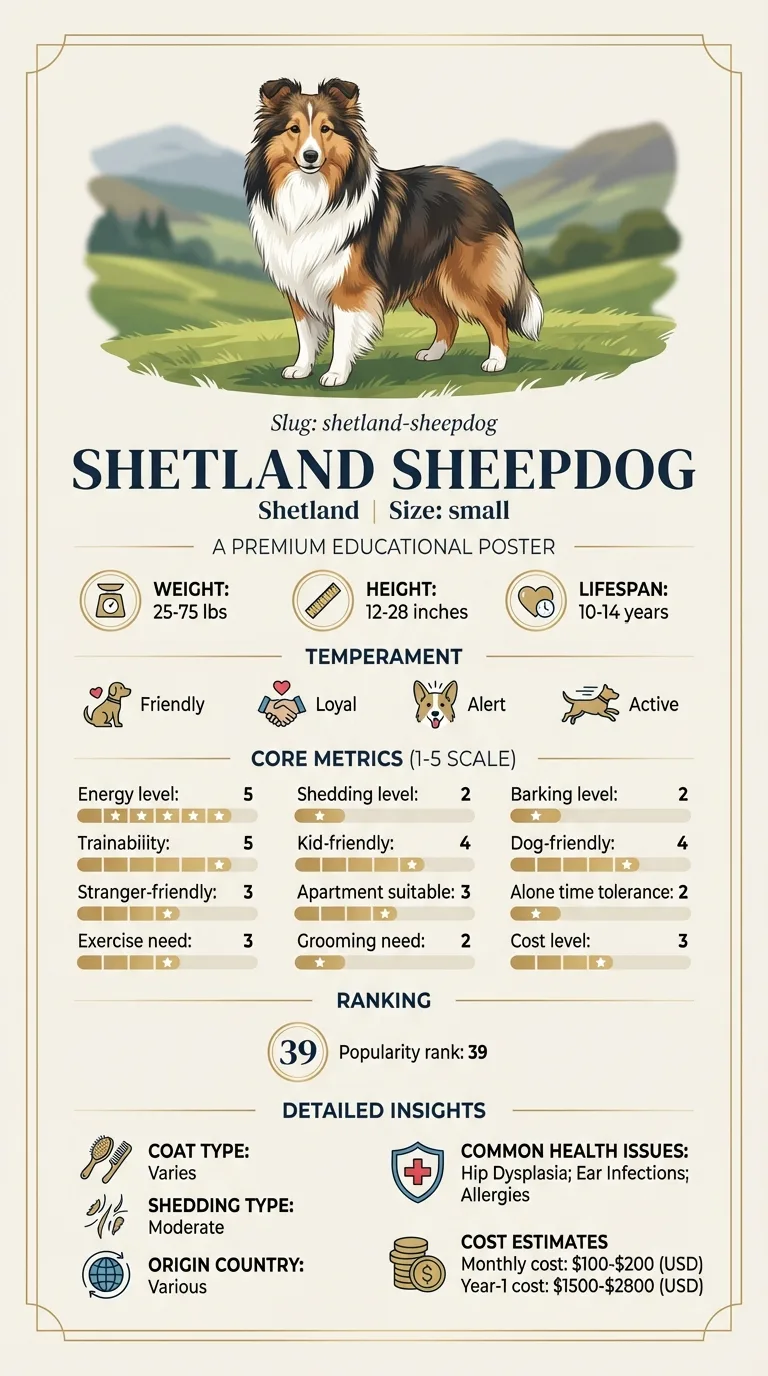
This is for someone already down to German Wirehaired Pointer and Shetland Sheepdog and deciding between them. For this pair the decision usually turns on apartment suitability and good for first-time owners, so those are covered first and in most detail. Anyone choosing from a flat has a clear answer here: Shetland Sheepdog rates 3/5 against 1/5. The focus throughout is on daily consequences rather than breed background.
Between German Wirehaired Pointer and Shetland Sheepdog, apartment suitability is what separates them, and Shetland Sheepdog is the lower-effort dog of the two to keep.
Choose German Wirehaired Pointer if you do not want a standing grooming appointment, shedding is a problem in your house and you want a dog that can keep up with an active routine.
Choose Shetland Sheepdog if you are in a flat or a smaller home, this is your first dog and your walking routine is modest.
| Feature | german wirehaired pointer | shetland sheepdog | Winner |
|---|---|---|---|
| Size class | large | small | Equal |
| Weight | 60–70 lbs | 15–25 lbs | Equal |
| Height | 22–26 in | 13–16 in | Equal |
| Lifespan | 12–14 years | 12–14 years | Equal |
| Exercise need | Very high (5/5) | High (4/5) | shetland sheepdog |
| Grooming need | Moderate (3/5) | High (4/5) | german wirehaired pointer |
| Shedding | Moderate (3/5) | High (4/5) | german wirehaired pointer |
| Energy level | Very high (5/5) | High (4/5) | Equal |
| Barking | Moderate (3/5) | Very high (5/5) | german wirehaired pointer |
| Apartment suitability | Very low (1/5) | Moderate (3/5) | shetland sheepdog |
| Good for first-time owners | Low (2/5) | High (4/5) | shetland sheepdog |
| Tolerates being alone | Low (2/5) | Low (2/5) | Equal |
| Trainability | High (4/5) | Very high (5/5) | shetland sheepdog |
| Good with kids | High (4/5) | High (4/5) | Equal |
| Good with other dogs | Moderate (3/5) | High (4/5) | shetland sheepdog |
| Friendly to strangers | Moderate (3/5) | Low (2/5) | german wirehaired pointer |
| Cost level | Moderate (3/5) | Moderate (3/5) | Equal |
| Coat | Wiry, weather-resistant | Long, dense double coat | Equal |
| Origin | Germany | Various | Equal |
| Typical monthly cost | $110–$220 | $80–$150 | Equal |
| Typical first-year cost | $1,700–$3,000 | $1,100–$2,300 | Equal |
The Shetland Sheepdog is a small breed at 15-25 lbs and 13-16 inches, dwarfed by the GWP's large 60-70 lbs and 22-26 inch frame -- a GWP can outweigh a Sheltie by three to four times. Despite that gap, both share a herding-or-hunting working heritage that shows in their alert, active builds; neither is a purely decorative breed. The size difference alone should steer most households toward one or the other quickly, since gear, feeding volume, and physical handling look completely different at these two scales.
The GWP edges ahead on exercise need, very high (5/5) against the Sheltie's high (4/5), with energy levels close too (5/5 vs 4/5, tied). Don't mistake the Sheltie's small size for low drive -- this is a genuine herding breed that wants a real job or vigorous play, not just a short leash walk. The GWP still needs more volume of activity overall given its hunting background, but a bored, under-exercised Sheltie can become just as much of a handful as an under-exercised GWP, just in a smaller package.
Grooming favors the GWP at moderate (3/5) against the Sheltie's high (4/5) -- that long, dense double coat needs regular brushing to prevent matting, especially through seasonal coat blows. Shedding also favors the GWP, moderate (3/5) against the Sheltie's high (4/5). Together, these ratings mean the Sheltie is a genuinely higher-maintenance coat overall despite its smaller size, something owners drawn to its beautiful, flowing look should plan for realistically rather than assuming small equals easy.
Apartment suitability favors the Sheltie, moderate (3/5) against the GWP's very low (1/5), but barking is the real story here: the Sheltie rates very high (5/5), among the most vocal ratings in this comparison, against the GWP's moderate (3/5). Bright, sensitive, and vocal describes the Sheltie's temperament accurately -- this is a breed that alerts to everything, which can be a serious problem in close-quarters or noise-restricted buildings regardless of its otherwise reasonable size for apartment living. Both breeds tie at low (2/5) for tolerating time alone.
Trainability favors the Sheltie, very high (5/5) against the GWP's high (4/5), and first-time owner suitability tells an even bigger story: high (4/5) for the Sheltie versus low (2/5) for the GWP. The Sheltie's bright, devoted temperament makes it eager to please and quick to learn, a genuinely forgiving choice for a newer owner willing to manage its sensitivity and vocal tendencies. The GWP's energetic, versatile hunting drive, by contrast, needs a more experienced handler ready to provide structured outlets from the start.
Good with kids ties at high (4/5) for both breeds, though the Sheltie edges ahead with other dogs (high, 4/5, versus the GWP's moderate, 3/5). Friendliness to strangers flips the other way: the GWP rates moderate (3/5) against the Sheltie's low (2/5) -- the Sheltie's sensitive, devoted temperament tends to make it more reserved or watchful with unfamiliar people despite being sociable with other dogs. Families who host frequently should weigh that stranger-shyness against the Sheltie's otherwise strong household compatibility.
Lifespans tie at 12-14 years for both breeds -- a rare point of genuine parity in this comparison. Their health lists share almost nothing in common though: the Sheltie's five conditions -- Collie Eye Anomaly, MDR1 drug sensitivity, dermatomyositis, hypothyroidism, and patellar luxation -- reflect its herding-breed genetics, including the MDR1 sensitivity that affects how it processes certain medications, a detail worth flagging to any vet treating a Sheltie. The GWP's ten-item list, by contrast, centers on hip and elbow dysplasia, bloat, epilepsy, and allergies, more typical of a larger sporting breed.
Cost level ties at moderate (3/5) for both, and the numbers land close: $110-$220 monthly for the GWP versus $80-$150 for the Sheltie, with first-year costs of $1,700-$3,000 against $1,100-$2,300. The Sheltie's smaller size keeps food costs down, but its high grooming need for that dense double coat adds back some expense that a size-based estimate alone wouldn't suggest. Overall the Sheltie remains the more budget-friendly of the two, even after accounting for coat care.
German Wirehaired Pointer weighs 60–70 lbs and lives 12–14 years; Shetland Sheepdog weighs 15–25 lbs and lives 12–14 years. The two diverge most on apartment suitability, good for first-time owners and barking. They are level on tolerates being alone, cost level and good with kids, so those cannot decide it. The table below marks a winner only where one breed is genuinely easier for a typical owner; size and origin are facts rather than merits and stay level. Ratings come from one source applied to both breeds, so they are meaningful against each other rather than as absolute scores.

The Shetland Sheepdog, rating very high (5/5) versus the GWP's moderate (3/5) -- Shelties are known for being highly vocal, alerting to nearly everything.
The Shetland Sheepdog, rating high (4/5) for first-time owners versus the GWP's low (2/5).
The Shetland Sheepdog, rating high (4/5) shedding against the GWP's moderate (3/5), from its long, dense double coat.
Yes -- both have a lifespan of 12-14 years, one of the few areas where they match exactly.
The GWP, rating moderate (3/5) versus the Sheltie's low (2/5) -- Shelties tend to be more reserved with unfamiliar people despite being affectionate with their family.
MDR1 drug sensitivity, a genetic trait affecting how the breed metabolizes certain medications, alongside Collie Eye Anomaly and dermatomyositis -- none of which appear on the GWP's health list.
The Shetland Sheepdog, with a first-year cost of $1,100-$2,300 versus the GWP's $1,700-$3,000, largely due to its smaller size.
The German Wirehaired Pointer, at 60-70 lbs versus the Sheltie's 15-25 lbs.
The German Wirehaired Pointer, rating moderate (3/5) barking versus the Sheltie's very high (5/5).
The Shetland Sheepdog, rating very high (5/5) versus the GWP's high (4/5).
The Shetland Sheepdog, rating moderate (3/5) versus the GWP's very low (1/5).
Secure checkout on Stripe. We never see your card.
7-day money-back guarantee. Instant access.
Health information here is general and is not veterinary advice. If your dog shows pain, sudden behaviour change, or worsening symptoms, consult a licensed veterinarian.
Some links on this site are affiliate links. We may earn a commission at no extra cost to you, and we only suggest products we believe are helpful for dog owners.
We research and check what we publish, but we do not warrant that any figure, date, price, or statement is accurate, complete, or current, and we accept no liability for any loss, cost, injury, or other harm arising from the use of this site. Use it as one reference among several. You remain responsible for your own decisions and for your dog's care - confirm anything that matters with a licensed veterinarian or another qualified professional before you act on it. Full disclaimer.
Match your lifestyle to the right dog.
Take quizNot sure which breed is right for you? Take our 2-minute quiz to find out.
Take the quiz