Training
Griffon or Papillon — which is the easier toy breed to own?
The Papillon, mainly on trainability — a very high 5/5 against the Griffon's moderate 3/5 — with costs running essentially identical between the two.

Quick answer
Griffon or Papillon — which is the easier toy breed to own?
The Papillon, mainly on trainability — a very high 5/5 against the Griffon's moderate 3/5 — with costs running essentially identical between the two.
Brussels Griffon or Papillon? On paper they differ most on trainability, and on the scales Brussels Griffon is the heavier at 8–12 lbs. Here is how the two compare on everything that shapes an ordinary week.
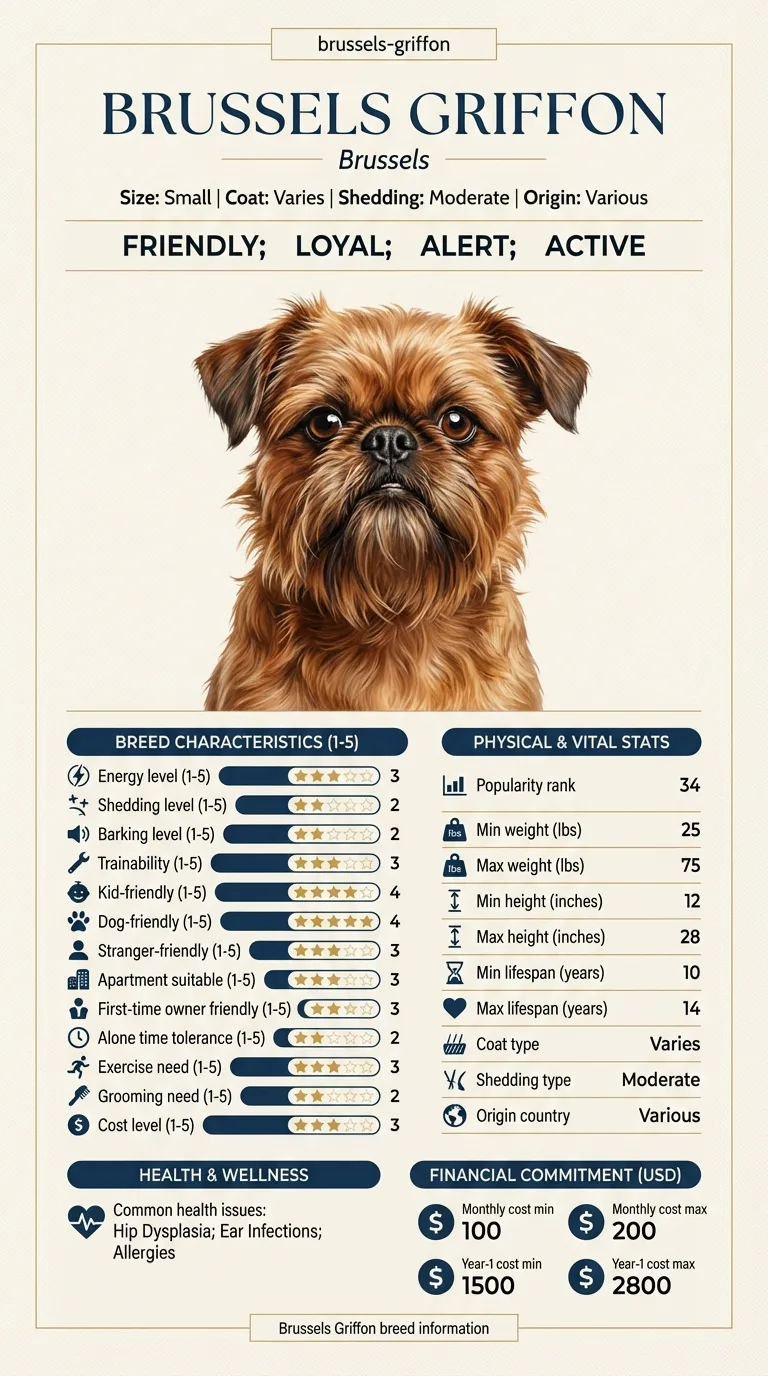
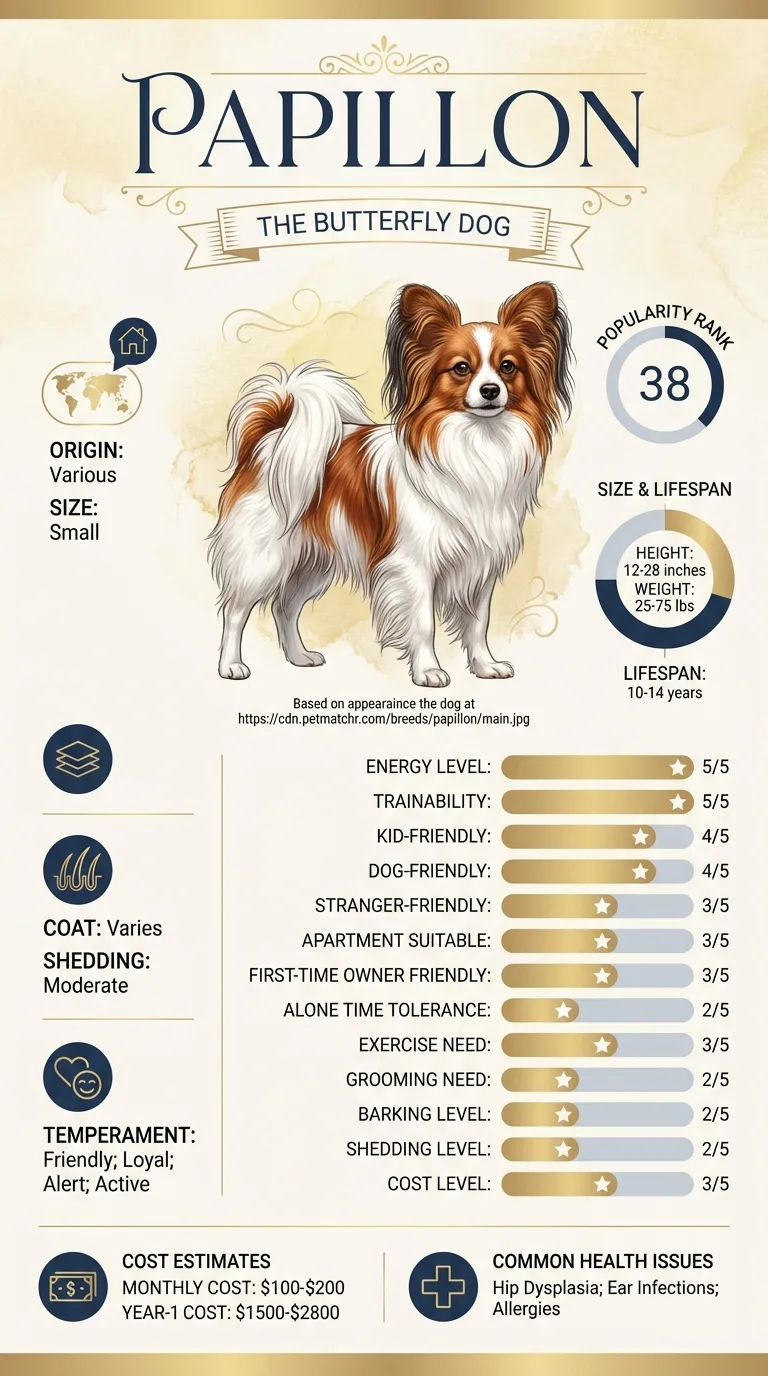
This is for someone already down to Brussels Griffon and Papillon and deciding between them. For this pair the decision usually turns on trainability, so those are covered first and in most detail. Both rate 5/5 for flats, so housing does not settle this one. The focus throughout is on daily consequences rather than breed background.
Between Brussels Griffon and Papillon, trainability is what separates them, and Papillon is the lower-effort dog of the two to keep.
Choose Brussels Griffon if your walking routine is modest and you want a dog that is more watchful with visitors.
Choose Papillon if this is your first dog, you do not want a standing grooming appointment and you already have another dog.
| Feature | brussels griffon | papillon | Winner |
|---|---|---|---|
| Size class | small | small | Equal |
| Weight | 8–12 lbs | 5–10 lbs | Equal |
| Height | 7–10 in | 8–11 in | Equal |
| Lifespan | 12–15 years | 14–16 years | papillon |
| Exercise need | Low (2/5) | Moderate (3/5) | brussels griffon |
| Grooming need | Moderate (3/5) | Low (2/5) | papillon |
| Shedding | Low (2/5) | Low (2/5) | Equal |
| Energy level | Moderate (3/5) | High (4/5) | Equal |
| Barking | Moderate (3/5) | High (4/5) | brussels griffon |
| Apartment suitability | Very high (5/5) | Very high (5/5) | Equal |
| Good for first-time owners | Moderate (3/5) | High (4/5) | papillon |
| Tolerates being alone | Low (2/5) | Low (2/5) | Equal |
| Trainability | Moderate (3/5) | Very high (5/5) | papillon |
| Good with kids | Moderate (3/5) | Moderate (3/5) | Equal |
| Good with other dogs | Moderate (3/5) | High (4/5) | papillon |
| Friendly to strangers | Moderate (3/5) | High (4/5) | papillon |
| Cost level | Moderate (3/5) | Low (2/5) | papillon |
| Coat | Rough or smooth | Long, silky single coat | Equal |
| Origin | Various | Various | Equal |
| Typical monthly cost | $80–$150 | $80–$150 | Equal |
| Typical first-year cost | $1,100–$2,300 | $1,100–$2,300 | Equal |
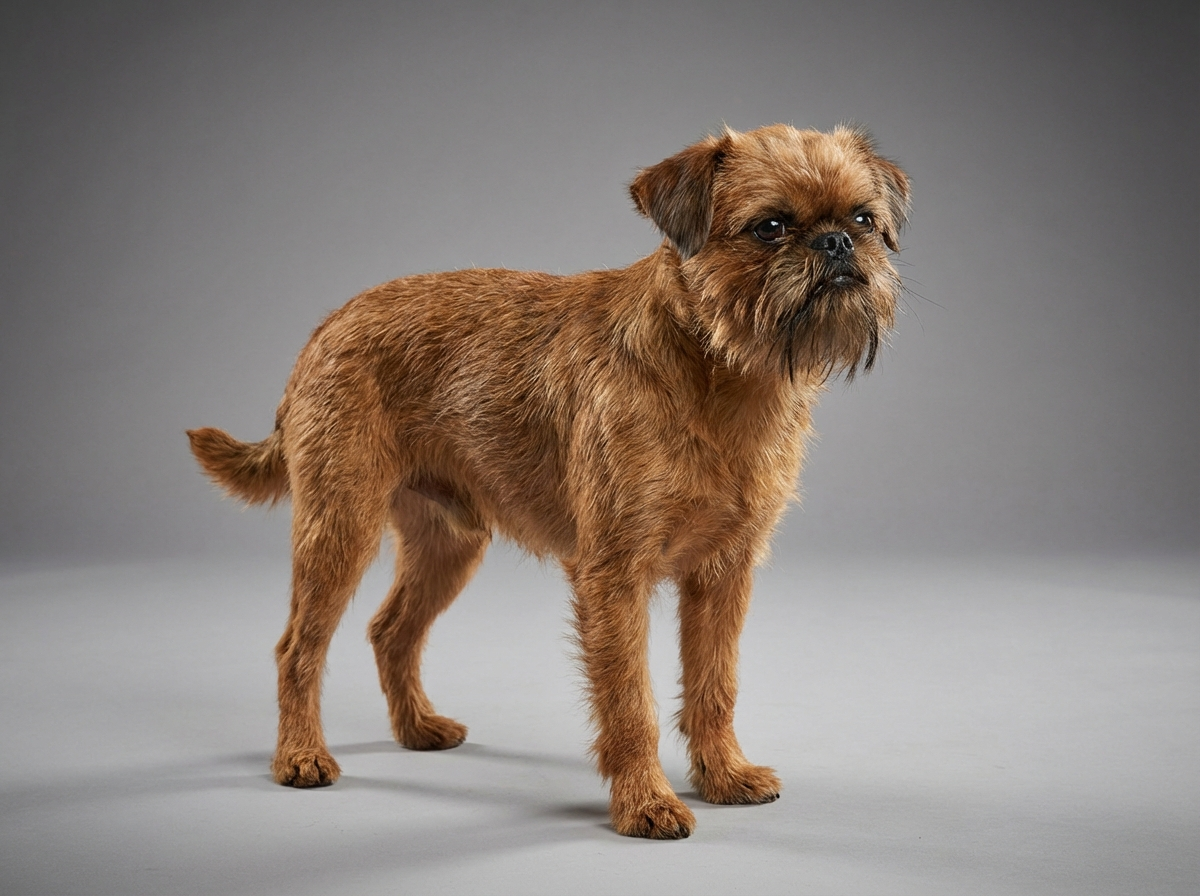
These two toy breeds sit close on the chart — the Griffon at 8-12 pounds and 7-10 inches, the Papillon a touch lighter and taller at 5-10 pounds and 8-11 inches. Neither will dominate a room by size; the more noticeable physical difference is the Papillon's signature butterfly ears against the Griffon's flatter, more human-like face.
The Papillon needs a bit more activity — moderate (3/5) against the Griffon's low (2/5) — and it's rated high (4/5) for general energy level against the Griffon's moderate (3/5). It's a livelier dog day to day despite being the smaller of the two, closer to a toy terrier in temperament than its dainty looks suggest.
Shedding ties at low (2/5) for both breeds, so neither leaves much fur behind. Grooming effort favors the Papillon, though — low (2/5) against the Griffon's moderate (3/5). That long silky coat looks high-maintenance but doesn't mat the way a rough or wiry coat can, so a weekly brushing session with a slicker brush and a comb usually keeps it tangle-free.
Both breeds rate a full 5/5 for apartment suitability. The Papillon barks more, though — high (4/5) against the Griffon's moderate (3/5) — a real consideration if your walls are thin. Both also tolerate alone time equally poorly, at low (2/5) each, so neither is suited to consistently long days without company. A downstairs neighbor may notice that barking difference more than you will.
This is the widest trainability gap in this entire comparison: the Papillon rates very high (5/5), the Griffon moderate (3/5). Papillons are frequently near the top of obedience-trial rankings for exactly this reason. The Griffon isn't untrainable, but it needs patience and gentle correction where a Papillon will often pick up new commands in a handful of repetitions.
With kids, the two tie at moderate (3/5). The Papillon edges ahead elsewhere — high (4/5) with other dogs against the Griffon's moderate (3/5), and high (4/5) with strangers against moderate (3/5) as well. Neither is a bad household fit, but the Papillon's outgoing, confident streak makes it the more socially adaptable of the two.
The Papillon has the edge here too, typically living 14-16 years against the Griffon's 12-15. Patellar luxation is their one shared risk. Past that, the Papillon's list runs shorter and more toy-breed-typical — dental disease, collapsing trachea, open fontanel — while the Griffon's brachycephalic build brings BOAS and syringomyelia into the picture instead. Ask about eye and joint testing for either breed before you commit.
Rare on this site: the two breeds tie exactly on dollar figures, both running $80-$150 monthly and $1,100-$2,300 in year one. The only difference is the overall cost rating — moderate (3/5) for the Griffon against low (2/5) for the Papillon — a small distinction given how closely the actual numbers land, so budget the same regardless of which one you bring home.
Brussels Griffon weighs 8–12 lbs and lives 12–15 years; Papillon weighs 5–10 lbs and lives 14–16 years. The two diverge most on trainability. They are level on tolerates being alone, apartment suitability and good with kids, so those cannot decide it. The table below marks a winner only where one breed is genuinely easier for a typical owner; size and origin are facts rather than merits and stay level. Ratings come from one source applied to both breeds, so they are meaningful against each other rather than as absolute scores.

Slightly, by weight — 5-10 pounds against the Griffon's 8-12, though the Papillon is a touch taller at 8-11 inches versus 7-10. Both are firmly toy-sized dogs.
The Papillon, by the widest margin in this comparison — very high (5/5) trainability against the Griffon's moderate (3/5). Papillons regularly rank among the most trainable toy breeds.
The Papillon, typically 14-16 years against the Griffon's 12-15 — a two-year edge at the top end of both ranges.
Yes, both rate a full 5/5. The Papillon barks more, though (high, 4/5, versus the Griffon's moderate 3/5), which is worth factoring in if noise is a concern for your neighbors.
Barely — both run $80-$150 monthly and $1,100-$2,300 in the first year, identical ranges. The only distinction is the overall cost rating, which sits a notch lower for the Papillon.
Patellar luxation is the one condition both lists share. The Papillon's other risks are mostly toy-breed-typical, like dental disease and collapsing trachea, while the Griffon's trace to its flat face.
The Papillon, rated high (4/5) for first-time owners against the Griffon's moderate (3/5). Its very-high trainability score makes the early weeks noticeably easier.
The Papillon, mainly on trainability — a very high 5/5 against the Griffon's moderate 3/5 — with costs running essentially identical between the two.
No — both run $80-$150 monthly and $1,100-$2,300 in year one, an exact tie.
The Papillon, rated moderate (3/5) against the Griffon's low (2/5), though both are light exercise breeds overall.
The Papillon, typically 14-16 years against the Griffon's 12-15.
Secure checkout on Stripe. We never see your card.
7-day money-back guarantee. Instant access.
Health information here is general and is not veterinary advice. If your dog shows pain, sudden behaviour change, or worsening symptoms, consult a licensed veterinarian.
Some links on this site are affiliate links. We may earn a commission at no extra cost to you, and we only suggest products we believe are helpful for dog owners.
We research and check what we publish, but we do not warrant that any figure, date, price, or statement is accurate, complete, or current, and we accept no liability for any loss, cost, injury, or other harm arising from the use of this site. Use it as one reference among several. You remain responsible for your own decisions and for your dog's care - confirm anything that matters with a licensed veterinarian or another qualified professional before you act on it. Full disclaimer.
Match your lifestyle to the right dog.
Take quizNot sure which breed is right for you? Take our 2-minute quiz to find out.
Take the quiz