Living
What are quick tips for Brussels Griffon care?
Regular grooming and moderate exercise are essential for Brussels Griffons. Ensure they have a clean environment and provide mental stimulation through toys or games.

Quick answer
What are quick tips for Brussels Griffon care?
Regular grooming and moderate exercise are essential for Brussels Griffons. Ensure they have a clean environment and provide mental stimulation through toys or games.
Are you caught in the Brussels Griffon purebred vs. mixed breeds debate? Knowing which type is right for you can shape your dog's behavior and health.
First-time dog owners and families may struggle with the choice between a purebred and a mixed breed. Owners who want a specific temperament or health profile often find this decision crucial. Additionally, those facing behavioral issues with their Griffon may need clarity on whether their dog's breed type plays a role.
This guide is not medical advice. If your dog shows pain, sudden behavior change, or worsening symptoms, consult a licensed veterinarian.
Some links may be affiliate links. We may earn a commission at no extra cost to you. We only suggest products we believe are helpful for dog owners.
We research and check what we publish, but we do not warrant that any figure, date, price, or statement is accurate, complete, or current, and we accept no liability for any loss, cost, injury, or other harm arising from the use of this site. Use it as one reference among several. You remain responsible for your own decisions and for your dog's care - confirm anything that matters with a licensed veterinarian or another qualified professional before you act on it. Full disclaimer.
Check this first
Understanding when your Brussels Griffon’s behavior problems are an emergency is crucial. If you notice severe symptoms, it's time to call your vet immediately. These red-flag signs include sudden aggression, extreme anxiety, or any signs of distress that interfere with daily life. Additionally, if your dog shows changes in appetite, weight, or energy level, these could indicate serious health issues requiring urgent attention.
If any of these apply, call your vet or an emergency clinic now. The rest of this page is for the cases that are not an emergency.
Understanding the differences between Brussels Griffon purebred vs. mixed breeds is crucial for potential dog owners. Purebred Brussels Griffons may exhibit more predictable traits but also come with higher health risks. For instance, studies suggest that purebred dogs are 1.9 times more likely to develop health issues like cancer compared to mixed breeds, which can lead to increased emotional and financial stress for owners.
Health problems in Brussels Griffon purebreds are quite common. Owners may notice these issues arise as early as the dog's first year, especially if the dog comes from a line with known health concerns. While mixed breeds tend to show a wider range of behaviors and health issues, many owners find that they experience fewer severe health problems overall.
Brussels Griffons, especially purebreds, can inherit specific health issues that lead to behavioral problems. These may include anxiety or aggression due to genetics. Their loyal nature can also make them overly attached, leading to separation anxiety.
Environmental factors play a significant role in a Brussels Griffon's behavior. Lack of socialization, insufficient exercise, or a chaotic home environment can exacerbate anxiety and behavioral issues. Changes in routine or new family members can also trigger stress.
If you notice drastic changes in behavior or signs of distress, it's essential to talk to your vet. They can rule out any underlying health issues contributing to the behavior and may suggest medication or referral to a behaviorist.
Avoiding these common mistakes can help improve your Brussels Griffon's behavior. Here are some key behaviors to watch out for that might delay progress.
Start here: Brussels Griffon Most Common Genetic Disorders: Screening
See all Brussels Griffon health problems, which breeds are prone to purebred vs mixed breeds, or the full Brussels Griffon breed guide for temperament, exercise needs and ownership costs.
Expect to see gradual improvements over 3 to 6 months with consistent care and a steady routine.
Success means your Brussels Griffon effectively responds to training, shows reduced anxiety, and engages positively with other dogs and people.
Sarah, a first-time dog owner in a bustling city, adopted a Brussels Griffon named Benny. Initially, Benny struggled with anxiety and barking at strangers, which made walks stressful for Sarah. After researching Brussels Griffon purebred vs. mixed breeds, Sarah committed to a training program focused on socialization and positive reinforcement. Over time, Benny learned to relax and enjoy his outings, making daily walks a pleasure for both of them.
Key takeaway: With the right training and patience, you can help your Brussels Griffon thrive, even if they come with a few quirks.
Brussels Griffons that are purebred tend to have more predictable traits, such as size and temperament. Mixed breeds may inherit a wider variety of characteristics, which can lead to differences in health and behavior. It's important to research both options to find the best fit for your lifestyle. This answer relates to Brussels Griffon purebred vs. mixed breeds.
Behavioral issues can stem from genetics, training, and socialization. Purebred Brussels Griffons may be more prone to specific health issues that could affect behavior. Addressing these problems often involves consistent training and understanding your dog's unique needs.
Training should start early, using positive reinforcement methods. Brussels Griffons are intelligent but can be stubborn, so patience is key. Consistent commands and rewards will help them learn effectively.
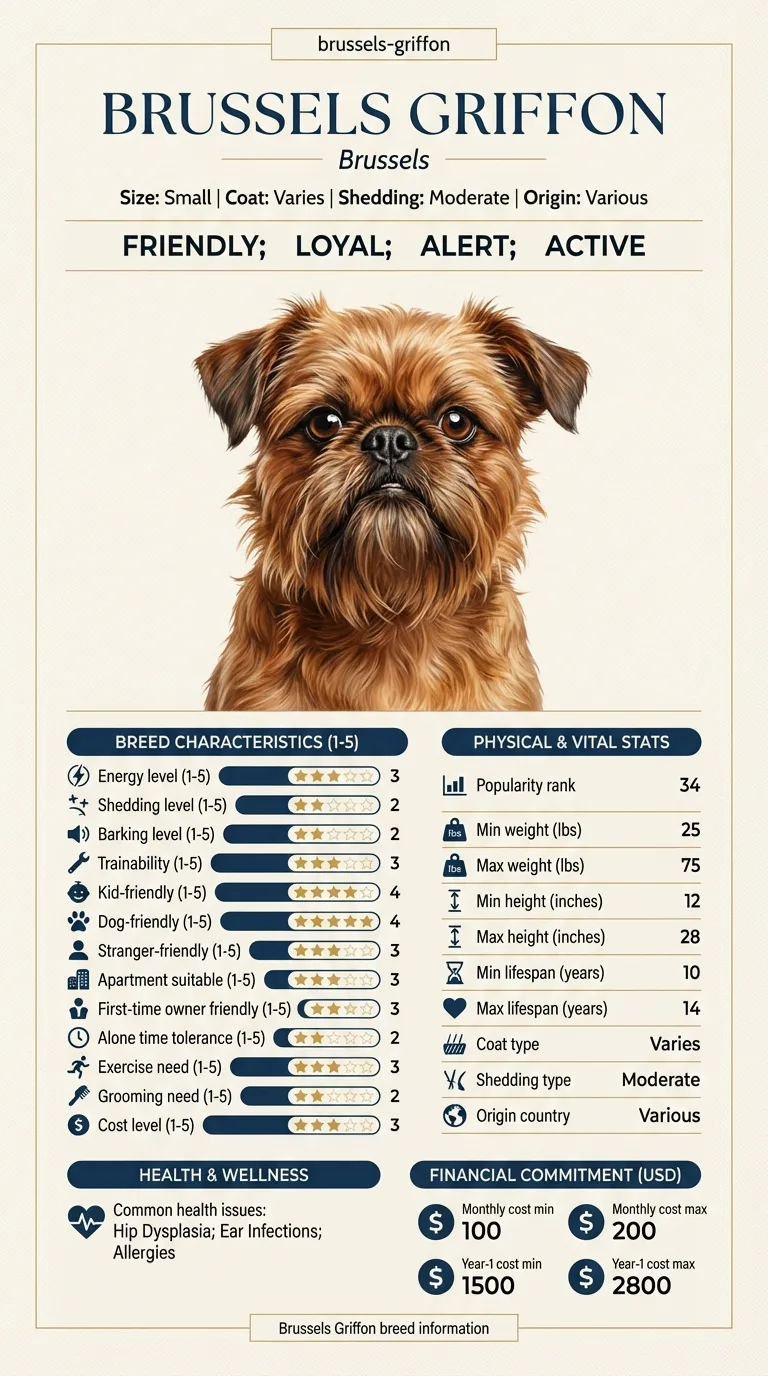
Common health issues for Brussels Griffons include hip dysplasia, ear infections, and allergies. Regular veterinary check-ups can help catch these problems early. Consider discussing genetic predispositions with your vet if you choose a purebred.
Identifying triggers for your dog's behavior is the first step. Consistent training, socialization, and providing sufficient exercise can help manage these issues. If problems persist, consulting a professional trainer might be necessary.
Yes, Brussels Griffons can be suitable for first-time owners due to their friendly and loyal nature. However, they do require regular training and socialization. Being prepared for their needs will help ensure a successful dog-owner relationship.
Brussels Griffons, whether purebred or mixed, can face health issues like hip dysplasia, ear infections, and allergies. It's essential to monitor their health closely and consult a vet regularly for check-ups.
Training can vary greatly among individual dogs, but mixed breeds may exhibit different temperaments. Some owners find that mixed breeds can be easier to train due to their diverse genetic backgrounds, while others may struggle with specific traits from either breed.
To determine if your Brussels Griffon is purebred or mixed, you can check for breed characteristics such as size, coat type, and temperament. For a definitive answer, consider a DNA test that can reveal your dog's breed lineage.
If your Brussels Griffon is showing signs of anxiety, it's crucial to address it early. Common strategies include creating a safe space, using calming products, or consulting a vet or a dog behaviorist for tailored training solutions.
Generally, purebred Brussels Griffons can be more expensive due to their breeding and lineage. However, mixed breeds might also incur costs depending on their health needs and training requirements, so it's essential to consider long-term ownership costs for both.
Regular grooming and moderate exercise are essential for Brussels Griffons. Ensure they have a clean environment and provide mental stimulation through toys or games.
Monthly costs for a Brussels Griffon range from $100 to $200, including food, grooming, and healthcare. Yearly expenses can vary between $1,500 and $2,800.
Gradually train your Brussels Griffon to spend time alone through short departures. Provide engaging toys and consider a comfort item to help them feel secure.
A one-page prep sheet for this condition: the signs, the questions to ask, what to get priced. Unlocks here.
You get: Vet visit prep sheet
No spam. One-click unsubscribe. See our privacy policy.
See a sample page before you decide.
Early access list
The free prep sheet covers the same-day warning signs, a symptom log and the questions to ask. We are considering a fuller kit that adds a cost worksheet for the usual tests and treatments (US price ranges with their sources) and a plain-English guide to ways of covering the bill. It is not built yet; this list tells us whether it is worth building.
One email, no spam, unsubscribe anytime. Information only, not veterinary advice.