Health
What are quick tips for managing Brussels Griffon von Willebrand's disease?
Ensure regular vet check-ups and monitor for any bleeding signs. Keep your dog away from rough play and stressful situations.

Quick answer
What are quick tips for managing Brussels Griffon von Willebrand's disease?
Ensure regular vet check-ups and monitor for any bleeding signs. Keep your dog away from rough play and stressful situations.
Brussels Griffon von Willebrand's disease is a bleeding disorder that can affect your dog's health and happiness.
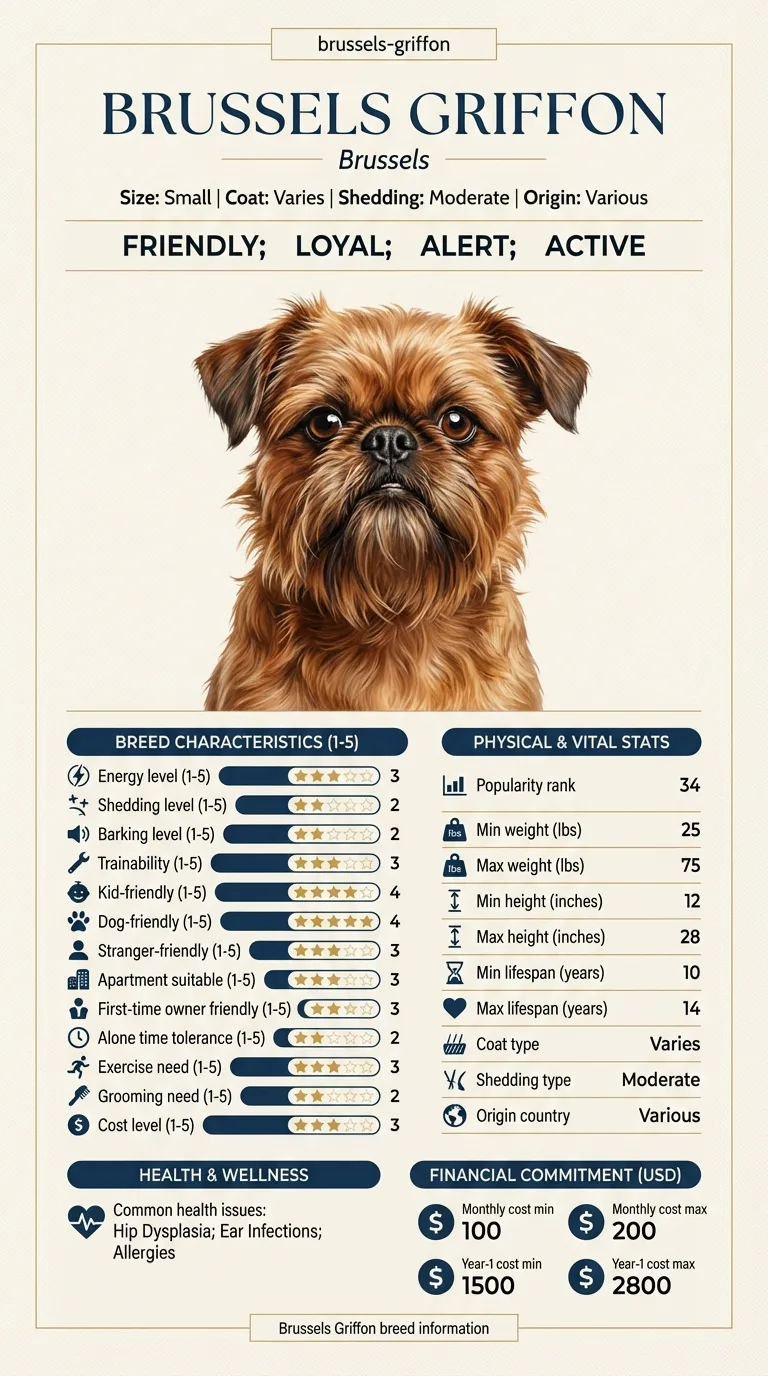
Typically, first-time dog owners or those unfamiliar with breed-specific health issues may struggle with this diagnosis. Owners who notice unusual bleeding or bruising in their Brussels Griffon might feel overwhelmed and uncertain about the next steps.
This guide is not medical advice. If your dog shows pain, sudden behavior change, or worsening symptoms, consult a licensed veterinarian.
Some links may be affiliate links. We may earn a commission at no extra cost to you. We only suggest products we believe are helpful for dog owners.
We research and check what we publish, but we do not warrant that any figure, date, price, or statement is accurate, complete, or current, and we accept no liability for any loss, cost, injury, or other harm arising from the use of this site. Use it as one reference among several. You remain responsible for your own decisions and for your dog's care - confirm anything that matters with a licensed veterinarian or another qualified professional before you act on it. Full disclaimer.
Check this first
Understanding when to take action is crucial for your Brussels Griffon. If you notice excessive bleeding, whether from a cut or unexplained bruises, these are red flags. If your dog collapses, has difficulty breathing, or shows signs of severe lethargy, call your vet immediately. These symptoms can indicate a serious bleeding episode that requires urgent care.
On the other hand, if your Brussels Griffon is experiencing mild symptoms like occasional nosebleeds or minor gum bleeding after chewing, these can often be monitored. Keep track of the frequency and severity of these incidents. Make a plan to discuss these symptoms with your vet during your next visit, but don’t ignore them altogether. Regular check-ups can help manage the disease effectively.
In summary, always trust your instincts. When in doubt, it's better to be safe and consult your veterinarian, especially when dealing with a condition like von Willebrand's disease.
If any of these apply, call your vet or an emergency clinic now. The rest of this page is for the cases that are not an emergency.
Brussels Griffon von Willebrand's disease is a bleeding disorder that affects their blood's ability to clot properly. This issue can lead to excessive bleeding from minor injuries, spontaneous nosebleeds, or bleeding gums. Owners may notice unusual bruising or prolonged bleeding after surgery, which can be alarming and requires immediate veterinary attention.
Von Willebrand's disease is relatively common in Brussels Griffons compared to other breeds. It is estimated that about 30% of Brussels Griffons may carry the gene associated with this disorder, making it crucial for potential owners to be aware of this health issue.
Brussels Griffons are prone to von Willebrand's disease due to their genetic makeup. This bleeding disorder is inherited and affects their blood's ability to clot properly. If your Brussels Griffon has this condition, it may stem from their lineage and breed characteristics.
Environmental factors can also play a role in the severity of von Willebrand's disease. Stressful situations, injuries, or surgeries can exacerbate bleeding episodes. Ensuring a calm and secure environment can help manage your dog's overall health.
Talk to your vet immediately if you notice excessive bleeding or bruising. Regular check-ups are essential for managing von Willebrand's disease and ensuring your dog's health.
Understanding common mistakes can help you navigate Brussels Griffon von Willebrand's disease more effectively. Here are some behaviors to avoid, along with safer alternatives.
Start here: Brussels Griffon Most Common Genetic Disorders: Screening
See all Brussels Griffon health problems, which breeds are prone to von willebrands disease, or the full Brussels Griffon breed guide for temperament, exercise needs and ownership costs.
Managing Brussels Griffon von Willebrand's disease typically takes several weeks to months. Regular vet check-ups and blood tests will help monitor your dog's condition.
Success means maintaining your dog's health through proper care, understanding their needs, and minimizing bleeding risks. You'll see fewer bleeding episodes and improved overall well-being.
When Sarah adopted Benny, her Brussels Griffon, she noticed he bruised easily and occasionally had nosebleeds. After a vet visit, she learned he had von Willebrand's disease. At first, she felt overwhelmed, but she quickly educated herself and implemented a routine. She adjusted his diet to include more vitamin K, managed his activity levels, and kept a close eye on his health. Over time, Benny thrived, and Sarah learned to recognize signs of potential bleeding. Their bond grew stronger as they navigated this challenge together.
Key takeaway: With the right knowledge and care, living with Brussels Griffon von Willebrand's disease can be manageable. Proactive measures and regular vet visits are key to a healthy and happy life.
Von Willebrand's disease is a genetic condition that affects the blood's ability to clot. If your Brussels Griffon has this condition, it may be inherited from their parents, so it's important to ask your breeder about the health history of the puppy's lineage.
Management involves regular veterinary check-ups and possibly avoiding certain activities that could lead to injury. Your vet may recommend specific treatments or medications to help manage the condition.
While there is no cure for von Willebrand's disease, treatment can help manage symptoms. Your vet may suggest blood transfusions or medications to improve clotting ability during bleeding episodes.
Preventing complications involves avoiding situations where your dog may get injured. Keeping your Griffon calm and minimizing stress is also beneficial.
Early signs of von Willebrand's disease in Brussels Griffons can include excessive bleeding from minor cuts, prolonged bleeding after surgery, or frequent nosebleeds. If you notice any unusual bleeding, it's important to consult your vet.
Older Brussels Griffons may show more severe symptoms of von Willebrand's disease, as their bodies might not compensate as well for the bleeding disorder. Regular check-ups with your vet are essential to monitor their health as they age.
Managing a Brussels Griffon's lifestyle with von Willebrand's disease involves minimizing activities that could lead to injury. Avoid rough play and consider keeping them on a leash during walks to prevent accidents.
When training a Brussels Griffon with von Willebrand's disease, focus on gentle, positive reinforcement methods. Avoid any activities that could lead to injury, and prioritize safety in your training exercises.
Ensure regular vet check-ups and monitor for any bleeding signs. Keep your dog away from rough play and stressful situations.
Regular vet visits every 6-12 months are recommended for monitoring their health and managing von Willebrand's disease.
Apply gentle pressure to the wound and contact your vet immediately. Quick action can help minimize complications.
Focus on calm, controlled training to reduce stress. Avoid high-energy activities that could risk injuries.
While it may not directly affect lifespan, complications from the disease can lead to serious health issues if not managed properly.
A one-page prep sheet for this condition: the signs, the questions to ask, what to get priced. Unlocks here.
You get: Vet visit prep sheet
No spam. One-click unsubscribe. See our privacy policy.
Preview page 1 before you decide.