Behavior
What are some quick tips for Brussels Griffon anxiety?
Establish a consistent daily routine to help your Brussels Griffon feel secure. Engaging them in regular exercise and training can also reduce their anxiety levels.

Quick answer
What are some quick tips for Brussels Griffon anxiety?
Establish a consistent daily routine to help your Brussels Griffon feel secure. Engaging them in regular exercise and training can also reduce their anxiety levels.
Brussels Griffon anxiety can be challenging, but it's manageable with the right approach.
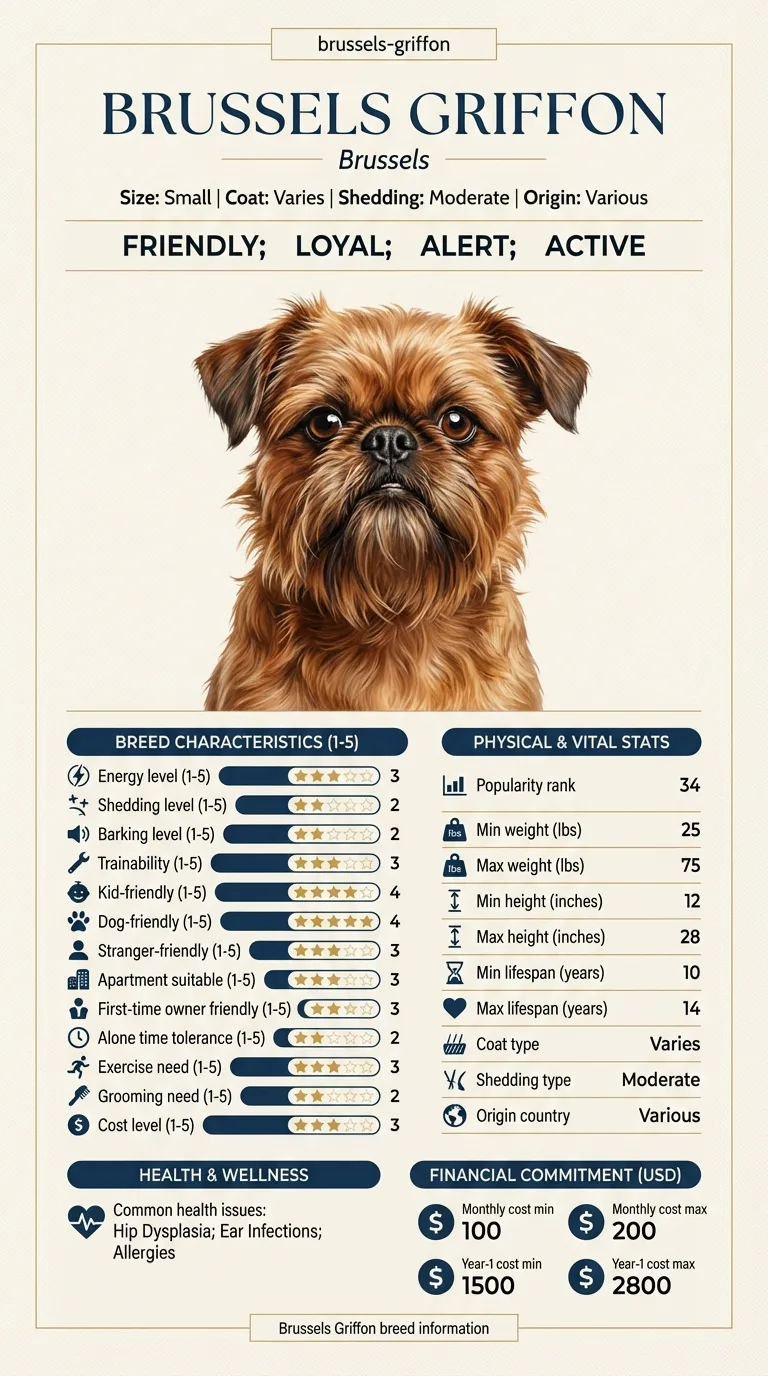
This guide is for Brussels Griffon owners who are noticing anxiety signs in their dogs, whether it's separation anxiety or fear of strangers.
Brussels Griffon anxiety often manifests as clinginess and distress when left alone. These small dogs can be particularly sensitive to changes in their environment or routine. Over time, this anxiety can lead to destructive behaviors or excessive barking if not managed appropriately.
If your Brussels Griffon anxiety persists despite your efforts, professional training can provide tailored strategies. A certified trainer can help address specific fears and build confidence.
If your Brussels Griffon's anxiety leads to destructive behavior or health issues, consult a vet or behaviorist. They can assess underlying health problems or recommend behavioral therapies.
A variety of tools and products can help manage Brussels Griffon anxiety effectively. These can enhance your at-home strategies and create a more supportive environment.
Making lifestyle adjustments can significantly help reduce Brussels Griffon anxiety. Start by establishing a consistent daily routine. Dogs thrive on predictability, so feed, walk, and play with your Brussels around the same times each day.
This helps them feel secure and understand what to expect.
Regular exercise is crucial. Aim for at least 30 minutes of activity each day to burn off excess energy and boost their mood. Activities like short walks or play sessions can be effective.
Also, consider scheduling quiet time to help your dog acclimate to being alone. Start with short periods and gradually increase the time to build their comfort with solitude.
Lastly, make adjustments to your household routine. Create a cozy space with their favorite toys and blankets where they can retreat when feeling anxious. Adding calming scents or soft music can also enhance their comfort.
By making these changes, you can help alleviate Brussels Griffon anxiety and create a more peaceful environment for your furry friend.
Tracking your Brussels Griffon's anxiety can feel daunting, but recognizing small changes is key. Look for micro-wins like your dog being calmer during brief absences or showing interest in playtime. These little victories mean your training efforts are taking root.
Setbacks are a normal part of the journey. If your Brussels suddenly barks more during certain situations or refuses to engage, it might be a sign of stress. Don’t panic; these moments can happen as your dog adjusts.
Just remember, consistency is crucial.
To gauge whether your plan is working, observe your dog's body language. Signs of relaxation, such as a wagging tail or settling down without constant pacing, indicate progress. If you notice your Brussels Griffon becoming more confident in new situations, that's a great sign!
If anxiety seems to worsen or doesn't improve after a few weeks, it might be time to reassess your strategies and consult a trainer or vet for additional support.

When Jenna adopted her Brussels Griffon, Max, she quickly noticed his anxiety. Max would bark at every sound and tremble when left alone. Jenna tried various tactics at home, like creating a cozy den with blankets and toys to help him feel secure. She also practiced short departures to help him get used to being alone. However, the anxiety persisted, leading Jenna to seek professional help. A dog trainer suggested a structured training plan focused on positive reinforcement and gradual exposure to alone time. With consistent training and a few calming products, like an anxiety wrap, Max began to show improvement. After several weeks, he could stay alone for short periods without panicking. Jenna felt relieved as Max became more relaxed and confident.
Key takeaway: With patience and the right training approach, Brussels Griffon anxiety can be managed effectively.
Brussels Griffons can experience anxiety due to factors like genetics, lack of socialization, or changes in their environment. They are sensitive dogs that thrive on routine and can become anxious with too much disruption. Understanding their triggers is key to helping them feel secure.
Signs of Brussels Griffon anxiety include excessive barking, destructive behavior, pacing, or clinginess. You may also notice changes in their eating habits or increased aggression. Observing your dog's behavior in different situations can help you identify anxiety.
Consistency and routine are crucial for managing Brussels Griffon anxiety. Providing a safe space, engaging in regular exercise, and using positive reinforcement during training can help. Consider consulting a vet or a professional trainer for tailored assistance.
Absolutely! Brussels Griffon anxiety training focuses on building confidence and reducing fear. Using positive reinforcement techniques, like treats and praise, can effectively help them cope with anxiety triggers.
If your Brussels Griffon's anxiety is severe or persistent, it's wise to seek professional help. A vet can rule out medical issues, while a trainer can provide specialized behavioral strategies. Don't hesitate to reach out for support.
Common signs of Brussels Griffon anxiety include excessive barking, destructive behavior, and clinginess. They may also show signs of nervousness like pacing or hiding. If you notice these behaviors, it's time to investigate possible triggers.
Yes, older Brussels Griffons can develop anxiety due to changes in their environment or health issues. It's important to monitor their behavior closely as they age and consult a vet if you notice changes. Special training techniques can help manage their anxiety.
To help your Brussels Griffon during travel, create a safe space with familiar items like a blanket or toy. Gradual exposure to car rides or new environments can also reduce anxiety. Make sure to take regular breaks during long trips to let them stretch and relieve themselves.
Brussels Griffons can experience anxiety in multi-dog households if they feel overshadowed or if there's competition for attention. Proper introductions and ensuring each dog has personal space can help. Regular training and positive reinforcement are key to keeping the peace.
Positive reinforcement training is effective for managing Brussels Griffon anxiety. Use treats and praise to reward calm behavior and gradually expose them to anxiety-inducing situations. Consistency and patience are essential for long-term success.
Establish a consistent daily routine to help your Brussels Griffon feel secure. Engaging them in regular exercise and training can also reduce their anxiety levels.
Create a safe space for your Brussels Griffon, like a cozy bed in a quiet room. Use calming music or white noise to drown out loud sounds.
Introduce new people slowly and allow your Brussels Griffon to approach at their own pace. Reward them with treats for calm behavior to build positive associations.
Consider anxiety wraps or calming pheromone diffusers, which can provide comfort. Consult your vet for recommendations on effective products.
Anxiety and pain look alike from the outside. Get the prep sheet for this breed's separation-anxiety page and take it to the vet.
You get: Vet visit prep sheet
No spam. One-click unsubscribe. See our privacy policy.
Preview page 1 before you decide.
This guide is not medical advice. If your dog shows pain, sudden behavior change, or worsening symptoms, consult a licensed veterinarian.
Some links may be affiliate links. We may earn a commission at no extra cost to you. We only suggest products we believe are helpful for dog owners.
We research and check what we publish, but we do not warrant that any figure, date, price, or statement is accurate, complete, or current, and we accept no liability for any loss, cost, injury, or other harm arising from the use of this site. Use it as one reference among several. You remain responsible for your own decisions and for your dog's care - confirm anything that matters with a licensed veterinarian or another qualified professional before you act on it. Full disclaimer.
Not sure which breed is right for you? Take our 2-minute quiz to find out.
Take the quiz