Living
Which fits a small home better?
The Papillon by a wide margin, 5/5 for apartment suitability against the Pit Bull's 2/5.

Quick answer
Which fits a small home better?
The Papillon by a wide margin, 5/5 for apartment suitability against the Pit Bull's 2/5.
American Pit Bull Terrier or Papillon? On paper they differ most on apartment suitability, and on the scales American Pit Bull Terrier is the heavier at 30–65 lbs. Here is how the two compare on everything that shapes an ordinary week.
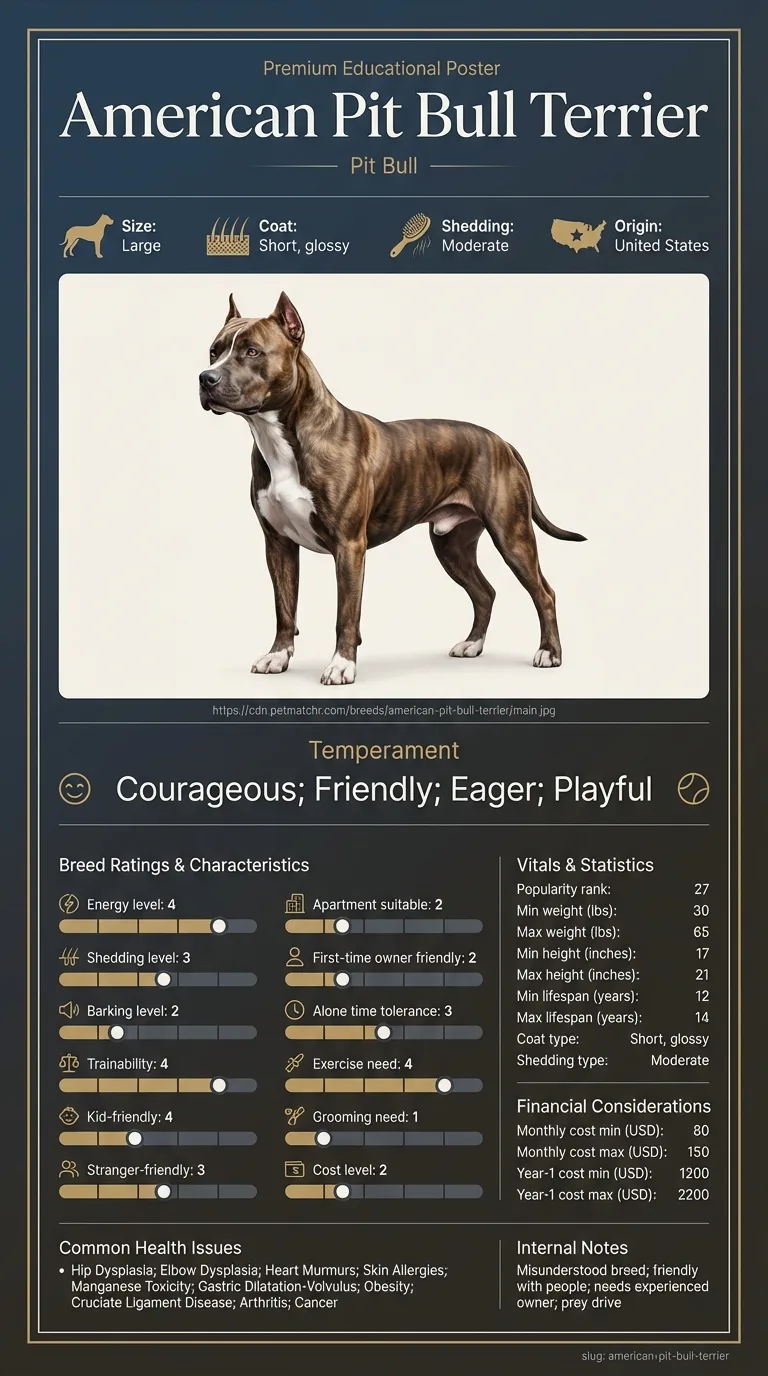
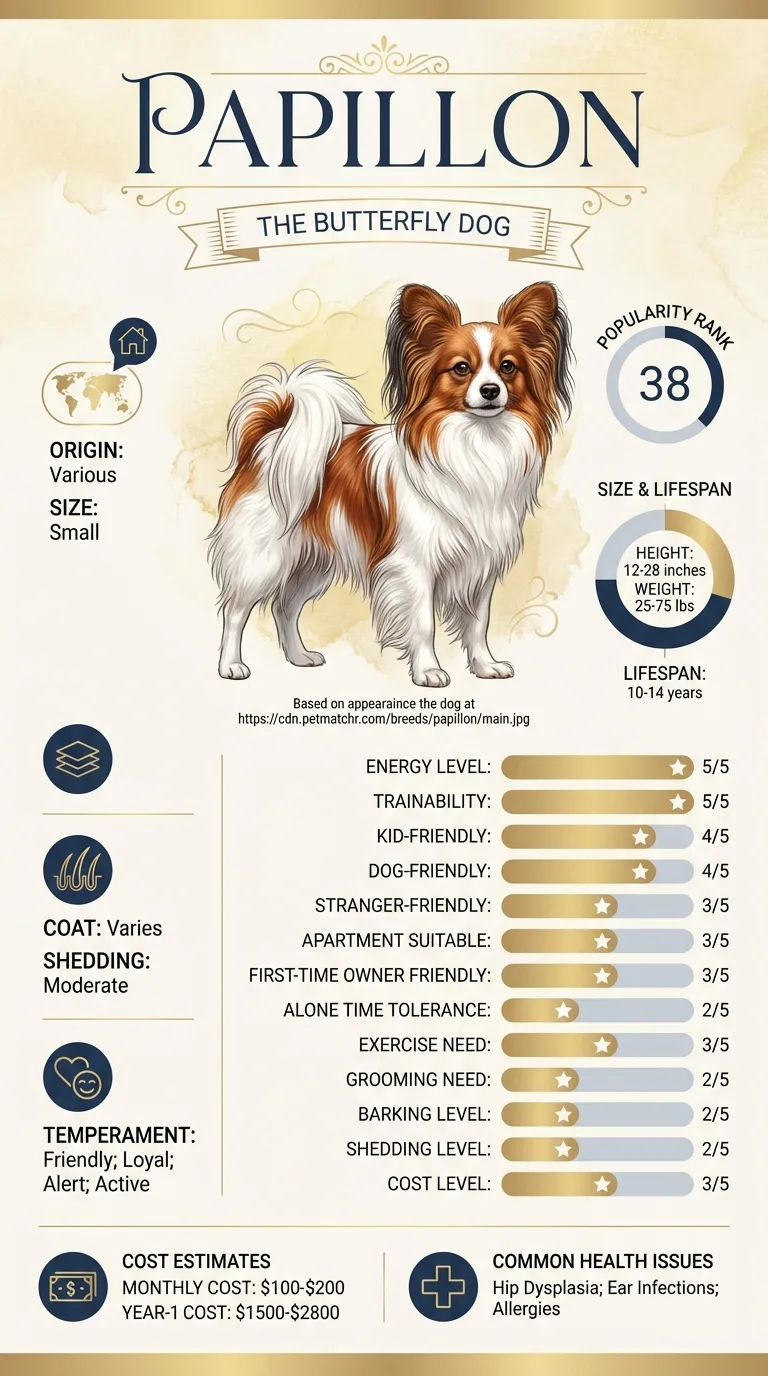
This is for someone already down to American Pit Bull Terrier and Papillon and deciding between them. For this pair the decision usually turns on apartment suitability and good for first-time owners, so those are covered first and in most detail. Anyone choosing from a flat has a clear answer here: Papillon rates 5/5 against 2/5. Breed history is left out; what follows is what you will actually live with.
Between American Pit Bull Terrier and Papillon, apartment suitability is what separates them, and Papillon is the lower-effort dog of the two to keep.
Choose American Pit Bull Terrier if you do not want a standing grooming appointment, the dog will be alone during the working day and there are young children at home.
Choose Papillon if you are in a flat or a smaller home, this is your first dog and shedding is a problem in your house.
| Feature | american pit bull terrier | papillon | Winner |
|---|---|---|---|
| Size class | large | small | Equal |
| Weight | 30–65 lbs | 5–10 lbs | Equal |
| Height | 17–21 in | 8–11 in | Equal |
| Lifespan | 12–14 years | 14–16 years | papillon |
| Exercise need | High (4/5) | Moderate (3/5) | papillon |
| Grooming need | Very low (1/5) | Low (2/5) | american pit bull terrier |
| Shedding | Moderate (3/5) | Low (2/5) | papillon |
| Energy level | High (4/5) | High (4/5) | Equal |
| Barking | Low (2/5) | High (4/5) | american pit bull terrier |
| Apartment suitability | Low (2/5) | Very high (5/5) | papillon |
| Good for first-time owners | Low (2/5) | High (4/5) | papillon |
| Tolerates being alone | Moderate (3/5) | Low (2/5) | american pit bull terrier |
| Trainability | High (4/5) | Very high (5/5) | papillon |
| Good with kids | High (4/5) | Moderate (3/5) | american pit bull terrier |
| Good with other dogs | Low (2/5) | High (4/5) | papillon |
| Friendly to strangers | Moderate (3/5) | High (4/5) | papillon |
| Cost level | Low (2/5) | Low (2/5) | Equal |
| Coat | Short, glossy | Long, silky single coat | Equal |
| Origin | United States | Various | Equal |
| Typical monthly cost | $80–$150 | $80–$150 | Equal |
| Typical first-year cost | $1,200–$2,200 | $1,100–$2,300 | Equal |
There's no subtlety to this matchup: a 30-to-65-pound Pit Bull against a 5-to-10-pound Papillon. Height tells the same story, 17 to 21 inches versus 8 to 11. If you're picturing these two side by side, think toddler next to teacup, the Papillon can ride in a bag, the Pit Bull cannot. Anyone choosing between them is really choosing between two different categories of dog ownership.
Both rate high (4/5) for energy level, which surprises people expecting the small dog to be the calmer one. The difference shows up in exercise need instead, the Pit Bull is rated 4/5, the Papillon a more modest 3/5. In practice, the Papillon can burn off its energy indoors with play; the Pit Bull generally can't.
Neither is a high-maintenance coat, but the Papillon takes slightly more work, a 2/5 for grooming and a low shedding rating, against the Pit Bull's near-zero 1/5. The Papillon's long, silky coat needs occasional brushing to stay tangle-free and prevent matting around the ears and legs; the Pit Bull's short coat barely needs a comb at all beyond a quick weekly pass to catch loose hair.
The Papillon is built for small spaces, rated a full 5/5 for apartment suitability, but it's also the noisier of the two at 4/5 for barking against the Pit Bull's 2/5. The Pit Bull, at only 2/5 for apartment fit, needs more room and more outdoor time than most apartments can offer. Thin walls and a vocal Papillon are a real combination to plan for.
The Papillon trains slightly easier on paper, 5/5 versus 4/5, and is rated high, not low, for first-time owners, a real point in its favor for someone new to dogs. The Pit Bull's low first-time-owner rating reflects its strength and the handling experience it benefits from, not a lack of intelligence. Either dog responds well to consistent, reward-based training.
The Papillon comes out ahead with other dogs, 4/5 versus 2/5, and with strangers, 4/5 versus 3/5, fitting the profile of a social, outgoing toy breed. The Pit Bull actually rates higher with kids, 4/5 against the Papillon's 3/5, its size makes it more durable around rough play, while a Papillon's small frame calls for gentler handling with young children.
These two don't share a single condition on their lists, which tells you their health risks come from genuinely different places. The Pit Bull's concerns are structural and internal, hip and elbow dysplasia, heart murmurs, bloat. The Papillon's run toward small-dog issues: patellar luxation, a soft spot in the skull, and a collapsing trachea. The Papillon also lives longer, typically 14 to 16 years against 12 to 14.
Cost is nearly identical despite the size gap: $80 to $150 a month for both, and first-year totals within about a hundred dollars of each other, $1,200 to $2,200 for the Pit Bull, $1,100 to $2,300 for the Papillon. Small dogs don't automatically mean small bills, the Papillon's higher-end vet costs and any dental work offset what it saves in food.
American Pit Bull Terrier weighs 30–65 lbs and lives 12–14 years; Papillon weighs 5–10 lbs and lives 14–16 years. The two diverge most on apartment suitability, good for first-time owners and barking and 1 other rated axes. They are level on cost level and energy level, so those cannot decide it. The comparison marks an easier option only where one exists. Facts like weight and country of origin are not scored. Both dogs are rated from the same dataset, which is what makes the numbers comparable with each other even though any individual dog sits somewhere inside its breed's range.

About as different as two dogs get, the Pit Bull can outweigh the Papillon sixfold, 65 pounds versus 10.
The Pit Bull, rated moderate (3/5) against the Papillon's low (2/5), though neither is a heavy shedder compared to double-coated breeds.
By the data here, yes, it's rated high (4/5) for first-time owners while the Pit Bull is rated low (2/5), mainly a function of size and strength rather than trainability.
The Papillon is rated very high (5/5) for apartment living. The Pit Bull is rated low (2/5), it needs more room and more daily exercise than most apartments provide.
They're close. Monthly costs match at $80 to $150, and first-year totals differ by only about $100.
No overlap in the data, the Pit Bull's risks are joint- and organ-related, the Papillon's are smaller-dog issues like patellar luxation and tracheal collapse.
The Papillon, rated high (4/5) against the Pit Bull's low (2/5). If noise is a concern for neighbors, factor that in.
The Papillon by a wide margin, 5/5 for apartment suitability against the Pit Bull's 2/5.
Barely any, both land at $80 to $150 a month despite the huge size gap.
The Pit Bull needs more structured daily exercise (4/5); the Papillon can meet a lot of its needs with indoor play (3/5).
The Papillon, typically 14 to 16 years against the Pit Bull's 12 to 14.
Secure checkout on Stripe. We never see your card.
7-day money-back guarantee. Instant access.
Health information here is general and is not veterinary advice. If your dog shows pain, sudden behaviour change, or worsening symptoms, consult a licensed veterinarian.
Some links on this site are affiliate links. We may earn a commission at no extra cost to you, and we only suggest products we believe are helpful for dog owners.
We research and check what we publish, but we do not warrant that any figure, date, price, or statement is accurate, complete, or current, and we accept no liability for any loss, cost, injury, or other harm arising from the use of this site. Use it as one reference among several. You remain responsible for your own decisions and for your dog's care - confirm anything that matters with a licensed veterinarian or another qualified professional before you act on it. Full disclaimer.
Match your lifestyle to the right dog.
Take quizNot sure which breed is right for you? Take our 2-minute quiz to find out.
Take the quiz