DogBreedCompass

Pit Bull or Shar-Pei: The Wrinkles Are the Health Problem

The Shar-Pei's wrinkles are not a cosmetic quirk. They come from an overproduction of hyaluronic acid in the skin, and the same underlying biology is linked to the periodic fever syndrome that carries the breed's name.

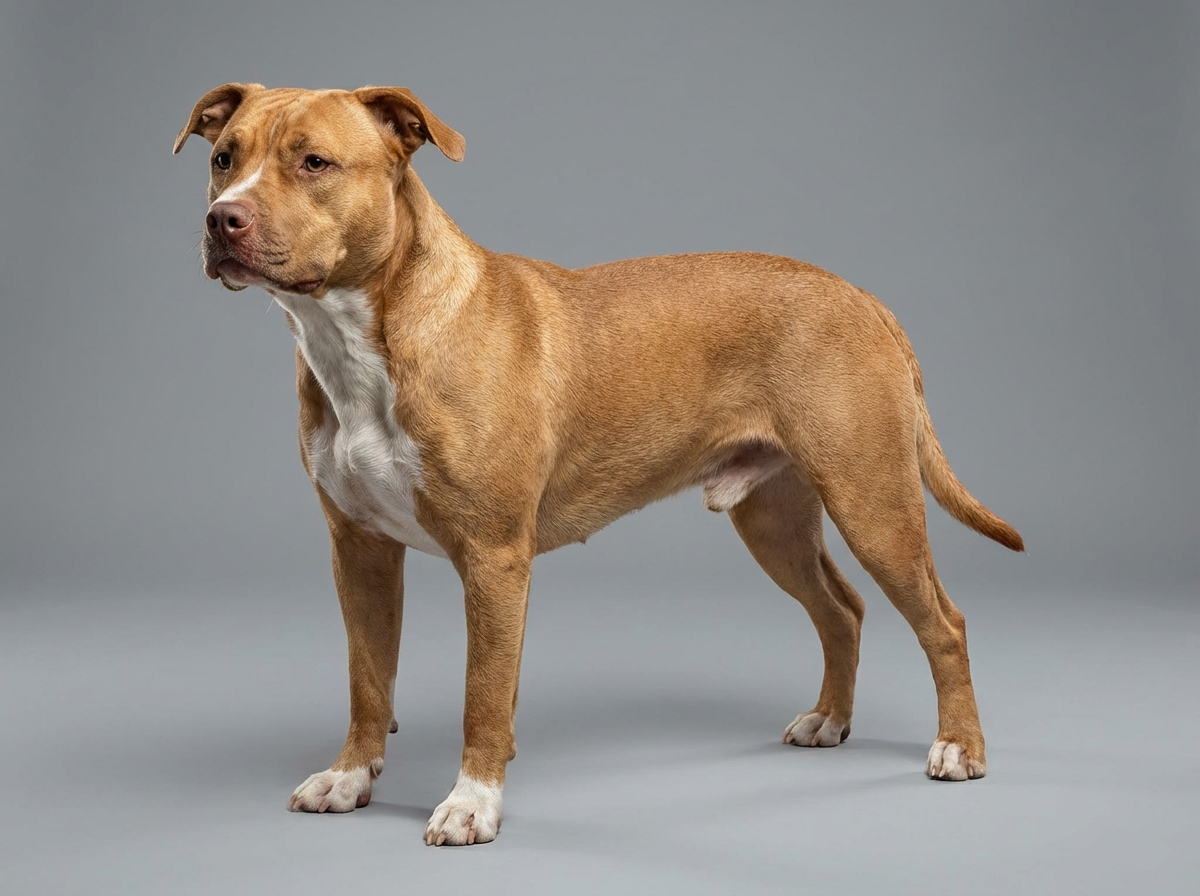
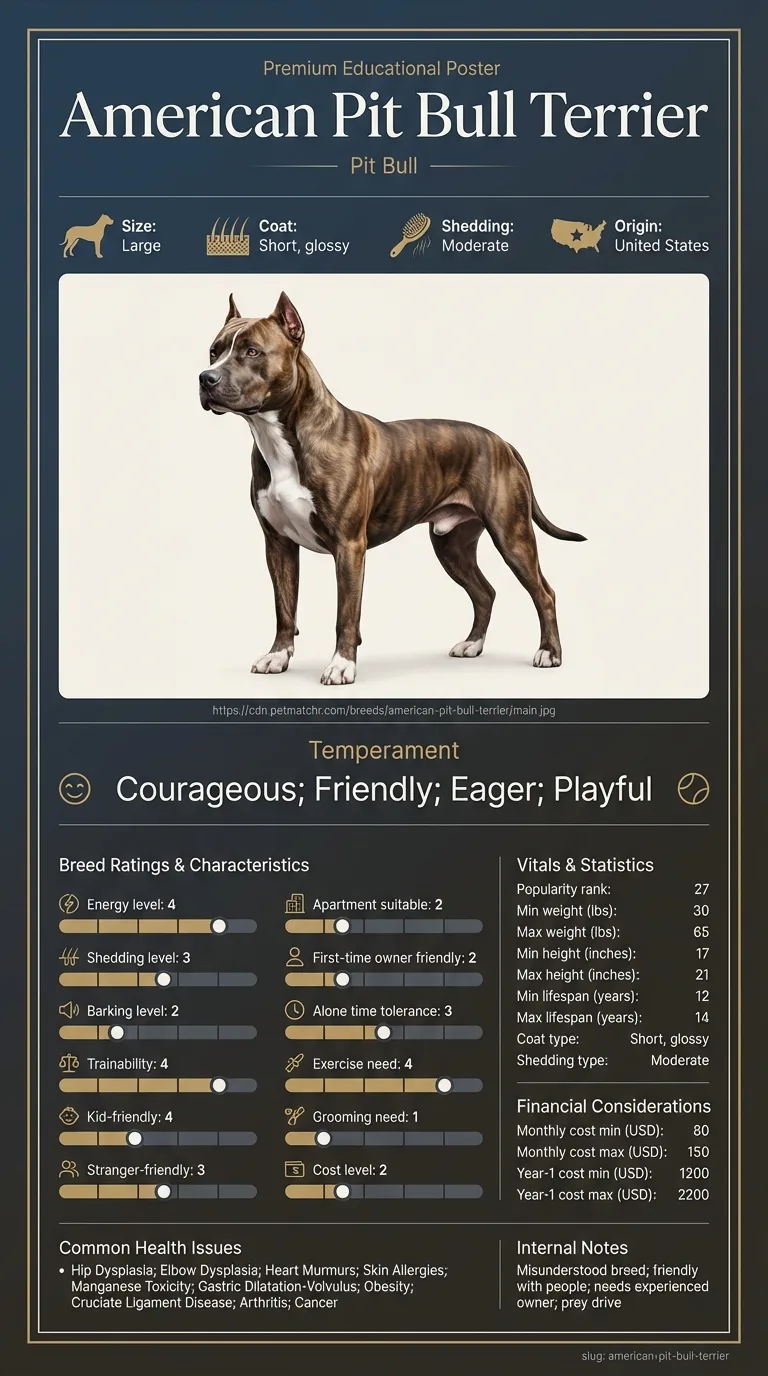
american pit bull terrier infographic
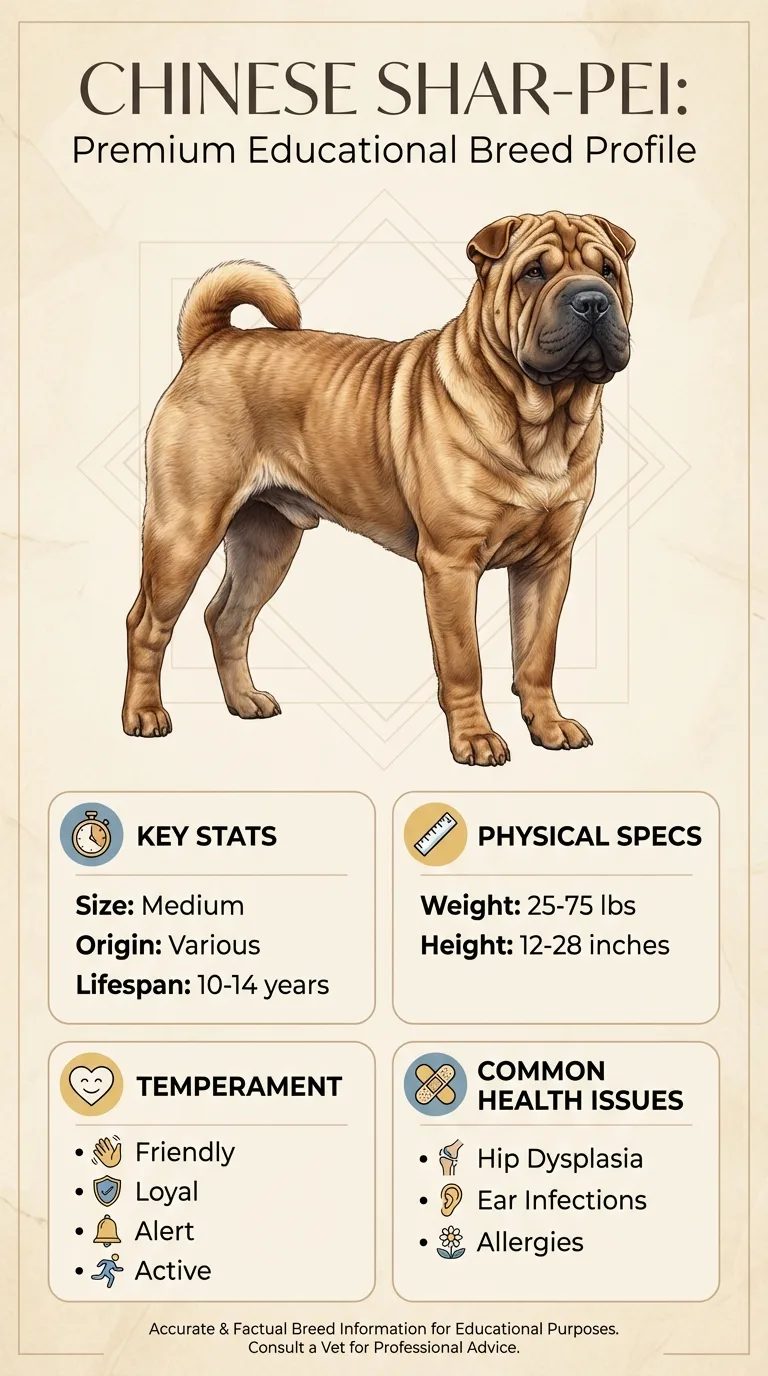
chinese shar pei infographic

This page is for someone drawn to an unusual, dignified, low-energy breed and needing to understand what the appearance costs medically before committing.

Quick verdict

The Shar-Pei is calm, quiet and undemanding on exercise, and it asks for daily skin care, careful breeder selection and an acceptance that its distinctive look and its health list are the same thing.

Choose american pit bull terrier if...

Choose the American Pit Bull Terrier if you want an athletic, long-lived, low-maintenance dog that is warm with people, and you can supply an hour a day and manage careful introductions to other dogs.

Choose chinese shar pei if...

Choose the Chinese Shar-Pei if you want a quiet, self-contained, low-exercise dog, you will do daily fold and ear care, and you will choose a moderately wrinkled dog from a breeder who tests.

Head-to-head comparison

Featureamerican pit bull terrierchinese shar peiWinner
Weight30–65 lbs45–60 lbsEqual
Height17–21 in18–20 inEqual
Lifespan12–14 years8–12 yearsamerican pit bull terrier
CoatShort, glossyShort and harshEqual
Grooming need1/52/5american pit bull terrier
Shedding3/5 — moderate2/5 — lowchinese shar pei
Energy level4/52/5chinese shar pei
Exercise need4/52/5chinese shar pei
Trainability4/52/5american pit bull terrier
Barking2/52/5Equal
Good with kids4/53/5american pit bull terrier
Good with other dogs2/52/5Equal
Friendly to strangers3/52/5american pit bull terrier
Apartment suitability2/54/5chinese shar pei
Good for first-time owners2/52/5Equal
Tolerates being alone3/53/5Equal
Typical monthly cost$80–150$100–200american pit bull terrier
Typical first-year cost$1,200–2,200$1,400–2,900american pit bull terrier

Deep dive

Familial Shar-Pei fever: the condition named after the breed

Familial Shar-Pei fever sits on the breed's health list and it is the entry that most buyers have never heard of, which is unfortunate because it is the one that most deserves attention.

It is an inherited inflammatory condition producing episodes of high fever, usually lasting a day or two, often accompanied by swelling of the hocks — the joints of the hind legs above the paws — which is why it is also called swollen hock syndrome. Affected dogs are lethargic, reluctant to move, and may have abdominal pain during an episode, then appear to recover fully. Episodes recur, and they often begin in the first eighteen months.

The reason it matters beyond the discomfort is amyloidosis. Repeated inflammation can lead to abnormal protein deposits in the kidneys or liver, and organ failure from amyloidosis is one of the main causes of early death in the breed. That connection is a large part of why the expected lifespan is 8 to 12 years rather than the 12 to 14 a 50 pound dog might otherwise reach.

There is a striking link back to the appearance. The condition is associated with the same genetic variation that drives hyaluronic acid overproduction in the skin — the substance responsible for the breed's wrinkles. In other words, the trait people buy the dog for and the trait that shortens its life are related, and heavily wrinkled lines are not the safer choice.

What a buyer can do: ask the breeder directly whether fever episodes have occurred in the line, whether any dog has been diagnosed with amyloidosis, and how wrinkled the adults are. Prefer a moderately wrinkled dog from a breeder who discusses this openly. As an owner, treat an unexplained fever with a reluctance to move as a same-day veterinary matter and make sure the diagnosis is recorded, because the long-term monitoring matters.

Skin folds and eyelids: the daily and the surgical

Skin fold dermatitis heads the Shar-Pei's list, and entropion sits directly below it. Both are consequences of the same skin.

Fold dermatitis is the daily job. Deep folds trap moisture, skin oils and debris, creating warm damp pockets where bacteria and yeast thrive. Left alone they become red, sore, smelly and infected, and in a heavily wrinkled dog the affected area can be extensive. The routine is wiping each fold out and — the part people skip — drying it thoroughly, every day. It takes a few minutes and it prevents most of the problem. A dog that is already infected needs veterinary treatment rather than more cleaning.

Entropion is the surgical one, and it is common enough in the breed to be worth planning for. The eyelid rolls inward so that lashes and hair rub the cornea, causing pain, squinting, weeping and eventual corneal damage. In Shar-Pei puppies the weight of facial wrinkles can push the lids inward before the head has matured, and eyelid tacking — a temporary procedure that holds the lids in position while the puppy grows — is a recognised early intervention. Permanent surgical correction is done later where needed.

The practical points for an owner: any Shar-Pei puppy squinting, weeping or holding an eye closed needs seeing promptly rather than being watched, and a breeder should be asked how many puppies in previous litters have needed tacking or surgery.

Ear infections complete the picture. The breed's ear canals are unusually small and the ear leather is tight, which restricts airflow and makes infections both more likely and harder to treat. Weekly checks and drying after baths are part of ownership.

All of that is why the breed rates 2/5 for grooming despite a coat that needs almost nothing — the coat is easy and everything around it is not.

The Pit Bull's 1/5 is a curry mitt once a week: no folds, upright well-ventilated ears, and a normal face.

Reserved, independent and calm: what 2/5 with strangers means here

The Shar-Pei's temperament keywords are loyal, independent, reserved and calm, and all four are accurate in a way that suits some households very well.

This is a quiet, dignified, self-contained dog. It is devoted to its own family and largely indifferent to everyone else, it does not seek attention from visitors, and at 2/5 barking it is one of the quieter breeds here. Its 2/5 exercise rating and 2/5 energy make it genuinely low-demand day to day — a couple of moderate walks and it is content — and its 4/5 apartment rating follows from that.

The 2/5 with strangers is guardian reserve rather than nervousness in a well-bred, well-socialised dog. It was historically a property guardian, and the modern breed still watches rather than greets. Without deliberate socialisation, though, that reserve drifts toward suspicion, and a 50 pound reserved dog that has decided a stranger is a problem is a serious matter. Structured, positive exposure through the first two years is not optional.

The 2/5 trainability reflects genuine independence rather than slowness. Shar-Pei will consider an instruction, decide whether it is worthwhile, and frequently decline. Training works when it is short, well-paid and consistent, and it does not respond to heavy-handedness — this is a breed that becomes obstinate rather than compliant under pressure.

With other dogs both breeds rate 2/5, and the management is similar: no dog parks, careful neutral-ground introductions, no on-lead greetings with strangers' dogs.

The Pit Bull's 3/5 with strangers and 4/5 with children make it the more sociable of the two with people, and its 4/5 trainability makes it markedly easier to build reliable behaviour on.

Both breeds also encounter restrictions: bully-type dogs frequently, and Shar-Pei occasionally, on insurance and tenancy lists. Check in writing before committing.

Cost level 4/5 against 2/5 for a similar-sized dog

Two dogs of almost identical size, and one costs roughly twice as much: $100–200 a month at cost level 4/5 against $80–150 at 2/5, with first years of $1,400–2,900 against $1,200–2,200.

None of that gap is food. It is all skin, eyes and ears.

Fold dermatitis needs treating when prevention slips, and in a heavily wrinkled dog it can recur. Entropion frequently needs tacking as a puppy and sometimes surgery later. Ear infections in small tight canals are more likely and more stubborn than in an open-eared breed. Hypothyroidism appears on the list and means lifelong medication once diagnosed. And fever episodes, where they occur, bring monitoring for amyloidosis with periodic urine and blood testing.

Insurance premiums for the breed reflect all of this, and insuring before anything is diagnosed matters more than the monthly figure.

The Pit Bull's costs are lower and flatter. Its most common day-to-day complaint is skin allergies, which are managed rather than cured; its most likely orthopaedic emergency is cruciate ligament disease, which is heavily weight-linked. Its financial uncertainty is insurance availability rather than premium size.

Lifespan is the last figure and a decisive one: 12 to 14 years against 8 to 12.

The honest framing is that the Shar-Pei is a specialist's dog. Owners who love the breed describe exactly the qualities the ratings show — calm, quiet, unobtrusive, deeply attached to its own people — and they accept the maintenance because they think it is worth it. What is not reasonable is buying one for the wrinkles without knowing that the wrinkles are the health list.

Choose a moderately wrinkled dog, from a breeder who talks openly about fever and eyelids, and do the folds every day.

The practical week with each dog

On daily effort the two breeds trade in opposite directions, and the trade is clean enough to state simply.

The Shar-Pei asks for very little exercise — two moderate walks, perhaps forty-five minutes in total — and a few minutes of fold, ear and eye care every day. It settles indoors for long periods, tolerates a working day at 3/5, and is quiet. In a flat, in a quiet household, or for an owner whose mobility is limited, that combination is genuinely valuable.

It is also heat-sensitive. A dense harsh coat over thick skin does not shed heat well, and summer exercise belongs at the cool ends of the day.

The Pit Bull asks for an hour to ninety minutes of real activity — a brisk walk plus a flirt pole, tug, weight pull or a training session — and about five minutes of grooming a week. It settles hard afterwards, tolerates a working day at 3/5 as well, and is quiet at 2/5.

With children the Pit Bull leads 4/5 to 3/5. The Shar-Pei's score reflects a reserved dog that dislikes being fussed over rather than any hostility; it suits households with older children who will leave it alone.

Both are 2/5 for first-time owners, and the difficulty is different in each case. With the Shar-Pei it is the health management and the socialisation of a reserved guardian. With the Pit Bull it is dog-dog management and the legal and insurance landscape.

If the shortlist genuinely holds both, the deciding question is whether you want to spend your time outdoors with the dog or on the dog. The Shar-Pei's hours go on maintenance; the Pit Bull's go on exercise.

American Pit Bull Terrier vs Chinese Shar-Pei at a glance

The Shar-Pei's wrinkles are not a cosmetic quirk. They come from an overproduction of hyaluronic acid in the skin, and the same underlying biology is linked to the periodic fever syndrome that carries the breed's name.

The Shar-Pei is calm, quiet, and undemanding on exercise compared to the Pit Bull, and in exchange it asks for daily skin care, careful breeder selection, and an acceptance that its distinctive look and its health list are the same underlying trait.

Choose the American Pit Bull Terrier if you want an athletic, long-lived, low-maintenance dog that is warm with people, and you can supply an hour a day and manage careful introductions to other dogs. Choose the Chinese Shar-Pei if you want a quiet, self-contained, low-exercise dog, you will do daily fold and ear care, and you will choose a moderately wrinkled dog from a breeder who tests.

Frequently asked questions

What is familial Shar-Pei fever?

An inherited inflammatory condition causing recurring episodes of high fever, often with swollen hocks and reluctance to move. Repeated inflammation can lead to amyloidosis and organ failure, which is a major reason the breed's lifespan is 8 to 12 years.

Are the wrinkles connected to the health problems?

Yes. The wrinkles come from an overproduction of hyaluronic acid in the skin, and the same genetic variation is associated with the breed's periodic fever syndrome. Heavily wrinkled lines are not the safer choice.

How much daily care do the folds need?

A few minutes. Wipe each fold out and dry it thoroughly every day — the drying is the part people skip and the part that matters. An already infected fold needs veterinary treatment rather than more cleaning.

What is eyelid tacking?

A temporary procedure holding a Shar-Pei puppy's eyelids in position while the head matures, used because facial wrinkles can roll the lids inward onto the cornea. Permanent correction is done later if needed.

Which is easier to train?

The Pit Bull at 4/5 against 2/5. The Shar-Pei is independent rather than slow — it weighs up instructions and often declines. It becomes obstinate under pressure, so short, well-paid, consistent sessions work best.

Which needs less exercise?

The Shar-Pei at 2/5 against 4/5 — two moderate walks totalling about forty-five minutes. It is also heat-sensitive, so summer walks belong at the cool ends of the day.

Why does a 50 pound dog cost 4/5 to keep?

Because the spending is dermatological and ophthalmic rather than dietary — fold infections, eyelid surgery, stubborn ear infections in small tight canals, thyroid medication and monitoring where fever episodes occur.

Quick answers

View more answers
Living

Pit Bull or Chinese Shar-Pei: which should I choose?

The Shar-Pei if you want a quiet, calm, low-exercise dog and will do daily skin care and choose a moderately wrinkled dog from a testing breeder. The Pit Bull if you want a longer-lived athlete and can supply an hour a day.

Costs

Which is cheaper to keep?

The Pit Bull at $80–150 a month against $100–200, at cost level 2/5 against 4/5, with almost all of the Shar-Pei's premium going on skin, eyes and ears.

Health

What should I ask a Shar-Pei breeder?

Whether fever episodes or amyloidosis have appeared in the line, how many puppies have needed eyelid tacking or surgery, and how wrinkled the adults are. Prefer moderate wrinkling and open answers.

Behavior

Is a Shar-Pei good with children?

It rates 3/5 against the Pit Bull's 4/5. It is reserved rather than hostile and dislikes being fussed over, which suits households with older children who will leave it in peace.

Related DogBreedCompass guides

  • American Pit Bull Terrier breed guideThe Pit Bull profile covers temperament, exercise and the practical realities of ownership.
  • Chinese Shar-Pei breed guideThe Shar-Pei profile covers skin care, eye health and the breed's reserved temperament.
  • common genetic disorders in Chinese Shar-PeiThe breed's inherited risks are few but closely tied to its appearance.
  • skin allergies in Pit Bull TerriersSkin disease is the leading day-to-day complaint in both breeds, from different causes.
  • hypothyroidism in Pit Bull TerriersHypothyroidism sits on the Shar-Pei's list and is easy to miss as gradual coat and weight change.
  • American Pit Bull Terrier vs Chow ChowReaders drawn to aloof Chinese breeds usually weigh the other one alongside this comparison.

Related guides

Important reminder

Health information here is general and is not veterinary advice. Fever episodes, eyelid surgery and organ monitoring should be discussed with your own veterinarian.

Some links on this site are affiliate links. We may earn a commission if you buy through them, at no additional cost to you.

Find Your Perfect Breed

Match your lifestyle to the right dog.

Take quiz

Find your match

Not sure which breed is right for you? Take our 2-minute quiz to find out.

Take the quiz