Health
Is elongated soft palate documented in Weimaraners?
No, it's characterized in brachycephalic breeds like Bulldogs and Pugs, not in Weimaraners.

Quick answer
Is elongated soft palate documented in Weimaraners?
No, it's characterized in brachycephalic breeds like Bulldogs and Pugs, not in Weimaraners.
BOAS sounds like the kind of breathing problem worth worrying about in any dog, but it's a defect tied to skull shape, and the Weimaraner's skull shape isn't the one that produces it.

Owners who've read general airway-health content online, or heard a vet mention BOAS at a puppy visit for an unrelated reason, and want to know whether it applies to their long-muzzled Weimaraner are the audience here.
This guide is not medical advice. If your dog shows pain, sudden behavior change, or worsening symptoms, consult a licensed veterinarian.
Some links may be affiliate links. We may earn a commission at no extra cost to you. We only suggest products we believe are helpful for dog owners.
We research and check what we publish, but we do not warrant that any figure, date, price, or statement is accurate, complete, or current, and we accept no liability for any loss, cost, injury, or other harm arising from the use of this site. Use it as one reference among several. You remain responsible for your own decisions and for your dog's care - confirm anything that matters with a licensed veterinarian or another qualified professional before you act on it. Full disclaimer.
Elongated soft palate is a structural airway defect central to brachycephalic obstructive airway syndrome (BOAS), well documented in flat-faced breeds like English Bulldogs and Pugs, and it isn't established as occurring in Weimaraners. The breed's long, proportionate muzzle doesn't produce the soft-tissue mismatch behind the condition, so a Weimaraner showing breathing changes is far more likely dealing with heat, anxiety, allergies, or a genuinely documented breed risk like bloat.
Elongated soft palate is extremely common within brachycephalic breeds, appearing in the large majority of dogs with a markedly shortened skull, but it has no established occurrence in Weimaraners at all. For this breed, breathing changes are far more likely to trace back to exertion, anxiety, or an unrelated medical cause than to any structural airway defect.
The soft-tissue mismatch behind elongated soft palate comes from generations of breeding toward a dramatically shortened skull, a path documented in breeds like the Bulldog and Pug but never part of the Weimaraner standard. Weimaraners were bred for scenting endurance and a long, functional muzzle, so there's no equivalent genetic driver in this breed.
Because the underlying anatomy isn't present, there are no environmental triggers that turn this into a real concern for a Weimaraner. The environmental factors actually worth watching in this breed are heat and overexertion during field work, and the stress triggers behind separation anxiety.
Call promptly for any combination of retching, drooling, and a distended abdomen, since that's a bloat emergency and time matters. Persistent noisy breathing at rest, especially in an older Weimaraner, is also worth a vet visit to rule out laryngeal paralysis or another unrelated cause.
See all Weimaraner health problems, which breeds are prone to elongated soft palate, or the full Weimaraner breed guide for temperament, exercise needs and ownership costs.
There's no treatment timeline to track for elongated soft palate in this breed, since it isn't a condition Weimaraners develop. If breathing changes do show up, the useful timeline is whatever your vet sets for investigating the actual, breed-relevant cause.
Success here looks like ruling out a brachycephalic-breed condition quickly and redirecting attention to what's actually documented in Weimaraners: bloat risk, joint health, bleeding disorder screening, and anxiety management. A Weimaraner owner who understands this rarely needs to think about airway surgery at all.
Brachycephalic obstructive airway syndrome develops when generations of breeding for a shortened skull leave soft tissue, including the soft palate, sized for the longer muzzle the breed used to have. That mismatch crowds the airway and makes an elongated soft palate the single most common surgical finding in affected dogs. The Weimaraner was never bred toward that shortened-skull standard, so the anatomical mismatch driving the condition doesn't exist in this breed.
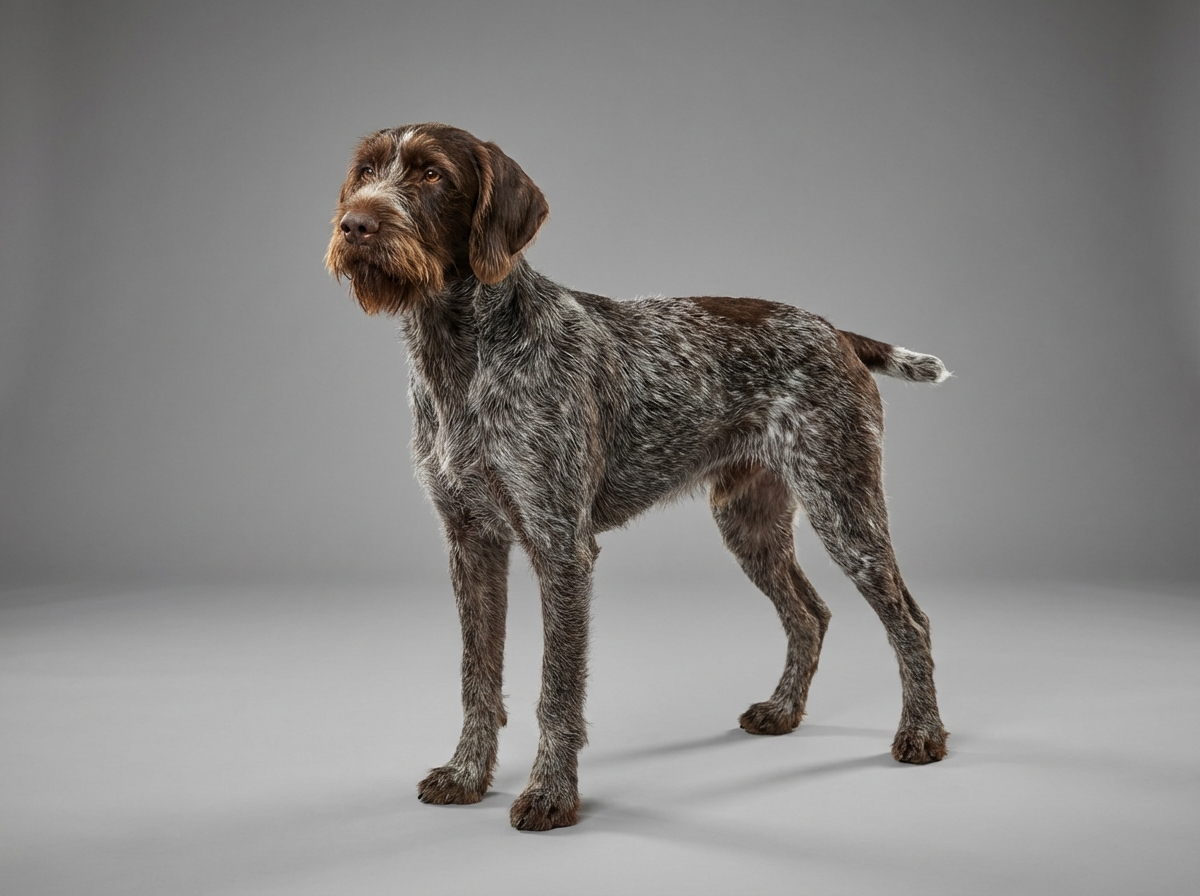
A Weimaraner's muzzle is long and proportionate to its skull, the build that let the breed track scent for hours in the field. Veterinary literature on BOAS centers on breeds like the English Bulldog, French Bulldog, Pug, and Boston Terrier, where the skull-shortening was deliberate and extreme. Weimaraners simply aren't part of that group, and elongated soft palate isn't documented as occurring in the breed.
Labored or noisy breathing in a Weimaraner is worth taking seriously, just not because of BOAS. These are the realistic causes to rule out instead.

A Weimaraner's documented health priorities are bloat (GDV), hip dysplasia, hypertrophic osteodystrophy, von Willebrand disease, and separation anxiety, a genetic bleeding disorder, a joint condition, a painful bone condition seen in fast-growing puppies, and a behavioral condition, not an airway defect. None of that overlaps with the brachycephalic anatomy that produces elongated soft palate.
If your Weimaraner is breathing hard, the more useful question for your vet is whether it fits a pattern connected to one of those five conditions, especially bloat, which is the breed's most urgent risk. Framing the conversation around what's actually documented in this breed gets you a faster, more relevant answer than starting from a brachycephalic-breed condition.

Priya's Weimaraner, Scout, started panting heavily and a little raspy after long hikes near Asheville, and a BOAS article she'd read about a friend's Bulldog made her worry it was the same thing. Her vet checked Scout's muzzle length and airway structure and explained that elongated soft palate is a brachycephalic-breed condition that doesn't occur in dogs built like Scout, with his long pointer-type muzzle. The exam instead focused on hydration and pacing during hot-weather hikes, plus a quick review of bloat warning signs given Scout's deep chest, which Priya found far more useful than the airway concern she'd walked in with.
Key takeaway: A breathing symptom that sounds alarming in a flat-faced breed doesn't automatically transfer to a long-muzzled breed like the Weimaraner; matching the concern to the breed's actual anatomy and documented risks is what leads to useful vet guidance.
No. Elongated soft palate is a structural feature of brachycephalic obstructive airway syndrome, documented in flat-faced breeds like Bulldogs and Pugs, and it isn't established as occurring in Weimaraners, whose long muzzle doesn't create the anatomical mismatch involved.
Elongated soft palate happens when the soft palate stays sized for a longer muzzle after generations of breeding shortened the skull, crowding the throat. A Weimaraner's muzzle was never shortened that way, so its soft palate and airway proportions stay matched.
Occasional snoring in a Weimaraner is usually positional, not a sign of airway obstruction, since the breed doesn't carry the skull structure behind BOAS. Persistent, loud snoring paired with daytime breathing effort is still worth a vet visit, just to look at other causes.
It's best documented in English Bulldogs, French Bulldogs, Pugs, Boston Terriers, and other breeds selected for a dramatically shortened skull. Weimaraners, Labradors, and other longer-muzzled breeds fall outside that risk group.
Heavy, distressed panting combined with unproductive retching or a swollen abdomen points toward bloat (GDV), the breed's most serious and time-sensitive health risk. That combination needs an emergency vet visit immediately, not a wait-and-see approach.
Yes, Weimaraners are known for separation anxiety, and stress panting can look and sound similar to labored breathing without any underlying airway problem. A vet can usually tell the difference quickly by watching the pattern and context.
Soft palate surgery is a BOAS treatment used in brachycephalic breeds and isn't a procedure Weimaraners are documented as needing for this condition. If a vet identifies a genuine airway issue in a Weimaraner, it's more likely to trace back to an unrelated cause like laryngeal paralysis in an older dog.
No, it's characterized in brachycephalic breeds like Bulldogs and Pugs, not in Weimaraners.
Bloat (GDV) is the breed's most urgent documented health risk, not any airway condition.
Heavy panting after hard exercise is normal for this energetic breed, though it should ease with rest and water.
There's little reason to budget for BOAS-related airway surgery in a Weimaraner since the condition isn't documented in the breed.
Snoring and panting are physical or emotional responses rather than trainable behaviors, though a trainer can help with anxiety-driven panting through desensitization work.
A one-page prep sheet for this condition: the signs, the questions to ask, what to get priced. Unlocks here.
You get: Vet visit prep sheet
No spam. One-click unsubscribe. See our privacy policy.
Preview page 1 before you decide.