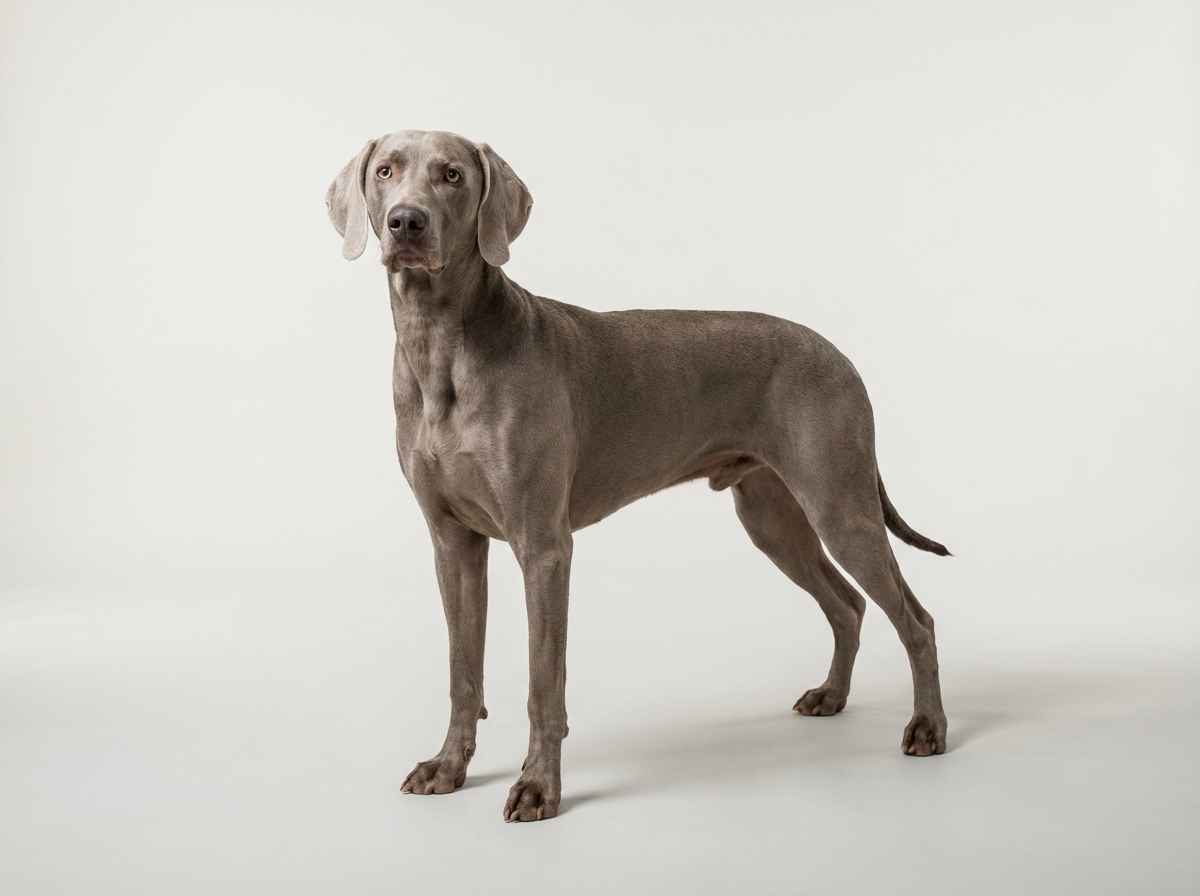
Health
Is elbow dysplasia different from hip dysplasia?
Yes, they're separate conditions affecting different joints, though both are developmental issues common in large, fast-growing breeds.

Quick answer
Is elbow dysplasia different from hip dysplasia?
Yes, they're separate conditions affecting different joints, though both are developmental issues common in large, fast-growing breeds.
A puppy that intermittently favors a front leg, especially after rest, before it's ever had an obvious injury, is showing a pattern worth investigating rather than dismissing as clumsiness.
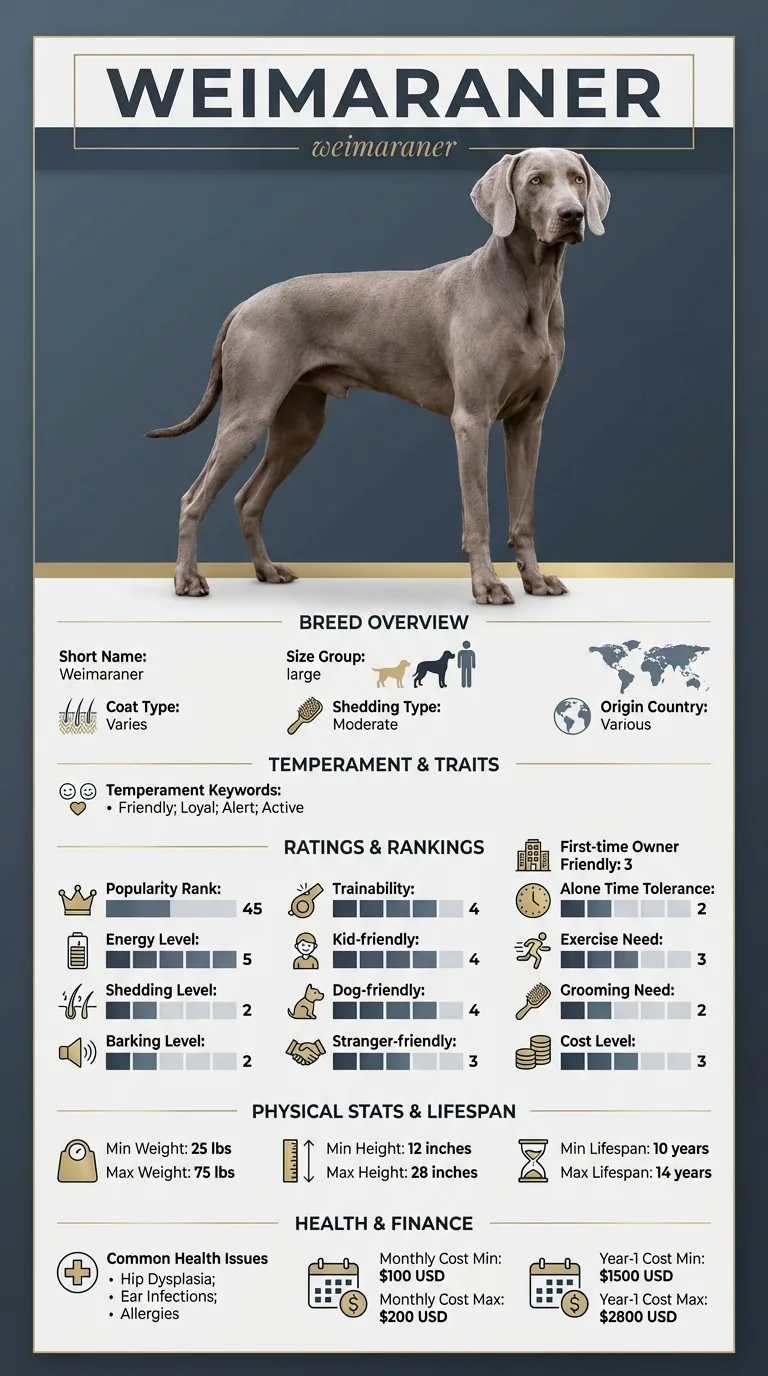
This affects owners of Weimaraner puppies during their rapid growth phase, roughly four to twelve months old, when elbow dysplasia typically becomes noticeable.
This guide is not medical advice. If your dog shows pain, sudden behavior change, or worsening symptoms, consult a licensed veterinarian.
Some links may be affiliate links. We may earn a commission at no extra cost to you. We only suggest products we believe are helpful for dog owners.
We research and check what we publish, but we do not warrant that any figure, date, price, or statement is accurate, complete, or current, and we accept no liability for any loss, cost, injury, or other harm arising from the use of this site. Use it as one reference among several. You remain responsible for your own decisions and for your dog's care - confirm anything that matters with a licensed veterinarian or another qualified professional before you act on it. Full disclaimer.
Elbow dysplasia is a developmental abnormality in a growing puppy's elbow joint, related to but distinct from hip dysplasia. It's a broader large-breed developmental concern rather than a documented hallmark issue specifically flagged for Weimaraners, but the breed's size and rapid puppy growth fit the general risk profile.
Elbow dysplasia occurs across large and giant breeds broadly at a meaningful rate, and while it isn't specifically flagged as a hallmark Weimaraner issue, the breed's size puts it within the general population where screening is a reasonable, standard precaution.
Weimaraners are a large breed with a fast growth trajectory, placing them within the general population of large and giant breeds where elbow dysplasia is more frequently diagnosed, even without a specific documented breed predisposition beyond size and growth rate.
Overfeeding or rapid weight gain during the growth phase, along with intense or repetitive exercise before joints have fully matured, can contribute to how a genetically predisposed joint develops.
See your vet for any front-leg lameness in a growing puppy, especially if it comes and goes or seems worse after rest. Getting an accurate diagnosis early gives more treatment options than waiting until lameness becomes constant or severe.
See all Weimaraner health problems, which breeds are prone to elbow dysplasia, or the full Weimaraner breed guide for temperament, exercise needs and ownership costs.
Diagnosis typically takes a single vet visit with X-rays, sometimes with a specialist follow-up. Mild cases managed conservatively may show improvement within weeks to a couple of months; surgical cases involve a longer recovery period of several weeks to a few months.
Success is a puppy that grows into a comfortable, mobile adult with the condition well managed, even though elbow dysplasia can predispose the joint to earlier arthritis later in life, which makes ongoing monitoring worthwhile.
Hip dysplasia, a documented health issue in Weimaraners, involves the ball-and-socket hip joint developing abnormally. Elbow dysplasia is a related but separate condition affecting the elbow, where several small developmental abnormalities, including bone fragments that don't fuse correctly during growth, can cause the joint surfaces to fit together poorly.
Elbow dysplasia isn't specifically called out as one of this breed's headline documented health issues the way hip dysplasia is, but it's a recognized concern across large and giant breeds broadly, and screening for it is standard practice through the same organizations that screen for hip dysplasia. A large, fast-growing breed like the Weimaraner fits the general risk profile for developmental joint conditions during puppyhood, even without elbow dysplasia specifically being flagged as a hallmark issue.
Early signs often show up as an intermittent, sometimes subtle front-leg lameness that can be worse after rest and improve somewhat with gentle movement, the opposite pattern of what you'd expect from a simple strain that worsens with activity. This paradoxical pattern is one of the clues that points a vet toward a developmental joint issue rather than a muscle strain.
Catching this early gives more options than waiting until a puppy is showing significant, consistent lameness.

At six months old, Elena's Weimaraner puppy, Talon, started occasionally favoring his left front leg, especially first thing in the morning, though he seemed to loosen up and move normally within a few minutes of activity. Elena mentioned the odd pattern to her vet, who took X-rays and diagnosed mild elbow dysplasia. Rather than surgery, Talon's vet recommended weight management, a modified exercise routine avoiding hard jumping, and a joint-supportive plan discussed with the vet. By the time Talon finished growing at around fourteen months, his lameness had resolved, though his vet noted they'd keep an eye on that elbow for early arthritis as he ages.
Key takeaway: The lameness pattern, worse after rest rather than after activity, was the clue that pointed away from a simple strain. Elena's willingness to get it checked early, rather than assuming it was normal puppy clumsiness, kept Talon's options open.
No, they're related but separate conditions. Hip dysplasia affects the ball-and-socket hip joint and is a documented Weimaraner health issue; elbow dysplasia affects the front leg's elbow joint and is a broader large-breed developmental concern not specifically flagged for this breed.
Signs most often show up during the rapid growth phase, roughly four to twelve months old, though mild cases can go unnoticed until screening reveals them later.
An intermittent front-leg lameness, sometimes worse after rest and improving somewhat with movement, is a common early pattern, different from a typical strain that worsens with activity.
X-rays, sometimes with specialized positioning, are the standard diagnostic tool, usually once growth plates have matured enough for an accurate reading.
Many owners choose to screen through OFA alongside hip screening, since it's a standard, relatively affordable way to catch a developmental issue before it progresses or before breeding a dog.
No, mild cases are often managed with weight control, activity modification, and joint-supportive care, while more significant joint abnormalities may require surgical intervention, which your vet or a veterinary surgeon can evaluate.
Screening X-rays are a relatively modest cost, while surgical treatment for more significant cases is considerably more, generally running into the thousands of dollars depending on severity and technique.
Yes, they're separate conditions affecting different joints, though both are developmental issues common in large, fast-growing breeds.
Most commonly during the rapid growth phase between four and twelve months old.
Intermittent front-leg lameness that's sometimes worse after rest, an unusual pattern compared to a typical muscle strain.
Yes, OFA elbow screening with X-rays is a standard way to check, often done alongside hip screening.
Screening is relatively modest, while surgical treatment for significant cases can run into the thousands of dollars.
A one-page prep sheet for this condition: the signs, the questions to ask, what to get priced. Unlocks here.
You get: Vet visit prep sheet
No spam. One-click unsubscribe. See our privacy policy.
Preview page 1 before you decide.