Health
What causes back problems in Weimaraners?
Cumulative mechanical wear from years of running, jumping, and hard stops, not an inherited body-shape issue.

Quick answer
What causes back problems in Weimaraners?
Cumulative mechanical wear from years of running, jumping, and hard stops, not an inherited body-shape issue.
Years of full-speed running, hard turns, and jumping in and out of vehicles add up in ways owners rarely notice until a dog starts moving a little differently through the middle of its body.
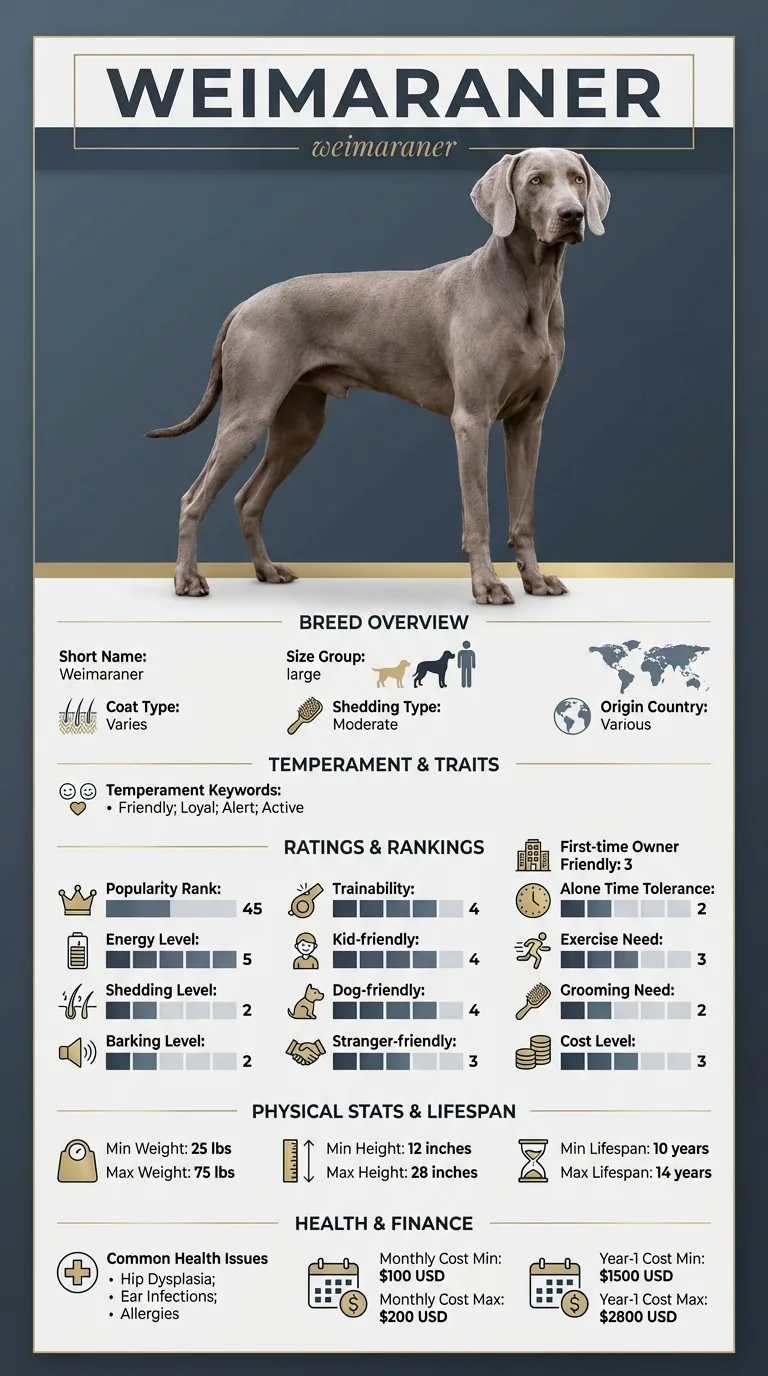
This affects owners of middle-aged to senior Weimaraners with an active history, and owners of working or field-trial dogs whose bodies take on more repetitive strain than a companion dog's.
This guide is not medical advice. If your dog shows pain, sudden behavior change, or worsening symptoms, consult a licensed veterinarian.
Some links may be affiliate links. We may earn a commission at no extra cost to you. We only suggest products we believe are helpful for dog owners.
We research and check what we publish, but we do not warrant that any figure, date, price, or statement is accurate, complete, or current, and we accept no liability for any loss, cost, injury, or other harm arising from the use of this site. Use it as one reference among several. You remain responsible for your own decisions and for your dog's care - confirm anything that matters with a licensed veterinarian or another qualified professional before you act on it. Full disclaimer.
General back problems in a Weimaraner usually mean cumulative mechanical wear on the spine's joints and supporting muscles rather than an inherited structural defect. Years of high-impact running, jumping, and hard turns are the main contributing factor in this athletic breed.
Some degree of back stiffness is common in Weimaraners that have led genuinely active lives into middle and senior age, though it is not considered one of the breed's hallmark documented health issues the way hip dysplasia or bloat are.
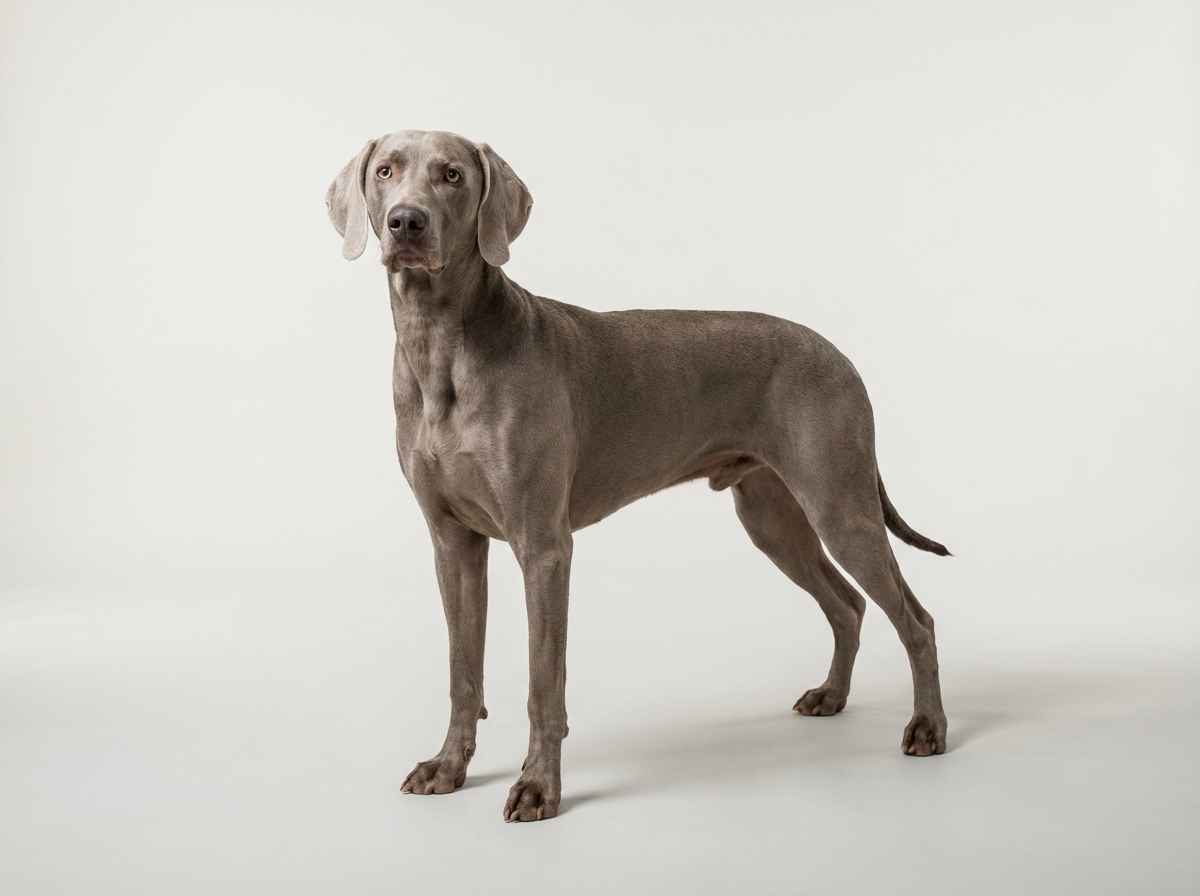
Weimaraners are proportionate, long-legged sporting dogs with a high exercise need and a temperament that pushes through discomfort rather than self-limiting. That drive means the spine absorbs years of hard use that a lower-energy or more cautious dog's spine would not.
Repeated high-impact activity without adequate warm-up, frequent vehicle jumping, and carrying excess weight all add mechanical strain over time. A sudden increase in activity intensity after a period of rest is a common trigger for a flare-up of existing wear.
See your vet if stiffness is persistent, if your dog's stride shortens or posture changes, or if reluctance to jump or move becomes a consistent pattern rather than an occasional off day. Any sudden, severe back pain, weakness in the hind legs, or dragging of the feet needs urgent evaluation the same day.
See all Weimaraner health problems, which breeds are prone to back problems, or the full Weimaraner breed guide for temperament, exercise needs and ownership costs.
Chronic wear develops over years, so improvement from activity changes is also gradual, typically showing some benefit within four to eight weeks of consistent modification.
Success is a dog that moves comfortably through daily life with occasional, manageable stiffness rather than progressive, worsening discomfort. It does not mean the spine returns to a younger dog's baseline.
Weimaraners are a proportionate, long-legged sporting breed, not a short-legged, long-backed one, so the classic disc problems associated with breeds like Dachshunds don't apply here the same way. What does apply is ordinary mechanical wear: years of running, jumping, and hard stops place repeated stress through the spine's joints and supporting muscles, and that stress accumulates.
Over time this can show up as generalized back stiffness, a stretched or arched posture at rest, reluctance to jump, or a shortened stride that looks more like caution than pain. It's often gradual enough that owners describe it as their dog 'slowing down' rather than something specifically wrong with the back.
This kind of wear-based back trouble is different from an acute disc problem, which tends to appear suddenly with more obvious pain or weakness. Chronic wear is manageable through activity modification and conditioning, while a sudden, severe change needs urgent evaluation rather than a wait-and-see approach.
None of these undo years of wear, but they slow how quickly it progresses and keep a dog more comfortable through middle and senior age.

Tomas ran his Weimaraner, Copper, in field trials for years, and by age nine Copper had developed a noticeably stiffer gait after car rides and a reluctance to jump onto the tailgate he used to leap into without hesitation. A vet exam found generalized spinal wear consistent with years of hard running, with no sign of an acute disc problem. Tomas added a ramp for the truck, swapped two of Copper's five weekly runs for pool sessions, and started a short warm-up walk before any intense activity. Within about six weeks, Copper's morning stiffness had noticeably eased.
Key takeaway: Copper's back wear wasn't a sudden injury; it was the accumulated cost of a genuinely active working life. Adjusting activity type rather than stopping activity altogether kept him comfortable and still moving.
Not the way short-legged, long-backed breeds are. Weimaraners have a proportionate build, so back issues here are more often about cumulative wear from an active lifestyle than an inherited body-shape risk.
A stiffer gait after resting, reluctance to jump, a shorter stride, or a posture that looks slightly hunched or arched are common early signs, usually developing gradually rather than overnight.
Chronic wear builds slowly over months or years and tends to fluctuate with activity. A disc injury typically appears suddenly, often with more obvious pain, weakness, or reluctance to move at all.
Not entirely, since some wear is a natural result of a physically demanding lifestyle, but warming up before activity, managing weight, and avoiding repetitive high-impact jumping meaningfully slow the process.
Generally yes, but the type matters. Steady, moderate activity and swimming tend to be easier on the spine than repeated hard sprints, sudden stops, and jumping.
Costs range from modest, ongoing costs for weight management and activity adjustments to more significant expenses if imaging or a rehabilitation program becomes necessary.
Yes, even mild, gradual stiffness is worth a vet visit to rule out an underlying cause and to get guidance on activity modification before it progresses further.
Cumulative mechanical wear from years of running, jumping, and hard stops, not an inherited body-shape issue.
A stiffer gait after rest or reluctance to jump, often appearing gradually rather than suddenly.
Shift some high-impact activity toward steady walking or swimming, and use a ramp for vehicles to reduce repetitive jumping strain.
Yes, extra weight adds direct load through the spine, making lean body condition one of the most controllable factors.
Any persistent or worsening stiffness deserves an exam, and sudden severe pain or weakness needs urgent evaluation.
A one-page prep sheet for this condition: the signs, the questions to ask, what to get priced. Unlocks here.
You get: Vet visit prep sheet
No spam. One-click unsubscribe. See our privacy policy.
Preview page 1 before you decide.