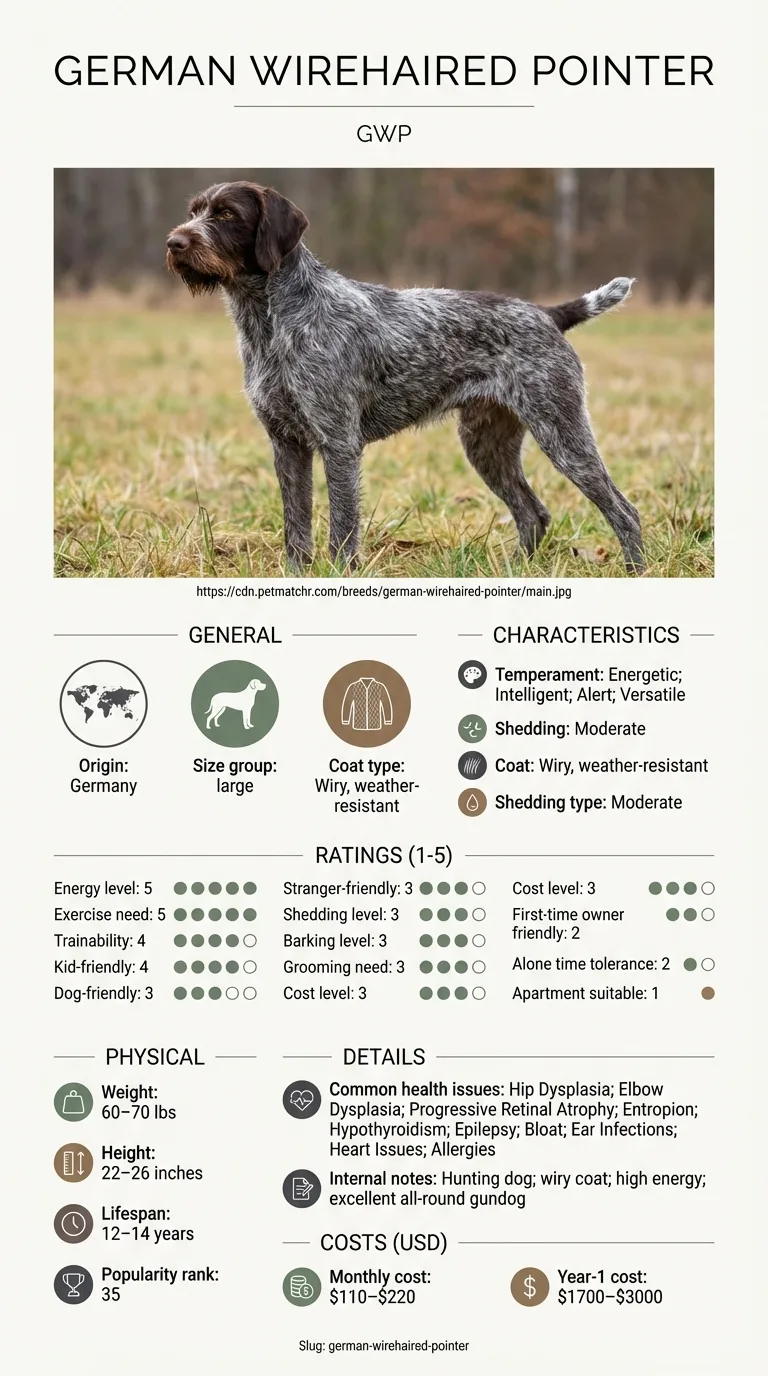
German Wirehaired Pointer Ventricular Arrhythmias - What You Need to Know
Ventricular arrhythmias can be a serious health concern for German Wirehaired Pointers. These irregular heartbeats may lead to fainting or even more severe complications. (German Wirehaired Pointer ventricular arrhythmias)

What you can try
- Establish a calm environment by minimizing loud noises and sudden changes. This helps reduce stress for your German Wirehaired Pointer.
- Maintain a consistent exercise routine. Regular walks and playtime can improve overall heart health and help manage anxiety.
- Monitor your dog's diet. A balanced, high-quality diet supports heart health and can reduce the risk of arrhythmias.
Mistakes that make this worse
Avoid these common mistakes to help your German Wirehaired Pointer manage ventricular arrhythmias more effectively. Here are some behaviors that can unintentionally escalate the problem.
- Ignoring symptoms: Some owners might dismiss irregular heartbeats as normal. It's crucial to consult your vet as soon as you notice any symptoms.
- Overexerting during exercise: While exercise is important, pushing your dog too hard can worsen their condition. Opt for moderate, controlled activities instead.
- Neglecting diet: Feeding unhealthy treats or low-quality food can impact overall heart health. Focus on a balanced diet rich in nutrients.
- Failing to follow vet recommendations: Skipping prescribed medications or check-ups can lead to serious complications. Always stick to your vet's guidance.
- Stressful environments: Allowing your dog to experience high-stress situations can exacerbate their arrhythmias. Create a calm, stable environment for them.
- Inconsistent training: Using harsh training methods can increase anxiety and worsen the issue. Employ positive reinforcement techniques to encourage good behavior.
- Avoiding preventive care: Some owners may overlook regular health check-ups. Regular vet visits are key to monitoring heart health.
When German Wirehaired Pointer Ventricular Arrhythmias Are an Emergency
It's crucial to recognize when your German Wirehaired Pointer's ventricular arrhythmias are serious. Certain signs indicate an emergency situation that requires immediate veterinary attention. If your dog experiences fainting, severe lethargy, difficulty breathing, or a noticeably rapid or slow heart rate, call your vet right away. These symptoms could suggest a life-threatening condition.

Frequently asked questions
Why does my German Wirehaired Pointer have ventricular arrhythmias?
Ventricular arrhythmias in German Wirehaired Pointers can occur due to several factors, including genetic predisposition and underlying health issues like heart disease. Stress, anxiety, or even electrolyte imbalances can also contribute. Regular vet check-ups can help monitor your dog's heart health. This answer relates to German Wirehaired Pointer ventricular arrhythmias.
How can I help my German Wirehaired Pointer with ventricular arrhythmias?
To support your German Wirehaired Pointer with ventricular arrhythmias, ensure they have a balanced diet and regular exercise to maintain a healthy weight. Reducing stress through a consistent routine and providing a calm environment can also help. Always consult a veterinarian for tailored advice and treatment options.
What are the signs of ventricular arrhythmias in my German Wirehaired Pointer?
Signs of ventricular arrhythmias may include lethargy, weakness, rapid breathing, or fainting spells. If you notice any of these symptoms, it's crucial to seek veterinary care immediately. Early detection can lead to better outcomes.
Is training effective for managing ventricular arrhythmias in German Wirehaired Pointers?
While training can't directly fix ventricular arrhythmias, it can help reduce anxiety and stress, which may alleviate some symptoms. Positive reinforcement training methods can create a calm environment, helping your dog feel more secure. Always pair training with veterinary advice.
Are there specific exercises that can help my German Wirehaired Pointer with this condition?
Moderate, low-stress exercises like walking or gentle play can benefit a German Wirehaired Pointer with ventricular arrhythmias. Avoid overexertion, as it can worsen their condition. Always consult your vet for personalized exercise recommendations.
What are the symptoms of ventricular arrhythmias in German Wirehaired Pointers?
Symptoms of ventricular arrhythmias in German Wirehaired Pointers can include lethargy, weakness, and fainting. If your dog shows any signs of distress, it’s important to consult a vet as soon as possible.
Can diet affect ventricular arrhythmias in my German Wirehaired Pointer?
Yes, diet can play a role in heart health. Feeding your German Wirehaired Pointer a balanced diet rich in omega-3 fatty acids may help support heart function. Always check with your vet before making dietary changes.
How do I know if my German Wirehaired Pointer requires urgent care for heart issues?
If your German Wirehaired Pointer experiences severe lethargy, difficulty breathing, or collapses, seek emergency veterinary care immediately. Early intervention can be crucial for heart conditions.
Are older German Wirehaired Pointers more prone to ventricular arrhythmias?
Older German Wirehaired Pointers may be at a higher risk for ventricular arrhythmias as heart conditions can develop with age. Regular vet check-ups are important to monitor heart health in senior dogs.
What is the long-term outlook for a German Wirehaired Pointer with ventricular arrhythmias?
The long-term outlook for a German Wirehaired Pointer with ventricular arrhythmias depends on the underlying cause and severity. With proper management and veterinary care, many dogs can lead happy lives, but ongoing monitoring is essential.
Related guides