DogBreedCompass
← Back to breed profile

German Wirehaired Pointer Hip Dysplasia: What You Need to Know

German Wirehaired Pointer hip dysplasia is a serious condition that affects mobility and quality of life.

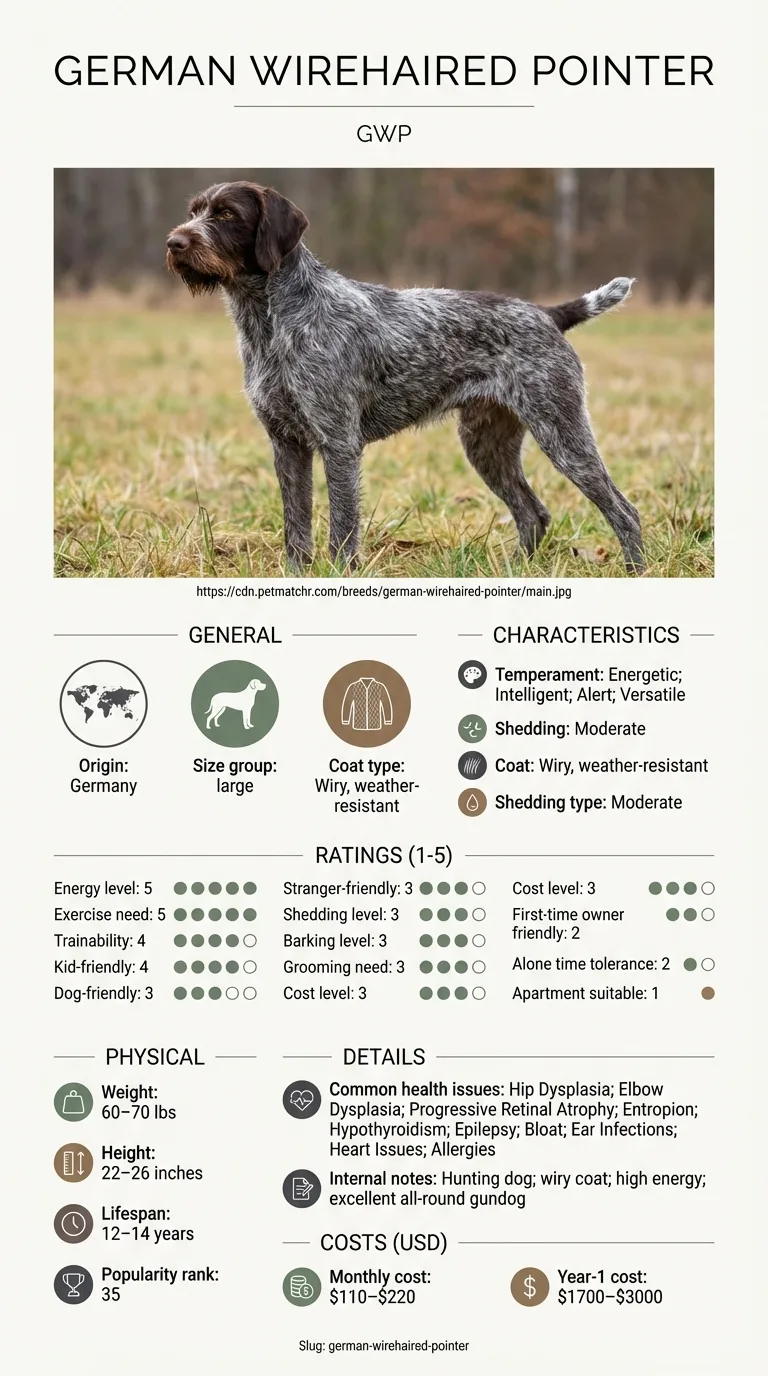
German Wirehaired Pointer Hip Dysplasia: What You Need to Know infographic

Owners of German Wirehaired Pointers, particularly those who enjoy active lifestyles or have older dogs, often face this challenge. Additionally, first-time dog owners may feel overwhelmed when dealing with this condition.

Important reminder

This guide is not medical advice. If your dog shows pain, sudden behavior change, or worsening symptoms, consult a licensed veterinarian.

Some links may be affiliate links. We may earn a commission at no extra cost to you. We only suggest products we believe are helpful for dog owners.

What this problem looks like

German Wirehaired Pointer hip dysplasia is a common issue that affects their mobility and overall quality of life. This condition occurs when the hip joint doesn't fit snugly into the hip socket, leading to arthritis and discomfort. Owners may notice their dog limping, struggling to stand up, or avoiding physical activity, which can be distressing for both the dog and the owner.

Common triggers

  • Genetics, since hip dysplasia can be inherited from the parents.
  • Obesity, which puts extra stress on the joints.
  • Rapid growth in puppies, particularly in large breeds like the German Wirehaired Pointer.
  • Excessive exercise or high-impact activities during early development.

Hip dysplasia is quite common in German Wirehaired Pointers, with studies showing that around 20-30% may be affected to some degree. Regular vet check-ups and awareness of the signs can help manage this issue early on.

Why this happens

Breed factors

German Wirehaired Pointers (GWPs) are a larger breed, which makes them more prone to hip dysplasia. Their genetic makeup may lead to malformed hip joints, causing arthritis and mobility issues. Being a hunting dog, their active lifestyle can exacerbate these problems if not managed properly.

Environment factors

Environmental factors also play a significant role in the development of hip dysplasia. Excessive weight, lack of proper exercise, and inadequate nutrition can contribute to joint problems. Additionally, poor training methods or over-exertion during young growth phases can lead to an increased risk of hip dysplasia.

What you can try

At-home strategies

  • Maintain a healthy weight for your German Wirehaired Pointer. Regularly monitor their food intake and adjust portions as needed to prevent obesity.
  • Incorporate low-impact exercises into their routine, such as swimming or short walks, to keep them active without stressing their joints.
  • Provide a comfortable sleeping area with supportive bedding to alleviate pressure on their hips, especially as they age.
  • Consider joint supplements or glucosamine, but consult your vet before starting any new supplement regimen.
  • Engage in gentle stretching exercises to improve flexibility and joint health.

When to consider a trainer

If your GWP shows signs of discomfort or has difficulty with basic commands due to mobility issues, it may be time to consult a dog trainer. A professional can provide tailored strategies to accommodate their needs while encouraging movement and training.

When to talk to your vet

Talk to your vet if you notice any signs of pain, limping, or decreased mobility in your German Wirehaired Pointer. Early intervention can help manage hip dysplasia effectively and may include medications, physical therapy, or even surgery in severe cases.

Realistic expectations

Managing German Wirehaired Pointer hip dysplasia is a long-term commitment. You may notice improvements in a few weeks to months with consistent care, but ongoing management is crucial.

Success means your dog experiences less pain and improved mobility, allowing them to engage in activities they enjoy. Regular vet check-ups and adjustments to their routine will contribute to their overall well-being.

Mistakes that make this worse

Avoid these common mistakes to help your German Wirehaired Pointer with hip dysplasia.

  • Ignoring Early Signs: Many owners overlook early signs of hip dysplasia, like limping or reluctance to exercise. Address these signs quickly to prevent further issues.
  • Overexercising: While exercise is important, too much can worsen joint pain. Opt for shorter, more frequent walks instead of long runs.
  • Skipping Vet Visits: Failing to take your dog to the vet for regular check-ups can delay diagnosis and treatment. Schedule annual visits to monitor their health.
  • Using Hard Surfaces: Allowing your dog to jump on hard surfaces can strain their hips. Provide soft bedding and avoid stairs when possible.
  • Neglecting Weight Management: Overweight dogs put extra pressure on their joints. Keep your German Wirehaired Pointer at a healthy weight with a balanced diet and proper portion control.
  • Delaying Treatment: Some owners wait too long to start treatment, thinking it will resolve on its own. Discuss treatment options with your vet as soon as you notice symptoms.
  • Inconsistent Training: Not reinforcing commands can lead to confusion and stress. Use positive reinforcement consistently to help your dog feel secure.

When German Wirehaired Pointer Hip Dysplasia is an Emergency

Recognizing when your German Wirehaired Pointer hip dysplasia is an emergency is crucial for their health. Some signs clearly indicate that immediate veterinary attention is necessary. If your dog displays severe limping, is unable to get up or move, or shows signs of extreme pain when touched, you should call your vet right away. Other red flags include swelling in the hip area, difficulty breathing, or sudden behavioral changes, like aggression or hiding.

On the other hand, there are less severe cases that can be monitored at home. If your GWP is showing mild limping or occasional stiffness after exercise, it may be a sign of hip dysplasia, but not an emergency. In these situations, you can create a careful management plan that includes controlled exercise, weight management, and joint supplements. Keeping a close eye on their behavior and comfort level is key.

In summary, trust your instincts. If you ever feel uncertain about your dog's condition, don't hesitate to reach out to your vet. It's always better to be safe than sorry, especially when it comes to your furry friend’s health.

German Wirehaired Pointer Hip Dysplasia: What You Need to Know - When German Wirehaired Pointer Hip Dysplasia is an Emergency

Finding Balance with Max

Clara, a busy nurse in Chicago, adopted Max, a spirited German Wirehaired Pointer. Soon after bringing him home, she noticed he was limping and hesitant to jump. After consulting her vet, she learned Max had hip dysplasia, a common issue in his breed. With a tailored plan that included weight management, joint supplements, and low-impact exercises, Max began to improve. Clara also enrolled in a training program to help Max learn commands that would keep him from overexerting himself. With patience, Clara saw her energetic pup regain his playful spirit.

Key takeaway: Managing German Wirehaired Pointer hip dysplasia requires a proactive approach. Regular vet visits, a balanced diet, and appropriate exercise help ensure a happy, active life.

Frequently asked questions

Why does my German Wirehaired Pointer have hip dysplasia?

German Wirehaired Pointer hip dysplasia is often caused by a combination of genetics and environmental factors. Rapid growth, obesity, and lack of exercise can all contribute to the development of this condition. Regular check-ups with your vet can help monitor your dog's joint health.

How can I stop my German Wirehaired Pointer from developing hip dysplasia?

To reduce the risk of German Wirehaired Pointer hip dysplasia, focus on maintaining a healthy weight and providing balanced nutrition. Regular, low-impact exercise is crucial to strengthen muscles around the joints. Always consult your vet for personalized recommendations.

What are the signs of hip dysplasia in my German Wirehaired Pointer?

Signs of hip dysplasia in your German Wirehaired Pointer may include difficulty getting up, limping, and reluctance to exercise. You might also notice decreased activity levels or changes in behavior. If you observe these signs, consult your vet for an evaluation.

What treatments are available for German Wirehaired Pointer hip dysplasia?

Treatments for German Wirehaired Pointer hip dysplasia can include weight management, physical therapy, and medication for pain relief. In severe cases, surgical options may be necessary. Your vet can help you determine the best course of action based on your dog's needs.

Can training help with my German Wirehaired Pointer's hip dysplasia?

Training can help manage German Wirehaired Pointer hip dysplasia by promoting exercises that strengthen the muscles around the hips without putting too much strain on the joints. Focus on gentle, controlled activities that your dog enjoys. Always consult a professional trainer or vet for guidance.

What are the signs of hip dysplasia in my German Wirehaired Pointer?

Signs of hip dysplasia in a German Wirehaired Pointer may include difficulty getting up, reluctance to exercise, limping, or a noticeable decrease in activity levels. If you notice any of these symptoms, it's essential to consult your vet for an accurate diagnosis and treatment options.

Can hip dysplasia develop in older German Wirehaired Pointers?

Yes, hip dysplasia can develop or worsen in older German Wirehaired Pointers. Even if your dog appeared healthy earlier in life, age-related wear and tear can exacerbate hip joint issues, making regular vet check-ups crucial as they age.

What lifestyle changes can help manage my German Wirehaired Pointer's hip dysplasia?

Managing your German Wirehaired Pointer's hip dysplasia may involve weight management, low-impact exercises, and modified activities to reduce stress on their joints. Consider working with your vet to create a tailored exercise plan that suits your dog's needs.

How can I help my German Wirehaired Pointer with hip dysplasia during colder months?

During colder months, ensure your German Wirehaired Pointer stays warm and comfortable. Provide soft bedding, limit outdoor time in extreme cold, and consider using joint supplements that may help ease discomfort and maintain mobility.

Is surgery a recommended option for German Wirehaired Pointer hip dysplasia?

Surgery can be a viable option for German Wirehaired Pointers with severe hip dysplasia. Your vet will assess your dog's condition and discuss the best surgical options, such as total hip replacement or femoral head osteotomy, depending on your dog's age and overall health.

Quick answers

View more answers
Behavior

What are some quick tips for managing hip dysplasia in German Wirehaired Pointers?

To manage hip dysplasia, maintain a healthy weight, provide joint supplements, and ensure regular vet check-ups. Gentle exercise and physical therapy can also help.

Health

Is hip dysplasia common in German Wirehaired Pointers?

Yes, hip dysplasia is a common issue in German Wirehaired Pointers and can be influenced by genetics and lifestyle factors.

Costs

How much does it cost to treat hip dysplasia in my German Wirehaired Pointer?

Treatment costs for hip dysplasia can range from a few hundred to several thousand dollars, depending on the severity and type of treatment needed.

Training

Are there specific training methods for German Wirehaired Pointers with hip dysplasia?

Yes, focus on low-impact exercises and training methods that strengthen muscles without stressing the hips. Consult a vet or trainer for tailored advice.

Related DogBreedCompass guides

  • German Wirehaired Pointer cost breakdownLearn about the costs associated with owning a German Wirehaired Pointer, especially if your dog has health concerns.
  • German Wirehaired Pointer hip dysplasia trainingFind effective training strategies to help manage your German Wirehaired Pointer's hip dysplasia.
  • German Wirehaired Pointer behavior problemsDiscover common behavior problems that may arise in German Wirehaired Pointers and how to address them.
  • Understanding hip dysplasia in dogsUnderstand more about hip dysplasia in dogs and its implications for various breeds.
  • German Wirehaired Pointer separation anxiety guideExplore how separation anxiety can affect your German Wirehaired Pointer and find helpful resources.

Related guides