DogBreedCompass
← Back to breed profile

German Wirehaired Pointer Hip Dysplasia Prevalence

Hip dysplasia is a common concern among German Wirehaired Pointers, impacting their mobility and quality of life. (German Wirehaired Pointer hip dysplasia prevalence)

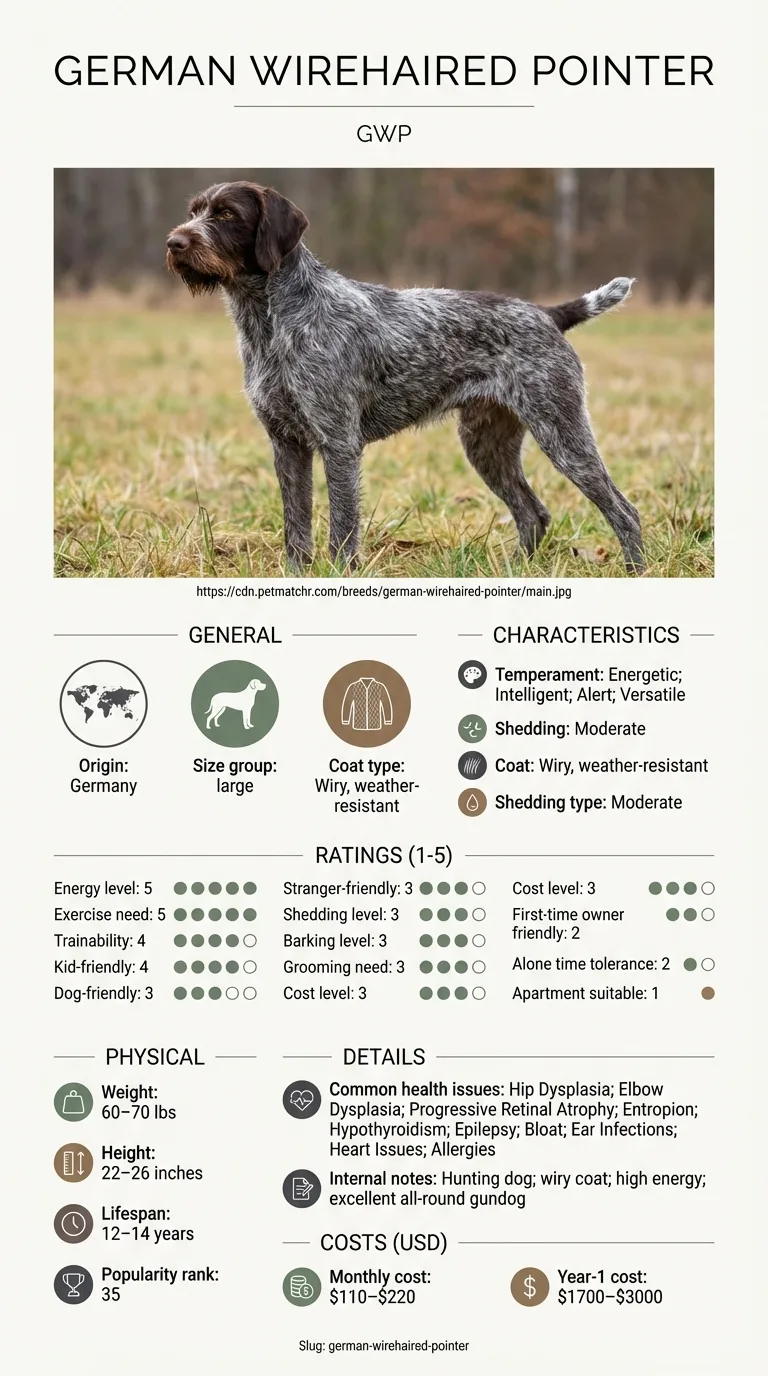
German Wirehaired Pointer Hip Dysplasia Prevalence infographic

Owners of German Wirehaired Pointers, especially those who are first-time dog parents, often face challenges in recognizing and managing this condition. If you're active with your GWP, knowing about hip dysplasia prevalence is vital for keeping them healthy and happy.

Important reminder

This guide is not medical advice. If your dog shows pain, sudden behavior change, or worsening symptoms, consult a licensed veterinarian.

Some links may be affiliate links. We may earn a commission at no extra cost to you. We only suggest products we believe are helpful for dog owners.

What this problem looks like

German Wirehaired Pointer hip dysplasia prevalence is a common concern among owners. This genetic condition can lead to discomfort and mobility issues, affecting daily activities like running and playing. Symptoms may include limping, difficulty rising, and reluctance to exercise.

Common triggers

  • Genetic predisposition from breeding
  • Excessive weight gain
  • Inadequate exercise or physical activity
  • Rapid growth during puppyhood

Hip dysplasia is notably prevalent in German Wirehaired Pointers, with studies suggesting that up to 20% of this breed may be affected. Regular screening and responsible breeding practices are essential in managing this issue.

Why this happens

Breed factors

Hip dysplasia is more common in large breeds like the German Wirehaired Pointer due to genetics. If their parents had hip dysplasia, there's a higher chance that the puppies will too. This condition can be exacerbated by rapid growth during puppyhood.

Environment factors

Environmental factors play a significant role in hip dysplasia prevalence. Overweight dogs and those who experience excessive jumping or rough play can put additional strain on their hips. Additionally, lack of exercise can lead to weaker muscles that support the hip joint.

What you can try

At-home strategies

  • Maintain a healthy weight for your German Wirehaired Pointer. Use a scale and adjust their food intake accordingly to avoid obesity.
  • Provide a balanced diet rich in omega fatty acids to promote joint health. Consider supplements like glucosamine, but consult your vet first.
  • Incorporate low-impact exercises such as swimming or walking on soft surfaces to strengthen their muscles without stressing their joints.

When to consider a trainer

If your dog shows signs of discomfort during exercise or struggles with basic commands, it may be time to consult a trainer. A professional can help create a tailored fitness plan that considers their hip health.

When to talk to your vet

If you notice limping, difficulty standing, or reluctance to play, consult your vet immediately. They can assess your dog's hips and recommend treatments or preventive measures.

Realistic expectations

Expect to see improvements in your German Wirehaired Pointer's hip health over 3 to 6 months with consistent training and care.

Success means your dog shows increased mobility, reduced discomfort, and an overall better quality of life.

Mistakes that make this worse – German Wirehaired Pointer hip dysplasia prevalence

Certain behaviors can unintentionally worsen German Wirehaired Pointer hip dysplasia prevalence. Here are some common mistakes to avoid.

  • Ignoring weight management: Allowing your GWP to become overweight can increase stress on their joints. Instead, provide a balanced diet and regular exercise to maintain a healthy weight.
  • Skipping regular vet check-ups: Missing routine veterinary visits can delay the detection of hip dysplasia. Schedule check-ups to catch potential issues early and tailor a care plan.
  • Neglecting low-impact exercise: High-impact activities like running or jumping can exacerbate hip issues. Focus on low-impact exercises, such as walking or swimming, to keep your dog active without straining their hips.
  • Overlooking early signs of discomfort: Dismissing signs of pain or difficulty in movement can lead to worsening conditions. Pay attention to your GWP's behavior, and consult your vet if you notice any changes.
  • Using inappropriate training methods: Harsh training techniques can create stress and anxiety, which may affect your dog's physical health. Opt for positive reinforcement methods to encourage good behavior without adding stress.
  • Delaying treatment options: Waiting too long to seek treatment can lead to increased pain and discomfort for your dog. If you suspect hip dysplasia, consult your vet for appropriate interventions as soon as possible.

When German Wirehaired Pointer Hip Dysplasia is an Emergency

Red-flag signs that mean you should call your vet immediately include sudden lameness, severe difficulty in getting up or lying down, or noticeable pain when you touch their hips. If your dog is unable to bear weight on a leg or shows signs of distress like whimpering or panting excessively, don’t hesitate to seek medical attention.

On the other hand, if your German Wirehaired Pointer displays mild limping or stiffness after activity but is otherwise happy and eating well, you can monitor them at home. Keeping an eye on their activity levels and pain responses can help you determine if their condition worsens. Regular check-ups with your vet can also assist in managing their hip health effectively.

Always consult your vet if you're unsure. They can provide tailored advice based on your dog's specific situation and recommend the best course of action.

German Wirehaired Pointer Hip Dysplasia Prevalence - When German Wirehaired Pointer Hip Dysplasia is an Emergency

Mark's Journey with Bella's Hip Dysplasia

Mark, a first-time dog owner, adopted Bella, a German Wirehaired Pointer, who was diagnosed with hip dysplasia at a young age. Initially, Mark was overwhelmed, unsure of how to manage Bella's condition. After consulting with a vet, he learned about specialized exercises and weight management to ease Bella's discomfort. Over months, Mark committed to daily walks and targeted exercises. He also adjusted Bella's diet to keep her weight in check. As a result, Bella became more active and playful, allowing them to enjoy their outdoor adventures together again.

Key takeaway: With proper guidance and dedication, managing hip dysplasia in German Wirehaired Pointers is possible, leading to a happier life for both dog and owner.

Frequently asked questions

Why does my German Wirehaired Pointer have hip dysplasia prevalence?

German Wirehaired Pointers are prone to hip dysplasia due to genetics and their large size. If your dog is experiencing discomfort or mobility issues, consult a vet for a proper evaluation. Early detection can help manage the condition effectively.

How can I stop German Wirehaired Pointer hip dysplasia prevalence?

To mitigate hip dysplasia prevalence in German Wirehaired Pointers, focus on maintaining a healthy weight and providing balanced nutrition. Regular exercise that is low-impact, like swimming, can also support joint health. Consult your vet for specific recommendations tailored to your dog.

What are the signs of hip dysplasia in my German Wirehaired Pointer?

Signs of hip dysplasia include difficulty rising, reluctance to jump, and limping on one or both hind legs. You may also notice your dog avoiding physical activity or showing signs of pain when touched near the hips. If you see these symptoms, schedule a vet visit.

Can training help with German Wirehaired Pointer hip dysplasia prevalence?

While training cannot eliminate hip dysplasia prevalence, it can help manage your dog's behavior and stress levels. Teaching gentle commands can encourage them to move in ways that protect their joints. Always prioritize gentle, positive reinforcement techniques.

What treatments are available for hip dysplasia in German Wirehaired Pointers?

Common treatments for hip dysplasia include weight management, anti-inflammatory medications, and physical therapy. In severe cases, surgical options like hip replacement may be necessary. Discuss all available options with your veterinarian to find the best approach.

What causes hip dysplasia in German Wirehaired Pointers?

Hip dysplasia in German Wirehaired Pointers is primarily genetic, influenced by factors like growth rate, weight, and nutrition. Poor breeding practices can increase the likelihood of this condition. Maintaining a healthy diet and weight during their growth phase can help reduce the risk.

How can I tell if my German Wirehaired Pointer has hip dysplasia?

Common signs of hip dysplasia include difficulty getting up, reluctance to jump or climb stairs, and limping or favoring one leg. If you notice these symptoms, it's essential to consult a veterinarian for a proper diagnosis and treatment plan.

Is hip dysplasia more common in older German Wirehaired Pointers?

Yes, hip dysplasia can become more apparent as German Wirehaired Pointers age. While some dogs show symptoms early in life, others may develop issues later. Regular check-ups with a vet can help monitor joint health as they grow older.

What treatments are available for German Wirehaired Pointer hip dysplasia?

Treatment options for hip dysplasia can include weight management, physical therapy, medications, and, in severe cases, surgery. Your vet can recommend the best course of action based on your dog's specific condition and needs.

Can hip dysplasia be prevented in German Wirehaired Pointers?

While you can't completely prevent hip dysplasia, you can reduce its prevalence by selecting a responsible breeder who screens for hip issues. Additionally, maintaining a healthy lifestyle, including regular exercise and a balanced diet, is crucial to supporting joint health.

Quick answers

View more answers
Behavior

What are some quick tips for managing German Wirehaired Pointer hip dysplasia prevalence?

To manage hip dysplasia, provide a balanced diet and maintain a healthy weight. Regular low-impact exercise can help keep your dog active without stressing their joints.

Health

How can I improve my German Wirehaired Pointer's joint health?

Incorporate joint supplements, like glucosamine, into your dog's diet after consulting with your vet. Regular vet checkups can also help monitor joint health over time.

Health

Are German Wirehaired Pointers prone to other health issues?

Yes, they are also prone to conditions like elbow dysplasia and progressive retinal atrophy. Regular health screenings are essential to catch any issues early.

Costs

What is the average cost of treatment for hip dysplasia in German Wirehaired Pointers?

Treatment costs can vary widely, typically ranging from $1,000 to $5,000 depending on the severity and type of treatment needed. It's important to discuss financial options with your vet.

Related DogBreedCompass guides

  • German Wirehaired Pointer health problems guideLearn more about the German Wirehaired Pointer's common health issues, including hip dysplasia.
  • German Wirehaired Pointer hip dysplasia trainingExplore training techniques to help manage hip dysplasia in German Wirehaired Pointers.
  • German Wirehaired Pointer separation anxiety guideFind out how to effectively deal with separation anxiety in your German Wirehaired Pointer.
  • German Wirehaired Pointer cost breakdownUnderstand the costs associated with owning a German Wirehaired Pointer, including potential health expenses.
  • German Wirehaired Pointer behavior problemsLearn how to manage behavior issues related to hip dysplasia or other health problems.

Related guides