Behavior
What are quick tips for German Wirehaired Pointer anxiety?
Provide daily exercise, engage in mental activities, and create a calming environment at home to help manage anxiety.

Quick answer
What are quick tips for German Wirehaired Pointer anxiety?
Provide daily exercise, engage in mental activities, and create a calming environment at home to help manage anxiety.
German Wirehaired Pointer anxiety can be a challenging issue for owners.
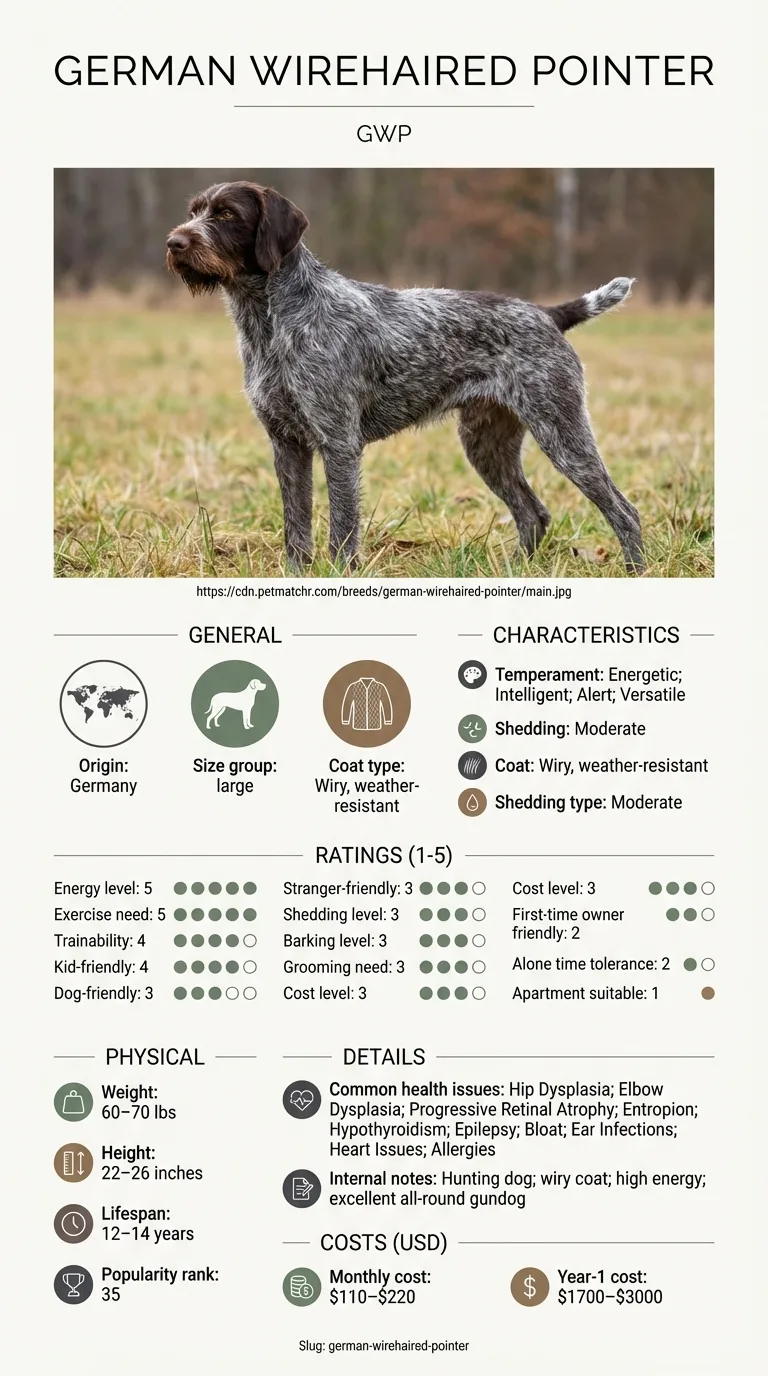
This guide is for German Wirehaired Pointer owners who are struggling with their dog's anxiety and want practical solutions.
German Wirehaired Pointer anxiety can manifest in various ways that affect daily life. Owners may notice their dog becoming restless, barking excessively, or showing signs of distress when left alone. This anxiety can lead to destructive behaviors and a general sense of unease in familiar settings.
If your German Wirehaired Pointer anxiety persists despite home strategies, consider professional training. A qualified trainer can provide tailored techniques and support to help manage your dog's anxiety effectively.
If you notice severe anxiety symptoms or if your dog's behavior worsens, consult a vet or a behaviorist. They can rule out medical issues and suggest appropriate treatment options.
There are various tools and products available to help manage German Wirehaired Pointer anxiety. From calming aids to training resources, these can significantly improve your dog's well-being.
Managing German Wirehaired Pointer anxiety requires thoughtful lifestyle adjustments. Start by creating a consistent daily schedule for feeding, walks, and playtime. This predictability helps your dog feel secure and reduces anxiety triggers.
Exercise is crucial for this energetic breed. Aim for at least 60-90 minutes of physical activity daily. Incorporate varied activities like hiking, swimming, or fetching to keep their interest high.
Also, consider breaking up exercise into smaller sessions throughout the day.
It's essential to gradually increase alone-time windows. Start with short durations and slowly extend them as your dog becomes more comfortable being alone. This helps your German Wirehaired Pointer develop independence without feeling abandoned.
Additionally, establish a calming routine before you leave the house. This may include a special toy or treat that your dog associates with happy experiences when alone. You can also create a cozy space with their bed or blanket to provide comfort when you are away.
Finally, stay attentive to household routines. Maintain a calm environment by avoiding loud noises or sudden changes in the home. Encourage quiet time by setting aside moments for relaxation.
These adjustments can make a significant difference in alleviating anxiety for your German Wirehaired Pointer.
Tracking progress with German Wirehaired Pointer anxiety can feel challenging, but small 'micro-wins' can signal improvement. For instance, if your dog starts to settle more quickly when left alone or shows less trembling during thunderstorms, these are positive signs. You might also notice reduced barking or a calmer demeanor during stressful situations, which can indicate that your training efforts are paying off.
However, setbacks are common. If your dog suddenly reverts to anxious behaviors after a period of improvement, don’t worry. This can happen for various reasons, such as changes in routine or environment.
Recognizing triggers can help you adjust your approach. If your GWP has a tough day, it doesn’t mean all progress is lost.
To gauge whether your anxiety management plan is effective, keep a journal of your dog's behaviors. Note any positive changes and setbacks. If you see consistent improvement over a few weeks, that's a good indication the plan is working.
If anxiety persists or worsens, it might be time to escalate your efforts, possibly consulting a veterinarian or a professional trainer for additional strategies.

Meet Sarah, a busy nurse who adopted Max, a German Wirehaired Pointer. Max was full of energy but struggled with separation anxiety, barking and pacing whenever Sarah left for her shifts. At first, she tried to soothe him with toys and extra exercise, but nothing seemed to work. After months of stress, Sarah decided to reach out to a dog trainer who specialized in anxiety issues. Together, they developed a structured routine that included crate training and gradual desensitization to her departures. With patience and consistency, Max learned to feel more secure when alone. Now, he relaxes on his bed while Sarah is gone, and their bond has grown even stronger.
Key takeaway: With the right training and support, handling German Wirehaired Pointer anxiety is possible. Consistency, routine, and professional guidance can make a significant difference.
German Wirehaired Pointer anxiety can stem from various factors, including lack of exercise, insufficient socialization, or changes in their environment. These dogs are energetic and intelligent, so boredom or isolation can contribute significantly to their anxiety levels. Identifying the root cause is key to helping your dog feel more secure.
To stop German Wirehaired Pointer anxiety, start by providing regular exercise and mental stimulation. Establishing a consistent routine can also help your dog feel more secure. Gradual desensitization to stressors, along with positive reinforcement training, can make a big difference.
Signs of anxiety in your German Wirehaired Pointer may include excessive barking, destructive behavior, or clinginess. You might also notice pacing, restlessness, or changes in eating habits. Observing these behaviors can help you understand when your dog is feeling anxious.
Yes, training is an effective way to manage German Wirehaired Pointer anxiety. Positive reinforcement techniques can teach your dog coping strategies and build their confidence. Engaging in training sessions regularly can also strengthen your bond and help alleviate anxiety.
If your German Wirehaired Pointer's anxiety is severe or doesn't improve with basic interventions, it's time to seek professional help. A veterinarian or a certified dog trainer can provide tailored advice and may suggest behavioral therapy or medication. Don't hesitate to reach out for support.
Yes, older German Wirehaired Pointers can develop anxiety, often due to changes in their environment or health issues. It's important to monitor their behavior and consult a vet if you notice significant changes.
To help your German Wirehaired Pointer with travel anxiety, create a comfortable space in the car with their favorite blanket or toy. Gradually acclimate them to car rides and consider using calming products like pheromones or anxiety wraps.
If one of your German Wirehaired Pointers has anxiety, it's essential to give them extra attention and a safe space away from the others when needed. Consistent training and positive reinforcement can help manage their stress levels.
Training your German Wirehaired Pointer to cope with anxiety involves consistent behavior modification techniques. Techniques include desensitization to triggers, creating a safe space, and using positive reinforcement to reward calm behavior.
Provide daily exercise, engage in mental activities, and create a calming environment at home to help manage anxiety.
Use calming techniques like gentle petting, a soothing voice, and safe spaces where your dog can retreat when feeling stressed.
Yes, chronic anxiety can lead to physical health issues, including digestive problems and a weakened immune system, so addressing it early is essential.
Positive reinforcement training, clicker training, and gradual desensitization are effective methods for reducing anxiety in your dog.
Anxiety and pain look alike from the outside. Get the prep sheet for this breed's separation-anxiety page and take it to the vet.
You get: Vet visit prep sheet
No spam. One-click unsubscribe. See our privacy policy.
Preview page 1 before you decide.
This guide is not medical advice. If your dog shows pain, sudden behavior change, or worsening symptoms, consult a licensed veterinarian.
Some links may be affiliate links. We may earn a commission at no extra cost to you. We only suggest products we believe are helpful for dog owners.
We research and check what we publish, but we do not warrant that any figure, date, price, or statement is accurate, complete, or current, and we accept no liability for any loss, cost, injury, or other harm arising from the use of this site. Use it as one reference among several. You remain responsible for your own decisions and for your dog's care - confirm anything that matters with a licensed veterinarian or another qualified professional before you act on it. Full disclaimer.
Not sure which breed is right for you? Take our 2-minute quiz to find out.
Take the quiz