Health
What's the most common trigger for pancreatitis?
A high-fat meal, such as fatty table scraps or rich human food.

Quick answer
What's the most common trigger for pancreatitis?
A high-fat meal, such as fatty table scraps or rich human food.
A dog that suddenly hunches its back, refuses food, and vomits repeatedly after getting into something fatty at a barbecue is describing a textbook pancreatitis flare.
This tends to catch owners off guard around holidays and cookouts, when a well-meaning scrap of fatty meat or a plate left within reach turns into an emergency vet visit within hours.
This guide is not medical advice. If your dog shows pain, sudden behavior change, or worsening symptoms, consult a licensed veterinarian.
Some links may be affiliate links. We may earn a commission at no extra cost to you. We only suggest products we believe are helpful for dog owners.
Check this first
Repeated vomiting, a hunched or 'praying' posture (front legs down, rear end up), a painful and distended abdomen, lethargy, and refusal to eat together indicate an acute pancreatitis flare significant enough to need same-day veterinary evaluation, often including IV fluids and pain management.
Severe cases can lead to dehydration and systemic complications quickly, so this combination of signs shouldn't be managed at home with a wait-and-see approach, even if the dog seems to have brief moments of feeling better in between vomiting episodes.
A dog with a known history of pancreatitis should have a clear plan with their vet for what to do at the very first sign of a repeat flare, since recognizing the pattern early tends to lead to a shorter, less severe episode overall.
If any of these apply, call your vet or an emergency clinic now. The rest of this page is for the cases that are not an emergency.
Pancreatitis is inflammation of the pancreas, the organ responsible for producing digestive enzymes and insulin. In French Bulldogs, it most commonly presents as an acute flare triggered by a high-fat meal, causing vomiting, abdominal pain, and lethargy, though some dogs experience recurrent or chronic low-grade inflammation requiring longer-term dietary management.
Pancreatitis is a commonly diagnosed acute digestive condition across dog breeds generally, and French Bulldogs, given their documented risk of both obesity and general GI sensitivity, are represented at a meaningful rate in veterinary emergency case data for this condition.
French Bulldogs' general predisposition toward weight gain and their broader documented GI sensitivity contribute to a background risk for pancreatic inflammation, though pancreatitis itself isn't uniquely tied to the breed's airway or skeletal anatomy the way many other conditions on this site are.
Diet is the single largest environmental factor: a high-fat meal, whether from table scraps, spoiled food, or a sudden diet change, is the most consistently identified trigger for an acute flare, making feeding choices the most directly controllable risk factor.
Seek prompt veterinary care for repeated vomiting, a hunched or painful posture, loss of appetite, and lethargy, treating this combination as needing same-day evaluation rather than home management.
Because a single fatty meal can be the entire trigger, a few common habits carry more risk than owners often realize.
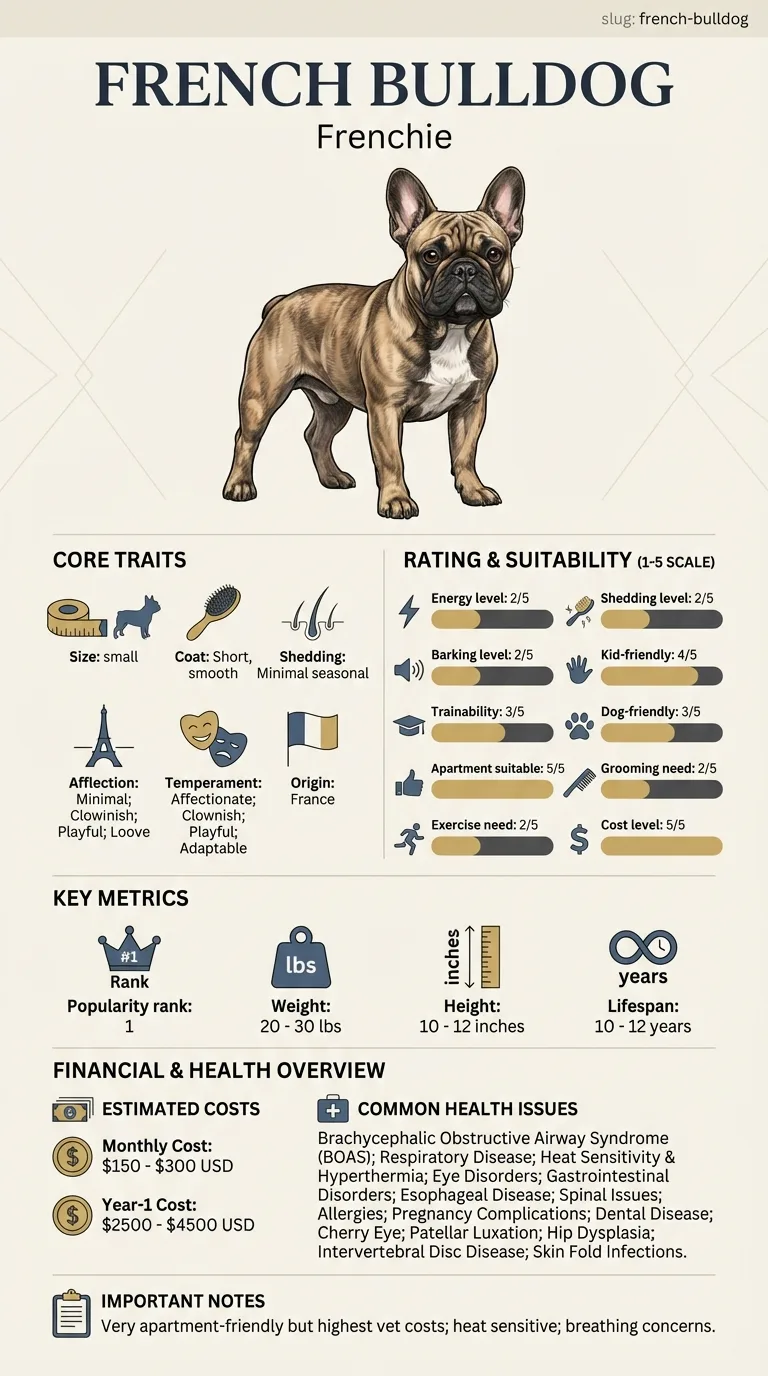
See all French Bulldog health problems, which breeds are prone to pancreatitis, or the full French Bulldog breed guide for temperament, exercise needs and ownership costs.
An acute flare typically requires a few days of hospitalization or intensive outpatient care, with most dogs recovering well within one to two weeks if treated promptly. Chronic cases require ongoing, indefinite dietary management.
Success means avoiding future flares through consistent low-fat feeding and trigger avoidance — for most dogs, a single well-managed episode doesn't have to become a recurring problem if dietary habits change afterward.
Duke, a six-year-old Frenchie, snagged a piece of fatty brisket that fell during a family barbecue, something everyone laughed off in the moment. By that evening, he was hunched, refusing food, and vomiting repeatedly, prompting an emergency vet visit. Bloodwork confirmed acute pancreatitis, and Duke spent two days hospitalized on IV fluids and pain management before gradually transitioning back to a low-fat diet. His family now keeps him in a separate room during cookouts and has switched permanently to a lower-fat regular diet as a precaution.
Key takeaway: One piece of fatty food was enough to trigger a genuine emergency — in this breed, 'just a taste' at a cookout carries real, immediate risk.
A high-fat meal is the most commonly identified trigger, though obesity, certain medications, and in some cases no identifiable cause at all can also be behind a flare-up of pancreatic inflammation.
Repeated vomiting, a hunched or 'praying' posture, abdominal pain, lethargy, and loss of appetite are the classic combination of signs, often appearing within hours of a high-fat meal.
Bloodwork measuring pancreatic enzyme levels, sometimes combined with abdominal ultrasound, helps confirm the diagnosis and rule out other causes of similar symptoms.
Treatment typically involves IV fluids, anti-nausea medication, pain control, and a gradual reintroduction of a low-fat diet, often requiring hospitalization for more significant cases.
Yes, some dogs experience recurrent flares, which may benefit from an ongoing low-fat diet and closer management of any identified triggers rather than treating each episode as an isolated event.
A single flare with hospitalization commonly runs from about $800 to $3,000 depending on severity and length of stay, with milder cases managed on an outpatient basis costing less.
Avoiding fatty table scraps entirely, maintaining a lean weight, and following any vet-recommended low-fat diet consistently are the most effective ways to reduce the risk of a repeat episode.
A high-fat meal, such as fatty table scraps or rich human food.
Repeated vomiting, a hunched painful posture, and loss of appetite, often within hours of a fatty meal.
IV fluids, anti-nausea medication, pain control, and a gradual return to a low-fat diet.
Roughly $800–$3,000 depending on severity and whether hospitalization is needed.
Yes, some dogs have recurrent flares and benefit from an ongoing low-fat diet.
A one-page prep sheet for this condition: the signs, the questions to ask, what to get priced. Unlocks here.
You get: Vet visit prep sheet
No spam. One-click unsubscribe. See our privacy policy.
Preview page 1 before you decide.