Health
Is a murmur the same thing as DCM?
No, a murmur is a sound most often from valve disease; DCM is a separate muscle disease that can occur with or without a murmur.

Quick answer
Is a murmur the same thing as DCM?
No, a murmur is a sound most often from valve disease; DCM is a separate muscle disease that can occur with or without a murmur.
A murmur is what a vet hears through a stethoscope; DCM is one of several possible reasons that sound might be there — or, notably, it can be present without ever causing a murmur at all.
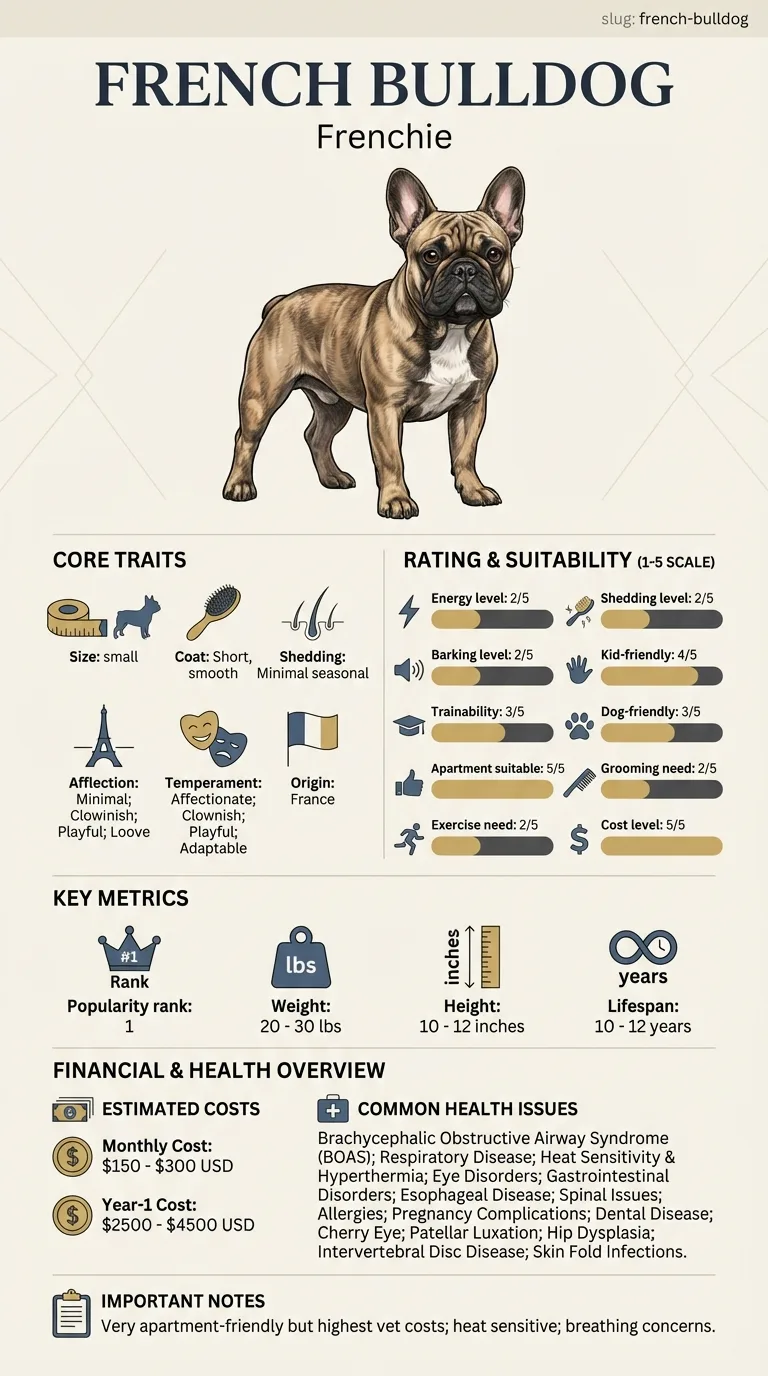
Owners who've just heard the phrase 'heart disease' for the first time at a checkup are the ones this affects most directly, often unsure whether that means an urgent problem or a minor, long-term monitoring situation.
This guide is not medical advice. If your dog shows pain, sudden behavior change, or worsening symptoms, consult a licensed veterinarian.
Some links may be affiliate links. We may earn a commission at no extra cost to you. We only suggest products we believe are helpful for dog owners.
'Heart disease' in French Bulldogs commonly refers to two related but distinct findings: heart murmurs, most often caused by valve degeneration, and dilated cardiomyopathy, a more serious muscle disease that can occur with or without an audible murmur. Distinguishing between them through proper diagnostics is central to understanding what a cardiac finding actually means for a specific dog.
Some form of detectable heart disease, most often a murmur traced to valve changes, is common enough in French Bulldogs that routine cardiac auscultation is a standard part of veterinary visits for the breed, with DCM specifically documented as the more serious concern within that broader category.
Valve-related murmurs in French Bulldogs often reflect the same general age-related valve degeneration seen across many breeds, while DCM is believed to have a more breed-specific genetic basis given how consistently it's documented in French Bulldog lines specifically as opposed to being a universal aging change.
For valve disease, general cardiovascular health maintained through appropriate weight and activity supports valve function over time, though environmental factors play a more limited, less clearly established role in DCM's onset compared to its suspected genetic basis.
Ask for clarification any time 'heart disease' is mentioned without a specific diagnosis, and seek prompt care for any new murmur, change in exercise tolerance, or breathing pattern change.
Because 'heart disease' is a broad label, a few common gaps in understanding can lead to the wrong level of concern or the wrong next step.
See all French Bulldog health problems, which breeds are prone to heart disease, or the full French Bulldog breed guide for temperament, exercise needs and ownership costs.
Reaching a specific diagnosis typically takes one to a few vet visits including an echocardiogram. Ongoing management, once a diagnosis is confirmed, generally involves periodic rechecks every few months to a year.
Success means having enough clarity about the specific underlying condition to know what monitoring and treatment actually apply — a vague 'heart disease' label resolved into an actionable, specific plan.
A heart murmur is simply a sound — turbulent blood flow through the heart that a stethoscope can pick up. In French Bulldogs, murmurs are most commonly traced to valve disease, where a valve leaflet has thickened and no longer closes fully, letting blood leak backward and create that whooshing sound.
Dilated cardiomyopathy is a different, generally more serious condition involving the heart muscle itself weakening and the chambers enlarging. It can sometimes produce its own murmur as the stretched chambers affect valve function secondarily, but it can also progress with no murmur at all, which is part of why DCM is considered a 'silent' risk that periodic screening, not just listening for a murmur, is meant to catch.
When a vet says 'heart disease' without further detail, the practical next step is always the same: ask which specific condition is suspected, and whether an echocardiogram is recommended to clarify it, since a murmur alone doesn't tell the whole story either way.

If you think your Frenchie has heart disease, the plan is three steps: write down what you have seen and when it started, book a veterinary appointment rather than waiting for the next flare, and take video of the behaviour or symptom before you go — the thing you are worried about rarely happens in the consulting room. Screening in the parents covers brachycephalic obstructive airway syndrome (boas), respiratory disease, heat sensitivity & hyperthermia.
What the vet visit should produce is a diagnosis and a written plan, not just reassurance: what is being ruled out, what the monitoring interval is, and which signs mean you come back sooner. Ask what the treatment costs across a year rather than per visit, because that is the number that decides whether you are managing this condition or reacting to it.
Between appointments, keep a short log — dates, what you saw, what changed. It is the single most useful thing an owner brings to a follow-up, and for heart disease it is often what separates a clear pattern from a guess.
Owen's vet detected a soft murmur at his six-year checkup and used the phrase 'some heart disease' when describing it, which sent his family into a worried spiral of assumptions about DCM and worst-case scenarios. An echocardiogram, done the following week, showed mild, stable valve degeneration with no evidence of muscle disease. Knowing specifically what they were dealing with changed everything about how Owen's family approached his care — instead of bracing for a serious prognosis, they settled into a manageable routine of annual rechecks.
Key takeaway: The words 'heart disease' cover a wide range of outcomes — getting the specific diagnosis, not just the general label, is what actually tells you how worried to be.
A murmur is a sound indicating turbulent blood flow, which is often but not always caused by an underlying disease process like valve degeneration; it's a clue rather than a diagnosis on its own.
No, DCM can progress silently without producing an audible murmur, which is why periodic screening beyond just listening with a stethoscope matters in breeds where DCM is documented.
An echocardiogram is the key tool, allowing direct visualization of valve function and heart muscle structure to distinguish valve disease, muscle disease, and other possible causes.
Many forms do progress over time, though the rate varies enormously by specific condition and individual dog; some mild valve disease remains stable for years, while DCM tends to be more consistently progressive.
Mild, early findings are sometimes simply monitored, but more significant valve disease or any confirmed DCM typically benefits from medication to support heart function and manage symptoms.
A physical exam with auscultation, an echocardiogram to evaluate structure and function, and often an ECG to assess heart rhythm are the standard combination used to reach a specific diagnosis.
This depends on the specific condition and its severity, but many dogs with a confirmed cardiac diagnosis are rechecked every three to twelve months to monitor progression and adjust medication as needed.
No, a murmur is a sound most often from valve disease; DCM is a separate muscle disease that can occur with or without a murmur.
An echocardiogram, which directly visualizes heart structure and function.
Not necessarily — many forms are manageable for years with appropriate monitoring and medication.
Commonly every three to twelve months depending on the specific condition and severity.
Yes, since the specific condition meaningfully changes the management plan and outlook.
A one-page prep sheet for this condition: the signs, the questions to ask, what to get priced. Unlocks here.
You get: Vet visit prep sheet
No spam. One-click unsubscribe. See our privacy policy.
Preview page 1 before you decide.